Source Dough Proofer for Bread Pizza and Pastry Production
Find 30 Dough Proofer units with varying capacities, voltage options, and temperature ranges. Buyers can compare specifications like tray counts, power sources, and dimensions to select the right equipment for commercial baking needs.
Key considerations
Products List


Premium Artisan Bread Proofer with 10 Adjustable Trays for Perfect Dough Rising
$370.00 - $425.00
MOQ: 1 Pieces


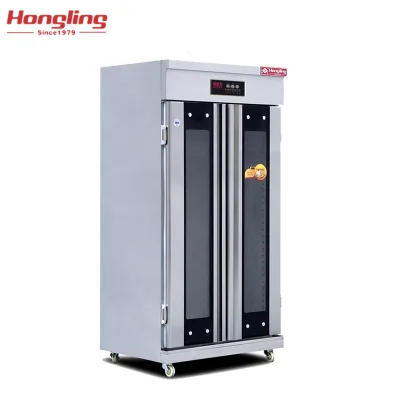
Stainless Steel 16 Trays Bakery Dough Proofer Bread Baking Proofer Retarder Proofer
$2400.00 - $9800.00
MOQ: 1 Pieces


Luxury Type of Retarder Dough Proofer for Bakery Shop of Baking Equipment
$2400.00 - $9800.00
MOQ: 1 Pieces

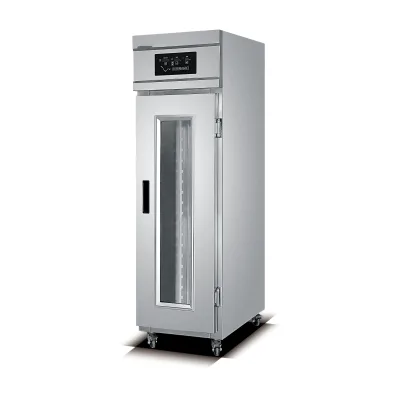
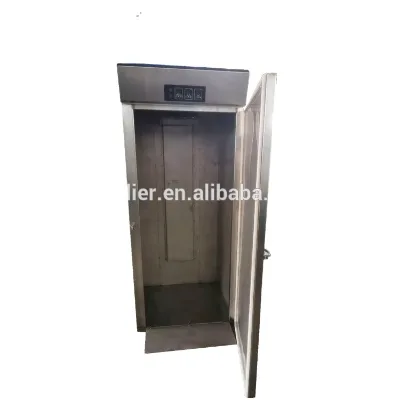
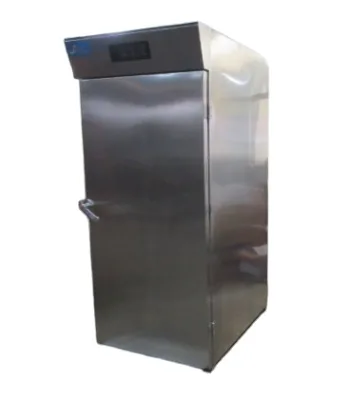
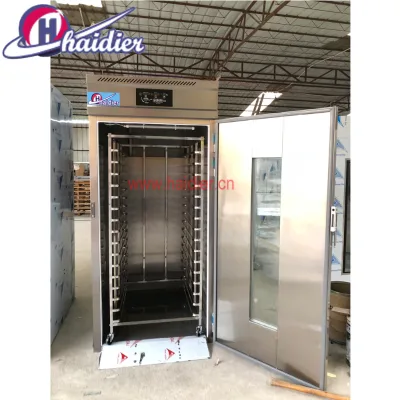
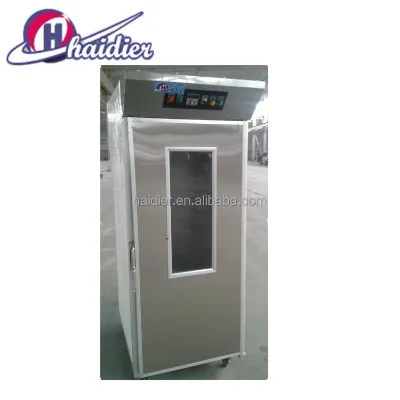
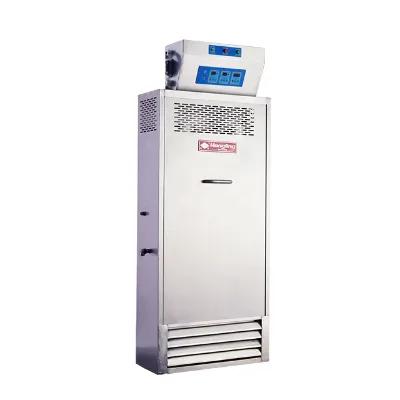
32 Pans Capacity Commercial Bakery Dough Retarder Proofer With Price
$1948.51 - $2153.62
MOQ: 1 Minimum
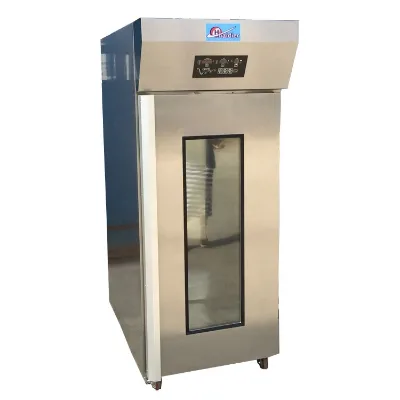


Stainless Steel High-Capacity Dough Proofer for Bakery Applications
$30000.00 - $50000.00
MOQ: 1 Pieces


Comprehensive Sourcing Guide
Dough Proofer Sourcing Guide
Selecting the right Dough Proofer is a critical decision for bakeries, pizzerias, and commercial food production facilities aiming to optimize fermentation consistency and throughput. These specialized units are designed to maintain precise environmental conditions—specifically temperature and humidity—to ensure yeast activity remains stable during the proofing stage. For procurement teams, the primary challenge lies in matching the unit’s capacity and technical specifications to the specific volume and product mix of the operation. Whether handling delicate artisan breads or high-volume pizza bases, the equipment must deliver uniform results without creating bottlenecks in the production line.
The market offers a diverse range of models, from compact countertop units to large-scale rack systems, each serving distinct operational needs. Buyers must navigate a landscape where power sources vary between electric and gas, and capacities range from small batch proofing to industrial-scale output. Understanding the interplay between physical dimensions, tray capacity, and energy consumption is essential for integrating these units into existing kitchen workflows. This guide provides a structured approach to evaluating Dough Proofer listings, ensuring that procurement decisions are grounded in verified technical data and commercial reality rather than marketing assumptions.
Product Scope and Observed Listing Signals
Current market listings reveal a wide spectrum of Dough Proofer configurations, with observed prices ranging from approximately $237.60 to $100,000 USD. This vast disparity reflects the difference between small, single-unit proofers and large, multi-rack industrial systems. The minimum order quantity (MOQ) for most suppliers appears to be one unit, indicating that these are typically sold as individual capital equipment purchases rather than bulk commodity items. Buyers should interpret the price range as an indicator of scale and complexity, where higher costs generally correlate with larger capacities, advanced digital controls, and robust construction materials like stainless steel.
Listing signals also highlight significant variations in physical footprint and internal capacity. Observed specifications include models with capacities of 15, 16, 32, and up to 36 trays, alongside larger rack systems that can be customized to hold 16 or 32 trays per rack. Dimensions vary widely, with some compact units measuring around 820x1240x2200mm, while larger industrial models can exceed 2000x3250x2600mm. These physical constraints are crucial for kitchen planning, as the proofer must fit within the allocated space while allowing for adequate airflow and worker access. Buyers must carefully cross-reference the listed dimensions with their floor plan to avoid logistical issues during installation.
Technical Specifications to Verify
Voltage and power requirements are fundamental technical parameters that must be verified against the facility’s electrical infrastructure. Listings show units operating on both 220V and 380V systems, with power consumption ranging from 2.85kW to 6kW. The frequency is typically listed as 50Hz, which is standard in many regions, but buyers must confirm compatibility with their local grid to prevent equipment damage or inefficient operation. Additionally, some models utilize gas as a power source, which introduces different safety and installation considerations compared to purely electric units. Verifying the exact power source and electrical rating is the first step in ensuring operational readiness.
Temperature and humidity control capabilities define the functional performance of the proofer. Observed temperature ranges for proofing typically span from 15℃ to 38℃, with some units offering a broader range of 0℃ to 50℃. Refrigeration capabilities are also present in some models, with temperatures dropping to 2℃~5℃ or even -15℃, allowing for flexible storage and fermentation management. Humidity control is another critical feature, with some units capable of maintaining humidity levels between 0% and 99% Rh. Buyers should verify whether the unit includes a timing device, as models with and without timers offer different levels of automation and process control.
Compliance and Safety Documentation
Electrical and mechanical safety certifications are mandatory for commercial kitchen equipment to ensure operator safety and regulatory compliance. Buyers must request documentation proving that the unit meets relevant local and international safety standards, such as CE marking for European markets or UL/ETL certification for North America. These certifications verify that the electrical components, wiring, and insulation meet rigorous safety protocols to prevent shocks, fires, or mechanical failures. Without proper certification, the equipment may not be insurable or legally operable in certain jurisdictions, posing significant legal and financial risks to the buyer.
Material safety and hygiene standards are equally important, particularly for food contact surfaces. Listings indicate that many units are constructed from stainless steel, a material preferred for its durability and ease of cleaning. Buyers should verify that the stainless steel grade is food-safe and resistant to corrosion, ensuring long-term hygiene and compliance with health department regulations. Additionally, the packaging method, whether carton or wooden case, should be assessed for its ability to protect the unit during transit, preventing damage that could compromise safety features or structural integrity upon installation.
Cost Drivers and Commercial Terms
The total cost of ownership for a Dough Proofer extends beyond the initial purchase price, encompassing energy consumption, maintenance, and potential customization fees. Units with higher capacities and advanced features, such as precise humidity control and digital timing devices, typically command higher prices. Buyers should evaluate the energy efficiency of the unit, considering the power rating and duty cycle, to estimate ongoing operational costs. Gas-powered units may have lower energy costs in some regions but require additional infrastructure for gas line installation, which can impact the overall budget.
Customization options can significantly influence the final price and lead time. Listings indicate that customization is available for dimensions, tray configurations, and pocket numbers, with options ranging from 88 to 640 pockets or more. While customization allows for a perfect fit with specific production needs, it often results in longer lead times and higher costs compared to standard models. Buyers should clearly define their requirements early in the sourcing process to avoid costly changes later. Additionally, the packing method, such as export cartons or wooden cases, may affect shipping costs and insurance premiums, which should be factored into the commercial terms.
Supplier Qualification and Quality Control
Verifying the supplier’s manufacturing capabilities and quality control processes is essential to ensure the reliability of the Dough Proofer. Buyers should inquire about the supplier’s production location, with many units originating from China, particularly Guangzhou, a hub for commercial kitchen equipment. Understanding the supplier’s manufacturing base can provide insights into their supply chain resilience and quality standards. Buyers should request evidence of their quality control procedures, including pre-shipment inspections and testing protocols, to ensure that each unit meets the specified technical parameters.
Product consistency and after-sales support are critical factors in supplier evaluation. Buyers should assess the supplier’s ability to provide consistent quality across multiple units, especially if ordering for multiple locations. Documentation such as user manuals, maintenance guides, and warranty terms should be reviewed to understand the level of support provided. Suppliers that offer comprehensive training and responsive technical support can significantly reduce downtime and operational issues. Buyers should also consider the availability of spare parts, ensuring that routine maintenance and repairs can be performed efficiently without long delays.
Long-Term Procurement Checks
Establishing a framework for long-term procurement checks ensures that the Dough Proofer continues to meet operational needs over time. Buyers should schedule regular performance reviews to assess the unit’s temperature and humidity stability, verifying that it maintains the specified ranges under varying load conditions. Monitoring energy consumption patterns can also help identify potential inefficiencies or maintenance needs before they lead to costly failures. Regular audits of the unit’s physical condition, including seals, trays, and electrical components, are essential for maintaining hygiene and safety standards.
Feedback from kitchen staff and production managers should be incorporated into the procurement evaluation process. User experience insights can highlight practical issues that may not be apparent in technical specifications, such as ease of loading trays, accessibility of controls, or cleaning convenience. Buyers should use this feedback to refine future procurement decisions, ensuring that new units better align with operational workflows. By maintaining a continuous improvement loop, procurement teams can optimize their equipment portfolio, enhancing productivity and reducing total cost of ownership over the long term.
FAQs
What voltage options are available for dough proofers?
Dough proofers are available in 220V and 380V voltage options to suit different electrical standards. Some models operate at 50Hz frequency with power ratings ranging from 2.85kw to 6kw depending on the specific capacity and tray configuration required for your facility.
Can I find a customized Dough Proofer with specific tray capacity?
Yes, customized dough proofers are available with flexible tray capacities such as 10, 15, 16, 32, or 36 trays. You can also request custom rack configurations like 2 racks to match your production volume and space constraints exactly.
What is the temperature range for the proofing and freezing functions?
The proofing temperature range typically spans from 15℃ to 38℃ to ensure optimal dough rising conditions. For freezing or proofing cycles, the unit can maintain temperatures between 2℃ and 5℃ or reach down to -15℃ for specific preservation needs.
Which dimensions are standard for industrial dough proofing machines?
Standard dimensions vary by model, with common sizes including 820*1240*2200mm or 2000*3250*2600mm for larger units. Smaller benchtop models may measure around 520*530*830mm or 805X740mm in footprint to fit compact kitchen environments.
How is the Dough Proofer packed for international shipping?
Packaging options include export cartons, standard cartons, or wooden cases depending on the order size and destination. The net weight of units ranges from 52kg to 180kg, ensuring secure transport while protecting the stainless steel construction during transit.
What power source options exist for these proofing machines?
Most industrial dough proofers operate on electric power sources, though some gas-powered models are also available. Electric units typically feature timing devices and humidity controls up to 99% Rh for precise environmental management during the proofing process.
Can the machine handle different types of dough like bread or pizza?
Yes, these machines are designed for versatile usage including bread, pizza, and other dough types. They offer pocket numbers ranging from 88 to 640 pieces and can adjust proofing times to approximately 15 minutes for efficient batch processing.