Source Dozer Coupling for Excavators, Bulldozers, and Loaders
Compare 30 verified listings for Dozer Coupling with varying specifications including hydraulic power, working widths, and packaging options. Buyers can evaluate models from Jiangsu and Quanzhou, China, with delivery times as short as one day.
Key considerations
Products List


$1199.00 - $2399.00
MOQ: 1 Sets

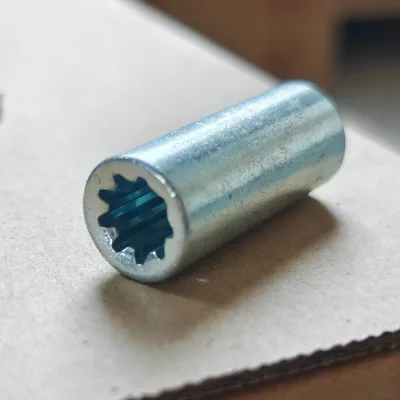


Flexible Coupling with Flange Connection for Diesel Engine Performance
$300.00 - $3000.00
MOQ: 1 Pieces


High Torque Customizable Durable Rubber Flexible Coupling for Bulldozer
$300.00 - $3000.00
MOQ: 1 Pieces


Customizable Connection Durable High Torque Rubber Flexible Shaft Coupling
$300.00 - $3000.00
MOQ: 1 Pieces
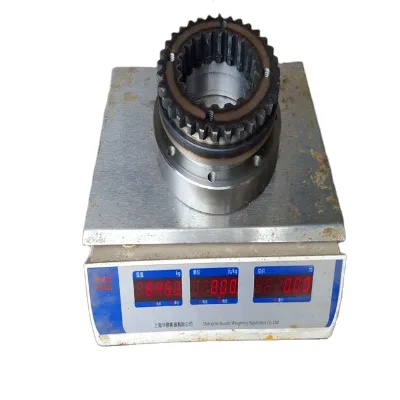

Comprehensive Sourcing Guide
Strategic Sourcing Guide for Dozer Coupling Components
The procurement of Dozer Coupling components represents a critical decision point for heavy machinery operators and fleet managers. These mechanical interfaces are essential for maintaining the operational integrity of bulldozers, particularly in demanding environments where high torque and vibration are constant factors. Sourcing these parts requires a disciplined approach that balances technical compatibility, supply chain reliability, and cost efficiency. This guide outlines the essential factors buyers must evaluate when researching the core keyword "Dozer Coupling," leveraging observed market data and verified product attributes to inform strategic purchasing decisions.
Technical Specifications and Compatibility Verification
When evaluating dozer couplings, the primary focus must be on precise technical specifications that ensure the component fits the specific machinery model. The market data indicates a wide variance in model numbers, ranging from specific identifiers like S407 and LZQ01 to complex alphanumeric codes such as 07332-01200 and 10y-11-05000. This diversity underscores the necessity for buyers to cross-reference their equipment's serial number and manufacturer specifications before placing an order. A mismatch in model numbers can lead to catastrophic mechanical failure or significant downtime.
Dimensions and physical attributes are equally critical. Observed specifications for compatible heavy machinery components often include a working width of approximately 1820mm and overall dimensions around 1800850775mm. The weight of such assemblies is typically substantial, with observed values around 350kg, necessitating robust handling and transport logistics. Furthermore, the material composition is a key determinant of longevity. The supply chain frequently lists Steel as the primary material for these high-stress components, ensuring the necessary tensile strength to withstand the forces generated during earthmoving operations.
Buyers should also scrutinize the transmission and power characteristics associated with the coupling system. In many heavy-duty applications, the transmission is described as a Hydraulic-Mechanical Transmission, which implies the coupling must accommodate both hydraulic fluid dynamics and mechanical torque transfer. The working flow rates for associated hydraulic systems are observed in the range of 40-80L/Min, with working pressures between 10-21MPa. Any coupling component sourced must be rated to handle these specific pressure and flow parameters without leakage or structural deformation.
Compliance, Certification, and Standardization
Navigating the regulatory landscape is a fundamental aspect of B2B procurement for industrial machinery. While specific certification statuses vary by supplier, the market data highlights the presence of ISO9001 certification as a significant indicator of quality management systems. Some listings explicitly pair this with CE marking, suggesting compliance with European safety and health standards. However, buyers must verify that these certifications are current and applicable to the specific batch of goods being purchased, rather than assuming they apply universally to all listings under a generic category.
Standardization is another area requiring careful attention. The observed data presents conflicting standard descriptions, ranging from specific width measurements like 60'', 72'', 84'', and 96'' to custom requests labeled as "CUSTOMERIZED" or "As customer requestment." This variability suggests that dozer couplings are often manufactured to order or adapted to specific regional or equipment requirements. Buyers should not rely on a single standard definition but must confirm the exact standard applicable to their machinery. For instance, while some components are listed with a standard of "Bulldozer spare parts," others may adhere to specific dimensional standards like 18.00 cm × 18.00 cm × 24.00 cm.
It is crucial to distinguish between generic product attributes and verified compliance. While "ISO9001: Condition:New" appears in the data, this phrasing indicates a state of the product rather than a standalone certification document. Procurement teams should request valid, up-to-date certification certificates directly from the supplier to ensure that the quality management system is active and the specific product line is covered. Relying on unverified claims can expose the buyer to liability and operational risks.
Cost Drivers and Pricing Dynamics
The pricing landscape for Dozer Coupling components is highly variable, with observed ranges spanning from $1 to $3,000 USD. This broad spectrum reflects differences in component complexity, material quality, brand reputation, and order volume. The lower end of the price range likely corresponds to smaller, non-critical accessories or generic replacements, while the higher end encompasses heavy-duty, custom-engineered couplings or complete assembly units.
Several factors drive these cost variations. The "High Quality" and "Original" designations in the supply data suggest that genuine parts from the original equipment manufacturer (OEM) command a premium. Conversely, aftermarket parts labeled as "Made in China" may offer cost savings but require rigorous quality verification. The packaging method also influences cost; options include Iron Frames, Pallets, Wooden Cartons, or standard Cartons. More robust packaging, such as Iron Frames, adds to the unit cost but provides superior protection during international shipping, potentially reducing the risk of damage-related losses.
Minimum Order Quantity (MOQ) is another significant cost driver. The observed MOQ range is 1 to 100 units. For small fleet operators or those needing immediate replacements, suppliers with an MOQ of 1 offer flexibility, though the unit price may be higher. Conversely, larger organizations can leverage economies of scale by ordering in bulk, potentially negotiating better rates, provided they can manage the inventory and storage costs associated with larger quantities. Buyers should calculate the total cost of ownership, including shipping, handling, and potential downtime costs, rather than focusing solely on the unit price.
Typical Applications and Operational Context
Dozer couplings are integral to the operation of heavy earthmoving equipment, specifically those designed for universal types of work. The "Universal Type" classification in the product data suggests these components are versatile and can be adapted to various dozer models and working conditions. The primary application involves connecting the dozer blade or attachment to the main chassis, allowing for the transfer of immense force required for pushing, grading, and leveling materials.
The working mode of the machinery is a critical consideration. The data indicates a "Wheeled" walking mode, which implies that the coupling must accommodate the specific dynamics of wheeled dozers, including different vibration profiles and load distributions compared to tracked vehicles. Additionally, the "Front Discharge" load and unload method suggests that the coupling system must be robust enough to handle the stress of material being pushed and discharged from the front of the machine.
Engine power is another operational factor. Observed engine power ratings range from 147 to 515kw, indicating that the couplings must be capable of handling a wide spectrum of power outputs. High-horsepower applications require couplings with higher fatigue resistance and superior thermal management properties. Buyers must match the coupling specifications to the specific engine power of their fleet to prevent premature wear or failure under heavy loads.
Supplier Evaluation and Geographic Considerations
The geographic origin of the product plays a pivotal role in supplier evaluation. The data points to China as the primary place of origin, with specific mentions of Jiangsu and Quanzhou as manufacturing hubs. While these regions are known for robust industrial manufacturing, buyers should conduct due diligence to assess the specific capabilities of the suppliers located there. The "Made in China" attribute is common, but the quality can vary significantly between different manufacturers within the same region.
Supplier reliability is further assessed through their service offerings. The presence of "One-Stop Service" and "After Service" options indicates a supplier's commitment to post-sales support. This is particularly important for critical components like dozer couplings, where downtime can be costly. Buyers should verify the availability of technical support, warranty terms, and the ease of obtaining replacement parts. The warranty period observed ranges from 3 months to 1 year, which serves as a baseline for evaluating supplier confidence in their product quality.
Logistics and transportation methods are also key evaluation criteria. The data lists Express, Sea Transport, and Air Transport as available options. For urgent replacements, air transport may be necessary despite higher costs, while sea transport is more suitable for bulk orders. The "Delivery Time" of 1-3 working days after payment is an attractive feature for immediate needs, but buyers must verify if this applies to all stock items or only specific models. The "In Stock" availability status should be confirmed in real-time, as inventory levels can fluctuate rapidly.
Quality Control and Long-Term Procurement Strategy
Ensuring consistent quality is paramount in the procurement of dozer couplings. The "Condition: New" attribute is a standard expectation, but buyers must implement rigorous quality control measures upon receipt. This includes visual inspections for defects, verification of dimensions against the specified 1800850775mm or other relevant measurements, and testing of material integrity. The "High Quality" claim in the market data should be validated through third-party testing or by reviewing the supplier's quality assurance protocols.
Long-term procurement strategies should focus on building relationships with suppliers who offer customization options. The "Customization: Available" attribute highlights the flexibility of the supply chain, allowing buyers to tailor components to their specific operational needs. This is particularly valuable for older machinery or specialized applications where off-the-shelf parts may not fit perfectly. Buyers should engage with suppliers early in the process to discuss custom requirements, ensuring that the final product meets all technical and performance criteria.
Finally, buyers should consider the total lifecycle cost of the components. While a lower initial price may be appealing, the long-term reliability and durability of the coupling are more important. Components that fail prematurely can lead to costly repairs and extended downtime. Therefore, the procurement strategy should prioritize suppliers who demonstrate a commitment to quality, offer comprehensive warranties, and provide reliable after-sales support. By focusing on these factors, buyers can secure a steady supply of high-performance dozer couplings that keep their operations running efficiently and safely.
FAQs
What are the standard dimensions for dozer couplings?
Standard dimensions are typically 1800*850*775mm with a working width of about 1820mm. Some models may vary based on specific width standards like 60 or 72 inches, so verify compatibility with your equipment.
Which certifications should I look for in Dozer Coupling suppliers?
Look for ISO9001 certification, which indicates a quality management system, and CE marking for safety compliance. Always request valid certificates directly from the supplier to ensure they cover your specific batch.
How much does a Dozer Coupling cost?
Prices range from 1 to 3000 USD depending on complexity and brand. Lower costs often reflect generic aftermarket parts, while higher prices usually indicate original equipment manufacturer parts or custom-engineered heavy-duty units.
Can I customize Dozer Coupling specifications?
Yes, customization is available for many models to meet specific customer requirements. Buyers should discuss custom needs early to ensure the final product matches their machinery's exact operational parameters.
What is the typical lead time for delivery?
Delivery time is typically 1 to 3 working days after payment is received for in-stock items. This applies to specific models, so confirm availability status before placing an urgent order.
Which materials are used for dozer couplings?
Steel is the primary material used to ensure high tensile strength and durability. This material choice is essential for withstanding the high torque and vibration forces generated during heavy earthmoving operations.
What is the warranty period for these components?
Warranty periods typically range from 3 months to 1 year depending on the supplier. This baseline reflects supplier confidence in product quality, but terms should be verified directly with the vendor.