Source Drawer Slides for Furniture, Cabinets, and Drawers
Compare 30 available Drawer Slides from verified Chinese manufacturers. Buyers can evaluate linear and roller types in stainless steel or iron, with customization options for length and surface finishes.
Key considerations
Products List


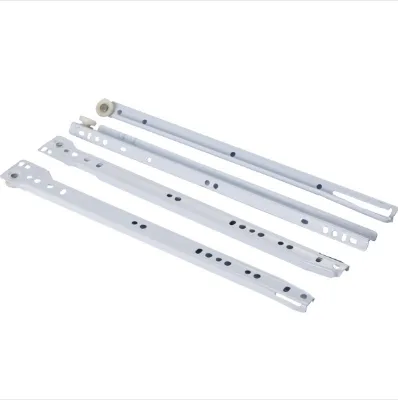


Push to Open Under Mount 3-Fold Drawer Slides Safe Concealed Drawer Slide
$0.60 - $20.00
MOQ: 500 Pairs


Runner Kitchen Cabinet Drawer Slides with Soft Close Ball Bearing Undermount
$1.00 - $25.00
MOQ: 5000 Pieces


Comprehensive Sourcing Guide
Strategic Sourcing Guide for Industrial and Furniture Drawer Slides
The global market for Drawer Slides is characterized by a vast array of configurations, materials, and performance specifications tailored to diverse industries ranging from residential furniture manufacturing to heavy-duty industrial machinery. For procurement professionals, navigating this sector requires a disciplined approach that prioritizes verified technical data over marketing assertions. The core objective is to secure components that ensure operational longevity, smooth mechanical function, and cost-efficiency while adhering to strict supply chain reliability standards. This guide synthesizes available market observations and technical parameters to provide a robust framework for sourcing Drawer Slides, focusing on material integrity, dimensional precision, and supplier capability assessment.
Technical Specifications and Dimensional Variability
The primary differentiator among Drawer Slides is their mechanical architecture and dimensional capacity. Market data indicates a significant divergence in slide types, ranging from linear roller mechanisms to steel ball bearing systems. Buyers must first identify the specific motion requirement for their application. Linear slides are often preferred for applications requiring high load-bearing capacity with minimal friction, while steel ball type slides offer smoother operation for lighter to medium-duty furniture applications. The structural configuration is equally critical; observed product attributes include "Two Knots" and "Three Knots" structures, which refer to the number of extension stages or the locking mechanism design. These structural differences directly impact the fully extended length and the stability of the drawer under load.
Dimensional specifications vary widely, necessitating precise verification before ordering. Length specifications observed in the market span from 250mm to 700mm for certain industrial models, while others are defined in imperial units ranging from 12 inches to 22 inches. The closed length and travel length are distinct metrics that must be calculated to ensure the drawer fits within the intended cabinet footprint. For instance, travel lengths have been observed between 1 1/16 inches and 60 inches, with closed lengths ranging from 2 3/4 inches to 60 inches. Width specifications also show a broad spectrum, typically falling between 3/16 inches and 5 1/16 inches. Standardization efforts often reference specific lengths such as 300mm to 550mm or 250mm to 600mm, yet many suppliers offer customization based on client needs. Procurement teams must verify that the selected slide's width and length align perfectly with the cabinet's internal dimensions to prevent binding or misalignment during operation.
Material Composition and Surface Treatment
The longevity and corrosion resistance of Drawer Slides are fundamentally determined by the base material and the applied surface finish. Stainless steel is a prominent material choice for applications requiring high resistance to moisture and corrosion, often found in food processing or marine environments. Conversely, iron-based slides are common in general-purpose furniture and industrial storage where cost-efficiency is a priority, provided they receive adequate surface protection. The surface treatment process is a critical quality indicator. Observed finishes include plain, zinc plating, copper plating, and phosphating. Zinc plating is particularly prevalent for its ability to prevent rust in standard indoor environments, while phosphating offers a base for subsequent painting or powder coating.
When evaluating material quality, buyers should request documentation regarding the thickness of the metal and the uniformity of the plating. The "Standard" attribute often cited as "American & European style" suggests compatibility with established mounting patterns, but the physical material properties must be confirmed. For heavy-duty applications, the weight capacity per pair is a vital specification, with observed ranges spanning from less than 100 lbs to over 500 lbs. It is essential to distinguish between the theoretical load capacity and the dynamic load capacity, which accounts for the stress of repeated opening and closing cycles. The condition of the material, whether new or used, must be explicitly stated, as used components may exhibit fatigue or wear that compromises safety and performance.
Compliance, Certification, and Environmental Standards
In the modern procurement landscape, compliance with environmental and safety standards is non-negotiable. While specific certification data for every product is not universally available in general listings, the RoHS (Restriction of Hazardous Substances) directive is a recognized benchmark for electronic and mechanical components. Buyers should verify that the Drawer Slides comply with RoHS regulations, which restrict the use of specific hazardous materials like lead, mercury, and cadmium. This is particularly relevant for products exported to the European Union and other regions with strict environmental laws.
Beyond environmental compliance, the origin of the product plays a significant role in regulatory adherence. The majority of the observed supply originates from China, specifically from manufacturing hubs in Guangdong and Tianjin. While these regions host advanced manufacturing capabilities, buyers must ensure that the specific supplier adheres to international quality management systems. The "Original brand" designation suggests that some products are manufactured by the brand owner, while others may be OEM (Original Equipment Manufacturer) products. Procurement teams should require proof of compliance with relevant standards, such as ISO certifications, to ensure that the manufacturing process maintains consistent quality control. Without explicit certification data, buyers should treat compliance claims as observations that require third-party verification before finalizing large orders.
Cost Drivers and Procurement Economics
The pricing of Drawer Slides is influenced by a complex interplay of factors, including material costs, customization requirements, and order volume. The observed price range in the market spans from $0.10 to $80.00 per unit, reflecting the vast difference between basic, mass-produced components and specialized, high-load, or custom-engineered slides. Several key variables drive these costs. First, the material choice is a primary cost driver; stainless steel units are inherently more expensive than iron-based alternatives due to raw material costs and processing complexity. Second, the surface treatment adds value; multiple layers of plating or specialized coatings increase the unit price but extend the product's lifespan.
Order volume significantly impacts the final cost. The Minimum Order Quantity (MOQ) ranges from 20 units to 100,000 units, indicating that suppliers offer flexibility for small-batch prototyping as well as large-scale production runs. However, smaller orders often carry a higher per-unit cost due to setup and logistics overhead. Customization is a major cost factor; while "Customization: Available" is a standard attribute, specific requests for unique lengths, colors, or load capacities will increase the price. Payment terms also influence the financial structure of the deal, with common terms including 30% TT in advance and 70% TT before shipment, or FOB (Free on Board) terms. Buyers should factor in the total cost of ownership, including shipping, duties, and potential quality rejections, rather than focusing solely on the unit price.
Supplier Evaluation and Operational Reliability
Selecting a reliable supplier is as critical as selecting the right product. The market data indicates that suppliers are located primarily in China, with specific mentions of manufacturers such as Fusaier. However, relying on a single named entity is not advisable; instead, buyers should evaluate suppliers based on their operational capabilities. Key evaluation criteria include the supplier's ability to meet lead times, which have been observed to range from 10 to 25 days. This timeframe can vary based on the complexity of the order and the current production load.
Packaging is another indicator of supplier professionalism. Observed packaging methods include paper cartons, small boxes, outer cartons, pallets, and wood packing. The choice of packaging should align with the fragility of the product and the logistics requirements of the destination. For international shipments, robust packaging that prevents damage during transit is essential. Furthermore, the supplier's responsiveness to "More details" inquiries is a strong predictor of future support. A supplier that provides clear communication regarding customization, lead times, and quality control is more likely to deliver a seamless procurement experience. Buyers should also verify the supplier's capacity to handle "Customer Requirements" for packing and labeling, ensuring that the final delivery meets all logistical specifications.
Quality Control and Long-Term Procurement Strategy
Implementing a rigorous quality control (QC) protocol is essential to mitigate the risks associated with mechanical components. Given the variation in product conditions, from "New" to "Used," buyers must establish clear acceptance criteria. For new products, visual inspection should check for surface defects, consistent plating, and correct dimensions. Functional testing, such as cycling the slide through its full travel length, is necessary to verify smooth operation and load-bearing capacity. The "Drawer Height: Adjustable+4.5" attribute suggests that some models offer flexibility in installation, which can be a valuable feature for reducing assembly errors.
For long-term procurement, building a relationship with suppliers who offer consistent quality and reliable lead times is paramount. Buyers should consider the total lifecycle cost of the slides, including maintenance and replacement frequency. High-quality slides with superior surface treatments and robust materials will reduce downtime and maintenance costs over time. Additionally, maintaining a buffer stock of critical components can protect against supply chain disruptions. When evaluating potential partners, buyers should prioritize those who demonstrate transparency in their manufacturing processes and are willing to provide detailed technical documentation. By focusing on verified attributes and avoiding unverified claims, procurement teams can build a resilient supply chain that supports the long-term success of their furniture and machinery operations.
Application Scenarios and Market Segmentation
Drawer Slides serve a wide array of applications, from residential cabinetry to industrial storage systems. The specific requirements of each application dictate the necessary technical specifications. In residential furniture, the focus is often on aesthetics, smooth operation, and moderate load capacity. Here, steel ball type slides with zinc plating and standard lengths are common. In contrast, industrial applications demand high durability, heavy load capacity, and resistance to harsh environments. These scenarios often require stainless steel slides with specialized surface treatments and robust structural designs like the "Two Knots" or "Three Knots" configurations.
The versatility of the product is highlighted by the ability to customize colors and dimensions to meet client needs. This adaptability allows manufacturers to integrate Drawer Slides into various designs without compromising functionality. Whether the application requires a compact slide for a small office drawer or a heavy-duty rail for a warehouse cart, the market offers solutions that can be tailored to specific constraints. Buyers should carefully analyze the intended use case to select the appropriate slide type, ensuring that the selected component meets both the functional and environmental demands of the application. By aligning product specifications with application requirements, buyers can optimize performance and ensure customer satisfaction.
FAQs
What materials are used for Drawer Slides?
Drawer Slides are commonly made from stainless steel or iron. Stainless steel offers high corrosion resistance, while iron is a cost-effective choice for general furniture applications requiring zinc plating or phosphating for protection.
Which slide types are available for furniture?
Available slide types include linear roller mechanisms and steel ball bearing systems. Linear slides suit high-load needs, whereas steel ball types provide smooth operation for lighter furniture applications with varying structural designs.
How long is the delivery time for orders?
The standard delivery time ranges from 10 to 25 days. This timeframe depends on order complexity and customization requirements, with payment terms typically requiring 30% advance and 70% before shipment.
Can I customize the length and size?
Yes, customization is available for length, size, and color based on client needs. Specifications can range from 250mm to 700mm or 12 to 22 inches, with widths between 3/16 inch and 5 1/16 inch.
What is the minimum order quantity required?
The minimum order quantity varies from 20 to 100,000 units depending on the supplier. Some vendors set MOQs according to specific size requirements, allowing flexibility for both small prototypes and large production runs.
How much weight can the slides support?
Weight capacity per pair ranges from less than 100 lbs to over 500 lbs. Buyers must verify the specific load rating for their application to ensure stability and prevent mechanical failure during use.