Source Dry Toyota Air Filter for Engine, Cabin, and Fuel Systems
Find 30 Dry Toyota Air Filter options with varying specifications like paper core and cotton medium materials. Buyers can compare models for Toyota and Lexus vehicles, check MOQs from 1 to 1000, and review delivery times ranging from 7 to 20 days.
Key considerations
Products List




Comprehensive Sourcing Guide
Strategic Sourcing Guide for Dry Toyota Air Filters
Understanding Product Classification and Core Specifications
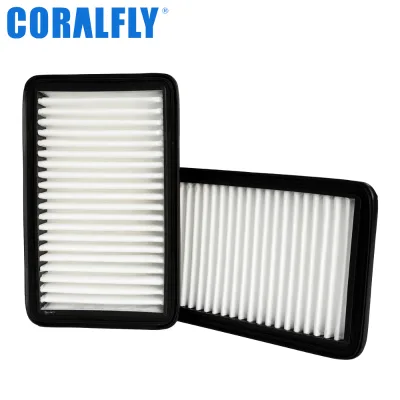
When sourcing dry Toyota air filters, buyers must first establish a precise understanding of the product classification and technical attributes that define this specific component. The core keyword "Dry Toyota Air Filter" points to a filtration element designed for internal combustion engines where the filtration medium operates without liquid immersion, relying on a dry paper or synthetic core to trap particulate matter. Based on observed market data, these products are consistently classified as "Air Filter" units with a "Dry" pattern, distinguishing them from oil-immersed or wet-type filtration systems. The structural integrity of these units is typically described as a "Filter Element/Assy" or "Cartridge Filter," indicating a self-contained assembly ready for direct installation into the engine bay or air intake system.
The material composition is a critical differentiator in this category. The supplied facts highlight a "Paper Core" as a primary material, which is the industry standard for dry air filtration due to its balance of surface area and filtration efficiency. However, variations exist where the medium material may include "Cotton" or where the filtration grade is categorized as "Medium Filter" or "Hepa Filter." This variance suggests that buyers must verify the specific filtration grade required for their application, as "Hepa Filter" implies a higher efficiency standard than a generic "Medium Filter." The physical dimensions are equally vital; observed specifications include standard sizes such as 24522445 mm and larger carton dimensions like 49cm x 40cm x 39cm, which likely represent the shipping package rather than the filter element itself. Buyers must cross-reference the model number, such as 17801-25020 or 17801-F0050, against the vehicle's service manual to ensure dimensional compatibility.
Technical Compatibility and Model Number Verification
The complexity of sourcing for Toyota and Lexus vehicles lies in the sheer volume of model numbers and the specific engineering requirements of each generation. The market data reveals a wide array of model numbers, including 17801-28010, 17801-10030, 17801-11100, and AY120TY009, alongside OEM numbers like 87139-Yzz30. These alphanumeric codes are not merely identifiers; they represent specific engineering tolerances, pleat counts, and sealing ring configurations. For instance, the specification "For Toyota/Lexus" indicates a broad compatibility, but the presence of distinct model numbers suggests that a single filter may not fit all variants of the brand.
Buyers must treat the model number as the primary verification tool. The observed data includes specific entries like "17801-0L040" and "Ok592-23-603A," which likely correspond to different engine families or model years. A critical error in procurement would be assuming interchangeability between these numbers without verification. The "Folded Filter" structure mentioned in the data suggests a design that maximizes surface area within a confined space, a common trait in modern automotive air filters. When evaluating a supplier's catalog, the buyer should demand a direct mapping between the supplier's part number and the original equipment manufacturer (OEM) number. The presence of "Customization" as an attribute indicates that while standard models exist, the supply chain can accommodate specific dimensional or material requests, provided the technical drawings are shared.
Cost Drivers and Pricing Dynamics
The pricing landscape for dry Toyota air filters is influenced by several distinct factors, ranging from material costs to logistical variables. The observed price range in the market spans from $0.50 to $30.19 USD. This wide disparity is not indicative of quality alone but reflects differences in filtration grade, packaging, and order volume. A unit priced at the lower end of this spectrum likely represents a basic "Medium Filter" with standard paper construction, while a unit at the higher end may incorporate "Hepa Filter" technology, specialized cotton media, or premium packaging.
Minimum Order Quantity (MOQ) is a significant cost driver. The data shows an MOQ range from 1 to 1000 units, with a specific high-confidence observation of 100 PCS for certain listings. Buyers sourcing small quantities may face a higher per-unit cost due to the lack of economies of scale, whereas bulk orders can leverage the lower end of the price range. The "Business Type" listed as "Retail or Wholesale" further suggests that pricing structures are tiered. Additionally, the "Delivery Time" of 20 days or 7-10 days impacts the total cost of ownership. Faster lead times often command a premium, while longer lead times allow for more efficient production scheduling and lower costs.
The packaging method also influences cost. Options range from "Paper" and "Neutral" packing to "Standard Export Package" or "Customization." While neutral packing reduces material costs, it may not be suitable for retail distribution. Conversely, custom packaging adds value but increases the unit price. Buyers must calculate the total landed cost, including the base price, MOQ requirements, and any surcharges for expedited shipping or specialized packaging, to determine the true economic viability of a supplier.
Supplier Evaluation and Geographic Considerations
Evaluating suppliers for dry Toyota air filters requires a focus on geographic origin and logistical capabilities. The observed data indicates that production originates from multiple locations within China, specifically "Hebei," "Sichuan," and general "China" origins. These regions are known for their manufacturing clusters, but each may have different specializations. Hebei, for example, is often associated with heavy industrial manufacturing, while Sichuan may have a different supply chain focus. Buyers should verify the specific factory location to ensure it aligns with their quality expectations and logistical needs.
Logistical flexibility is another critical evaluation criterion. The data lists "Ningbo/Guangzhou/Yiwu" as other ports, indicating that suppliers have established shipping routes from these major hubs. This diversity allows buyers to negotiate better freight terms based on their destination. Furthermore, the availability of "Online Service" and "Quality: High-Quality" attributes suggests that reputable suppliers offer digital support and maintain certain quality benchmarks. However, buyers must not rely solely on these self-reported attributes. Instead, they should request evidence of the supplier's ability to meet the "Standard" or specific "prod_standard" requirements mentioned in the product data.
The "Business Type" being "Retail or Wholesale" implies that some suppliers may cater to end-users while others focus on bulk distribution. For B2B procurement, identifying a supplier that specializes in wholesale operations is often preferable, as they are more likely to have the inventory depth and logistical infrastructure to handle large orders. The presence of "Customization" as a service offering also signals a supplier's willingness to adapt to specific buyer needs, which is a positive indicator of flexibility and customer service orientation.
Quality Control and Compliance Verification
Quality control in the air filter sector is paramount to ensuring engine protection and longevity. The observed data highlights "Function: Engine Protection" as a primary attribute, underscoring the critical role these filters play in preventing particulate ingress into the engine. To verify quality, buyers must look beyond generic claims of "High-Quality" and focus on tangible specifications. The "Filtration Grade" is a key metric; while some listings specify "Hepa Filter," others list "Medium Filter." Buyers must confirm that the filtration grade matches the vehicle manufacturer's requirements to avoid under-filtering or excessive backpressure.
The structural integrity of the filter is another area requiring strict verification. The "Structure" is listed as "Filter Element/Assy" or "Cartridge Filter," and the "Type" is noted as "Folded Filter." These terms describe the physical construction, but the actual quality depends on the pleat consistency, the strength of the adhesive used, and the durability of the frame. The "Clapboard: without Clapboard" attribute suggests a specific design choice that may affect the filter's rigidity or installation method. Buyers should request detailed technical drawings or samples to verify that the filter meets the "Standard" dimensions and does not rely on non-standard components that could fail under stress.
Compliance and certification checks are essential, although specific certification names are not explicitly detailed in the provided facts. Buyers should inquire about adherence to international standards for automotive filtration. The "prod_standard" field lists dimensions like 24522445, which serves as a baseline for dimensional compliance. However, true compliance involves testing for dust holding capacity, pressure drop, and efficiency ratings. Buyers should ask suppliers for test reports that validate the "Medium Filter" or "Hepa Filter" claims against recognized industry benchmarks. Without such data, the "High-Quality" assertion remains unverified.
Long-Term Procurement and Operational Considerations
Sourcing dry Toyota air filters is not a one-time transaction but an ongoing operational requirement that impacts vehicle maintenance schedules and fleet reliability. The "Delivery Time" of 20 days or 7-10 days must be factored into inventory planning. For buyers managing a fleet or a distribution network, a lead time of 20 days may require maintaining a higher safety stock to prevent stockouts, whereas a 7-10 day lead time allows for a leaner inventory model. The "Payment Tern" of "Tt/Paypal" offers flexibility, but buyers should establish clear terms of payment to manage cash flow effectively.
The "Customization" availability is a strategic asset for long-term procurement. As vehicle models evolve or as specific market requirements change, the ability to customize the filter's dimensions, material, or packaging can extend the lifecycle of the supplier relationship. The "Other Ports" of Ningbo, Guangzhou, and Yiwu provide multiple shipping options, which can be leveraged to optimize logistics costs and reduce lead times during peak seasons. Additionally, the "Service: Online Service" attribute suggests that suppliers are equipped to handle inquiries and support issues digitally, which is crucial for resolving problems quickly and maintaining operational continuity.
Buyers should also consider the "Packing" options for long-term storage and distribution. Options like "Standard Export Package," "Carton," or "Inner Package with Clear Plastic Bag" offer different levels of protection. For international shipping, a robust "Standard Export Package" is often necessary to prevent damage during transit. For domestic distribution, "Neutral" or "Carton" packing may suffice. The choice of packaging should align with the buyer's distribution strategy and the environmental conditions of the storage facilities.
Summary of Key Procurement Parameters
To facilitate a structured decision-making process, the following table summarizes the critical parameters observed in the market for dry Toyota air filters. This comparison highlights the variability in specifications and the need for careful verification.
| Parameter | Observed Range/Options | Verification Requirement |
|---|---|---|
| Filtration Grade | Medium Filter, Hepa Filter | Confirm vehicle manufacturer specs; request test data. |
| Material | Paper Core, Cotton | Verify material composition against durability needs. |
| Model Numbers | 17801-25020, 17801-F0050, etc. | Cross-reference with OEM manual; do not assume interchangeability. |
| Dimensions | 24522445 mm, 49cm x 40cm x 39cm | Distinguish between product size and shipping carton size. |
| MOQ | 1 to 1000 PCS | Negotiate based on volume; note 100 PCS as a common baseline. |
| Lead Time | 7-10 Days, 20 Days | Plan inventory accordingly; faster times may cost more. |
| Origin | Hebei, Sichuan, China | Verify factory location for quality and logistical alignment. |
| Packaging | Paper, Neutral, Carton, Custom | Select based on distribution channel and protection needs. |
In conclusion, sourcing dry Toyota air filters requires a disciplined approach that prioritizes technical verification over marketing claims. By focusing on model number accuracy, filtration grade validation, and supplier logistical capabilities, buyers can secure a supply chain that ensures engine protection and operational efficiency. The variability in the market, from material types to delivery times, necessitates a tailored procurement strategy that aligns with specific operational requirements.
FAQs
What filtration grades are available for dry Toyota air filters?
Available filtration grades include Medium Filter and Hepa Filter options. Buyers must verify the specific grade required for their application, as Hepa Filter implies a higher efficiency standard than a generic Medium Filter.
Which model numbers correspond to Toyota and Lexus vehicles?
Common model numbers include 17801-25020, 17801-F0050, 17801-28010, and 17801-0L040. These alphanumeric codes represent specific engineering tolerances and must be cross-referenced against the vehicle service manual for compatibility.
How long is the typical delivery time for these filters?
Typical delivery times range from 7 to 20 days depending on the supplier. Faster lead times often command a premium, while longer lead times allow for more efficient production scheduling and potentially lower costs.
Can buyers request customization for packaging and specifications?
Yes, customization is available for packaging and specific product specifications. Options range from neutral packing to standard export packages, allowing buyers to adapt to specific market requirements or distribution needs.
What is the minimum order quantity for purchasing these filters?
The minimum order quantity ranges from 1 to 1000 units, with some listings requiring 100 pieces. Bulk orders can leverage lower per-unit costs, while small quantities may face higher prices due to a lack of economies of scale.
From which locations do these manufacturers ship their products?
Products originate from Hebei, Sichuan, and other regions in China. Suppliers typically ship from major ports like Ningbo, Guangzhou, and Yiwu, offering logistical flexibility for international buyers.