Find Nissan Leaf Battery Pack with 1P96S Configuration for EVs, Storage, and Power Tools
Source 30 listings for the Nissan Leaf Battery Pack with 1P96S Configuration suitable for electric vehicles, energy storage systems, and power tools. Buyers can compare specifications, prices, and certifications across multiple suppliers offering rechargeable lithium-ion and Ni-MH options.
Key considerations
Products List


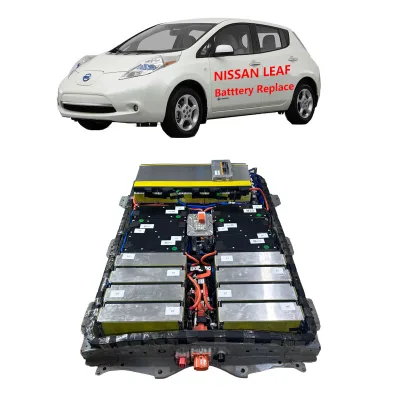
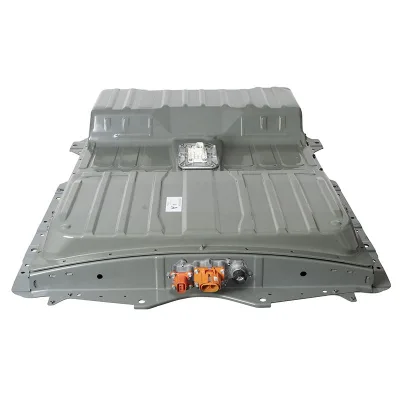
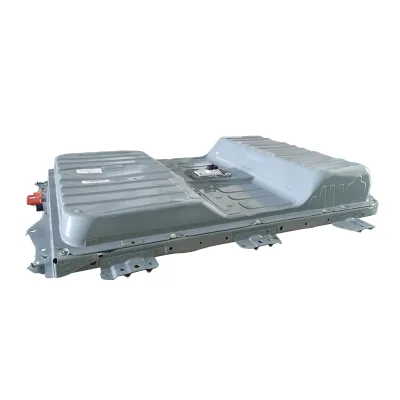
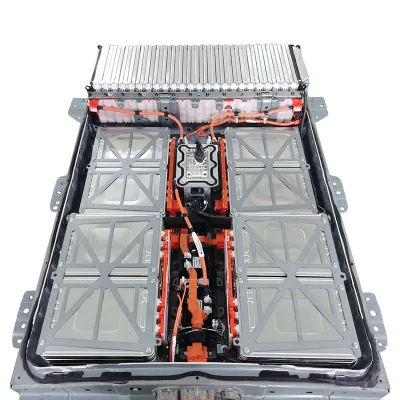
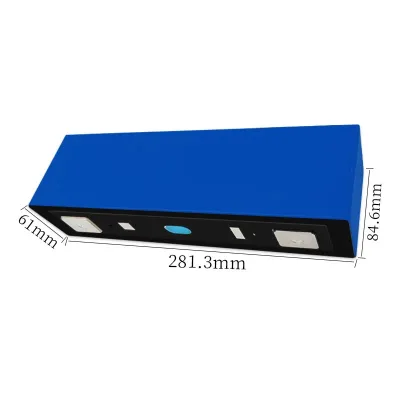


LiFePO4 Battery 12.8V 100ah 4s Battery Pack for E-Vehicle/Golf Cart/Solar Storage
$255.00 - $285.00
MOQ: 2 Pieces

Comprehensive Sourcing Guide
Strategic Sourcing Guide for Nissan Leaf Battery Pack Configurations
Procuring a Nissan Leaf battery pack with a 1P96S configuration requires a disciplined approach to verifying technical compatibility, safety certifications, and supply chain reliability. The 1P96S designation indicates a specific internal architecture where cells are arranged in one parallel string of 96 series-connected units. This configuration is critical for matching the voltage and capacity requirements of the original vehicle or compatible aftermarket applications. Buyers must navigate a market where product attributes vary significantly between listings, and where the distinction between genuine OEM components and aftermarket replacements is often blurred. This guide outlines the essential factors for evaluating potential suppliers and products, ensuring that the final procurement decision is grounded in verified data rather than marketing claims.
Technical Architecture and Specification Verification
The core of the sourcing process involves confirming that the physical and electrical specifications align with the 1P96S requirement. In a 1P96S setup, the battery pack must deliver a nominal voltage corresponding to 96 series-connected cells. For Lithium Iron Phosphate (LFP) chemistry, which is frequently cited in the available market data, the nominal voltage per cell is typically 3.2V, resulting in a pack voltage of approximately 307.2V. However, if the configuration utilizes Lithium Cobalt Oxide (ICR) or other chemistries, the voltage profile will differ. Buyers must explicitly verify the cell chemistry, as the provided market data shows a mix of LFP, ICR, and even Ni-MH/Ni-CD options, none of which are automatically interchangeable without significant engineering adjustments.
Capacity is another critical variable. The observed market data indicates a wide range of capacities, from standard 1500mAh cells to larger packs rated at 10.4Ah or 11.6Ah. For a 1P96S configuration intended for an electric vehicle, the capacity must be sufficient to meet the vehicle's range requirements. The data notes that some products have a rated capacity exceeding 1000mAh, while others specify exact values like 1500mAh. A buyer must calculate the total energy storage by multiplying the single-cell capacity by the number of parallel strings (which is one in a 1P configuration) and the number of series cells. Furthermore, the discharge rate is a vital performance metric. The market data distinguishes between "Low Discharge Rate" and "High Discharge Rate" options. A 1P96S pack for a vehicle requires a high discharge rate to support acceleration and regenerative braking; a low discharge rate product would be unsuitable for this application.
Physical dimensions and weight also play a role in integration. The data lists sizes ranging from "Medium" to "Large" and specific dimensions such as 43010040mm for certain models. The weight of a complete pack can be substantial, with some observed units weighing up to 4.550 Kg. Buyers must ensure that the physical footprint of the 1P96S pack fits within the designated battery tray of the Nissan Leaf or the target application, and that the weight does not compromise the vehicle's suspension or handling dynamics.
Compliance and Certification Standards
Safety and regulatory compliance are non-negotiable when sourcing high-voltage battery packs. The market data highlights several specific certifications and standards that serve as benchmarks for quality and safety. Products listed in the supply chain often reference UL1642, a standard specifically for lithium batteries, and IEC62133, which covers safety requirements for portable secondary cells and batteries. Additionally, CE, TUV, and RoHS certifications are frequently mentioned, indicating compliance with European safety and environmental directives.
When evaluating a potential supplier for a 1P96S configuration, buyers should demand proof of these certifications. It is important to note that the presence of a certification label on a product listing does not guarantee that every unit in a batch meets the standard. The data indicates that some products are certified while others may not be, and the "1P96S" configuration itself is a custom assembly that may require specific testing beyond the base cell certification. Buyers must verify that the specific 1P96S assembly has undergone the necessary safety tests, including overcharge, over-discharge, short circuit, and thermal abuse testing, as per the IEC62133 standard.
Furthermore, the data mentions a standard of "62g/cell" and "2.4V 1500mAh" for certain items. These specific values must be cross-referenced with the actual product specifications. If a supplier claims a 1P96S pack but the individual cells do not meet the required voltage or weight standards, the entire pack may be non-compliant. Buyers should request detailed test reports for the specific batch being purchased, rather than relying on generic certification statements. The "12 Months" or "1 Year" warranty periods mentioned in the data also serve as a proxy for supplier confidence, but they should be reviewed in conjunction with the technical compliance documentation.
Cost Drivers and Pricing Dynamics
The pricing for battery packs in the observed market ranges widely, from $0.95 to $5,849.88 USD. This vast disparity reflects differences in chemistry, capacity, brand, and certification status. For a 1P96S configuration, the cost is driven primarily by the number of cells required, the quality of the Battery Management System (BMS), and the level of integration. A pack with 96 high-quality LFP cells will cost significantly more than one using lower-grade ICR cells or older Ni-Cd technology.
The Minimum Order Quantity (MOQ) is another critical cost factor. The observed MOQ ranges from 1 to 5,000 units. Buyers seeking a single replacement pack may face higher per-unit costs due to the low MOQ, while those ordering in bulk can negotiate better rates. However, the data also notes that "Small Orders" are accepted by some suppliers, which is beneficial for prototyping or small fleet replacements. Customization is listed as "Available," which can add to the cost but is often necessary to achieve the precise 1P96S configuration required for a specific Nissan Leaf model year.
Buyers must be wary of prices that seem too low. A price point near the lower end of the observed range ($0.95) likely refers to individual cells or small accessories rather than a complete 1P96S pack. A complete, certified, and functional battery pack for an electric vehicle will typically fall in the mid-to-high range of the observed spectrum. The cost should also account for the "Charger Type" and "Socket Type" compatibility, as the data mentions specific requirements like "For E.U." sockets and "Electric Charger" types. Incompatible charging infrastructure can lead to additional hidden costs.
Typical Applications and Compatibility
While the core keyword specifies the Nissan Leaf, the market data reveals a diverse range of compatible battery types, including Li-ion, Ni-MH, and Ni-CD. This diversity suggests that many listings are generic battery packs that may require significant modification to function in a Nissan Leaf. The 1P96S configuration is highly specific to the voltage requirements of the Leaf's original battery system. Using a pack with a different series count or cell chemistry could result in BMS errors, reduced performance, or safety hazards.
The data lists "Compatible Battery Type" as "Recyclable:Recyclable" or "Non-Recyclable," which is an important consideration for end-of-life disposal. For a 1P96S application, the battery pack must be compatible with the vehicle's existing BMS communication protocols. The "Connection Mode" is listed as "Series Connection," which aligns with the 96S requirement, but the physical connectors and communication pins must match the vehicle's harness.
Applications for such a pack extend beyond the original vehicle. The data mentions "Standard Battery" applications and "Simple Charger" styles, suggesting that these packs could be repurposed for stationary energy storage or other electric mobility solutions. However, for a direct replacement in a Nissan Leaf, the buyer must ensure that the pack's "Charge Temperature" range, listed as -30°C to 45°C, covers the operating conditions of the intended use. The "Cycle Life" of 500 times, as noted in the data, is a baseline figure that should be verified for the specific 1P96S assembly, as cycle life can vary significantly based on the depth of discharge and charging habits.
Supplier Evaluation and Sourcing Strategy
Evaluating suppliers requires a focus on transparency and technical capability. The data indicates that the origin of these products is primarily "China," with specific mentions of "Shenzhen, China" as a production hub. While this is a common manufacturing center, buyers should verify the specific factory's capabilities regarding high-voltage battery assembly. The "OEM: Acceptable" attribute suggests that suppliers are willing to produce custom configurations, which is essential for the 1P96S requirement.
Buyers should prioritize suppliers who provide detailed product specifications, including the exact cell model (e.g., LFP22650-2000 or ICR18650), the BMS specifications, and the physical dimensions of the pack. The "Customization" availability is a strong indicator of a supplier's ability to meet specific 1P96S needs. However, buyers must be cautious of suppliers who offer "Recyclable:Non-Recyclable" options without clear explanation, as this could indicate a lack of quality control or the use of substandard materials.
The "Warranty" period is another key metric. The data shows warranties of "12 Months" or "1 Year." A supplier offering a longer warranty may have more confidence in their product's longevity, but the terms of the warranty must be clear regarding what is covered, such as cell failure, BMS malfunction, or physical damage. Buyers should also check the "Small Orders" policy to ensure that the supplier can accommodate their specific order size without excessive lead times or fees.
Quality Control and Long-Term Procurement
Quality control is paramount when dealing with high-voltage battery systems. The "Cycle Life" of 500 times is a standard metric, but buyers should request independent test results to verify this claim. The "Standard" of 18650 or 2.4V 1500mAh should be matched against the actual product to ensure consistency. The "prod_packing" details, such as "Carton" or "Paper Box with PE Bag," indicate the level of protection during shipping, which is crucial for preventing physical damage to the cells.
Long-term procurement considerations include the availability of spare parts and the supplier's ability to support the product over its lifecycle. The "Rechargeable" attribute is confirmed for most products, but the specific charging profile must be compatible with the vehicle's charging system. The "Charger Application" listed as "Standard Battery" suggests that generic chargers may be used, but for a 1P96S pack, a dedicated charger with the correct voltage and current limits is often required to prevent overcharging or undercharging.
Buyers should also consider the "Weight" of the pack, as heavier packs may require structural reinforcements in the vehicle. The "Size" classification of "Large" or "Prismatic" must be verified against the vehicle's battery compartment. Finally, the "Certification" status, including UL1642 and IEC62133, should be maintained throughout the procurement process to ensure that the product remains compliant with safety regulations. By adhering to these rigorous standards, buyers can secure a reliable 1P96S battery pack that meets the performance and safety requirements of the Nissan Leaf.
FAQs
What certifications are available for these battery packs?
Available certifications include UL1642, IEC62133, CE, TUV, and RoHS. These standards ensure safety for lithium-ion and lithium iron phosphate chemistries used in the packs.
Can I order small quantities of the battery packs?
Yes, small orders are accepted with a minimum order quantity ranging from 1 to 5000 units. This flexibility supports both prototyping and bulk procurement needs.
Which discharge rates are offered for these battery models?
Products are available with both low and high discharge rates. High discharge rates are typically required for electric vehicle applications to support acceleration and regenerative braking.
What is the warranty period for the battery packs?
The warranty period is typically 12 months or 1 year depending on the specific model. This coverage helps protect against early failures in the battery assembly.
How is the battery pack customized for specific needs?
Customization is available for specifications like model number, capacity, and dimensions. Suppliers can adjust the pack to match specific vehicle requirements or application constraints.
What is the cycle life of the lithium-ion battery packs?
The cycle life is rated at 500 times for the standard lithium-ion models. This metric indicates the number of charge-discharge cycles before capacity significantly degrades.
Which cathode materials are used in these battery packs?
Cathode materials include Lithium Iron Phosphate (LFP) and other lithium-ion chemistries. The specific material determines the voltage profile and safety characteristics of the cell.