Source Eaves Light for Christmas, Garden, and Party Decorations
Find and compare 30 Eaves Light options featuring LED technology, IP65 ratings, and remote control capabilities. These versatile lighting solutions support indoor and outdoor applications, including holiday decorations and garden settings, with customizable designs and solar or DC power inputs available for diverse sourcing needs.
Key considerations
Products List
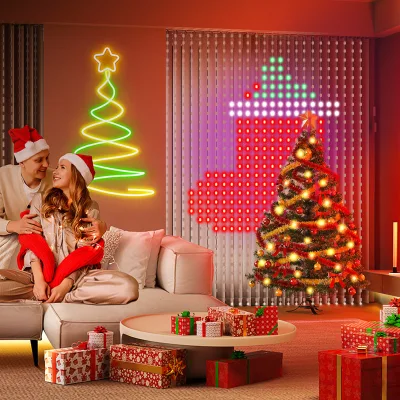


Ambient Light, Light String, Colored Light, Colorful String Lights, Night Light
$1.20 - $2.40
MOQ: 500 Pieces

Ambient Light, Colorful String Lights, Night Light, Decorative Light Romantic
$0.45 - $1.30
MOQ: 500 Pieces


Comprehensive Sourcing Guide
Eaves Light Sourcing Guide
The Eaves Light market presents a diverse array of solutions ranging from low-voltage decorative rope lights to specialized solar-powered fixtures designed for outdoor architectural integration. Based on observed listings, these products frequently serve dual purposes as holiday decorations and permanent outdoor lighting, with specific models featuring remote control capabilities and wireless operation. Buyers must distinguish between general decorative items intended for festivals and more robust units designed for industrial or garden applications, as the intended use case dictates the necessary durability and safety ratings.
Procurement decisions for eaves lighting require careful attention to the specific power source and environmental rating, as observed data indicates a split between DC 5V wired systems and solar-powered units with integrated batteries. The presence of IP65 ratings in some listings suggests water resistance suitable for outdoor exposure, while other entries highlight indoor or party decoration use, necessitating a clear definition of the installation environment. Understanding these distinctions is critical before engaging with suppliers, as the same product category can encompass vastly different technical requirements and performance expectations.
Product Scope and Observed Listing Signals
The observed product scope for eaves lighting includes specific configurations such as rope lights and holiday decoration lighting with dimensions ranging from 1x1 meters to 3x3 meters, alongside linear lengths of 2 meters or 3 meters. These items often feature LED light sources with a color temperature of 3500K, providing a warm white ambiance suitable for festive or residential settings. The market data also highlights the availability of customization services, allowing buyers to tailor dimensions or features to specific architectural needs, though the standard offerings typically focus on versatile, multi-function designs.
Listing signals indicate a wide variance in power consumption and control mechanisms, with some units operating at 1 watt while others support up to 5 watts, and control types ranging from remote control to solar input via micro-USB. Buyers should note that while some products are marketed for industrial use or garden applications, others are explicitly categorized for indoor or party decorations, requiring a verification of the specific application context for each SKU. The presence of features like "hanging" and "portable" suggests a design philosophy centered on ease of installation and flexibility, which is a key selling point for temporary or semi-permanent eaves installations.
Technical Specifications to Verify
When evaluating technical specifications, the input voltage and power source are primary verification points, as the market contains both DC 5V wired systems and solar-powered units utilizing 3.2V LiFePO4 batteries with 0.35W poly solar panels. It is essential to confirm the compatibility of the power source with the intended installation site, ensuring that the voltage matches the existing electrical infrastructure or that the solar panel provides sufficient charging capacity for the 500mAh battery. Additionally, the working temperature range of -30 to 50 degrees Celsius must be verified against local climate conditions to ensure reliable operation during extreme weather events.
Lighting performance metrics such as the Color Rendering Index (Ra) of 80 and lamp luminous flux of 375 lumens provide a baseline for visual quality, but buyers should verify these figures against the specific model number, such as VIR00589 or SF-1S, as performance can vary between product lines. The working lifetime of 50,000 hours is a significant specification that warrants confirmation through supplier documentation, as this figure directly impacts the total cost of ownership and maintenance schedules. Furthermore, the material composition, whether PVC, ABS, or PP, should be cross-referenced with the IP rating to ensure the housing material can withstand the specified environmental exposure without degradation.
Compliance and Safety Documentation
Compliance documentation for eaves lighting must include valid certifications such as CE, RoHS, and REACH, which are frequently cited in product listings but require independent verification for each batch. The presence of ISO standards and specific product standards like Inner Gift Box dimensions indicates a structured approach to manufacturing and packaging, yet buyers should request current test reports to confirm that the specific units being sourced meet these regulatory requirements. Safety is paramount, especially for outdoor applications, so verifying that the IP65 rating is backed by independent testing data is necessary to prevent water ingress and electrical hazards.
Documentation regarding the warranty period, typically listed as 1 year, should be reviewed alongside the supplier's policy on defect rates and replacement procedures. Buyers must ensure that the certification documents explicitly cover the specific model and voltage configuration being purchased, as certifications are often model-specific and may not automatically extend to customized variations. Additionally, the inclusion of lighting and circuitry design services suggests that the supplier may offer technical support, which should be formalized in the procurement agreement to ensure ongoing compliance and safety throughout the product lifecycle.
Cost Drivers and Commercial Terms
Cost drivers for eaves lighting are heavily influenced by the complexity of the power system, with solar-integrated units often commanding higher prices due to the inclusion of batteries, solar panels, and charge controllers compared to simple DC 5V wired versions. The MOQ (Minimum Order Quantity) varies significantly across the market, ranging from single items to 7000 units, with specific listings showing an MOQ of 1000 pieces, which can impact the unit price and overall budget for smaller procurement projects. Buyers should analyze the trade-off between lower MOQs and higher per-unit costs against the benefits of bulk purchasing, considering the storage and logistics implications of large orders.
Commercial terms must clearly define the packaging standards, such as standard export packing or carton packaging, as these affect shipping costs and the risk of damage during transit. The selling unit structure, whether single item or bulk, dictates the pricing model and should be aligned with the buyer's inventory strategy. Lead times and production capacity are critical factors that should be negotiated explicitly, as the observed data does not provide a universal lead time, and delays can disrupt project timelines for holiday or festival decorations.
Supplier Qualification and Quality Control
Supplier qualification should begin with a verification of their place of origin, noting that while some products list Guangdong or Shanghai as the origin, the actual manufacturing facility must be audited to ensure consistent quality control. The presence of certifications like CE and RoHS is a positive indicator, but buyers should request evidence of the supplier's quality management systems, such as ISO compliance, to ensure that the production process is standardized and reliable. It is also advisable to assess the supplier's capability for customization, as the ability to modify materials or dimensions often reflects a higher level of engineering competence and flexibility.
Quality control protocols must include pre-shipment inspections that verify critical attributes such as the IP rating, color temperature, and luminous flux against the agreed specifications. Buyers should establish clear acceptance criteria for the working lifetime and warranty terms, ensuring that the supplier is accountable for performance failures within the specified period. Regular communication regarding production progress and quality reports is essential to mitigate risks, particularly when sourcing from regions with varying levels of regulatory enforcement, and should be formalized in the purchase agreement.
Long-Term Procurement Checks
Long-term procurement checks should focus on the consistency of product performance over time, specifically monitoring the degradation of the LED light source and the battery capacity in solar-powered units. Since the working lifetime is specified as 50,000 hours, buyers should implement a system to track actual usage hours and compare them against expected performance to identify any premature failures or quality drifts. Regular audits of the supplier's quality control processes and certification renewals are necessary to ensure that the products continue to meet safety and compliance standards as regulations evolve.
Supply chain resilience is another critical aspect of long-term procurement, requiring buyers to assess the supplier's ability to maintain consistent material quality and production capacity during peak demand periods. The availability of spare parts and the supplier's responsiveness to warranty claims should be evaluated periodically to ensure that the procurement relationship remains sustainable. Finally, buyers should stay informed about technological advancements in LED efficiency and solar power integration to ensure that their eaves lighting solutions remain competitive and energy-efficient over the long term.
FAQs
What is the input voltage for these LED eaves lights?
The input voltage is DC 5V, ensuring safe operation for indoor and outdoor holiday decorations. This low voltage requirement allows for easy installation without complex wiring. The lights are designed to be portable and wireless, making them suitable for various festive settings. They support remote control for convenient operation. The system is powered by a rechargeable battery or solar input, providing flexibility for different installation environments.
Can these eaves lights be used in outdoor environments?
Yes, these lights are rated IP65, making them suitable for outdoor use in gardens and festivals. They can withstand temperatures ranging from -30 to 50 degrees Celsius. The PVC material ensures durability against weather elements. They are designed for holiday decorations and party settings. The wireless control feature allows for easy management of lighting effects in outdoor spaces without the need for nearby power outlets.
What certifications do these LED eaves lights have?
The products hold CE, RoHS, and REACH certifications, ensuring compliance with international safety and environmental standards. These certifications verify that the materials and manufacturing processes meet strict regulatory requirements. The lights are also associated with ISO standards for quality management. This ensures that buyers can trust the product's safety and reliability for both industrial and decorative applications. The certifications provide assurance for global sourcing and distribution.
What is the working lifetime of these eaves lights?
The working lifetime is 50,000 hours, providing long-term reliability for continuous use. This extended lifespan reduces the need for frequent replacements, making them cost-effective for large-scale decorations. The LED light source contributes to this durability. The lights are designed for holiday and festival applications where consistent performance is crucial. The 1-year warranty further supports the confidence in their longevity and quality for buyers.
How are these eaves lights powered?
They are powered by a 3.2V/500mAh LiFePO4 battery and can be charged via sunlight or DC Micro USB. A 0.35W/4.5V poly solar panel is included for solar charging options. This dual-power capability ensures they remain functional in various conditions. The battery supports the LED operation for extended periods. This setup allows for wireless installation in locations without direct electrical access, ideal for garden and holiday decor.
What customization options are available for these lights?
Customization is available for these eaves lights, allowing buyers to tailor specifications to their needs. The product supports lighting and circuitry design services to meet specific project requirements. Buyers can request custom packaging or specific model configurations. This flexibility is beneficial for large orders or unique decorative themes. The manufacturer offers support for custom branding or design adjustments to align with client specifications.