Source Eco-Friendly Biodegradable Bamboo Cutlery for Weddings Parties Hotels
Find 30 listings for eco-friendly biodegradable bamboo cutlery suitable for weddings, parties, and hotels. Buyers can compare customization options, sizes, and packaging specifications from verified suppliers in China.
Key considerations
Products List


Biodegradable Wooden Cutlery Eco-Friendly Customized Disposable Bamboo Cutlery
$0.02 - $0.02
MOQ: 50000 Pieces

Custom Eco Friendly Fork Knife Spoon Disposable Biodegradable Bamboo Cutlery
$0.02 - $0.02
MOQ: 50000 Pieces


Disposable Bamboo Cutlery Set Eco-Friendly Biodegradable Tableware Cutlery
$0.02 - $0.02
MOQ: 50000 Pieces

Biodegradable Spoon Fork and Knife Bamboo Cutlery Disposable Wooden Disposable Cutlery
$0.02 - $0.06
MOQ: 100000 Pieces


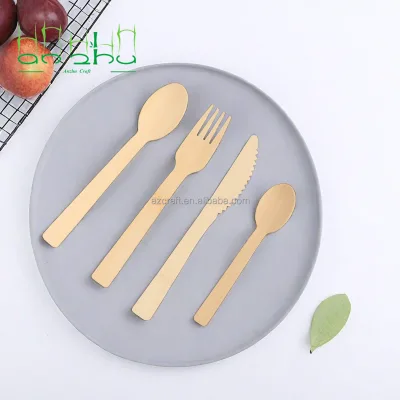


Any Color Customized Eco Cutlery PLA Compostable Biodegradable Disposable Cutlery
$0.01 - $0.02
MOQ: 20000 Pieces


Comprehensive Sourcing Guide
Strategic Sourcing Guide for Eco-Friendly Biodegradable Bamboo Cutlery
The global shift toward sustainable packaging and single-use alternatives has elevated the demand for eco-friendly biodegradable bamboo cutlery. For procurement professionals, sourcing this category requires a nuanced understanding of material variations, regulatory compliance, and supply chain logistics. Unlike synthetic plastics, bamboo offers a renewable profile, but the market is fragmented with varying definitions of "biodegradable" and inconsistent quality standards. This guide provides a disciplined framework for evaluating suppliers, verifying product specifications, and managing risks associated with bamboo cutlery procurement.
Material Composition and Product Variability
The foundation of any bamboo cutlery procurement strategy lies in the precise definition of the raw material. While the core keyword suggests "bamboo," the supply landscape often includes products labeled as "wood," "bamboo & wood," or "100% bamboo." These distinctions are critical for compliance and marketing claims. Sourcing data indicates that products may be listed as "100% Bamboo" or "Wood or Bamboo," with some specifications explicitly noting "Bamboo & Wood" blends. Buyers must verify the exact material composition to ensure it aligns with their sustainability goals and local regulations regarding biodegradability.
The product attributes observed in the market reveal a diverse range of item types, including knives, forks, spoons, flat forks, and sporks. Some listings specifically identify the product as "Wooden Cutlery" or "Disposable Bamboo Cutlery Set," while others include "Disposable Chopstick" as a related item. This variability suggests that a single supplier may offer a broad portfolio, but the material consistency across different SKUs must be confirmed. The color profile is predominantly "Natural Bamboo Color" or "Natural Color," often described as "Unicolor," which implies a lack of synthetic dyes. However, buyers should request visual samples to confirm that the natural hue is consistent and free from chemical treatments that might compromise the biodegradable claim.
Technical Specifications and Dimensional Standards
Precision in technical specifications is essential for operational compatibility, particularly in food service environments where cutlery must fit specific utensil holders or packaging lines. The observed market data presents a wide range of dimensions, with sizes commonly cited as 140mm, 160mm, 165mm, 170mm, and 105mm. Some specifications list these as standard options, while others emphasize "Customized" sizes, indicating that manufacturers can tailor dimensions to specific client needs.
The standardization of these items varies significantly. One set of data suggests a standard of "140mm/160mm," while another lists "165mm" as a specific standard, and yet another mentions a complex standard including "105mm 140mm 160mm spork, 70mm 95mm." This inconsistency highlights the need for buyers to define their exact dimensional requirements in the Request for Quotation (RFQ). Relying on generic "standard" sizes without verification can lead to mismatches in packaging or usage. Furthermore, the "prod_standard" field often notes that "different set has different size," reinforcing the necessity of a detailed specification sheet for every order.
Compliance, Certification, and Regulatory Verification
In the realm of eco-friendly disposables, certification is not merely a marketing asset but a regulatory necessity. The supply chain data reveals a mix of certifications, including BRC, BSCI, CE, MSDS, ISO9001, CE/EU, FDA, and LFGB. The presence of FDA and LFGB certifications is particularly relevant for food contact safety, ensuring the bamboo does not leach harmful substances. Similarly, BRC and ISO9001 indicate adherence to quality management systems and food safety standards.
However, the mere listing of these certifications does not guarantee that every specific batch of cutlery is certified. Buyers must treat these as potential attributes rather than universal guarantees. It is imperative to request valid, current certificates of analysis for the specific production run. The "MSDS" (Material Safety Data Sheet) is also a critical document to verify the chemical composition, ensuring no toxic preservatives or glues were used in the manufacturing process. For international trade, CE marking indicates conformity with health, safety, and environmental protection standards for products sold within the European Economic Area. Procurement teams should verify that the supplier can provide traceable documentation for each of these standards before finalizing a contract.
Cost Drivers and Minimum Order Quantity Analysis
Understanding the cost structure of bamboo cutlery is vital for budgeting and supply chain planning. The observed market data indicates a Minimum Order Quantity (MOQ) range that spans from 1 to 200,000 units. This wide variance suggests a market segmented between small-batch custom orders and massive volume contracts. Specific listings mention MOQs of 10,000 PCS or 150,000 PCS, while others indicate a flexible range starting at 1 unit.
The cost drivers for this product category include the raw material sourcing, the labor-intensive nature of bamboo processing, and the complexity of customization. Customization options, such as "Accept Customized Logo" or "Customized" sizes, typically incur additional costs and may affect the MOQ. The packaging specifications also play a role in cost; options range from simple "OPP Bag" or "Kraft Bag" to more robust "Carton Box" or "Woven Bag Packaging." The observed packaging density, such as "50PCS/Bag, 100bags/Carton" or "100PCS/Bag, 10bags/Carton," directly impacts shipping volume and logistics costs. Buyers should negotiate based on their specific volume needs, as higher volumes often allow for more favorable packaging configurations and unit pricing.
Supplier Evaluation and Operational Capabilities
When evaluating potential suppliers, buyers must look beyond the product listing to assess operational reliability. The origin of the products is consistently noted as "Anhui, China" or generally "China." While this provides a geographical baseline, it is crucial to verify the specific factory location and capacity. The "prod_origin" field confirms the location, but buyers should conduct due diligence on the supplier's production capacity to ensure they can meet demand spikes, especially for large orders like the 150,000 PCS MOQ observed in some listings.
Supplier capabilities regarding customization are a key differentiator. The data confirms that "Customization: Available" and "Customized Logo" are standard features. This allows brands to align the cutlery with their corporate identity. However, the ability to provide "Customized" sizes and packaging requires a robust engineering and design team. Buyers should assess the supplier's lead times for these customizations, as they often extend beyond standard production cycles. Additionally, the "Brand" field lists names like "Anzhu" and "Xizhu," but buyers should avoid relying solely on brand recognition and instead focus on the supplier's track record, financial stability, and ability to scale production.
Quality Control and Long-Term Procurement Strategy
Ensuring consistent quality in biodegradable products requires a rigorous quality control (QC) protocol. The "Feature" field highlights attributes like "Disposable Eco Friendly Stocked Biodegradable," but these claims must be validated through physical testing. Buyers should establish clear acceptance criteria for defects such as splinters, uneven cuts, or inconsistent coloring. The "Type" field mentions "Disposable Chopstick," which implies a focus on single-use integrity; the cutlery must not break under normal dining pressure.
For long-term procurement, building a relationship with a supplier who offers flexible packaging and consistent material quality is essential. The "Packaging" options, including "Paper Pack," "Carton," and "Customized" solutions, offer opportunities to reduce waste in the supply chain. A strategic approach involves negotiating a long-term agreement that locks in pricing for the "Natural Bamboo Color" and standard sizes while allowing for volume-based adjustments. Furthermore, buyers should consider the environmental impact of the packaging itself, ensuring that the "Carton Box" or "Woven Bag" is also sustainable.
Application Scenarios and Market Fit
The versatility of bamboo cutlery is evident in its wide range of applications. The "Place of Use" and "Application" fields list venues such as "Wedding/Party/Coffee Shop/Holiday," "Party.Home.Restaurant.Bar.Hotel.Wedding," and "Super Mar" (likely Super Market). This broad applicability means that the product can serve diverse sectors, from high-end hospitality to casual dining and retail. The "occasion" is noted as "All occasions," suggesting that the product is designed to be a universal alternative to plastic.
However, the suitability of the product depends on the specific use case. For example, a "Wedding" may require higher aesthetic standards and custom branding, while a "Coffee Shop" might prioritize cost-efficiency and standard sizing. The "Feature" of being "Biodegradable" is a strong selling point for events and venues with strict sustainability mandates. Buyers should align their procurement strategy with the specific demands of their end-users, ensuring that the cutlery's durability and appearance meet the expectations of the target market.
Comparative Overview of Product Attributes
To facilitate decision-making, the following table summarizes the key attributes observed in the market data, highlighting the variability that buyers must navigate.
| Attribute Category | Observed Variations | Procurement Consideration |
|---|---|---|
| Material | 100% Bamboo, Wood or Bamboo, Bamboo & Wood | Verify exact composition for biodegradability claims. |
| Size | 140mm, 160mm, 165mm, 170mm, 105mm, Customized | Define exact dimensions in RFQ; standards vary by SKU. |
| Certifications | BRC, BSCI, CE, MSDS, ISO9001, FDA, LFGB | Request valid certificates for specific production batches. |
| MOQ | 1, 10,000, 150,000, up to 200,000 | Align order volume with supplier capacity and cost tiers. |
| Packaging | OPP Bag, Kraft Bag, Carton, Customized, Woven Bag | Optimize for logistics and sustainability goals. |
| Customization | Logo, Size, Packaging, Color | Confirm lead times and costs for custom requests. |
| Origin | Anhui, China; General China | Verify factory location and supply chain transparency. |
In conclusion, sourcing eco-friendly biodegradable bamboo cutlery requires a meticulous approach to specification, compliance, and supplier selection. By focusing on the tangible attributes of material, size, and certification, and by avoiding assumptions about universal standards, buyers can build a resilient supply chain that meets both operational and sustainability objectives. The market offers significant flexibility, but success depends on rigorous verification and clear communication of requirements.
FAQs
What materials are used for eco-friendly biodegradable bamboo cutlery?
Products are made from 100% bamboo, wood, or a blend of bamboo and wood. Buyers must verify the exact composition to ensure it aligns with specific sustainability goals and local biodegradability regulations.
Which certifications ensure food safety for bamboo cutlery suppliers?
Common certifications include FDA, LFGB, BRC, ISO9001, and CE. Buyers should request valid certificates for specific production batches to confirm compliance with food contact safety and quality management standards.
How can buyers customize the size and logo of bamboo cutlery?
Suppliers offer customized sizes like 140mm or 170mm and accept customized logos. Customization options typically incur additional costs and may extend lead times compared to standard production cycles.
What is the typical minimum order quantity for bamboo cutlery?
MOQs vary significantly from 1 unit up to 200,000 units depending on the supplier. Specific listings often require orders of 10,000 or 150,000 pieces, so volume needs must be confirmed early.
Where are eco-friendly biodegradable bamboo cutlery products manufactured?
Products originate from Anhui, China, or other regions within China. Buyers should verify the specific factory location and capacity to ensure the supplier can meet large order demands reliably.
Can bamboo cutlery be used for weddings and coffee shops?
Yes, these items are suitable for weddings, parties, coffee shops, hotels, and supermarkets. The natural bamboo color and biodegradable features make them versatile for diverse dining and event applications.