Find Foldable Portable Visualizer with LED Light for Business, Teaching, Home
Source 30 Foldable Portable Visualizer with LED Light models from Chinese manufacturers. Compare specifications including resolution, sensor types, and scan sizes for business, teaching, and home applications.
Key considerations
Products List


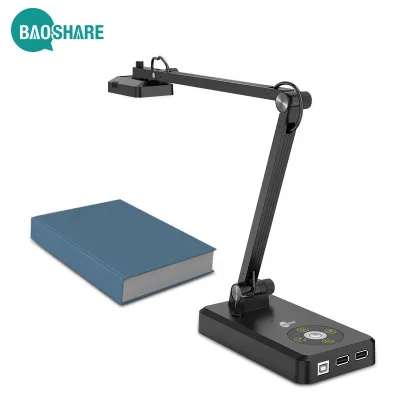
School Standard 4K Document Camera Visualizer with Foldable Structure and LED Light
$108.00 - $120.00
MOQ: 1 Pieces



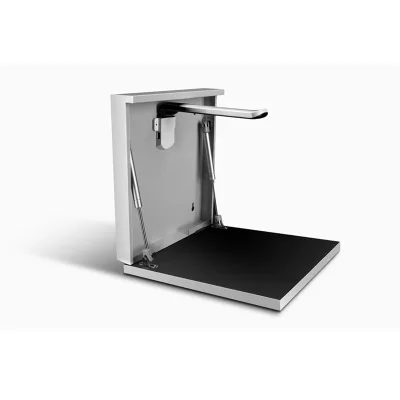
Cheap Portable Monitor, Multifunction Monitor, Monitor, Precision Monitor
$330.00 - $350.00
MOQ: 1 Pieces


Comprehensive Sourcing Guide
Sourcing Guide for Foldable Portable Visualizers with LED Light
The global demand for foldable portable visualizers equipped with LED lighting has surged as educational institutions and corporate training centers seek versatile, space-saving display solutions. These devices, often referred to as document cameras or interactive projectors, bridge the gap between physical materials and digital projection. For procurement professionals, navigating this market requires a disciplined approach to verifying technical capabilities, ensuring regulatory compliance, and understanding the specific cost drivers associated with high-resolution imaging and portability. This guide provides a structured framework for sourcing these devices, grounded in observed market data and essential technical verification steps.
Understanding Core Technical Specifications
When evaluating foldable portable visualizers, the primary differentiator lies in the imaging sensor and resolution capabilities. The market offers a spectrum of performance tiers, ranging from entry-level 2-megapixel sensors to high-end 16-megapixel units. Buyers must scrutinize the resolution specifications to ensure they align with their display requirements. For instance, models supporting 4K resolution (3840*2160) are critical for environments requiring fine detail visibility, such as teaching intricate diagrams or inspecting small components in business settings. These high-resolution units often operate at frame rates of 30 frames per second (fps), ensuring smooth video transmission without lag.
Conversely, lower-tier models may offer 1080p resolution (19201080) with frame rates of 30 fps, which are sufficient for general presentations but may lack the clarity needed for detailed text analysis. Some advanced units boast 16-megapixel sensors capable of capturing 46083456 resolution, providing exceptional detail for archival or high-precision applications. The frame rate for these ultra-high-resolution models can vary, with some operating at 10 fps when pushing maximum resolution limits. It is essential to verify the sensor type; while some units utilize standard CMOS sensors, others specify proprietary standards like Sony CMOS, which can impact color accuracy and low-light performance.
The physical construction also dictates portability and durability. Materials range from lightweight plastics to robust metals. Plastic casings are common in budget-friendly, highly portable models, whereas metal construction is often found in professional-grade units designed for frequent transport and heavy usage. The folding mechanism itself is a critical feature; buyers should verify that the device supports A3 and A4 scan sizes, as this determines the maximum document or object that can be captured without cropping. Additionally, the inclusion of LED lighting is standard, but the intensity and color temperature of these lights must be adjustable to prevent glare and ensure consistent illumination of the subject.
Compliance and Certification Verification
In the B2B procurement landscape, regulatory compliance is non-negotiable. Devices intended for international distribution or use in regulated sectors must adhere to specific safety and environmental standards. Observed market data indicates that reputable manufacturers typically certify their visualizers with CE, FCC, and RoHS marks. The CE mark signifies conformity with health, safety, and environmental protection standards for products sold within the European Economic Area. FCC certification is mandatory for electronic devices sold in the United States, ensuring that the product does not emit harmful levels of electromagnetic interference.
RoHS (Restriction of Hazardous Substances) compliance is equally critical, as it restricts the use of specific hazardous materials in electrical and electronic equipment. Beyond these core certifications, some suppliers may provide additional documentation, such as ISO 9001 for quality management systems or ISO 4001 for environmental management. While these are not always mandatory for the product itself, they indicate a supplier's commitment to consistent manufacturing processes and environmental responsibility.
Buyers must also verify the origin of the product. Many visualizers are manufactured in China, with specific production hubs in cities like Shenzhen. While this is a common origin for electronics, it necessitates rigorous due diligence to ensure that the supply chain is transparent and that the products meet the claimed standards. Procurement teams should request valid certification documents directly from the supplier rather than relying on marketing claims. The presence of a "Standard" field listing specific certifications like "CE, ROHS FCC" or "CE, FCC, ISO9001, ISO4001, ROHS" should be cross-referenced with official databases to confirm validity.
Cost Drivers and Pricing Dynamics
The pricing of foldable portable visualizers is influenced by a complex interplay of factors, including sensor resolution, build material, and feature set. The observed market price range spans from approximately $1 to $899, reflecting the vast diversity in product quality and capability. Entry-level models with 2-megapixel sensors and plastic casings tend to occupy the lower end of this spectrum. These units are often suitable for basic classroom demonstrations or small business meetings where high-fidelity imaging is not a priority.
As specifications increase, so does the cost. Models featuring 8-megapixel or 16-megapixel sensors, metal construction, and 4K resolution command premium prices. The inclusion of advanced features such as 1000x digital zoom or 12x digital zoom further elevates the cost. Additionally, the interface type plays a role; units supporting multiple connection options like USB, VGA, and HDMI offer greater versatility and may be priced higher than those with a single USB interface.
Minimum Order Quantity (MOQ) is another significant cost driver. The observed MOQ range spans from 1 unit to 600 units. For small businesses or pilot programs, suppliers offering an MOQ of 1 allow for low-risk testing and evaluation. However, larger organizations seeking volume discounts may face higher MOQs, often requiring orders of 100 units or more to access tiered pricing. Buyers should also consider the packaging requirements; standard carton packing is common, but custom packaging solutions may incur additional costs and affect the overall unit price.
Typical Applications and Usage Scenarios
Foldable portable visualizers with LED lights serve diverse applications across education, business, and technical training sectors. In the educational environment, these devices are indispensable for teachers who need to display physical textbooks, worksheets, or three-dimensional objects to a large audience. The ability to scan A4 and A3 sizes ensures that standard paper formats and larger charts can be projected clearly. The high-resolution capabilities allow students to see fine print and detailed illustrations, enhancing the learning experience.
In business settings, these visualizers are used for presentations, contract reviews, and quality control inspections. The 4K resolution and high frame rates ensure that financial documents and product prototypes are displayed with clarity and fluidity. The portability of the foldable design makes them ideal for mobile sales teams or consultants who travel frequently between client sites. The LED lighting is particularly useful in environments with poor ambient lighting, ensuring that the subject is always well-illuminated regardless of the room conditions.
Teaching and training applications also benefit from the digital zoom capabilities. Some models offer up to 1000x digital zoom, allowing instructors to focus on minute details of a specimen or a mechanical part. This feature is crucial for specialized training in fields like biology, engineering, or electronics repair. The versatility of the interface types, including USB and HDMI, allows for seamless integration with existing projection systems and interactive whiteboards, making these devices a central component of modern digital classrooms and conference rooms.
Supplier Evaluation and Quality Control
Selecting the right supplier requires a comprehensive evaluation of their technical capabilities, production standards, and quality control processes. Buyers should prioritize suppliers who provide detailed product specifications, including the exact sensor model, resolution, and frame rate. The presence of specific product models, such as the FT-G800-16M or SS-12MPA3, indicates a structured product line, which is a positive sign of a mature manufacturing operation.
Quality control should be a central part of the supplier assessment. Buyers must verify that the supplier adheres to recognized standards like ISO 9001. This certification suggests that the supplier has a documented quality management system in place to ensure consistent product quality. Additionally, the use of high-quality materials, such as metal construction for durability or Sony CMOS sensors for superior image quality, should be confirmed through technical datasheets or sample testing.
The customization options available from the supplier are also a key evaluation criterion. Many manufacturers offer customization services, including logo printing, color variations (such as Silver, Black, or White), and custom packaging. This flexibility allows buyers to brand the devices for their specific organizational needs. However, buyers should be cautious of suppliers who promise extensive customization without clear lead times or minimum order requirements.
Long-Term Procurement Considerations
Sourcing foldable portable visualizers is not just about the initial purchase; it involves long-term considerations regarding maintenance, support, and scalability. Buyers should evaluate the supplier's after-sales support, including warranty terms, availability of spare parts, and technical assistance. The durability of the folding mechanism and the longevity of the LED lights are critical factors that will impact the total cost of ownership over time.
Scalability is another important aspect. As an organization grows, the need for additional units may arise. Suppliers with flexible MOQs and the ability to scale production quickly can support this growth without significant delays. The standardization of models across the organization can also simplify training and maintenance. For example, if a school district adopts a specific model with a known interface and resolution, it becomes easier to train staff and troubleshoot issues.
Finally, buyers should consider the future-proofing of their investment. As display technologies evolve, the visualizer must remain compatible with new projection systems and software. Support for multiple interface types and high-resolution standards ensures that the device will remain relevant for years to come. By focusing on these long-term factors, procurement professionals can make strategic decisions that deliver value and reliability over the lifecycle of the product.
Comparative Analysis of Key Models
To assist in decision-making, the following table compares key attributes of observed product models in the market. This comparison highlights the differences in resolution, sensor capacity, and scan size, which are critical for matching the right device to specific needs.
| Product Model | Resolution | Frame Rate | Image Sensor | Max Scan Size | Material | Color Options |
|---|---|---|---|---|---|---|
| FT-G800-16M | 4608*3456 | 10fps | 16 Mega Pixels | A4 | Plastic | Silver+Black |
| FT-F702H | 3840*2160 | 30fps (Max) | 8 Mega Pixels | A3 | N/A | Black |
| FT-F707 | 1920*1080 | 30fps | 2 Mega Pixels | A3 and Below | N/A | N/A |
| FT-F705 | 3840*2160 | 20fps | 1/2.8" CMOS | N/A | N/A | White, Black |
| SS-12MPA3 | N/A | N/A | 12MP | A3 | Metal | Silver |
| SS-515 | N/A | N/A | 5-Megapixel | N/A | N/A | N/A |
Note: Data is derived from observed product listings. Some specifications like frame rate or material may vary based on specific configuration or production batch.
This table serves as a reference point for buyers to quickly identify models that meet their resolution and size requirements. However, it is essential to conduct further due diligence to confirm the exact specifications and availability of each model before making a final procurement decision.
FAQs
What resolutions are available for foldable portable visualizers with led light?
Available resolutions include 4608*3456, 3840*2160, and 1920*1080. Higher resolutions like 4608*3456 often operate at 10fps, while 3840*2160 can reach 30fps depending on the specific model configuration.
Which certifications do these visualizers typically hold?
Most models carry CE, FCC, and RoHS certifications. Some manufacturers also provide ISO9001 and ISO4001 standards for quality and environmental management, ensuring compliance for international markets.
Can I customize the color and packaging of these devices?
Yes, customization is available for colors like Silver, Black, and White. Custom packaging options are also supported, allowing buyers to tailor the product presentation to their specific branding needs.
What is the maximum scan size supported by these units?
The maximum scan size varies by model, with options supporting A4, A3, or both. Some high-end units explicitly support A3 and below, ensuring flexibility for different document sizes.
How many megapixels do the image sensors in these visualizers have?
Image sensors range from 2 megapixels to 16 megapixels. Specific models feature 16MP sensors for ultra-high detail, while others utilize 8MP or 5MP sensors for standard business and teaching applications.
What interface types are supported for connectivity?
Supported interfaces include USB, VGA, and HDMI. Some models offer multiple connection options for versatility, while others may rely primarily on USB for simpler integration with computers and projectors.
Where are these foldable portable visualizers manufactured?
Products originate from China, with specific production hubs in Shenzhen. Buyers should verify the origin details to ensure supply chain transparency and alignment with their sourcing requirements.