Source eco-friendly car ac odor eliminator for AC Clean, Deeply Cleaning, Multi-purpose
Find 30 eco-friendly car ac odor eliminator options from verified Chinese manufacturers. Buyers can compare specifications like capacity, propellant type, and customization features for AC cleaning and air conditioning system maintenance needs.
Key considerations
Products List


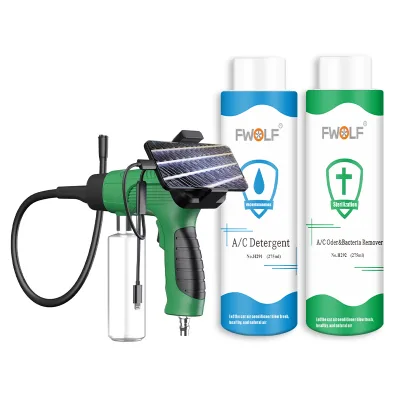


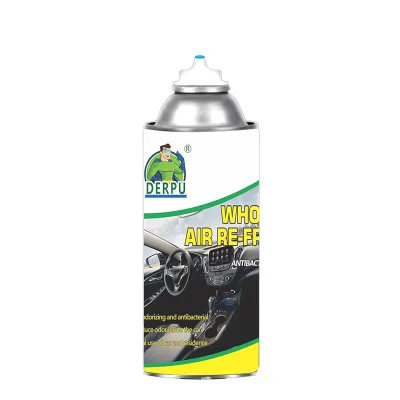
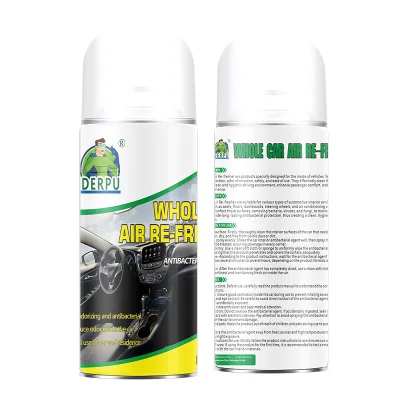


Wholesale Air Freshener Long Lasting Odor Eliminator Spray for Home & Car
$0.93 - $1.12
MOQ: 3000 Pieces


Comprehensive Sourcing Guide
Strategic Sourcing Guide for Eco-Friendly Car AC Odor Eliminator Solutions
Procuring an eco-friendly car AC odor eliminator requires a nuanced understanding of the intersection between chemical efficacy, environmental compliance, and supply chain reliability. In the B2B marketplace, buyers must navigate a landscape where "eco-friendly" is often a marketing descriptor rather than a verified technical specification. This guide provides a disciplined framework for evaluating potential suppliers and products, ensuring that procurement decisions are grounded in observable product attributes and verifiable supply chain data rather than unverified claims. The focus remains on identifying products that effectively eliminate odors within automotive air conditioning systems while adhering to sustainability principles and safety standards.
Technical Specifications and Chemical Composition
The foundation of a successful procurement strategy lies in a rigorous analysis of the product's technical specifications. When sourcing an air conditioning cleaner, the chemical base is the primary determinant of performance and safety. The available market data indicates a prevalence of water-based liquid formulations, which generally align with eco-friendly objectives by reducing reliance on volatile organic compounds (VOCs) found in solvent-heavy alternatives. Buyers should verify that the product is explicitly categorized as a "Water-Based Liquid" to ensure compatibility with modern HVAC components and to minimize environmental impact.
The physical state of the product is equally critical. Most effective solutions in this category are delivered as aerosols, utilizing propellants such as LPG (Liquefied Petroleum Gas) or a combination of LPG and DME (Dimethyl Ether). These propellants are selected for their ability to deliver the cleaning agent deep into the evaporator core and ductwork. However, the specific propellant choice can influence the product's environmental footprint and flammability classification. Procurement teams must confirm the exact propellant type listed on the product datasheet, as "LPG/Dme" mixtures may offer different performance characteristics compared to pure LPG formulations.
Volume and capacity are significant variables that dictate the application method and cost-per-use. Observed product ranges include capacities from 300ml to 1000ml, with specific models available in 220ml, 300ml, 400ml, and 500ml configurations. The choice of volume often correlates with the intended application: smaller units (e.g., 220ml or 300ml) are typically designed for spot treatments or single-vehicle applications, while larger capacities (500ml+) may be preferred for fleet maintenance or commercial detailing operations. Additionally, the pH level of the cleaning agent is a vital safety parameter. While some products are neutral, others may be formulated with a base pH. Buyers must verify the pH specification to ensure the chemical will not corrode aluminum fins or damage rubber seals within the AC system.
Compliance, Certification, and Environmental Claims
The term "eco-friendly" in the automotive cleaning sector is frequently used loosely, making independent verification essential. While some suppliers may reference broad environmental standards such as ISO9001 or ISO14001, these are management system certifications and do not guarantee the specific chemical composition of the product is non-toxic or biodegradable. Therefore, buyers should not rely solely on the presence of these logos on a supplier's website. Instead, the focus must be on material composition and specific product attributes.
Key attributes to verify include the "Material" designation, which should explicitly state "Environment Friendly" or similar phrasing supported by the supplier's technical data sheet. The product's odor profile is another indicator of its chemical nature; a "Light Alcohol Smell" suggests the presence of alcohol-based solvents, which are generally considered safer and more biodegradable than harsh petroleum distillates. However, the presence of an odor does not confirm the absence of harmful VOCs.
Buyers must also scrutinize the expiration date, which is a critical factor in product stability and safety. Data indicates a standard expiration period of 3 years for these formulations. Using a product beyond this date can lead to separation of ingredients, loss of efficacy, or the development of hazardous byproducts. Furthermore, the packaging standards should be reviewed. Products are often shipped in cartons on pallets, and the single package size (e.g., 16x5.5x19.5 cm) impacts logistics costs and storage efficiency. Ensuring that the packaging is designed for sustainability, such as recyclable cartons, adds another layer to the eco-friendly assessment.
Cost Drivers and Pricing Dynamics
Understanding the cost structure of eco-friendly car AC odor eliminators is vital for budgeting and margin analysis. The observed price range in the market is exceptionally broad, spanning from $0.38 to $5,000. This variance is not indicative of a single product type but rather reflects the diversity of SKUs, from single-unit retail packs to bulk industrial shipments or specialized kits. A price of $0.38 likely represents a single unit in a high-volume order, whereas the upper end of the range may include complete advanced kits with multiple components, specialized application tools, or custom branding services.
The Minimum Order Quantity (MOQ) is a primary driver of unit cost. The market data shows an MOQ range from 1 piece to 30,000 pieces. Suppliers often offer tiered pricing structures where the unit cost decreases significantly as the order volume increases. For instance, a specific model may have an MOQ of 120 pieces, which serves as a threshold for wholesale pricing. Buyers must calculate the total landed cost, including the MOQ requirement, shipping, and any customization fees, to determine the true cost per unit.
Customization is a significant cost factor. Many suppliers offer logo customization and the ability to design new packaging. While this adds value for brand building, it often incurs additional setup fees and may require a higher MOQ to be economically viable. The "Style" of the product, such as "New China-Chic," may also influence the aesthetic cost, though this is less relevant for B2B bulk buyers focused on utility.
Typical Applications and Functional Performance
The functional scope of these products extends beyond simple odor masking. The primary application is the cleaning of the car air conditioning system, specifically targeting the evaporator and ductwork where mold, mildew, and bacteria accumulate. The product is described as having a "Deeply Cleaning" function, which implies a formulation capable of penetrating the tight spaces of the AC coil to remove organic buildup that causes odors.
The "Use" category is often listed as "Multi-purpose," suggesting versatility in application. However, for AC systems, the specific "Application" field is more precise, listing "Car Air Conditioning System" or "AC Clean." It is crucial to distinguish between general car cleaning chemicals and those specifically engineered for AC systems. General cleaners may not have the necessary surfactants or antimicrobial agents to effectively treat the AC evaporator.
Furthermore, the product type is sometimes categorized as "Without Dewaxing Car Cleaning Chemical," indicating that the formula is designed not to remove wax from painted surfaces, which is beneficial for detailing applications where the cleaner might come into contact with the vehicle's exterior. The "Function" of the product is to eliminate odors, but buyers should verify if the product also claims to kill bacteria or mold, as this is a common secondary benefit of AC cleaners. The "State" of the product as an aerosol ensures that the liquid can be sprayed into the intake vents, reaching areas that liquid application cannot.
Supplier Evaluation and Verification
Evaluating suppliers requires a focus on transparency and the ability to provide verifiable data. The "Place of Origin" is a key indicator of supply chain logistics and potential regulatory compliance. Data points to origins in Guangdong and Qingdao, China, which are major manufacturing hubs for automotive chemicals. Buyers should verify the specific factory location to assess shipping lead times and import regulations.
The "Brand Name" and "Model Number" are essential for tracking specific products. For example, models like "AIR251312404," "AIR251312405," "NO.H290," and "YQ-C-0062" represent distinct product lines with potentially different formulations. Buyers should request technical data sheets for each specific model number to compare attributes such as pH, volume, and propellant type.
Supplier reliability is also measured by their packaging and shipping capabilities. The "Product Packing" is typically listed as "Carton" or "Carton/Pallet," and the "Single Gross Weight" (e.g., 0.860 kg) is critical for freight calculations. Suppliers who can provide consistent packaging standards and accurate weight data are more likely to be reliable partners. Additionally, the "Selling Units" being listed as "Single item" suggests that the supplier is flexible with order sizes, which can be advantageous for testing new products before committing to large volumes.
Quality Control and Long-Term Procurement Considerations
Establishing a robust quality control (QC) process is essential for maintaining product consistency. Buyers should implement a protocol that includes verifying the "Expiration Date" on every batch received, ensuring that the product has not degraded. The "Color" of the liquid, often listed as "Clear" or "Mixed Color," should be consistent with previous orders; any deviation could indicate contamination or formulation changes.
Long-term procurement considerations involve the stability of the supply chain. The "Standard" for the product, such as "400ml" or "500ml," should remain consistent to avoid confusion in inventory management. If a supplier changes the "prod_standard" or "prod_model," it could affect the compatibility of the product with existing application equipment. Buyers should also monitor the "Customization" capabilities of the supplier. If a buyer requires custom branding, the supplier must demonstrate the ability to maintain the "Eco-friendly" claims while applying new logos or packaging designs.
Finally, buyers should consider the "Feature" of the product, such as "Eco-friendly," as a long-term differentiator. As environmental regulations tighten, products that can substantiate their eco-friendly claims with material safety data sheets (MSDS) and third-party testing will become more valuable. The "Odor" profile, specifically the "Light Alcohol Smell," should be evaluated for its acceptability in different market segments; some customers may prefer odorless products, while others find the alcohol scent indicative of effective cleaning.
Comparative Analysis of Product Attributes
To facilitate decision-making, the following table summarizes key attributes observed in the market for eco-friendly car AC odor eliminators. This comparison highlights the variability in specifications that buyers must navigate.
| Attribute | Observation Range / Specific Values | Procurement Implication |
|---|---|---|
| Chemical Type | Water-Based Liquid | Preferred for eco-friendly status; verify VOC content. |
| State | Aerosol | Requires propellant verification (LPG vs. LPG/Dme). |
| Capacity | 220ml - 1000ml (e.g., 300ml, 400ml, 500ml) | Determines application scope and unit cost. |
| Propellant | LPG or LPG/Dme | Affects flammability and environmental impact. |
| pH Level | Neutral or Base | Critical for preventing corrosion of AC components. |
| Expiration | 3 Years | Standard shelf life; check batch dates upon receipt. |
| MOQ | 1 - 30,000 pcs (e.g., 120 pcs specific model) | Influences initial investment and cash flow. |
| Origin | Guangdong, China; Qingdao, China | Impacts lead time and import duties. |
| Packaging | Carton/Pallet; Single item | Affects logistics and storage requirements. |
| Function | Deeply Cleaning, AC Clean | Confirms suitability for evaporator treatment. |
In conclusion, sourcing an eco-friendly car AC odor eliminator requires a meticulous approach that prioritizes verified technical data over marketing claims. By focusing on the chemical composition, propellant type, and specific model attributes, buyers can ensure they are acquiring products that are both effective and environmentally responsible. The broad range of prices and MOQs necessitates a tailored procurement strategy that aligns with the buyer's specific volume needs and budget constraints. Ultimately, the success of the procurement lies in the ability to distinguish between genuine eco-friendly formulations and those that merely use the term as a label, ensuring that the final product delivers on its promise of deep cleaning and odor elimination without compromising safety or sustainability.
FAQs
What is the typical capacity range for eco-friendly car ac odor eliminators?
The typical capacity ranges from 300ml to 1000ml, with specific models available in 220ml, 400ml, and 500ml configurations. Buyers should verify the exact volume on the product datasheet to ensure it matches their application needs, whether for single-vehicle spot treatments or fleet maintenance operations.
Can these products be customized with a buyer's logo and packaging?
Yes, customization is available for both logos and packaging design. Suppliers offer options to design new packaging or provide custom branding, though this often requires meeting specific minimum order quantities to be economically viable for the buyer.
Which propellants are commonly used in these aerosol car ac cleaners?
Common propellants include LPG or a combination of LPG and DME. These gases are selected to deliver the water-based liquid deep into the evaporator core, but buyers must confirm the specific type on the datasheet to assess flammability and environmental impact.
How long is the expiration date for these air condition cleaning chemicals?
The standard expiration date for these formulations is three years. Using the product beyond this period can lead to ingredient separation, loss of cleaning efficacy, or the development of hazardous byproducts, making batch verification essential for safety.
What is the pH level of the car cleaning chemical formulations available?
Available formulations include both neutral and base pH levels. Buyers must verify the specific pH specification on the product sheet to ensure the chemical will not corrode aluminum fins or damage rubber seals within the air conditioning system.
Which locations are the primary origins for these eco-friendly cleaning products?
Primary origins include Guangdong and Qingdao in China, which are major manufacturing hubs for automotive chemicals. Buyers should verify the specific factory location to assess shipping lead times and ensure compliance with local import regulations.