Source Eco-Friendly Cardboard Advent Calendar for Gifts, Decoration, and Office
Compare 30 listings for eco-friendly cardboard advent calendar options featuring customizable sizes, hot stamping, and lamination. Buyers can evaluate suppliers offering FSC-certified materials, various insert types, and bulk pricing for arts, crafts, and promotional use.
Key considerations
Products List


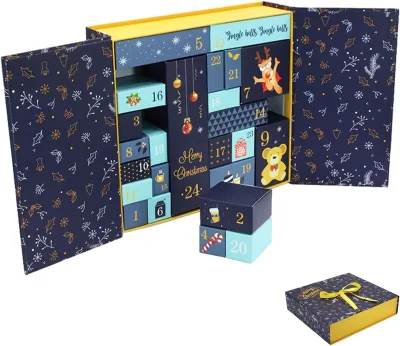
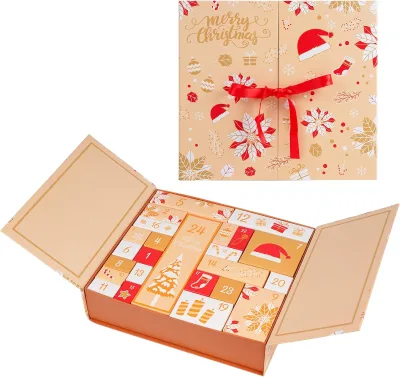
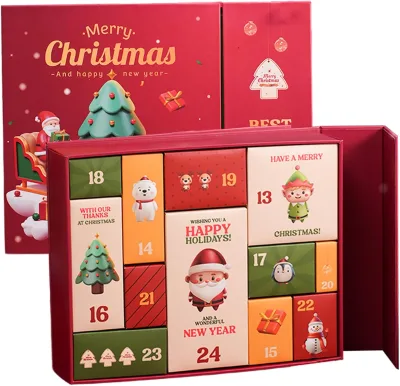

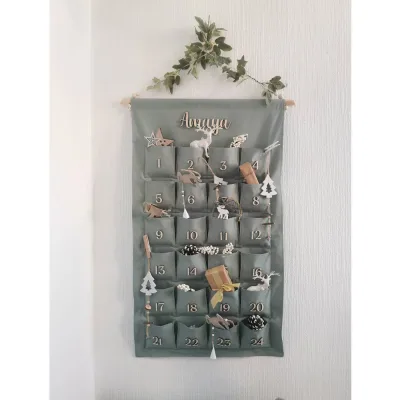


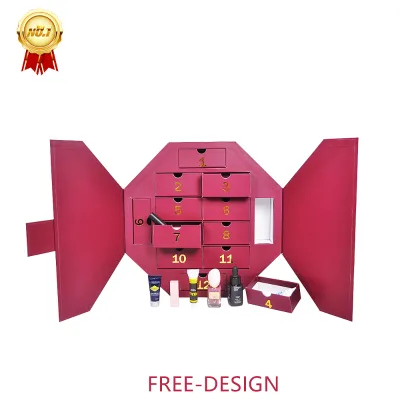
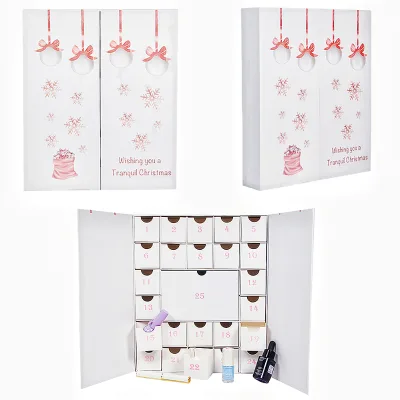
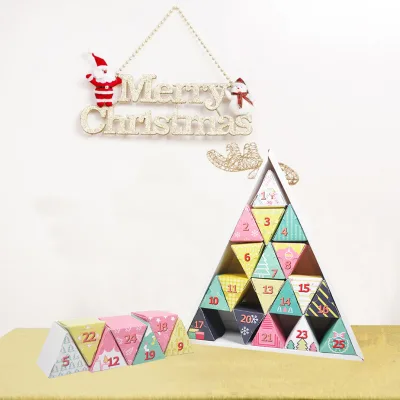

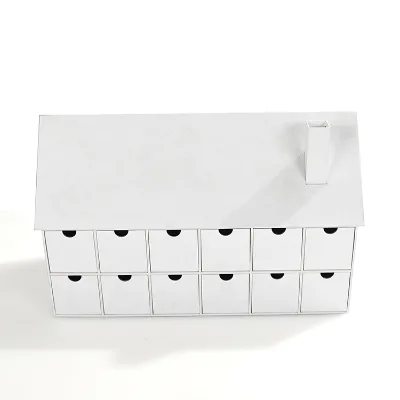
Comprehensive Sourcing Guide
Sourcing Guide for Eco-Friendly Cardboard Advent Calendars
Understanding Product Specifications and Material Composition
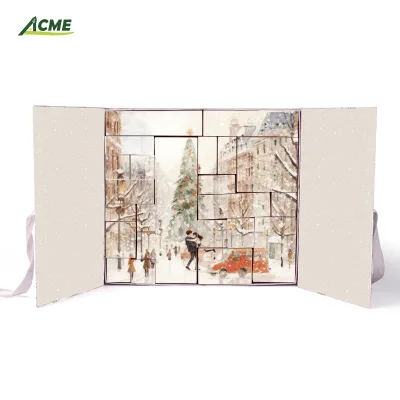
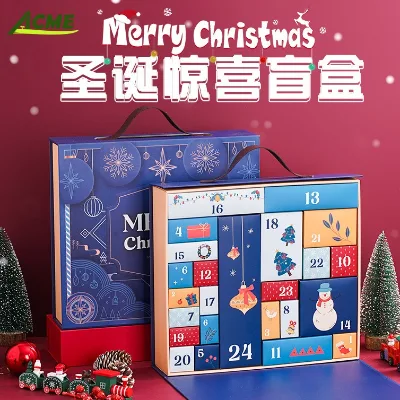
When sourcing an eco-friendly cardboard advent calendar, buyers must first distinguish between the structural requirements of the packaging and the functional needs of the calendar itself. The core material is consistently identified as cardboard, specifically noted for being recyclable and environmentally friendly. This aligns with the growing demand for sustainable packaging solutions that minimize environmental impact while maintaining structural integrity. The physical dimensions of these products vary significantly to accommodate different usage scenarios. Observations indicate that size specifications range from "Small" to "Middle," suggesting that buyers should verify the exact footprint required for their specific retail or promotional needs.
Thickness is a critical structural parameter for these calendars. The available data points to a thickness range of 1-3mm. This range is essential for ensuring the calendar can hold the weight of inserted items without collapsing, yet remains lightweight enough for efficient shipping. The weight of individual units also varies, with observed data indicating some products fall between 0.5-1 kg, while others exceed 1.5 kg. This discrepancy highlights the importance of defining the intended contents; a calendar designed for small gifts or cosmetics will differ significantly in mass from one intended for larger electronic products or garment items. The shape is predominantly rectangular, which facilitates standard stacking and display arrangements.
The customization capabilities are extensive, allowing for "Custom Any Color" or specific CMYK requests. This flexibility supports brand alignment, ensuring the advent calendar matches corporate identity or seasonal themes. Furthermore, the product standard is often listed as "Custom size," meaning buyers are not restricted to off-the-shelf dimensions but can request bespoke measurements. However, this customization comes with specific file requirements. To ensure high-quality printing, suppliers typically require source files in 300dpi PDF, AI, CDR, or Photoshop formats. Buyers must ensure their design teams adhere to these resolution standards to avoid pixelation or printing errors.
Compliance, Certification, and Environmental Claims
Verifying the environmental credentials of an advent calendar is paramount when the core keyword includes "eco-friendly." While the product attributes explicitly state that the material is "Recyclable and Environmentally Friendly," buyers must look for third-party validation to substantiate these claims. The observed data lists specific certifications such as FSC (Forest Stewardship Council), SGS, and BV (Bureau Veritas). The FSC certification, in particular, is a high-confidence indicator that the cardboard originates from responsibly managed forests. However, buyers should treat the presence of these certifications as a verification target rather than a guaranteed attribute of every listed product.
The "Feature" attribute explicitly mentions "Recyclable," reinforcing the sustainability angle. To ensure compliance, procurement teams should request current certificates from suppliers before placing orders. The presence of SGS and BV certificates suggests that the supplier has undergone quality and safety audits, which adds a layer of trust regarding the manufacturing process. It is crucial to understand that while the material is recyclable, the finishing processes may introduce complexities. For instance, the surface handling often involves "Hot Stamping" and "Glossy/Matte Lamination." Buyers need to verify if these finishing materials are also recyclable or if they require separation before the cardboard can be processed in recycling streams.
Compliance extends beyond environmental claims to include safety standards for the intended usage. Since these calendars are used for items ranging from food and cosmetics to electronic products, the materials must not leach harmful substances. The "Certificate" field listing SGS and BV implies that these safety checks are part of the supplier's standard offering, but specific test results for food contact or chemical safety should be requested if the calendar is intended for consumable goods. The "Standard" field often notes "Custom size," which means buyers must ensure that custom dimensions do not compromise the structural integrity required for safety compliance.
Cost Drivers and Pricing Dynamics
The pricing for eco-friendly cardboard advent calendars is influenced by a complex interplay of customization, volume, and material quality. The observed listed price range in the market is 0.01 to 8.99 USD. This wide variance indicates that the final cost is highly dependent on the specific configuration of the order. Factors driving the lower end of the price spectrum likely include standard sizes, minimal customization, and high-volume orders. Conversely, the upper end of the range is driven by bespoke designs, complex finishing processes, and smaller order quantities.
Minimum Order Quantity (MOQ) is a significant cost driver. The observed MOQ range spans from 1 to 1000 units. A lower MOQ of 1 allows for prototyping or small-scale promotional campaigns but typically results in a higher unit cost due to setup fees and inefficient production runs. An MOQ of 1000, as noted in specific product listings, suggests that economies of scale are necessary to achieve the most competitive pricing. Buyers must balance their budget constraints with their inventory needs. Ordering exactly at the MOQ threshold is often the most cost-effective strategy, as it maximizes production efficiency without overstocking.
Additional cost factors include the choice of finishing and inserts. The "Surface Handling" options, such as hot stamping and lamination, add to the production cost. Similarly, the "Insert" options, which can include EVA, sponge, paper, or plastic, vary in price. Plastic inserts, while durable, may conflict with the "eco-friendly" narrative unless they are also recyclable. The "Packing" method also impacts cost; options range from standard "Packing Carton" to "Export Standard, 5-Layer Corrigated Carton." The latter offers superior protection during transit but adds material and labor costs. Buyers should request detailed breakdowns of these cost components to understand where their budget is allocated.
Typical Applications and Functional Versatility
Eco-friendly cardboard advent calendars serve a diverse array of applications, extending far beyond simple holiday decoration. The "Usage" attributes reveal a broad spectrum of intended functions, including Arts and Crafts, Electronic Products, Jewelry, Food, Garment & Shoes, Greeting Cards, Letters, Gifts, Cosmetic, and Health Care Products. This versatility makes them suitable for various industries. For example, a cosmetic brand might use a calendar to distribute samples of lotions or perfumes, while an electronics retailer might use it to showcase small accessories.
The "Function" attribute highlights a key practical benefit: "Fold to Reduce Storage Space and Transportation Co." This feature is critical for logistics, as it allows the calendars to be shipped flat and assembled on-site or by the end-user. This reduces shipping volume and associated carbon emissions, further supporting the eco-friendly value proposition. The "Style" is predominantly "Wall Calendar," though "Desk Calendar" options are also available. The "Use" category includes "Photo Frame" and "Promotion," indicating that these calendars can double as display units for marketing materials or personal photos.
For promotional purposes, the "Promotional" attribute is marked as "Yes," and the "Product Name" often includes "Custom Wall/Desk Calendar" or "Advent Calendar." This confirms their suitability as branded merchandise. The "Type" is sometimes listed as "Printing Calendar," suggesting that the primary value lies in the printed content and design. The "Design" attribute notes that "Customized Designs Acceptable," allowing companies to integrate their branding seamlessly. Whether used for "Office Gifts & Decoration," "Home Decoration," or as a "Gift," the product's adaptability is its strongest asset.
Supplier Evaluation and Quality Control Protocols
Selecting the right supplier requires a rigorous evaluation process that goes beyond price comparisons. Buyers should prioritize suppliers located in regions with established manufacturing ecosystems, such as Guangdong and Henan, China, which are noted in the product origins. These locations often have specialized expertise in cardboard processing and printing. When evaluating a supplier, buyers must verify their capacity to meet the "Custom Order" requirements, ensuring they can handle bespoke sizes and designs without compromising quality.
Quality control should focus on the consistency of the "Surface Handling" and "Finishing" processes. Since "Hot Stamping" and "Glossy/Matte Lamination" are common, buyers should request samples to check for adhesion, color consistency, and durability. The "Insert" materials must also be inspected to ensure they fit securely within the calendar compartments and do not degrade over time. The "File" requirements of 300dpi PDF/AI/CDR/Photoshop should be strictly enforced to prevent printing defects.
Suppliers should also demonstrate a commitment to the "Recyclable" nature of the product. This involves verifying that the inks and adhesives used in the production process are eco-friendly and do not hinder the recycling of the cardboard. The "Certificate" field listing FSC, SGS, and BV should be treated as a baseline requirement. Buyers should ask for current, valid certificates and verify their authenticity. Additionally, the "Packing" method should be evaluated to ensure it protects the product during transit. The "Export Standard, 5-Layer Corrigated Carton" is a robust option that minimizes damage risks.
Long-Term Procurement and Strategic Sourcing Considerations
Sourcing eco-friendly cardboard advent calendars is not merely a transactional activity but a strategic decision that impacts brand reputation and supply chain resilience. The "Customization" availability allows for long-term brand consistency, enabling companies to update designs annually while maintaining a recognizable aesthetic. However, buyers must consider the lead times associated with custom orders. While specific lead times are not provided in the data, the complexity of custom sizes and finishes suggests that production schedules should be planned well in advance.
Sustainability is a long-term trend, and relying on "Recyclable" materials positions brands favorably with environmentally conscious consumers. However, buyers should stay informed about evolving regulations regarding packaging waste and recycling standards. The "Standard" field noting "Custom size" implies that buyers have the flexibility to adapt to new regulations or market demands. The "MOQ" of 1000 for some products suggests that larger orders are more stable, but the lower MOQ of 1 offers flexibility for testing new markets.
Buyers should also consider the lifecycle of the product. The "Function" of folding to reduce storage space is a significant advantage for inventory management. This feature reduces warehousing costs and energy consumption. Furthermore, the "Usage" in sectors like "Health Care Products" and "Food" requires ongoing compliance with safety standards. Buyers should establish a relationship with suppliers who can provide regular updates on material changes or regulatory shifts. The "Design" flexibility allows for continuous innovation, ensuring the product remains relevant and engaging for end-users year after year.
| Feature Category | Key Attributes to Verify | Strategic Importance |
|---|---|---|
| Material | Recyclable, Cardboard, 1-3mm Thickness | Ensures environmental compliance and structural durability. |
| Certification | FSC, SGS, BV | Validates eco-friendly claims and safety standards. |
| Customization | Custom Size, Any Color, Custom Design | Enables brand alignment and unique market positioning. |
| Finishing | Hot Stamping, Glossy/Matte Lamination | Affects aesthetic appeal and perceived value. |
| Logistics | Foldable, Export Standard Packing | Reduces shipping costs and storage footprint. |
| Volume | MOQ 1-1000 | Balances cost efficiency with inventory flexibility. |
By adhering to these guidelines, buyers can navigate the complex landscape of eco-friendly cardboard advent calendars, ensuring they source products that meet both functional requirements and sustainability goals. The focus on verified specifications, rigorous supplier evaluation, and strategic long-term planning will lead to successful procurement outcomes in this dynamic market.
FAQs
What customization options are available for these calendars?
Customization is available for size, color, and logo printing. Buyers can request custom sizes and any color, including CMYK or specific requests. High-resolution files in PDF, AI, CDR, or Photoshop formats at 300dpi are required to ensure quality printing results.
Which certifications verify the eco-friendly claims of the material?
The product attributes list FSC, SGS, and BV certificates as available verification options. These certifications help confirm that the cardboard is recyclable and sourced responsibly. Buyers should request current certificates to validate environmental claims before placing orders.
How does the product thickness affect storage and shipping?
The thickness ranges from 1 to 3mm, ensuring structural integrity while remaining lightweight. The design allows the calendar to fold, reducing storage space and transportation costs. This feature supports efficient logistics for both small and large order volumes.
What are the minimum order quantity requirements for buyers?
Minimum order quantities range from 1 to 1000 units depending on the supplier. Some listings specify an MOQ of 1000, while others allow smaller orders for prototyping. Buyers should verify the specific MOQ threshold to align with their budget and inventory needs.
Can these calendars be used for food and cosmetic products?
Yes, the usage attributes include Food, Cosmetic, and Health Care Products among other applications. The material is recyclable and environmentally friendly, but buyers must verify safety certifications like SGS for food contact. Proper inserts like EVA or paper can be selected to secure items.
What printing finishes are offered for surface handling?
Surface handling options include Hot Stamping and Glossy or Matte Lamination. These finishes enhance the visual appeal and durability of the cardboard. Buyers should confirm if the finishing materials used are compatible with the recyclable nature of the base cardboard.
Where are the manufacturers of these calendars located?
Manufacturers are located in China, specifically in regions like Guangdong and Henan. These areas have established ecosystems for cardboard processing and printing. Buyers can source from these locations to access specialized expertise in producing custom-sized calendars.