Source Eco-friendly Cardboard Cat and Dog Scratching Board for Home, Grooming, and Training
Compare 30 eco-friendly cardboard cat and dog scratching board options from verified Chinese manufacturers. Buyers can evaluate specifications like size, weight, and customization features to find the right solution for home use, grooming, and training.
Key considerations
Products List


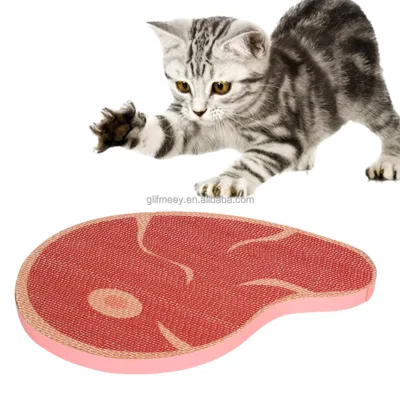
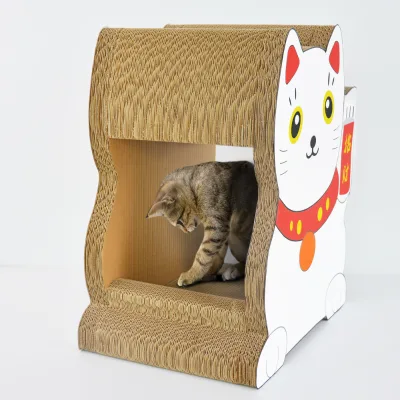
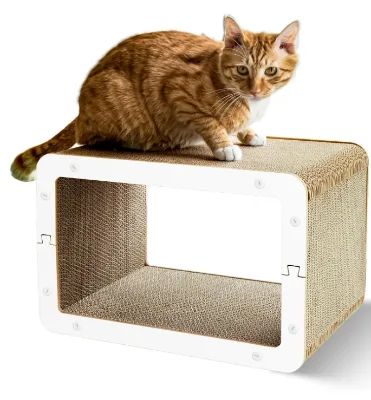
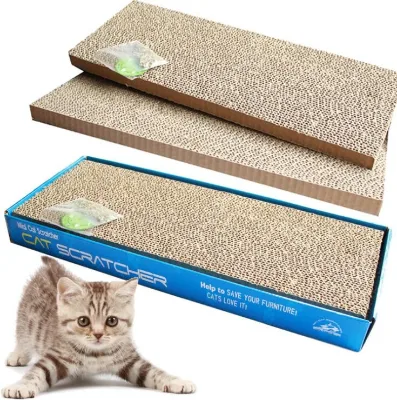
Cat House Corrugated Cardboard Cat Scratching Board with Sisal Scratcher
$2.00 - $4.00
MOQ: 500 Pieces


Creative Cat Scratch Board Scratching Board Corrugated Paper Cat Cardboard
$1.89 - $5.88
MOQ: 1000 Pieces


Factory Customized Corrugated Paper Cat Scratcher Circle Corrugated Cardboard
$9.60 - $9.86
MOQ: 30 Pieces




Comprehensive Sourcing Guide
Strategic Sourcing Guide for Eco-Friendly Cardboard Cat and Dog Scratching Boards
Understanding Product Specifications and Material Composition
When sourcing eco-friendly cardboard cat and dog scratching boards, the primary focus must be on the structural integrity and material composition of the product. The core material for these items is consistently identified as corrugated paper, a choice that aligns with sustainability goals while providing the necessary durability for pet scratching activities. Buyers should verify that the specific product listings confirm the use of corrugated paper as the primary structural element, as this material offers a high strength-to-weight ratio suitable for repeated abrasion.
The physical dimensions of these scratching boards vary significantly depending on the intended use and target pet size. Observed specifications indicate a range of sizes, including compact units measuring 303030cm and larger configurations such as 52X26X25cm or 57X28X27cm. Some specialized models, particularly those designed for larger dogs or multi-level cat structures, may feature dimensions around 40.640.240 cm or 43026040 mm. It is critical for procurement teams to match these specifications to the physical requirements of the end-user. A unit weighing 1.62kg may be appropriate for a standard cat, whereas a heavier unit weighing 4.09kg or 4.65kg provides the stability required for larger dogs or more aggressive scratching behaviors.
Packaging standards also play a vital role in the logistics and presentation of the product. Most units are supplied in shrink film for individual protection, ensuring the corrugated structure remains undamaged during transit. Other variations may be packed in cartons or boxes, with specific standards noting a density of 1PC per shrink film or 40cm standard packaging. The consistency of the packing method is essential for maintaining the product's aesthetic and functional integrity upon arrival at the distribution center.
Compliance, Certification, and Safety Standards
In the B2B procurement of pet products, compliance with international safety and environmental standards is non-negotiable. While the market often seeks products with broad certification, buyers must verify the specific credentials attached to each supplier. The available data highlights the presence of ISO and RoHS certifications for certain product lines, such as model SB-7505 and others in the EK series. ISO certification generally indicates adherence to quality management systems, ensuring consistent production processes, while RoHS compliance confirms that the materials used are free from specific hazardous substances, a crucial factor for pet safety.
It is important to note that certification status is not universal across all product models. Some listings may only reference ISO certification, while others might not explicitly list certifications in the provided data. Buyers should not assume that all eco-friendly cardboard scratching boards carry CE or other specific marks unless explicitly stated in the product documentation. The presence of "OEM" branding suggests that many manufacturers operate under private label arrangements, meaning the end buyer must ensure that the underlying manufacturing facility maintains the necessary quality controls and certifications to support their brand's reputation.
Furthermore, the abrasion performance of the cardboard is a key safety and durability metric. Products are described as having "strong" abrasion performance and "high" strength, which are qualitative observations that require physical verification. Procurement teams should request third-party test results or specific performance data regarding the tensile strength and tear resistance of the corrugated paper to ensure the product can withstand the intended use without disintegrating prematurely.
Cost Drivers and Pricing Dynamics
The pricing structure for eco-friendly cardboard scratching boards is influenced by several variables, including material costs, customization requirements, and order volume. The observed price range in the market spans from approximately $0.66 to $19.70 USD. This wide disparity suggests that factors such as size, complexity, and branding significantly impact the final unit cost. Smaller, standard models like the CP-119 or CP-235 likely occupy the lower end of the price spectrum, while larger, multi-functional units or those with extensive customization may command higher prices.
Minimum Order Quantity (MOQ) is another critical cost driver. The observed MOQ range extends from 10 to 1000 units. Lower MOQs, such as 10 units, are typically associated with sample orders or highly customized, small-batch production runs, which often carry a premium per unit. Conversely, orders approaching the 1000-unit threshold benefit from economies of scale, reducing the per-unit cost. Buyers must balance their inventory needs with cash flow constraints when selecting an MOQ.
Customization is a significant factor in pricing. Products offering logo printing and custom dimensions generally cost more than standard, non-customized items. The data indicates that some models are available with logo printing, while others are strictly non-customized. The decision to include branding or custom packaging will directly affect the total landed cost. Additionally, the origin of the product influences logistics costs; items originating from Zhejiang, Guangdong, or Qingdao, Shandong, China, may have different freight rates depending on the buyer's location and the specific port of departure.
Typical Applications and Market Segmentation
Eco-friendly cardboard scratching boards serve diverse applications across the pet care market. The primary use case is as a cat scratching board, designed to satisfy the natural scratching instincts of felines while protecting household furniture. These products are often marketed as "Cat Paper Cardboard" or "Scratching Board" and are valued for their ability to be easily replaced when worn out. The corrugated structure provides an ideal texture for cats to sharpen their claws.
Beyond feline applications, these products are increasingly utilized for dog scratching and chewing. The "high strength" and "strong abrasion performance" attributes make them suitable for dogs that require a durable outlet for their chewing instincts. The varying weights and sizes, from 1.62kg to 4.65kg, allow for segmentation based on pet size. Smaller, lighter boards are ideal for kittens or small dogs, while heavier, more robust units are necessary for medium to large breeds.
The market also sees applications in multi-pet households or commercial settings like pet hotels and grooming salons. In these environments, the ease of disposal and the eco-friendly nature of the cardboard make it a preferred choice over plastic or fabric alternatives. The ability to customize the product with a logo allows businesses to create branded merchandise or promotional items, further expanding the utility of these boards beyond simple pet accessories.
Supplier Evaluation and Quality Control Protocols
Evaluating suppliers for cardboard scratching boards requires a rigorous approach to quality control and operational reliability. Buyers should prioritize suppliers who can demonstrate consistent adherence to the specified product standards, such as the 1pc/Shrink Film packing standard or the 40cm standard dimensions. The origin of the product, whether from Zhejiang, Guangdong, or Qingdao, can provide insights into the local manufacturing ecosystem, but it does not guarantee quality on its own.
Quality control should focus on the structural integrity of the corrugated paper. Buyers must verify that the "strong" abrasion performance and "high" strength claims are backed by tangible evidence. This includes checking for consistent glue application, uniform corrugation density, and the absence of delamination. The packaging method is also a critical quality indicator; products packed in cartons or shrink film must arrive without crushing or moisture damage.
When assessing suppliers, procurement teams should look for transparency in their production processes. The presence of OEM branding indicates a willingness to work with external partners, but the supplier must maintain strict control over the manufacturing environment. Verification of ISO and RoHS certifications should be a mandatory step, with buyers requesting valid certificates of compliance for each batch. Additionally, the lead time, observed to be around 20-40 days, should be factored into the supply chain planning to ensure timely delivery.
Long-Term Procurement and Sustainability Considerations
Long-term procurement strategies for eco-friendly cardboard scratching boards should prioritize sustainability and supply chain resilience. The use of corrugated paper as the primary material aligns with global trends toward biodegradable and recyclable pet products. Buyers should seek suppliers who can provide documentation on the recyclability of their materials and the sourcing of their paper pulp. This ensures that the product meets the environmental expectations of modern consumers.
Sustainability also extends to the packaging. The shift towards shrink film and carton packing should be evaluated for its environmental impact. While these materials protect the product, buyers should inquire about the use of recycled content in the packaging and the feasibility of recycling the packaging after use. This holistic approach to sustainability can enhance the brand value of the end product.
Finally, buyers should consider the scalability of their supplier relationships. The wide range of MOQs and the variety of product models suggest that the market can accommodate both small startups and large retailers. Establishing a long-term partnership with a supplier who can flexibly adjust production volumes and maintain consistent quality will be essential for navigating market fluctuations. By focusing on verified certifications, robust quality control, and genuine sustainability practices, buyers can build a reliable supply chain for eco-friendly pet products.
Comparative Analysis of Product Models
To assist in decision-making, the following table summarizes key attributes of the observed product models based on the supplied data. This comparison highlights the diversity in specifications, certifications, and origins available in the market.
| Model Number | Material | Dimensions (Approx.) | Weight | Certification | Origin | Packing Standard | Customization |
|---|---|---|---|---|---|---|---|
| SB-7505 | Corrugated Paper | 303030cm | 1.62kg | ISO, RoHS | Zhejiang, China | 1PC/Shrink Film | With Logo Printing |
| SB-7503 | Corrugated Paper | 52X26X25cm | 4.09kg | ISO | Guangdong | Packed in Carton | Available |
| CP-119 | Corrugated Paper | 40.640.240 cm | N/A | ISO | Guangdong | Cartons | Without Logo Printing |
| EK-6 | Corrugated Paper | 43026040 | N/A | ISO | Qingdao, Shandong | Carton | OEM Brand |
| EK-2 | Corrugated Paper | N/A | N/A | N/A | China | Box | N/A |
| 40cm | Corrugated Paper | 40cm | N/A | N/A | China | Cartons | N/A |
This table illustrates that while the core material remains consistent, the specific attributes vary significantly. Buyers must align these specifications with their specific market needs, ensuring that the chosen model meets the required durability, size, and certification standards. The presence of OEM branding and varying customization options further underscores the need for careful supplier selection to ensure brand alignment and product quality.
FAQs
What material is used for eco-friendly cardboard cat and dog scratching boards?
The primary material is corrugated paper, which offers high strength and strong abrasion performance suitable for pets. This sustainable choice ensures durability while allowing for easy disposal when worn out.
Which certifications are available for these scratching board models?
Some models carry ISO and RoHS certifications to ensure quality management and safety from hazardous substances. Buyers should verify specific credentials as not all listings explicitly state these marks.
How does the price range vary for these eco-friendly pet products?
The observed price range spans from approximately 0.66 to 19.7 USD depending on size and customization. Smaller standard models cost less, while larger units with branding command higher prices.
Can buyers request logo printing on these cardboard scratching boards?
Logo printing is available for some models, while others are non-customized. Customization options like branding directly affect the final unit cost and minimum order quantity requirements.
What is the typical lead time for delivery of these products?
The delivery time is about 20-40 days for production and shipping. This timeline should be factored into supply chain planning to ensure timely arrival at distribution centers.
Which dimensions are common for these corrugated paper scratching boards?
Common sizes include 30*30*30cm, 52X26X25cm, and 430*260*40mm depending on the model. Buyers must match these specifications to the physical requirements of their specific pet.