Source Eco-Friendly Electric Sightseeing Bus for Scenic Spots
Find 30 eco-friendly electric sightseeing bus models suitable for scenic spots, airports, and golf courses. Compare specifications including passenger capacity, battery range, and motor power to select the right vehicle for your facility.
Key considerations
Products List


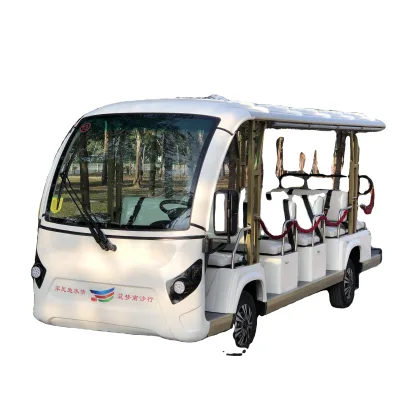
14 Seats Eco-Friendly Electric Sightseeing Bus for Water Park Environments
$5500.00 - $6400.00
MOQ: 1 Pieces

Bus Sightseeing Tour Electric Tourist Car Good Quality Sightseeing Car
$5400.00 - $6400.00
MOQ: 1 Pieces



Comprehensive Sourcing Guide
Strategic Sourcing Guide for Eco-Friendly Electric Sightseeing Buses
Understanding the Technical Landscape of Electric Sightseeing Vehicles
The procurement of eco-friendly electric sightseeing buses requires a deep dive into specific technical parameters that distinguish these vehicles from standard automotive transport. Based on current market observations, these vehicles are primarily categorized as sightseeing cars or electric buses designed for low-speed, high-torque environments. The core powertrain architecture typically relies on electric motors with a power output of 8.5kw, paired with battery systems that often utilize a configuration of 6V cells, such as a 6V*16PCS setup to achieve a total voltage of 48V. This configuration is standard for ensuring sufficient torque for climbing while maintaining energy efficiency in short-range applications.
When evaluating technical specifications, buyers must scrutinize the endurance mileage and recharge time. Observed data indicates a range capability of approximately 100km on a single charge, with a recharge time spanning between 8 to 9 hours. This suggests that operational planning must account for overnight charging cycles or the deployment of portable smart chargers to maintain fleet availability. The physical dimensions of these vehicles vary significantly based on the model. For instance, specific models like the TC230A measure 496014302000mm, while others like the LY05M are sized at 315015201950mm. The wheelbase, or axle distance, is another critical metric, with observed values ranging from 2620mm to 3050mm, directly influencing the vehicle's stability and turning radius.
The body construction is equally vital for durability and safety. Manufacturers frequently employ ABS plastic or PP material for the body panels, offering a balance between lightweight design and impact resistance. The body type is predominantly closed, providing protection from the elements for passengers. In terms of performance, these vehicles are engineered for specific terrains, boasting a climbing ability of up to 30%. The braking distance is a crucial safety metric, with observed specifications indicating a distance of 7.0m. The minimum turning radius is typically around 7.0 meters, allowing for maneuverability in tight spaces such as pedestrian streets or narrow resort pathways.
Compliance, Certification, and Regulatory Standards
Navigating the regulatory landscape is a fundamental step in sourcing electric sightseeing buses. Buyers must verify that suppliers possess valid certifications that align with the destination market's requirements. The most frequently observed certifications in the current supply base include CE, EEC, and CCC. These marks indicate compliance with European safety standards, European Economic Community regulations, and Chinese Compulsory Certification, respectively. However, the presence of these certifications on a product page should be treated as an observation of the specific listing rather than a universal guarantee for every unit in a supplier's catalog.
Beyond the primary certifications, buyers should inquire about adherence to broader quality management standards. While ISO9001 is a common background standard in the industry, it should not be assumed without explicit verification from the supplier. The product standards themselves often define the physical dimensions and structural integrity. For example, specific models adhere to standard dimensions such as 483014602020mm or 2.21.11.95m. It is imperative for procurement teams to cross-reference these dimensions with the intended infrastructure of the application site, such as gate widths, parking bay sizes, and road load limits.
The certification status also extends to the electrical components. The battery systems, often operating at 48V, must meet safety standards for lithium or lead-acid batteries depending on the specific model configuration. The motor and controller systems must also be certified for low-voltage operation to ensure they do not pose electrical hazards in wet or high-humidity environments typical of scenic spots or ports. Buyers should request test reports that validate these certifications for the specific batch of vehicles being ordered, as compliance can vary between different production runs.
Cost Drivers and Pricing Structures
The pricing of eco-friendly electric sightseeing buses is influenced by a complex array of factors, resulting in a wide observed range from $600 to $165,600 USD. This significant variance is not arbitrary but is driven by the specific model, seating capacity, and customization options. The minimum order quantity (MOQ) for these vehicles is typically low, often starting at 1 unit, which allows for flexible procurement strategies for smaller resorts or individual facilities. However, the unit price is heavily dependent on the configuration.
Key cost drivers include the seating capacity and the resulting structural reinforcement required. Models with higher capacities, such as those accommodating 23 seats, will naturally command a higher price point compared to smaller 8-seat units. The material composition of the body also plays a role; vehicles constructed with premium ABS plastic or reinforced steel frames covered by cartons may carry a premium over those with simpler packaging or body materials. Additionally, the inclusion of advanced features like a portable smart charger or specific color options (e.g., Rose Red, Violet, or Black) can influence the final cost.
The packaging method is another variable that affects logistics costs and, consequently, the total landed cost. Some models are shipped in wooden boxes, while others utilize steel frames covered by cartons or pallet packages. These differences impact the shipping volume and weight, which are critical factors in international freight calculations. Buyers should also consider the customization costs. Since customization is available, any request for specific branding, unique color schemes, or tailored interior layouts will add to the base price. It is essential to request a detailed breakdown of the cost to understand how much of the price is attributed to the chassis, the battery, the body, and the accessories.
Typical Applications and Operational Fit
The versatility of electric sightseeing buses makes them suitable for a diverse range of environments. The observed application spectrum includes scenic spots, amusement parks, golf courses, hotels, resorts, schools, hospitals, airports, ports, stations, factories, pedestrian streets, and villas. Each of these environments presents unique operational requirements that must be matched with the correct vehicle specifications.
For instance, in golf courses and resorts, the low-speed nature of the vehicles (max speed of 30km/h) is ideal for maintaining safety while providing convenient transport for guests. The quiet operation of electric motors ensures that the serene atmosphere of these locations is not disrupted. In contrast, applications such as airports, ports, and wharves require vehicles with robust braking systems and sufficient climbing ability to handle gradients and heavy passenger loads. The 30% climbing ability and 7.0m braking distance are critical for these high-traffic, potentially uneven terrains.
Schools and hospitals often prioritize safety and accessibility. The closed body type provides protection from weather, while the specific seating arrangements, such as the 23-seat configuration, allow for efficient transport of large groups. The compact turning radius of 7.0 meters is particularly beneficial in pedestrian streets and narrow factory corridors where larger vehicles cannot navigate. Furthermore, the color options available, ranging from standard white to vibrant hues like yellow, green, and blue, allow facilities to align the vehicle aesthetics with their branding or safety color-coding requirements.
Supplier Evaluation and Quality Assurance
Evaluating suppliers for electric sightseeing buses requires a rigorous approach to ensure product reliability and long-term support. The origin of these vehicles is predominantly Guangzhou, China, a hub for electric vehicle manufacturing. Buyers should verify the supplier's production capabilities and their ability to maintain consistent quality across batches. The presence of certifications like CE and CCC is a good starting point, but it should be complemented by a review of the supplier's quality control processes.
One critical aspect of supplier evaluation is the inspection of the vehicle's build quality. The body material, whether ABS plastic or PP, should be inspected for uniformity and lack of defects. The axle distance and wheelbase must be measured to ensure they match the specifications provided in the product data. Additionally, the battery system should be tested for capacity and charging efficiency to ensure it meets the claimed 100km endurance mileage. The supplier should provide documentation that verifies the kerb weight (2400kg) and gross weight (3670kg) to ensure the vehicle is not overloaded or under-specified.
Quality assurance also extends to the packaging and shipping process. The product packing, whether wooden box, steel frame, or pallet package, must be robust enough to prevent damage during transit. Buyers should request photos or videos of the packaging process to ensure that the vehicles are secured properly. Furthermore, the supplier's ability to provide after-sales support, including spare parts availability and technical assistance, is a vital factor in the selection process. A supplier with a strong track record in the industry is more likely to provide reliable support throughout the vehicle's lifecycle.
Long-Term Procurement and Lifecycle Management
Procuring an electric sightseeing bus is not just a one-time transaction but the beginning of a long-term operational relationship. Buyers must consider the lifecycle costs, including maintenance, battery replacement, and energy consumption. The recharge time of 8 to 9 hours suggests that charging infrastructure must be planned accordingly to avoid downtime. The battery system, which is a significant component of the vehicle's cost, will eventually require replacement. Buyers should inquire about the expected lifespan of the battery and the cost of replacement units.
The customization options available allow for long-term adaptability. As the needs of the facility change, the vehicle can be reconfigured or repainted to suit new requirements. However, buyers should ensure that the customization process does not compromise the structural integrity or safety of the vehicle. The standard dimensions and specifications should be maintained to ensure compatibility with existing infrastructure and regulations.
Finally, buyers should plan for the eventual end-of-life disposal of the vehicle. The battery system, in particular, requires proper recycling or disposal to prevent environmental harm. Suppliers should be asked about their policies regarding battery recycling and whether they offer take-back programs. By considering these long-term factors, buyers can ensure that their investment in eco-friendly electric sightseeing buses remains sustainable and cost-effective over the years.
Comparative Analysis of Key Specifications
To facilitate a clearer understanding of the differences between various models, the following table summarizes the key specifications observed in the market. This comparison highlights the diversity in seating capacity, dimensions, and design styles available to buyers.
| Model | Seating Capacity | Style | Body Type | Dimensions (mm) | Max Speed (km/h) | Climbing Ability |
|---|---|---|---|---|---|---|
| TC230A | 23 Seats | Luxury | Closed | 496014302000 | 30 | 30% |
| LY05M | Style: Luxury | Luxury | Closed | 315015201950 | 30 | Not Specified |
| GMDG14 | Style: Multipurpose | Multipurpose | Not Specified | 483014602020 | 30 | Not Specified |
| 14 | Style: Standard | Standard | Not Specified | 220011001950 | 30 | Not Specified |
| S8 | 8 Seats | Standard | Not Specified | Not Specified | 30 | Not Specified |
This table illustrates that while the maximum speed is consistently 30km/h across models, the seating capacity and dimensions vary significantly. The TC230A offers the highest capacity at 23 seats, making it suitable for large groups, while the S8 is designed for smaller, more intimate transport needs with only 8 seats. The style also varies from Luxury to Standard, influencing the interior finish and overall aesthetic. Buyers should use this data to select the model that best fits their specific operational requirements and budget constraints.
FAQs
What is the maximum passenger capacity for these sightseeing cars?
The maximum passenger capacity is 23 seats for specific models like the TC230A. Other configurations may offer fewer seats, such as 8 seats for the S8 model, depending on the chosen style and application requirements.
Which certifications do these electric buses typically hold?
These vehicles commonly hold CE, EEC, and CCC certifications. Buyers should verify specific batch documentation as compliance may vary between different production runs and models within the supplier catalog.
How far can the vehicle travel on a single charge?
The vehicle can travel approximately 100km on a single charge. This endurance mileage requires planning for overnight charging cycles or the use of portable smart chargers to maintain fleet availability.
Can buyers customize the color and body style of the bus?
Yes, customization is available for color and body style. Options include white, blue, green, yellow, red, black, and more, with body types ranging from closed to multipurpose configurations based on the model.
What is the maximum speed and climbing ability of these cars?
The maximum speed is 30km/h with a climbing ability of up to 30%. These specifications ensure safe operation in scenic spots, airports, and other low-speed environments with varying terrain gradients.
Where are these electric sightseeing buses manufactured?
These buses are primarily manufactured in Guangzhou, China. Buyers should verify the specific origin for each order to ensure alignment with logistics planning and potential regional regulatory requirements.