Source eco-friendly elastic draw cord for Garment, Shoe, and Home Textiles
Compare 30 listings of eco-friendly elastic draw cord from verified Chinese manufacturers. Buyers can evaluate specifications like material, diameter, and certification for garment, shoe, and home textile applications.
Key considerations
Products List


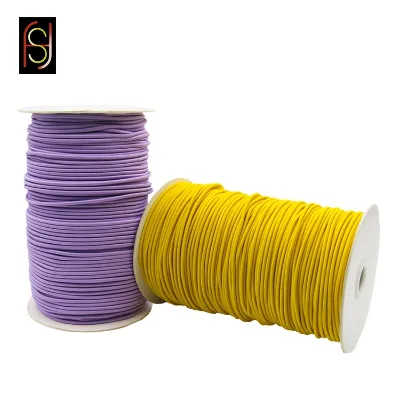
Colored Elastic Draw Cords Rope Stretch Round Cord Polyester Rubber Cord
$0.03 - $0.22
MOQ: 2000 Yards




Comprehensive Sourcing Guide
Strategic Sourcing Guide for Eco-Friendly Elastic Draw Cords
Understanding Product Definitions and Technical Variations
When initiating a procurement strategy for eco-friendly elastic draw cords, buyers must first navigate the diverse landscape of product definitions and technical specifications. The market offers a spectrum of items ranging from simple braided ropes to complex knitted laces, all falling under the broad umbrella of elastic cords. In the current supply chain, distinct product types are identified by their construction method and primary material composition. For instance, one category of products is explicitly classified as "Braided Rope" with a specific model designation such as JEC001. These items often feature a braided structure designed for high durability and are available in a wide array of sizes, including diameters of 1mm, 1.5mm, 2.0mm, 2.5mm, 3.0mm, 3.5mm, 4.0mm, and 4.5mm. The length specifications for these braided variants are typically standardized in bulk units, such as 30 meters, 40 meters, 50 meters, or 100 meters per bobbin, though customization is frequently available to meet specific project needs.
Conversely, another significant segment of the market comprises "Elastic Tape" or "Knitted Lace" products. These items, often associated with model JET002, utilize a knitted technic rather than a braided one. The material composition here can vary, with some products utilizing Spandex as a primary component to ensure high elasticity. The width specifications for these knitted variants differ significantly from the braided ropes, offering standard widths of 10mm, 15mm, 20mm, 25mm, 30mm, and 50mm. The production process for these items often involves dyeing, allowing for a vast color palette that can be customized to match specific brand requirements. Buyers must carefully distinguish between these construction types, as the performance characteristics of a braided cord versus a knitted tape differ substantially in terms of flexibility, recovery, and application suitability.
A third critical category involves "Rubber Elastic Cord" and "Drawcord and Shoelaces" products, which often feature a composite material structure. These items, such as those under model REC-001, typically consist of a Latex or Rubber core encased in a Polyester or Nylon outer sheath. This construction is designed to maximize the elastic properties while providing a durable exterior surface. The diameter range for these cords is extensive, spanning from 0.8mm to 15mm, with the option for fully customized dimensions. The material options for the outer sheath can include 100% Polyester, Cotton, or Nylon, each offering different tactile and performance profiles. The usage scenarios for these composite cords are equally diverse, extending from garment applications and shoe accessories to outdoor gear, packaging, and agricultural uses. Understanding these technical distinctions is the first step in ensuring that the selected product aligns with the functional requirements of the final end product.
Compliance, Certification, and Eco-Friendly Verification
In the realm of sustainable procurement, verifying the environmental and safety compliance of elastic draw cords is paramount. Buyers seeking "eco-friendly" solutions must look beyond marketing terminology and examine specific certifications and material standards. The supply chain for these products often highlights certifications such as Oeko-Tex 100, which serves as a critical benchmark for textile safety. This certification ensures that the product has been tested for harmful substances and is safe for human contact, a vital consideration for items used in garments, masks, and home textiles. While some background knowledge may reference standards like OEKO-TEX or ISO 9001:2015, buyers should prioritize verifying the actual presence of these certifications on the specific product listings rather than assuming their applicability based on general industry trends.
The material composition plays a significant role in the eco-friendly profile of the product. Products listed with materials such as 100% Polyester, Cotton, or Nylon offer different sustainability narratives. For instance, cotton-based drawcords may appeal to buyers seeking natural fiber content, while high-performance polyester options might be selected for their durability and recyclability potential. The presence of a "High Tenacity" and "Eco-Friendly" feature in product descriptions suggests that the manufacturer has engineered the cord to withstand stress while adhering to environmental standards. However, buyers must verify these claims through documentation. The "Eco-Friendly" attribute is often paired with "Abrasion Resistance," indicating a balance between longevity and environmental responsibility.
Furthermore, the production process itself can impact the eco-friendly status of the product. Attributes such as "Dyeing" as the color production method require scrutiny regarding the chemicals and water usage involved. Buyers should inquire about the specific dyeing processes used to ensure they align with the company's sustainability goals. While some suppliers may claim adherence to GOTS (Global Organic Textile Standard), this is a high-confidence fact that requires direct verification from the supplier. It is essential to treat product attributes as observations rather than universal claims; not every listed product will satisfy every eco-friendly criterion. Therefore, the procurement strategy must include a rigorous verification step where the buyer requests specific test reports and certification documents for the exact batch of goods being ordered. This due diligence ensures that the "eco-friendly" designation is substantiated by data rather than mere assertion.
Cost Drivers and Pricing Dynamics
The pricing structure for eco-friendly elastic draw cords is influenced by a complex interplay of factors, including material costs, production complexity, and order volume. The observed price range in the market can vary significantly, with some listings appearing in the lower end of the spectrum, potentially ranging from 0 to 5 USD, while others command higher prices based on specific customization or certification requirements. These price variations are not arbitrary but are driven by the underlying cost of raw materials and the intricacies of the manufacturing process. For example, cords featuring a composite structure with a Latex/Rubber core and a Polyester outer sheath may incur higher material costs compared to simple braided ropes made from a single material.
Order volume is another critical determinant of cost. The Minimum Order Quantity (MOQ) for these products varies widely, with observed ranges spanning from 1 to 20,000 units. Specific product lines may have a defined MOQ, such as 5,000 meters per color for certain knitted tapes or 2,000 yards/meters for rubber elastic cords. These thresholds are set by suppliers to ensure production efficiency and cost-effectiveness. Buyers who can meet or exceed these MOQs often benefit from more favorable unit pricing. Conversely, smaller orders may incur higher per-unit costs due to the setup and operational expenses associated with smaller production runs.
Customization is a significant cost driver in this sector. While many products offer standard sizes and colors, the ability to customize dimensions, colors, and packaging can increase the overall cost. Attributes such as "Customization: Available" and "Color: Any" suggest flexibility, but this flexibility comes with a price premium. The process of dyeing to a specific color or producing a non-standard diameter requires additional setup and quality control measures. Additionally, the packaging details, such as the use of PP bags, cartons, or export-standard inner and outer packing, can influence the final cost. Buyers must balance their need for customization against their budget constraints, understanding that bespoke solutions will invariably cost more than off-the-shelf standard items.
Typical Applications and Usage Scenarios
The versatility of eco-friendly elastic draw cords makes them suitable for a vast array of applications across multiple industries. The observed usage categories for these products are extensive, ranging from traditional textile applications to specialized industrial uses. In the garment industry, these cords are frequently utilized for drawstrings in hoodies, sweatpants, and athletic wear, where elasticity and comfort are paramount. The "Garment" and "Shoe" applications are particularly prominent, with specific product types like "Shoelaces" and "Drawcord and Shoelaces" designed to meet the rigorous demands of footwear and apparel manufacturing.
Beyond apparel, these cords find significant use in the home textiles sector. Applications include curtains, cushions, and other decorative items where the aesthetic and functional properties of the cord enhance the final product. The "Home Textiles" category often requires cords that are not only elastic but also aesthetically pleasing, leading to the use of products with specific patterns like "Jacquard" or colors that match interior design schemes. The "Decoration" and "Chinese Knot" usage highlights the cultural and aesthetic applications of these cords, where they serve as both functional and decorative elements.
Industrial and outdoor applications also represent a substantial portion of the market. The "Outdoor Gear" category includes items such as tents, backpacks, and camping equipment, where the durability and high tenacity of the cord are essential. The "Security" and "Shipping" uses indicate that these cords are employed in packaging and logistics, where they serve as securing mechanisms for goods in transit. The "Agriculture" and "Packaging" applications further demonstrate the broad utility of these products, which are used in securing crops, bundling materials, and various other logistical tasks. The "Function" of these cords, such as "Bungee Trampoline Jumping," underscores their ability to withstand dynamic loads and repeated stretching, making them ideal for recreational and sports equipment.
Supplier Evaluation and Geographic Considerations
Evaluating suppliers for eco-friendly elastic draw cords requires a comprehensive approach that considers geographic location, production capabilities, and reliability. The supply chain for these products is concentrated in specific regions of China, with notable origins in Zhejiang and Guangdong provinces. These regions are known for their robust textile manufacturing infrastructure and expertise in producing a wide variety of cords and ropes. The "prod_origin" attribute confirms that products are sourced from these locations, which can influence lead times, shipping costs, and communication efficiency.
When evaluating suppliers, buyers should assess their production capabilities against their specific needs. Suppliers offering "Customization: Available" and "Can Be Produced by Customer's" requests demonstrate flexibility and a willingness to adapt to client requirements. The "Manual Process" attribute, such as "Around," suggests that some aspects of production may involve handcrafting, which can impact consistency and output volume. Buyers must determine if this level of manual intervention aligns with their quality and volume expectations.
Reliability is another critical factor in supplier selection. The "Features" listed, such as "High Tenacity," "Elastic," "Eco-Friendly," and "Abrasion Resistance," should be backed by consistent quality control measures. Buyers should request samples to verify these claims and assess the physical properties of the product firsthand. Additionally, the "Packaging Details" provided by the supplier, such as "PP Bag or Carton" or "OPP Bag Inner Packing+Outer Packing Stander Export," indicate the level of care taken in product handling and shipping. A supplier that invests in robust packaging is more likely to deliver products in good condition, reducing the risk of damage during transit.
Quality Control and Long-Term Procurement Strategy
Establishing a robust quality control (QC) framework is essential for ensuring the long-term success of sourcing eco-friendly elastic draw cords. Given the diverse range of materials and construction methods, buyers must implement a multi-stage QC process. This includes pre-production sampling, in-process inspections, and final random inspections. The "Certification" status, such as Oeko-Tex 100, should be verified for each batch to ensure compliance with safety standards. Buyers should also test for physical properties like elasticity, tensile strength, and colorfastness to confirm that the product meets the specified requirements.
Long-term procurement considerations involve building a sustainable relationship with suppliers. This includes negotiating favorable terms for volume discounts, establishing clear communication channels, and fostering a collaborative environment for continuous improvement. The "MOQ" requirements, such as 5,000 meters per color or 2,000 yards/meters, should be factored into the procurement strategy to optimize inventory levels and cash flow. Buyers should also consider the "Lead Time" and "Production Capacity" of the supplier to ensure they can meet demand fluctuations without compromising quality.
Finally, buyers should remain vigilant about market trends and regulatory changes that may impact the sourcing of eco-friendly products. As sustainability standards evolve, suppliers may need to adapt their production processes and material choices. By maintaining a proactive approach to supplier evaluation and quality control, buyers can ensure a steady supply of high-quality, eco-friendly elastic draw cords that meet their operational and environmental goals. This strategic approach not only mitigates risks but also positions the buyer as a responsible and forward-thinking partner in the supply chain.
Comparative Analysis of Product Specifications
To facilitate informed decision-making, the following table summarizes the key technical specifications and attributes of the different product categories observed in the market. This comparison highlights the distinct characteristics of braided ropes, knitted tapes, and composite cords, aiding buyers in selecting the most appropriate product for their specific application.
| Feature | Braided Rope (JEC001) | Knitted Tape/Lace (JET002) | Rubber Elastic Cord (REC-001) |
|---|---|---|---|
| Primary Material | Spandex / Nylon | Spandex | Latex/Rubber Inside + Polyester Outside |
| Construction | Braided | Knitted | Composite (Core + Sheath) |
| Size Range | 1mm - 4.5mm | 10mm - 50mm | 0.8mm - 15mm (Customizable) |
| Length/Packing | 30-100 M/Bobbin | 36-144 yds/Bobbin | Customized Length |
| Key Features | Elastic, High Tenacity | Elastic, Jacquard Pattern | High Tenacity, Abrasion Resistance |
| Typical Usage | Security, Shipping, Garment | Home Textiles, Garment | Outdoor Gear, Shoe, Agriculture |
| Certification | GS | Oeko-Tex 100 | Oeko-Tex 100 |
| Origin | Zhejiang, China | Zhejiang, China | Guangdong, China |
This comparative analysis underscores the importance of aligning product specifications with application requirements. While braided ropes offer high durability for security and shipping, knitted tapes provide the aesthetic and flexibility needed for home textiles and garments. Composite cords, with their rubber core, deliver superior elasticity for outdoor gear and footwear. By carefully evaluating these attributes, buyers can make data-driven decisions that optimize performance and cost-effectiveness in their procurement processes.
FAQs
What certifications are available for eco-friendly elastic draw cords?
Some products carry Oeko-Tex 100 certification to ensure safety for human contact. This verification confirms the absence of harmful substances, which is critical for garments and masks. Buyers should request specific test reports to validate these claims for their exact order batch.
Which materials are commonly used in elastic draw cord construction?
Materials include Spandex, Nylon, Polyester, and Cotton, often combined with a Latex or Rubber core. Specific models may feature a braided rope structure or a knitted lace design. The outer sheath can be 100% Polyester or Cotton depending on the required durability and texture.
Can buyers customize the size and color of these elastic cords?
Yes, customization is available for diameter, length, and color options. Sizes range from 1mm to 4.5mm for braided ropes and 0.8mm to 15mm for composite cords. Colors can be customized to match specific brand requirements through dyeing processes or standard selections like black, white, and red.
What are the typical minimum order quantities for these products?
Minimum order quantities vary by product type, often starting at 2,000 yards or 5,000 meters per color. Some listings show a general range from 1 to 20,000 units depending on the supplier. Meeting these thresholds usually secures more favorable unit pricing compared to smaller orders.
Where are the manufacturers of these elastic cords located?
Manufacturers are primarily located in Zhejiang and Guangdong provinces in China. These regions host factories producing various types like braided ropes and knitted laces. Buyers can expect sourcing options from these specific geographic origins when evaluating supplier capabilities.
How are these cords packaged for export and shipping?
Packaging typically involves PP bags, cartons, or export-standard inner and outer packing. Specific options include 30 to 100 meters per bobbin or 36 to 144 yards per bobbin. Customized packing arrangements are often available to meet specific logistical requirements.