Source Eco Friendly Soft Beret for Daily Wear and Outdoors
Explore 30 listings for Eco Friendly Soft Beret options suitable for daily wear, outdoor activities, and seasonal fashion. Compare customizable features, materials like cotton and polyester blends, and OEM services from verified manufacturers to find the right fit for your brand.
Key considerations
Products List


Wholesale Fashion Wool Children's Knit Beret Warm Mori Trendy Women Girls Beret
$1.50 - $4.00
MOQ: 100 Pieces


Autumn Winter Wool Warm Berets Fashion Custom Woman Plain Color Felt Beret
$1.00 - $4.00
MOQ: 100 Pieces

Custom French Styling Women Simple Fashion Warm Knit Beret Retro Painter Beret
$1.50 - $4.00
MOQ: 100 Pieces


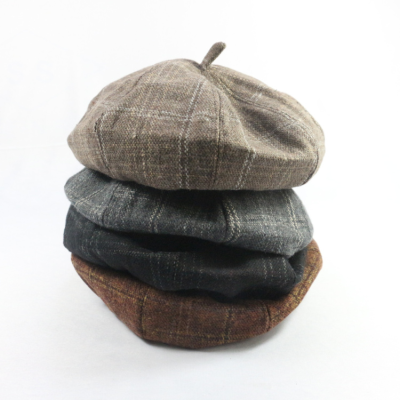

Wool Beret Hat Custom Solid Color Classic Beret for Fashion & Outdoor Use
$3.30 - $4.30
MOQ: 100 Pieces

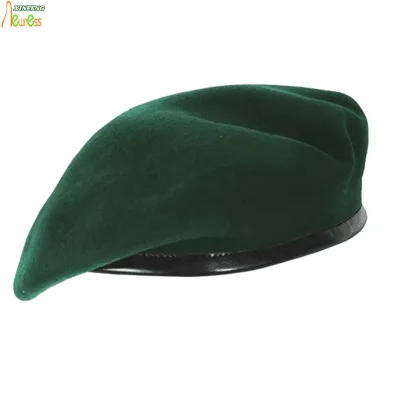


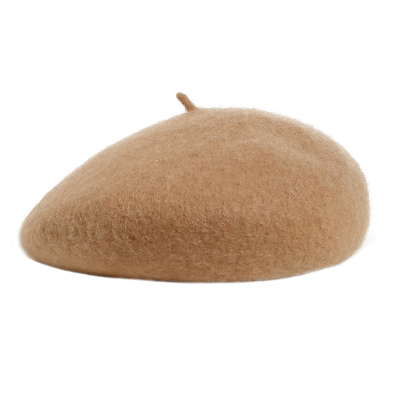
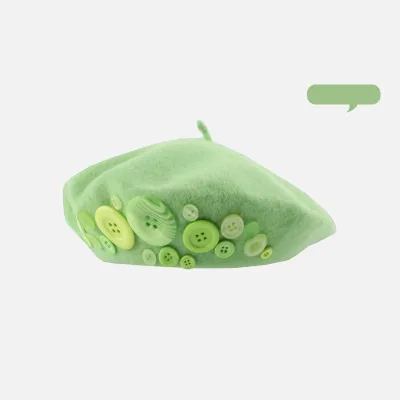
Comprehensive Sourcing Guide
Eco Friendly Soft Beret Sourcing Guide
Eco Friendly Soft Beret programs sit at the intersection of fashion headwear and sustainability sourcing, which makes disciplined verification more important than in conventional cap buying. The listings observed in this category include lattice and checkered berets in 100% cotton and polyester/cotton blends, adult sizing at 56–58 cm head circumference, and unisex styling intended for daily wear and outdoor activities. Several models carry washable, quick-dry, foldable, and sun-protection features, and customization of logos is widely advertised. Buyers should treat these attributes as observations from listings, not as guarantees, and confirm each claim against physical samples before committing to a purchase order.
Because the keyword emphasizes both "eco friendly" and "soft," procurement teams should define internally what those terms mean for their market: fiber origin, finishing chemistry, hand feel, and skin-contact comfort. A beret that is merely soft will not satisfy buyers marketing sustainability, and a cotton beret with harsh dye residues will fail retail intake tests. Establish written acceptance criteria covering both dimensions at the RFQ stage, and require suppliers to state which listed features—such as adjustable fit, with-brim or without-brim construction, and crown design—apply to the exact model quoted.
Product Scope and Observed Listing Signals
The observed catalog spans two families. The BE-series (models BE-01, BE-04, BE-05, BE-06, BE-09, BE-10) is described as 100% cotton, with brim and crown construction, adjustable fit, unisex adult use, and box packing under standard 15X20X20 dimensions, originating in China. The YC-series (models YC-2508, YC-2509, YC-2684, YC-2686, YC-2705, YC-2805) includes washable, foldable, quick-dry variants with packing of one piece per oppbag and 100 pieces per carton, customizable on request. A third listing, model HZM-17733 "lattice Beret" under the HZSTAR brand, is a computer-knitted polyester/cotton beanie-style beret in checkered pattern, Zhejiang origin, adult size, 0.160 kg gross weight, 45X45X45 cm package.
Color options are unusually broad across the listings—black, white, red, purple, orange, green, gray, brown, blue, yellow, and colourful—suggesting factory dye-lot flexibility rather than stock colors only. Season coverage spans winter, summer, spring/autumn, and autumn, which indicates the category serves year-round assortments. Observed pricing sits in a low USD 1–8 band and MOQs range from 1 to 3,000 pieces, so buyers can trial small quantities but must not assume that a 1-piece MOQ listing reflects the terms of a production-grade order. Confirm which model, price tier, and MOQ actually correspond to the configuration you intend to buy.
Technical Specifications to Verify
Start with material composition. One listing family claims 100% cotton while the lattice beret is polyester/cotton, and these behave differently in weight, drape, pilling, and dye uptake. Request a fabric spec sheet stating fiber percentages, yarn count, knitting or weaving method (computer knitting is noted for the HZM-17733), and finished fabric weight. Because berets are skin-contact headwear, also verify shrinkage after repeated washing and whether "quick dry" or "washable" claims are supported by defined test methods. Ask for the actual head circumference tolerance around the stated 56–58 cm adult size across a sample set.
Then confirm construction and functional details. Listings alternate between "with brim" and "without brim," and crown construction affects shape retention after packing—relevant since foldable claims appear in the YC-series. If adjustability is quoted for the BE-series, ask how it is achieved (internal drawcord, elastic band, or sizing band) and test it on samples. Check colorfastness for the full 11-color range if you order multiple shades, since pale colors such as white and yellow expose staining while dark colors expose crocking. Document each specification in a signed sample approval before mass production.
Compliance and Safety Documentation
No certification claims appear in the observed listings, so buyers must drive the documentation agenda rather than relying on supplier-supplied badges. For cotton and polyester/cotton headwear sold into regulated markets, the standard expectation is restricted-substances compliance appropriate to skin-contact textiles; ask each factory which test regime it can support and which third-party laboratory it uses. Request a test report scoped to the exact fabric and dyestuff of your chosen colorways, since a report on a different fabric lot has limited evidentiary value. For "eco friendly" marketing claims, obtain written substantiation describing what makes the product greener—fiber content, dye process, or recyclable packaging—before you repeat any claim in your own listings.
Buyers should also verify fiber-origin documentation when cotton content is a selling point, because unverified cotton claims increasingly attract regulatory and reputational scrutiny in destination markets. Request the supplier's stated place-of-origin records (China, and Zhejiang for the lattice beret) and confirm they align with shipping documents. If your retail channel requires labeling—fiber content, care instructions, country of origin—agree label artwork and placement early, since beret interiors offer limited label area. Keep all compliance documents version-controlled and tied to the model number (BE, YC, or HZM series) they cover.
Cost Drivers and Commercial Terms
The observed 1–8 USD price band will vary sharply with configuration. Main cost drivers include fiber choice (100% cotton typically prices differently than polyester/cotton), knitting or cutting complexity for checkered and lattice patterns, the number of colors ordered (multi-color programs raise dye and changeover costs), logo customization method, and packing format—box packing for the BE-series costs more than oppbag packing with 100-piece cartons. Foldable, quick-dry, and adjustable features add processing steps. Ask suppliers to quote each feature separately so you can see which attributes justify their premium for your market.
Commercial terms require equal scrutiny. MOQs observed range from 1 to 3,000 pieces; small-MOQ listings are useful for sampling and market testing but often carry higher unit prices and longer effective lead times than full-carton orders. Confirm whether quoted prices are FOB or include inland charges, what payment structure the factory requires from a first-time buyer, and whether sample fees are credited against production orders. The packing spec (1 pcs/oppbag, 100 pcs/CTN, or as your request) directly affects your landed cost through carton volume—the stated 45X45X45 cm package and 15X20X20 standard both influence freight class, so model your logistics before comparing unit prices.
Supplier Qualification and Quality Control
The listings describe the seller as a manufacturer offering OEM/ODM customization, sample availability, and customization service—but self-declared descriptions are the starting point, not the evidence. Qualify by verifying business registration, requesting photographs or a live video walk-through of the knitting and finishing lines relevant to berets, and confirming the factory actually produces the model family quoted rather than trading across workshops. Check how long the factory has produced knitted or cut-and-sew berets specifically, and ask for references from buyers with comparable order profiles. A supplier comfortable with customized logos and 11-color programs should demonstrate color-management capability explicitly.
Quality control should be anchored on approved samples. Commission a golden sample for each model and colorway, then define an inspection plan covering head circumference, fabric weight, stitching, crown shape after compression, and packaging accuracy. For first orders, arrange pre-production inspection of the dyed fabric and a final random inspection before shipment; state the acceptance limits in writing rather than relying on "good quality" language. The low single-gross-weight figure (0.160 kg) noted for the lattice beret suggests lightweight construction—verify seam strength and shape retention specifically, since light garments are where workmanship defects surface first in consumer returns.
Long-Term Procurement Checks
Sustainability positioning requires ongoing verification, not one-time documents. Schedule periodic re-testing of restricted substances whenever the factory changes dye supplier, fabric mill, or finishing process, and require advance written notification of any material substitution—cotton blends are a common point of silent replacement under cost pressure. Re-confirm that "eco friendly" claims in your marketing remain supported by current evidence each season. Track lot-level consistency in color matching across your multi-color program, because a pale yellow or white beret that drifts in shade between orders will generate visible shelf inconsistency in retail.
Operationally, build a scorecard per supplier covering on-time delivery, defect rates at inspection, sample turnaround, and responsiveness on reorders. Revisit commercial terms annually: as volumes consolidate, MOQ flexibility, price tiers, and packing customization ("or as your request") should improve. Maintain a dual-source strategy within the category—the BE cotton family, the YC washable/foldable family, and the HZM knit lattice style give buyers three technically distinct options, which reduces dependency on any single factory. Finally, archive every approved sample, test report, and specification revision by model number so institutional knowledge survives staff changes and future audits.
FAQs
What materials are used for these berets?
The berets are crafted from 100% cotton or polyester/cotton blends. These materials ensure comfort and durability for daily wear. The fabric features common characteristics suitable for various seasons. Buyers can select the specific material composition that best fits their target audience needs and preferences.
Can I customize the logo on the berets?
Yes, customized logos are available for these berets. The supplier provides OEM and ODM customization services to meet specific branding requirements. Buyers can request tailored designs to align with their brand identity. This service allows for unique product differentiation in the competitive headwear market.
What is the minimum order quantity for these berets?
The minimum order quantity ranges from 1 to 3000 pieces. This flexible MOQ accommodates both small trial orders and large bulk purchases. Buyers can negotiate specific quantities based on their inventory needs. The supplier supports various order sizes to facilitate efficient procurement and supply chain management.
Are samples available for quality verification?
Samples are available for quality verification before placing bulk orders. Buyers can request samples to assess material quality, stitching, and overall finish. This step ensures the product meets expected standards. Sample availability helps mitigate sourcing risks and confirms supplier capability prior to committing to larger production runs.
What styles and colors are offered?
The berets come in various styles including checked and lattice patterns. Available colors include yellow, white, red, purple, orange, green, gray, brown, blue, and black. These options cater to diverse fashion preferences. Buyers can choose from multiple colorways to match seasonal trends or specific brand color palettes effectively.
Where are these berets manufactured?
These berets are manufactured in Zhejiang, China. The production takes place in a dedicated manufactory facility. This location is known for its textile industry expertise. Buyers sourcing from this region benefit from established supply chains and experienced manufacturing capabilities for headwear products.