Source Eco-Friendly Soft Facial Tissue for Office Hotel and Travel
Compare 30 listings of Eco-Friendly Soft Facial Tissue from Chinese manufacturers. Buyers can review specifications like ply count, packaging styles, and certifications to find suitable options for office, hotel, and travel applications.
Key considerations
Products List


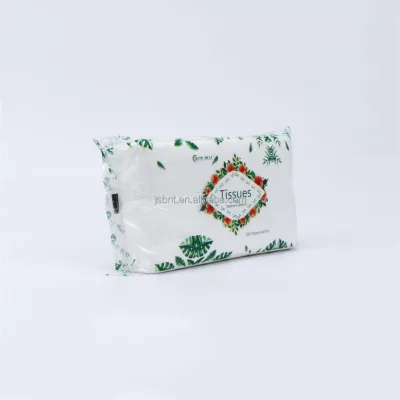


Professional Eco-Friendly 4-Ply Soft Facial Tissue with Customized Printing
$0.20 - $0.70
MOQ: 20000 Bags

Business-Grade Soft and Smooth Facial Tissues Made of Absorbent Material
$0.10 - $0.30
MOQ: 20000 Bags


Wholesale Eco-Friendly Soft Facial Tissues Paper Disposable Portable Tissue
$0.23 - $0.28
MOQ: 8000 Bags


Comprehensive Sourcing Guide
Strategic Sourcing Guide for Eco-Friendly Soft Facial Tissues
Navigating the global market for eco-friendly soft facial tissues requires a disciplined approach that balances material integrity, environmental compliance, and cost efficiency. Buyers seeking this specific product category must distinguish between generic paper products and those engineered with sustainable raw materials and verified manufacturing standards. The following guide outlines the critical technical, regulatory, and operational factors that define a successful procurement strategy for this essential hygiene item.
Understanding Material Composition and Structural Integrity
The foundation of any eco-friendly facial tissue lies in its raw material composition. In the current supply landscape, the dominant material specification for high-quality soft tissues is virgin wood pulp. This material choice is critical because it ensures the absence of recycled fibers that might compromise softness or introduce contaminants, while simultaneously offering a renewable source base. Procurement specifications should explicitly demand 100% wood virgin pulp to guarantee the "Prime Grade" quality often associated with premium tissue products.
Beyond the raw material, the structural design of the tissue determines its performance in daily usage scenarios. The market offers a variety of ply configurations, ranging from single-ply to multi-ply options. Specific product observations indicate that 2-ply and 3-ply structures are prevalent, with some suppliers offering customizable options that include 4-ply or 5-ply variants. The selection of ply count directly influences the tissue's absorbency, durability, and perceived softness. Buyers must verify the exact ply count for their specific application, as a 3-ply tissue offers superior strength for office environments, whereas a 2-ply option might suffice for travel-sized units.
The physical dimensions and net content of the tissue are also vital technical parameters. Standard specifications often cite a paper net content ranging between 50g and 150g per piece, depending on the intended format. For instance, pocket tissues and wallet tissues typically fall within the 50g to 100g range, while larger box tissues may reach up to 150g. The physical size is frequently customizable, with standard dimensions observed around 180mm by 128mm or 128mm by 90mm. However, buyers should not assume these are universal; the ability to request custom sizing is a key feature of modern OEM manufacturing.
Compliance, Certification, and Environmental Standards
In the realm of eco-friendly products, certification is not merely a marketing label but a verification of the supply chain's adherence to international standards. A robust sourcing strategy must prioritize suppliers who hold recognized certifications. The most frequently observed certification in this sector is ISO 9001, which validates the manufacturer's quality management systems. However, for a truly comprehensive eco-friendly profile, buyers should look for additional credentials such as ISO 14001 for environmental management and ISO 45001 for occupational health and safety.
Furthermore, the Forest Stewardship Council (FSC) certification is a critical benchmark for verifying the sustainability of the wood pulp source. While background data suggests FSC is a relevant standard, buyers must explicitly request proof of current certification status from the supplier, as this ensures the wood is harvested responsibly. Some product listings also reference FDA compliance, which is particularly relevant for tissues intended for food service or close personal contact.
When evaluating compliance, it is essential to distinguish between the product's inherent properties and the supplier's operational certifications. A product may be made from virgin pulp and be labeled "Eco-Friendly" due to its biodegradability, but this claim is only as strong as the supplier's documented management systems. Buyers should verify that the "Eco-Friendly" attribute is supported by the specific certifications held by the manufacturing facility, ensuring that the environmental claims are backed by third-party audits rather than self-declared marketing.
Cost Drivers and Pricing Dynamics
The pricing of eco-friendly soft facial tissues is influenced by a complex interplay of material costs, production complexity, and order volume. The observed market price range for these products spans from $0.03 to $0.70 per unit, a significant variance that reflects differences in ply count, packaging, and customization levels. The primary cost driver is the raw material; virgin wood pulp is generally more expensive than recycled alternatives, and the cost fluctuates with global timber markets.
Order Volume is the second most significant factor affecting unit cost. The Minimum Order Quantity (MOQ) for these products varies widely, ranging from as low as 30 units for small trials to 200,000 units for large-scale industrial contracts. Specific product models indicate MOQs of 5,000 bags or 20,000 bags, suggesting that buyers must align their procurement volumes with the supplier's production thresholds to achieve optimal pricing. Smaller orders often incur higher per-unit costs due to the fixed costs of setup and packaging, whereas bulk orders leverage economies of scale.
Packaging and customization also contribute to the final price. Options such as soft pack wrapping, box wrapping, or bulk bag/carton/pallet configurations add to the manufacturing complexity. Customization of size, embossing patterns, and branding (OEM) further increases costs. Buyers should anticipate that a "Custom" size or a specific embossing pattern will command a premium over standard stock items. Additionally, the "Production" lead time mentioned in supply data implies that manufacturing is often made-to-order, which can impact cash flow and inventory planning compared to off-the-shelf stock.
Typical Applications and Usage Scenarios
The versatility of eco-friendly soft facial tissues allows them to serve a broad spectrum of applications. The primary usage scenarios identified include office and hotel environments, residential homes, travel, sports activities, and restaurants. Each of these environments imposes different requirements on the tissue's performance and packaging.
In office and hotel settings, the demand is for high-quality, durable tissues that can withstand frequent use. Here, 3-ply or higher tissues with a larger net content (up to 150g) are preferred to ensure user satisfaction. The packaging in these settings is often "Box Wrapped" or designed for bulk dispensing. For travel and sports, the "Pocket Tissue" or "Wallet Tissue" style is dominant. These products prioritize portability and compactness, often featuring a "Without Core" design to maximize space efficiency and a net content in the 50g-100g range.
Home and restaurant applications require a balance of softness and absorbency. The "Soft Pack" style is common here, offering convenience for quick access. The "Without Flavor" attribute is a standard requirement across all these sectors to ensure the tissue does not interfere with food or personal care routines. The "Prime Grade" quality ensures that the tissue feels soft against the skin, a critical factor for consumer acceptance in home and hospitality sectors. Buyers should match the tissue specification, such as ply count and packaging style, to the specific demands of the target application to avoid performance issues.
Supplier Evaluation and Operational Capabilities
Selecting the right supplier involves more than just comparing prices; it requires a deep dive into their operational capabilities and geographic footprint. The supply data indicates that major production hubs for these tissues are located in China, specifically in provinces like Guangdong and Jiangsu. These regions have established infrastructure for paper manufacturing and export logistics.
When evaluating suppliers, buyers should verify their OEM (Original Equipment Manufacturer) capabilities. The data confirms that OEM services are acceptable, meaning suppliers can produce tissues with custom branding, sizes, and packaging. This is crucial for businesses looking to build a private label. The "Custom" size specification and "Acceptable" OEM status suggest a flexible manufacturing process, but buyers must confirm the supplier's capacity to handle their specific volume requirements without compromising quality.
The production model, such as "C-538" or "QZX200," indicates that suppliers often have specific product lines or SKUs. Buyers should request samples of these specific models to verify the actual quality of the virgin wood pulp and the consistency of the ply bonding. Additionally, the "Production" lead time suggests that suppliers may operate on a make-to-order basis. Buyers must clarify the exact delivery timeline and the supplier's ability to scale production during peak demand periods.
Quality Control and Long-Term Procurement Strategy
Ensuring consistent quality is paramount in the tissue industry, where consumer perception is heavily influenced by texture and strength. Quality control measures should include rigorous testing of the paper net content, ply separation strength, and embossing consistency. The "Prime Grade" designation implies a high standard, but buyers must implement their own quality assurance protocols to verify this claim. This includes checking for defects such as uneven embossing, color inconsistencies (though "White" and "Natural White" are standard), and packaging integrity.
For long-term procurement, establishing a strategic partnership with a reliable supplier is more beneficial than transactional buying. Buyers should focus on suppliers who demonstrate a commitment to sustainability through their certifications (ISO 14001, FSC) and who offer flexible customization options. The ability to adjust the layer count (1 to 3 layers or more) and packaging style allows buyers to adapt to changing market trends and consumer preferences.
Furthermore, buyers should consider the total cost of ownership, which includes not just the unit price but also logistics, packaging waste, and potential returns due to quality issues. By selecting suppliers with robust quality management systems (ISO 9001) and clear communication channels, buyers can mitigate risks and ensure a steady supply of high-quality, eco-friendly soft facial tissues. The goal is to build a supply chain that is resilient, sustainable, and capable of meeting the evolving demands of the global market.
FAQs
What raw material is used for Eco-Friendly Soft Facial Tissue?
The tissue is made from 100% virgin wood pulp to ensure prime grade quality. This material choice guarantees softness and avoids contaminants found in recycled fibers, meeting eco-friendly standards.
Which certifications do manufacturers typically hold for these tissues?
Manufacturers often hold ISO 9001, ISO 14001, ISO 45001, and FSC certifications. These credentials verify quality management, environmental compliance, and responsible wood sourcing for the final product.
How many layers are available for Eco-Friendly Soft Facial Tissue?
Products typically come in 2-ply or 3-ply configurations, with options for 1 to 5 layers. Buyers can select the ply count based on specific needs for absorbency and durability in various settings.
Can buyers request custom sizes for Eco-Friendly Soft Facial Tissue?
Yes, custom sizing is acceptable and available for most product models. Suppliers offer flexibility to adjust dimensions like 180mm by 128mm or other specifications to meet unique packaging requirements.
What is the minimum order quantity for these facial tissues?
Minimum order quantities range from 30 units up to 200,000 units depending on the supplier. Specific models may require 5,000 or 20,000 bags, influencing the unit cost significantly.
Where are the main production locations for these tissues located?
Major production hubs are located in Guangdong and Jiangsu provinces in China. These regions provide established infrastructure for manufacturing and exporting high-quality virgin wood pulp tissues globally.