Source Educational Cartoon Jigsaw Puzzle for Gift School Office
Compare 30 Educational Cartoon Jigsaw Puzzle options from verified Chinese suppliers. Buyers can evaluate wood and paper materials, customization services, and certifications like ASTM and EN71 for school, office, and promotional use.
Key considerations
Products List

Animal Toys Kids Educational Puzzle Educational Toy Puzzle Jigsaw Puzzle
$1.90 - $3.00
MOQ: 2000 Pieces


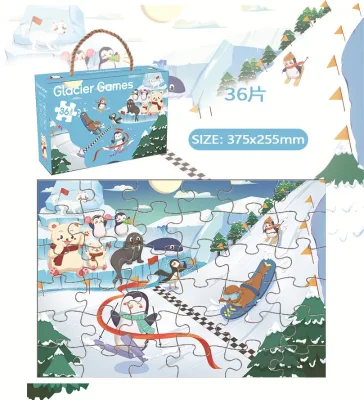


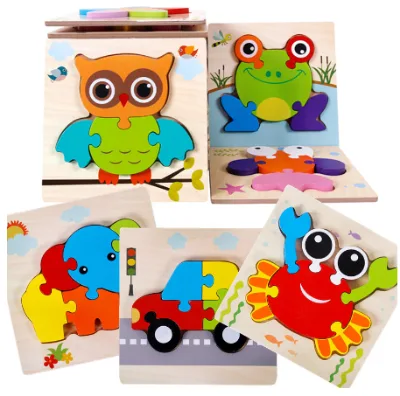


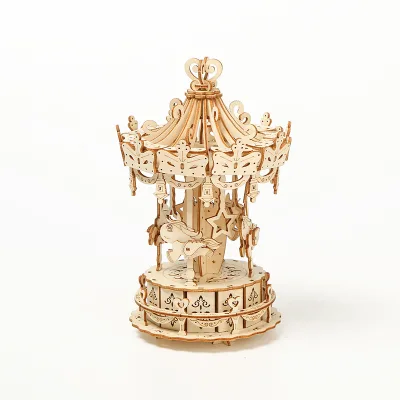
Comprehensive Sourcing Guide
Strategic Sourcing Guide for Educational Cartoon Jigsaw Puzzles
Understanding Product Definitions and Core Attributes
When sourcing educational cartoon jigsaw puzzles, buyers must first distinguish between the specific product categories that often overlap in global marketplaces. The core keyword implies a product that combines cognitive development tools with visual storytelling. Based on available market data, these items are frequently categorized under "Wood and Auxiliary Toys" or "Intellectual Toys," though some listings may ambiguously classify them as "Language Cards" or "Educational Cards" depending on the manufacturer's focus. A critical observation is that while the primary material for many high-quality educational puzzles is wood, there is a distinct segment of the market utilizing paper-based materials, such as gloss art paper or art card, which may be marketed similarly but offer different durability and tactile experiences.
The product type is explicitly identified as a "Jigsaw Puzzle," yet the "Style" attribute varies significantly between "Educational Toy" and "European & American" aesthetics. This distinction is vital for procurement teams targeting specific regional markets. For instance, a buyer seeking products for the North American market might prioritize the "Educational Toy" classification which aligns with developmental milestones, whereas a buyer targeting European retailers might look for the "European & American" style designation. Furthermore, the "Gender" attribute is consistently observed as "Unisex," ensuring broad market applicability. The "Scale" is typically noted as "Medium," suggesting these are not miniature desk toys nor massive floor puzzles, but rather a standard size suitable for classroom or home use.
Technical Specifications and Material Verification
Technical due diligence begins with verifying the material composition, as this directly impacts safety, durability, and the educational value of the product. The supplied data indicates a bifurcation in material sourcing: "Wood" and "Paper." For wooden puzzles, the "Quality" attribute is frequently linked to "Eco-Friendly Material," a claim that requires rigorous supplier verification. Buyers should request physical samples to confirm the absence of splinters and the smoothness of the edges, which are critical for the "Age Range" of 3 to 7 years. For paper-based variants, the "Plastic Type" is listed as "Paper," which may refer to the lamination or coating process. Specifications such as "Gloss Artpaper/Artcard" or "Matt Artpaper" suggest different finishes that affect the visual clarity of the cartoon imagery.
Dimensional specifications are equally critical for logistics and shelf-space planning. One observed standard dimension is 35x10x30 cm, which likely refers to the packaging size rather than the puzzle itself. However, the "prod_model" varies widely, ranging from generic codes like "SH-250745882" to specific identifiers like "STPZ031703." This variation indicates a high degree of customization. The "Number of Puzzle Pieces" is noted as ranging from 25 to "Type: Jigsaw Puzzle," implying that piece counts are flexible and often determined by the customization request. Buyers must explicitly define the piece count during the inquiry phase, as this is a primary driver of the "Customization" service. Additionally, the "Cover" options, including "Fabri" (likely fabric or felt backing), offer further differentiation in product feel and functionality.
Compliance, Certification, and Safety Standards
Safety compliance is the most non-negotiable aspect of sourcing educational toys for children. The observed data lists specific certifications: "ASTM F963-96a," "EN71," and "CE." These are not merely marketing terms but represent adherence to rigorous safety standards. ASTM F963-96a is the standard consumer safety specification for toy safety in the United States, covering mechanical and physical hazards, flammability, and chemical migration. EN71 represents the European standard for toy safety, which is equally stringent regarding heavy metals and flammability. The "CE" marking indicates conformity with health, safety, and environmental protection standards for products sold within the European Economic Area.
Buyers must treat these certifications as observations of specific listings rather than universal guarantees for all products in the category. The presence of "Eco-Friendly Material" and "Design" attributes suggests a trend toward sustainability, but this must be validated against recognized environmental standards. While "FSC" is mentioned in background data, it should not be assumed as a standard certification without explicit supplier confirmation. The "Standard" attribute is listed as "customized" or "35X10X30 cm," which highlights that while the product itself may be custom, the safety standards it must meet are fixed by the destination market. Procurement teams should request valid, up-to-date test reports from accredited laboratories for every batch, ensuring that the "ASTM" and "EN71" claims are backed by current documentation rather than expired certificates.
Cost Drivers and Pricing Dynamics
The pricing structure for educational cartoon jigsaw puzzles is influenced by a complex interplay of customization, material, and order volume. The observed price range in the market spans from $0.06 to $6.92 USD. This wide variance is primarily driven by the "Customization" level and the "Material" used. A basic paper puzzle with a standard design will likely sit at the lower end of the spectrum, while a wooden puzzle with a custom cartoon design, eco-friendly certification, and specialized packaging will command the higher price points. The "MOQ" (Minimum Order Quantity) range of 3 to 2000 units further dictates the unit cost. Smaller orders, such as those near the 3-unit threshold, typically incur a higher per-unit cost due to setup fees and the inefficiency of small-batch production. Conversely, orders approaching 2000 units benefit from economies of scale, bringing the price closer to the lower observed limit.
Logistics and packaging also contribute significantly to the final landed cost. The "prod_packing" options include "Paper Carton," "Carton," "Iron Box," and "Box Packing." An "Iron Box" is a premium packaging option that adds substantial cost but enhances the product's value as a "Gift" or "Corporate Giveaway." The "Customized Packing" attribute allows for branding, which is essential for "Promotional Use" but requires additional tooling costs. Buyers should analyze the total cost of ownership, including the "Delivery Time" of 15-25 days, which impacts inventory planning and potential rush fees. The "Location" of origin, primarily "Ningbo, China" and "Zhejiang, China," suggests a mature supply chain, but freight costs can fluctuate based on global shipping rates and the weight of the chosen packaging.
Typical Applications and Market Segmentation
Educational cartoon jigsaw puzzles serve multiple distinct market segments, each with unique requirements. The "Use" attribute lists "Game, Gift, Promotion, School, Office, Commercial," indicating a versatile product. In the "School" and "Learning Card Baby" sectors, the "Style" as an "Educational Toy" is paramount. These buyers prioritize durability and the "Age Range" of 3-7 years, ensuring the puzzle pieces are large enough to prevent choking hazards and the imagery is engaging for early learners. The "Game Category" is defined as "Family and Friend Game," suggesting that these puzzles are also suitable for home entertainment and social bonding.
For the "Promotional Use" sector, which includes "Gift" and "Corporate Giveaway," the "Logo" and "Customization" features are critical. The ability to add a "Customerized Logo" and "Customization Graphic" allows corporations to brand the puzzle with their identity, turning a simple toy into a marketing tool. The "Iron Box" or "Carton" packaging becomes a key differentiator here, as the unboxing experience contributes to the perceived value of the corporate gift. In the "Commercial" sector, such as toy stores or gift shops, the "European & American" style and "Color" options (ranging from standard "Color" to "as Photo") allow retailers to stock a diverse inventory that appeals to different aesthetic preferences. The "Content" often features "Character" themes, which are highly marketable to children and drive impulse purchases.
Supplier Evaluation and Quality Control Protocols
Evaluating suppliers for this category requires a multi-faceted approach focusing on their capability to handle customization and maintain consistent quality. The "Other Customized Services" listed include "Customization Graphic, Logo, Packaging," indicating that the supplier must have robust design and printing capabilities. Buyers should verify the supplier's "prod_origin," which is predominantly in China, specifically Ningbo and Zhejiang. These regions are known for their manufacturing clusters, but buyers must ensure the specific factory has experience with "Eco-Friendly Material" and "Intellectual Toys."
Quality control should be rigorous, particularly regarding the "Number of Puzzle Pieces" and the "Cover" finish. A common defect in paper puzzles is peeling or delamination, while wooden puzzles may suffer from rough edges or loose fit. Buyers should implement a pre-shipment inspection protocol that checks for the "Quality: Eco-Friendly Material" claim, ensuring no harmful chemicals are present. The "Lead Time" of 15-25 days provides a window for quality checks before shipment. It is essential to verify that the "prod_model" matches the agreed-upon specifications, as the data shows significant variation in model numbers. Suppliers should be required to provide a "Test Result" or "Quality Assurance" document for each batch, confirming that the product meets the "ASTM" and "EN71" standards.
Long-Term Procurement and Sustainability Considerations
Sourcing educational toys is not just a transactional activity but a long-term partnership that requires attention to sustainability and supply chain resilience. The "Eco-Friendly Material" and "Design" attributes suggest a growing market demand for sustainable products. Buyers should prioritize suppliers who can demonstrate a commitment to environmental standards beyond the basic "CE" or "ASTM" certifications. This includes verifying the source of the wood or paper and ensuring that the inks and adhesives used are non-toxic and biodegradable.
The "Customization" aspect allows for long-term brand building. By working with a supplier that offers "Customized Packing" and "Logo" services, companies can create a unique product identity that evolves over time. However, buyers must be cautious of the "Standard" attribute being listed as "customized," as this can lead to inconsistencies if not managed correctly. Establishing a clear "Standard" for every order, including dimensions, material thickness, and color accuracy, is essential for maintaining brand integrity. Finally, the "Delivery Time" of 15-25 days should be factored into long-term inventory planning to avoid stockouts, especially during peak seasons like holidays or back-to-school periods. By focusing on these strategic elements, buyers can secure a reliable supply of high-quality educational cartoon jigsaw puzzles that meet both safety standards and market demands.
Comparative Analysis of Product Variants
To assist in decision-making, the following table summarizes the key differences between the primary product variants observed in the market. This comparison highlights the trade-offs between material, packaging, and intended use.
| Feature | Wood-Based Variant | Paper-Based Variant |
|---|---|---|
| Primary Material | Wood (Eco-Friendly) | Paper (Gloss/Matt Artpaper) |
| Durability | High; suitable for repeated use | Moderate; susceptible to moisture |
| Typical Packaging | Iron Box, Custom Carton | Paper Carton, Box Packing |
| Target Age Range | 3-7 Years (Heavy use) | 3 & Above (Light use) |
| Customization Level | High (Logo, Shape, Pieces) | High (Graphic, Color, Size) |
| Price Point | Higher ($3.00 - $6.92 range) | Lower ($0.06 - $3.00 range) |
| Primary Use Case | School, Gift, Long-term Play | Promotion, Learning Card, Event |
This table illustrates that while both variants serve the "Educational Toy" category, the wood-based option is better suited for high-durability needs like schools and long-term gifting, whereas the paper-based option is ideal for cost-effective promotional events or single-use learning activities. Buyers should align their procurement strategy with these distinct use cases to optimize their budget and achieve their specific business objectives.
FAQs
What certifications do educational cartoon jigsaw puzzles typically have?
Products often carry ASTM F963-96a, EN71, and CE certifications. These standards ensure safety for children aged 3 to 7 years by regulating mechanical hazards and chemical migration in both wood and paper variants.
Can buyers customize the logo and packaging for these puzzles?
Yes, customization is available for logos, graphics, and packaging types. Suppliers offer options like iron boxes or cartons to support promotional use, corporate giveaways, and specific branding requirements for schools or offices.
What is the typical lead time for manufacturing these educational toys?
The standard delivery time ranges from 15 to 25 days. This timeframe applies to orders starting from an MOQ of 3 units up to 2000 units, depending on the complexity of customization requested.
Which materials are used to make these jigsaw puzzles?
Manufacturers primarily use wood and paper materials for construction. Wood options are often eco-friendly, while paper variants utilize gloss or matte art paper covers to ensure durability and visual clarity for young learners.
Where are these educational toys typically manufactured?
Production is concentrated in Ningbo and Zhejiang, China. These regions provide established supply chains for intellectual toys, ensuring efficient logistics for global orders of family and friend games.
What is the price range for ordering these puzzles?
Unit prices generally fall between 0.06 and 6.92 USD. The final cost depends on the material selected, the number of pieces, and the level of customization required for the specific order volume.