Source Educational Children Play Dough for DIY, Promotion, and Learning
Compare 30 verified listings for Educational Children Play Dough suitable for DIY projects, promotional giveaways, and early learning activities. Buyers can review specifications like ASTM and EN71 certifications, age ranges from 3 to 13 years, and various color options before requesting quotes.
Key considerations
Products List


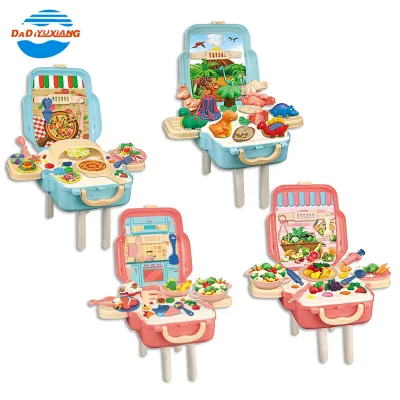
Children Kids DIY Eductation Toy Promotion Gift Modeling Clay Play Dough
$0.28 - $1.00
MOQ: 10000 Sets




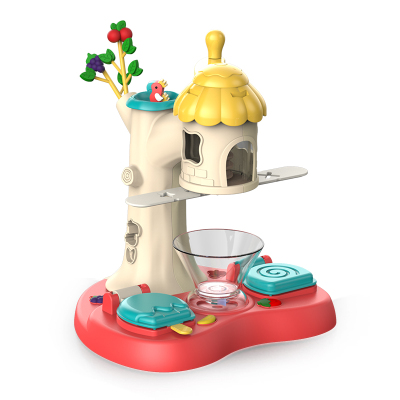
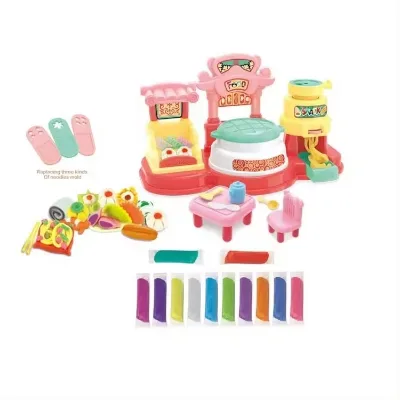
ITTL Safety Kids Play Dough Play Set Making Ice Cream Educational Toy Playdough
$2.98 - $3.53
MOQ: 180 pieces
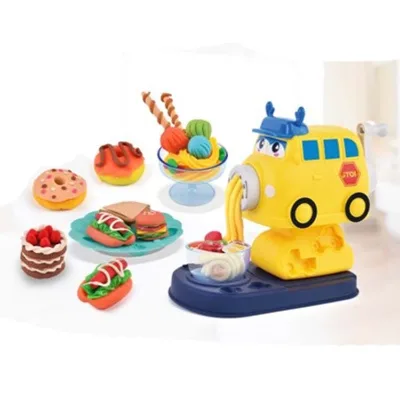
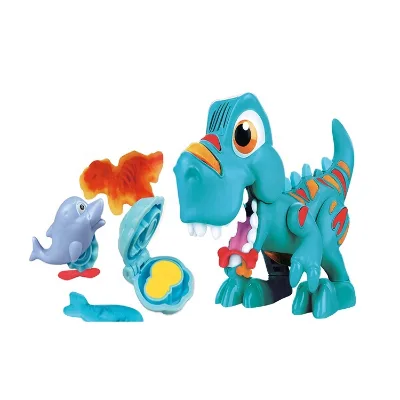
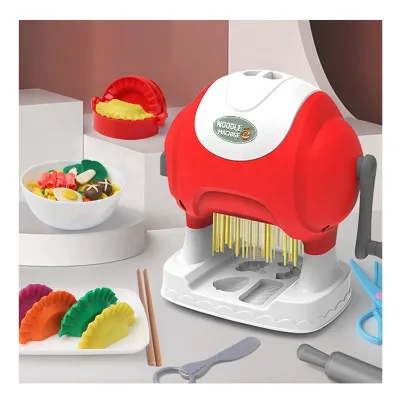
ITTL Eco-friendly Dough Machine Noodle Maker Plastic Play Dough Toys for Kids
$4.10 - $4.92
MOQ: 180 pieces
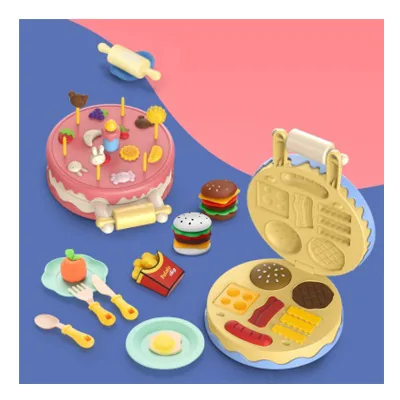


Wholesale Children Creative DIY Color Play-Dough for Children Fun Play Toy
$0.24 - $0.28
MOQ: 700 Pieces


Wholesale Play-Dough Set for Children's Creative 3D Modeling Educational Toy
$1.76 - $2.02
MOQ: 300 Pieces
Comprehensive Sourcing Guide
Strategic Sourcing Guide for Educational Children Play Dough
Understanding Product Specifications and Material Composition
When sourcing Educational Children Play Dough, buyers must first establish a clear understanding of the technical specifications that define product viability. The core material for these items is typically clay, which offers the necessary malleability for educational and DIY applications. In the current market, specific product models such as ML05500 and ML12160 demonstrate varying dimensional requirements. For instance, standard units may measure approximately 12.02.31.7cm, while smaller variants can be as compact as 7.01.0cm or 7.51.0cm. Larger sets, such as the Color dough backpack Set, often come in significantly larger packaging dimensions, such as 231228 cm, with carton sizes reaching 85.54855 cm to accommodate bulk shipping.
The material composition is a critical differentiator. While the primary substance is clay, some listings reference specific plastic types like Butadiene Rubber or generic Rubber, whereas others explicitly state "None Toxic" without specifying a polymer type. This variance requires buyers to verify the exact chemical composition to ensure safety. The product is generally designed for a specific age demographic, ranging from 2 to 13 years, with a high-confidence observation of suitability for ages 3 to 8 years. The texture is consistently described as eco-friendly, non-toxic, and safe for children, which are non-negotiable attributes for this category. Furthermore, the functional aspect is primarily DIY and educational, serving as a tool for creative expression and skill development rather than passive entertainment.
Compliance and Certification Verification Protocols
Safety compliance is the most critical factor in the procurement of children's play materials. Buyers must rigorously verify that suppliers possess valid certifications before placing orders. The observed market data indicates that reputable products often carry the ASTM F963-96a, EN71, and CE certifications. Specifically, the EN71 standard and ASTM standards are frequently cited as the baseline for product safety. Some listings also reference custom standards, which necessitates a deeper audit to ensure they meet international safety requirements.
The presence of these certifications is not merely a marketing claim but a legal requirement for importing into many regions. For example, the EN71 standard covers mechanical and physical properties, while ASTM F963 addresses specific toy safety hazards. Buyers should request current test reports that correspond to the specific model numbers, such as ML08120 or the DD series (DD475177 through DD475180), to ensure the batch being shipped matches the certified sample. It is essential to note that while some products list "None Toxic" as a plastic type attribute, this is an observation that must be backed by third-party laboratory testing results. Without these documents, the product cannot be considered compliant for the educational toy market.
Cost Drivers and Pricing Structure Analysis
The pricing structure for educational play dough is influenced by several variable factors, including material costs, packaging complexity, and order volume. The observed price range in the market spans from $0.24 to $30.00 USD. This wide disparity is primarily driven by the scale of the product. Individual units or small sets may fall at the lower end of the spectrum, while comprehensive kits, such as the Color dough backpack Set with storage boxes, command higher prices due to the inclusion of multiple colors, packaging materials, and branding.
The Minimum Order Quantity (MOQ) is another significant cost driver. The observed MOQ range is substantial, varying from 5 units to 10,000 units. For smaller buyers, an MOQ of 5 cartons or 5 units may be accessible, but larger commercial buyers often negotiate based on volume. The packing configuration also impacts the unit cost. Products are commonly packed in color boxes containing 5, 8, or 12 pieces, or in blister cards. Bulk shipping efficiency is determined by the CBM (cubic meter) of the carton; for instance, a specific set has a CBM of 0.226, which affects freight costs. Buyers should calculate the landed cost by factoring in the unit price, the MOQ requirements, and the volumetric weight of the packaging to determine the true cost per unit.
Typical Applications and Target Market Segments
Educational play dough serves multiple functions beyond simple play, making it a versatile product for various market segments. The primary applications include DIY projects, educational activities, and promotional giveaways. The product is explicitly categorized as a DIY toy and an educational toy, designed to enhance fine motor skills, creativity, and sensory development in children. The target user base is broad, encompassing children aged 2 to 13 years, with specific focus groups identified as 2-4 years, 5-7 years, and 8-13 years.
The versatility of the product allows for use in schools, daycare centers, and home environments. The "Eco Friendly" and "Non Toxic" attributes make it suitable for educational institutions that have strict safety policies regarding classroom materials. Additionally, the product's nature as a promotional item makes it attractive for corporate gifts or event giveaways, where the brand name (such as DADI TOYS) can be featured on the packaging. The gender-neutral design ensures that the product appeals to all children, maximizing its market potential. The inclusion of multiple colors, ranging from 5 to 12 colors per set, further enhances its utility in creative and educational settings, allowing for diverse artistic expression.
Supplier Evaluation and Origin Verification
Selecting the right supplier requires a thorough evaluation of their location, production capabilities, and reliability. The majority of the observed products originate from China, with specific mentions of Guangdong as a place of origin. This region is known for its robust manufacturing infrastructure for toys and plastics. However, buyers must verify the specific factory location and production capacity to ensure consistent supply. The presence of a brand name, such as DADI TOYS, indicates that some suppliers operate as established manufacturers rather than mere traders, which can be a positive indicator of quality control.
When evaluating suppliers, buyers should look for evidence of customization capabilities. The product attributes indicate that customization is available, which is crucial for buyers seeking private label options or specific branding. The ability to customize the product model, such as the ML series or the DD series, allows for tailored solutions. Buyers should also assess the supplier's response to quality inquiries and their willingness to provide detailed specifications. The variety of packing options, from color boxes to blister cards and storage boxes, suggests that suppliers have flexible production lines capable of meeting diverse packaging requirements.
Quality Control and Inspection Standards
Maintaining high quality in play dough procurement requires a robust quality control (QC) framework. Given the direct contact of the product with children, QC must focus on material safety, consistency, and packaging integrity. The inspection process should verify that the clay texture is uniform and that the product meets the "Eco Friendly" and "Non Toxic" claims. Buyers should implement a sampling plan that checks for color consistency, as products are available in 5, 8, or 12 colors. The physical dimensions of the product, such as the 12.02.31.7cm or 7.0*1.0cm sizes, must be within tolerance to ensure they fit the intended packaging and usage scenarios.
Packaging quality is equally important. The product is often packed in color boxes with specific quantities, such as 5PCS/Color Box or 12PCS/Color Box. Inspectors must verify that the packaging is durable enough to withstand shipping and that the labeling accurately reflects the certifications and age recommendations. For bulk orders, the carton quantity, such as 24 PCS per carton, must be accurate to prevent shipping discrepancies. Additionally, the storage box included in larger sets must be inspected for durability and functionality. Regular third-party inspections are recommended to ensure that the production process adheres to the stated standards, such as EN71 and ASTM.
Long-Term Procurement and Market Sustainability
For long-term success, buyers must consider the sustainability and scalability of their procurement strategy. The market for educational toys is dynamic, with a growing emphasis on eco-friendly and non-toxic materials. Suppliers that can demonstrate a commitment to sustainable practices and continuous compliance with evolving safety standards will be more valuable partners. The availability of customization allows buyers to adapt their product offerings to changing market trends, such as new color palettes or thematic designs.
Scalability is another key consideration. With an observed MOQ range extending up to 10,000 units, suppliers must have the capacity to handle large orders without compromising quality. Buyers should establish long-term contracts that include volume discounts and guaranteed lead times. The location of the supplier, particularly in established manufacturing hubs like Guangdong, China, offers logistical advantages for global distribution. However, buyers should also monitor geopolitical and economic factors that could impact supply chain stability. By focusing on suppliers with strong quality control systems and a proven track record of compliance, buyers can ensure a steady supply of high-quality educational play dough that meets the needs of their customers and maintains brand reputation.
FAQs
What certifications do Educational Children Play Dough products typically hold?
Reputable products typically hold ASTM F963-96a, EN71, and CE certifications to ensure safety. These standards verify mechanical and physical properties required for toys. Buyers must request current test reports for specific model numbers like ML05500 to confirm batch compliance before ordering.
Which specifications define the size of standard play dough units?
Standard units vary in size, with common dimensions being 12.0 by 2.3 by 1.7 cm or compact 7.0 by 1.0 cm sizes. Larger sets like the Color dough backpack Set have packaging dimensions of 23 by 12 by 28 cm. These variations affect shipping volume and carton quantities.
Can buyers customize the product model and packaging for orders?
Yes, customization is available for product models and packaging configurations. Suppliers offer options like color boxes containing 5, 8, or 12 pieces, or blister cards. Buyers can request private labeling and specific model variations such as the ML series or DD series to meet branding needs.
How does the minimum order quantity affect the procurement cost?
The minimum order quantity ranges from 5 units to 10,000 units, directly influencing unit pricing. Smaller buyers may access low MOQs of 5 cartons, while larger commercial buyers negotiate based on volume. Bulk efficiency depends on the cubic meter of the carton, such as 0.226 CBM for specific sets.
What materials are used to ensure the product is safe for children?
The primary material is clay, often described as eco-friendly and non-toxic. Some listings specify plastic types like Butadiene Rubber or generic Rubber, while others explicitly state non-toxic properties. Third-party laboratory testing is required to validate these safety claims for the 3 to 8-year-old age group.
Where are the manufacturers of Educational Children Play Dough located?
Most manufacturers originate from China, with specific production hubs in Guangdong. This region offers robust manufacturing infrastructure for toys and plastics. Buyers should verify the specific factory location within this region to ensure consistent supply and reliable production capacity for their orders.
What age ranges are suitable for using these educational play dough toys?
These toys are designed for children aged 2 to 13 years, with specific focus on the 3 to 8-year-old demographic. The product is suitable for various segments including 2-4 years, 5-7 years, and 8-13 years. The non-toxic texture ensures safety for all identified age groups during DIY activities.