Source Educational Electric Vehicle Puzzle Board for Kids, Schools, and Training
Find 30 options for the Educational Electric Vehicle Puzzle Board designed for children aged 2 to 13 years. Buyers can compare models featuring sound recording, light effects, and various materials like wood and ABS plastic from suppliers in China.
Key considerations
Products List


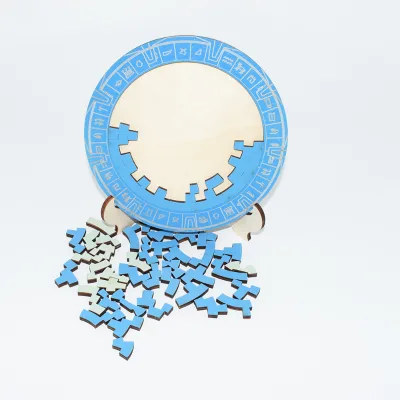
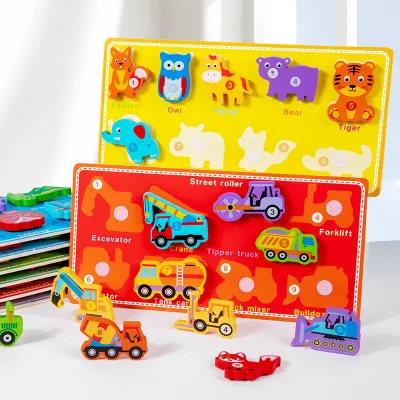
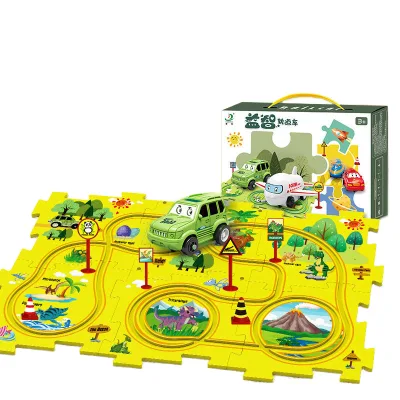
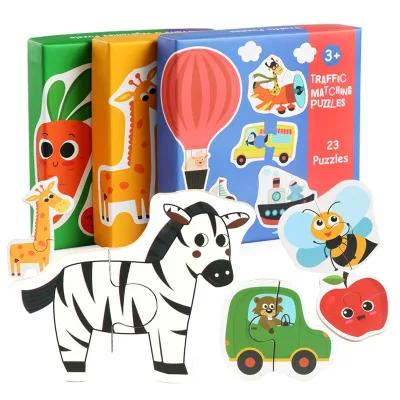


New Hottest Educational Kids 3D Wooden Vehicles Puzzles with Knob W14m113
$1.00 - $5.00
MOQ: 500 Pieces

New Hottest Educational Vehicle Pattern Wooden Peg Puzzles for Kids W14m135
$1.00 - $5.00
MOQ: 500 Pieces


Montessori Activity Learning Toy Car Shaped Wooden Busy Board for Kids W12D335
$12.00 - $18.00
MOQ: 100 Pieces


Whole Loader Vehicle Electrical Teaching Board Educational Equipment
$5000.00 - $8000.00
MOQ: 1 Pieces


Comprehensive Sourcing Guide
Strategic Sourcing Guide for Educational Electric Vehicle Puzzle Boards
The global market for educational toys has seen a significant shift toward interactive, multi-sensory learning tools that combine traditional cognitive challenges with modern electronic engagement. The core keyword "Educational Electric Vehicle Puzzle Board" represents a specific niche where tactile assembly meets auditory and visual stimulation. For B2B procurement professionals, sourcing this category requires a nuanced understanding of the intersection between mechanical puzzle design and electronic functionality. This guide provides a disciplined framework for evaluating suppliers, verifying technical specifications, and ensuring compliance with international safety standards without relying on unverified claims or speculative market data.
Defining Technical Specifications and Functional Requirements
When sourcing an Educational Electric Vehicle Puzzle Board, the primary technical focus must be on the integration of mechanical and electronic components. The product is not merely a static puzzle; it is a dynamic learning tool. Based on observed market data, these products often feature a "Sound Module" or "Electric" functionality, which includes sound recording capabilities, music playback, and light flashes. The physical construction typically utilizes durable materials such as ABS plastic or wood, depending on the target age group and durability requirements.
A critical specification to verify is the age range suitability. Market observations indicate that these products are often designed for children aged 2 to 13 years, with specific models targeting narrower bands such as 3-8 years or 2-4 years. The physical dimensions are equally important for logistics and shelf placement. For instance, specific models in this category have been observed with dimensions around 19x18.5x3.5 cm or larger formats like 30x15x1.3 cm. The number of puzzle pieces can vary significantly, with some configurations offering between 51 and 100 pieces to ensure an appropriate level of cognitive challenge.
The electronic component is a defining feature. Buyers must confirm the presence of a "Sound Module" that allows for interaction. This module often includes a remote control, electric motors for vehicle movement, and visual indicators like flashing lights. The power source is typically electric, requiring batteries or a rechargeable system, which necessitates specific safety testing for battery compartments. The "Product Type" is frequently categorized as "Educational Toy" or "Jigsaw Puzzle," but the inclusion of "Electric" and "Sound Recording" functions elevates it to a complex interactive device.
Compliance and Certification Verification Protocols
Safety compliance is the most critical factor in sourcing educational toys, particularly those involving electronics and small parts. The regulatory landscape for children's products is stringent, and buyers must verify that suppliers possess valid certifications before placing orders. Observed data indicates that reputable manufacturers in this sector often hold a comprehensive suite of certifications, including CE, EN71, ASTM F963-96a, RoHS, PAHs, Phthalates, EMC, and FSC.
The CE mark is essential for European markets, indicating conformity with health, safety, and environmental protection standards. EN71 is the specific European standard for toy safety, covering mechanical and physical properties, flammability, and chemical migration. For the North American market, ASTM F963-96a is the mandatory standard. Additionally, RoHS (Restriction of Hazardous Substances) and PAHs (Polycyclic Aromatic Hydrocarbons) compliance ensure that the materials used, particularly plastics and paints, do not contain harmful chemicals.
Electromagnetic compatibility (EMC) is a specific requirement for products with electronic functions, such as the "Sound Module" and "Remote Control" features observed in this category. EMC testing ensures that the device does not emit excessive electromagnetic interference and is immune to interference from other devices. Buyers should also verify FSC (Forest Stewardship Council) certification if the product utilizes wood components, ensuring sustainable sourcing. The presence of CCC (China Compulsory Certification) is relevant for products manufactured in or sold within China.
It is imperative to note that certification status is not a universal attribute of every listed product. Buyers must request current test reports for each specific model number, such as Tw-019 or KN-043, rather than assuming a supplier's general compliance covers all SKUs. The absence of a specific certification in a product listing should be treated as a red flag requiring immediate clarification.
Cost Drivers and Pricing Structure Analysis
The pricing of educational electric vehicle puzzle boards is influenced by several distinct factors, primarily the complexity of the electronic integration and the quality of raw materials. The observed price range in the market spans from $0.50 to $8,000 USD, a vast disparity that reflects the difference between simple plastic puzzles and complex, high-end electronic learning systems.
The primary cost driver is the electronic module. Products featuring sound recording, music playback, and remote control capabilities require more sophisticated circuitry, speakers, and power management systems compared to non-electric puzzles. The material choice also impacts cost; while ABS plastic is common and cost-effective, high-quality wood or mixed-material constructions may command a higher price point. The "Customized" nature of product sizes and the "Offset Printing" techniques used for colorful graphics also add to the manufacturing cost.
Minimum Order Quantity (MOQ) is another significant variable. Market data shows an MOQ range from 1 to 3,000 units. Suppliers with lower MOQs may charge a premium per unit due to the setup costs for custom molds and electronic programming. Conversely, larger orders often benefit from economies of scale, reducing the unit cost. Packaging requirements, such as "Individual PP Bag" versus "Color Box" or "Blister" packaging, also influence the final landed cost. Buyers should be aware that "Standard Export Cartons" are the norm for bulk shipping, but custom branding on packaging will increase costs.
Typical Applications and Target Demographics
Understanding the application of these products is vital for matching the right inventory to the right market segment. The "Educational Toy" classification suggests a dual purpose: entertainment and cognitive development. These products are specifically designed to enhance brain training, spatial reasoning, and problem-solving skills through the assembly of puzzle boards. The inclusion of "Sound Recording" and "Music" functions adds an auditory learning dimension, making them suitable for early childhood education where multisensory engagement is key.
The target demographic is broad, ranging from toddlers to pre-teens. Specific models are tailored for different age groups: "2 to 4 Years" for basic cognitive skills, "5 to 7 years" for more complex assembly, and "8 to 13 Years" for advanced challenges. The "Gender" attribute is typically listed as "Unisex" or "Suitable for Boys & Girls," ensuring a wide market appeal. The "Product Name" often includes terms like "Kids Brain Training" or "Cognitive Toy," signaling their use in educational settings such as preschools, daycares, and home learning environments.
The "Usage" is explicitly defined as "Children Education," indicating that these products are intended for structured learning activities or unstructured play that fosters development. The "Toy Department" classification confirms their placement in the general toy aisle, but their educational value often leads to placement in the "Educational" or "STEM" sections of retail stores.
Supplier Evaluation and Operational Due Diligence
Selecting a reliable supplier for educational electric vehicle puzzle boards requires a rigorous evaluation process that goes beyond price comparison. The supply chain for these products often originates from manufacturing hubs in China, with specific locations like Shenzhen, Zhejiang, and Guangdong being prominent. Shenzhen is noted for its electronics manufacturing capabilities, which is crucial for the "Electric" and "Sound Module" aspects of the product. Zhejiang and Guangdong are known for their woodworking and plastic molding industries, respectively.
Buyers should verify the "Place of Origin" and "Brand Name" to ensure transparency. For example, brands like "Hoye Craft" or generic manufacturer names like "BJQ" may appear in listings. It is essential to confirm that the supplier has the technical capacity to handle the specific "Model Number" requirements, such as "Tw-036" or "HC-H24X12B1105E." The "Product Number" and "Model Number" must align perfectly to avoid receiving incorrect or non-compliant items.
Packaging and logistics capabilities are also critical. The "Packing" method, whether "Color Box," "Blister," or "Individual PP Bag," must be consistent with the buyer's retail requirements. The "QTY/CTN" (Quantity per Carton) and "Package Size" (e.g., 24x5x16 cm) are vital for calculating shipping costs and warehouse space. Suppliers should demonstrate a clear understanding of "Standard Export Cartons" to ensure product safety during transit.
Quality Control and Long-Term Procurement Considerations
Quality control (QC) for electronic puzzles involves a multi-stage inspection process. The first stage is the verification of raw materials, ensuring that the "Plastic Type" (ABS) and "Material" (Wood) meet safety standards. The second stage involves testing the electronic components for functionality, including the "Sound Recording," "Music," and "Flash of Light" features. The third stage is a mechanical integrity check to ensure that the "Number of Puzzle Pieces" fits together correctly and that the vehicle components move as intended.
Long-term procurement considerations include the availability of spare parts and the scalability of production. If a product is successful, the supplier must be able to maintain consistent quality and lead times. The "Lead Time" is not explicitly provided in the source data, but buyers should negotiate this based on the "MOQ" and production complexity. For customized orders, lead times will naturally be longer.
Buyers should also consider the "Standard" compliance over time. Regulations like EN71 and ASTM F963 are subject to updates. A reliable supplier will proactively inform buyers of any changes in standards and adjust their production accordingly. The "Weight" of the product, observed at approximately 0.18 kg for certain models, is a factor in shipping costs and should be monitored to ensure it remains consistent across batches.
Comparative Analysis of Product Attributes
To facilitate decision-making, the following table summarizes key attributes observed in the Educational Electric Vehicle Puzzle Board category. This comparison highlights the diversity in specifications and helps buyers identify the specific requirements for their target market.
| Attribute Category | Observation 1 (Electronic Focus) | Observation 2 (Wooden Puzzle Focus) | Observation 3 (Vehicle Module) |
|---|---|---|---|
| Product Model | Tw-019, Tw-036 | hc-h24x12b1105e | KN-043, BJQ-326 |
| Primary Material | ABS Plastic | Wood | Plastic |
| Key Function | Sound Recording, Music, Remote | Brain Training, Puzzle Assembly | Vehicle Movement, Cognitive Toy |
| Age Range | 3-8 Years | 2-13 Years (Multi-tier) | 2-4 Years, 5-7 Years |
| Certifications | CE, EN71, ASTM, RoHS | CE, ROHS, CCC | CE, EN71, ASTM |
| Packaging | Standard Export Cartons, PP Bag | Individual PP Bag | Color Box, Blister |
| Origin | Shenzhen | Zhejiang, China | Guangdong, China |
| Size | Customized | 19x18.5x3.5 cm | 24x5x16 cm |
This table illustrates that while the core keyword remains consistent, the execution varies significantly. Buyers must align their specific needs—whether prioritizing electronic features, material sustainability, or specific age-appropriate complexity—with the supplier's capabilities.
In conclusion, sourcing educational electric vehicle puzzle boards requires a balanced approach that prioritizes safety compliance, technical functionality, and supply chain reliability. By rigorously verifying certifications, understanding the cost drivers, and evaluating supplier capabilities against specific technical specifications, buyers can secure high-quality products that meet the demands of the modern educational toy market. The diversity in models and attributes offers ample opportunity for customization, but success depends on disciplined due diligence and clear communication of requirements.
FAQs
What certifications do educational electric vehicle puzzle boards require?
These products typically require CE, EN71, ASTM F963-96a, and RoHS certifications for international safety compliance. Specific models like Tw-019 also hold EMC, PAHs, and Phthalates certifications to ensure electronic safety and material purity for children aged 3 to 8 years.
Which materials are used for constructing these educational puzzle boards?
Manufacturers commonly use ABS plastic or wood depending on the specific model and target durability. For instance, the Tw-019 model utilizes ABS plastic, while other variants like the hc-h24x12b1105e puzzle board are constructed from wood to ensure safety and longevity.
How can buyers verify the electronic functionality of these toys?
Buyers should confirm features such as sound recording, music playback, light flashes, and remote control capabilities. These electronic functions are standard for models like Tw-019, ensuring interactive engagement for children through auditory and visual stimulation during play.
What is the typical age range for these educational vehicle puzzles?
Most products are designed for children between 2 and 13 years, with specific models targeting narrower bands like 3 to 8 years. The age suitability ensures appropriate cognitive challenges, ranging from basic assembly for toddlers to complex brain training for older children.
Can suppliers customize the size and packaging of these puzzles?
Yes, product sizes are often customized to meet specific buyer requirements, with standard export cartons used for bulk shipping. Packaging options include individual PP bags, color boxes, or blister packs, allowing flexibility for different retail and distribution needs across global markets.
Where are the primary manufacturing locations for these educational toys?
Production primarily originates from manufacturing hubs in China, specifically Shenzhen, Zhejiang, and Guangdong. Shenzhen is noted for electronics integration, while Zhejiang and Guangdong specialize in wood and plastic molding, ensuring diverse supply chain capabilities for different product components.
What is the minimum order quantity for these educational puzzle boards?
The minimum order quantity ranges from 1 to 3,000 units depending on the supplier and customization level. Specific models like KN-043 may have an MOQ of 120 pieces, while others allow for smaller trial orders to facilitate market testing before bulk procurement.