Source Electric Disc Blade Sharpening Machine for Saw, Band, and Circular Blades
Find 30 verified listings for the Electric Disc Blade Sharpening Machine designed for circular saws, band saws, and tool grinding. Compare specifications like voltage, grinding width, and precision to identify the right supplier for your industrial needs.
Key considerations
Products List
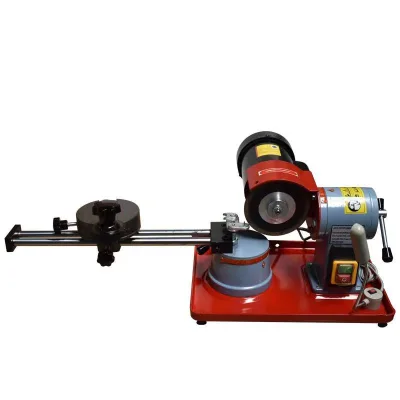


Automatic Electric Knife Sharpener Circular Saw Blade Sharpening Machine
$1000.00 - $1050.00
MOQ: 1 Pieces


Industrial Multifunctional Blade Sharpener Machine with High Precision Grinding
$600.00 - $780.00
MOQ: 1 pieces


Electric Grinding Machine Sharpening Circular Blade Woodworking Machine
$690.00 - $750.00
MOQ: 1 Pieces


Full Automatic Hydraulic Circular Saw Blade Sharpener Sharpening Grinding Machine
$2000.00 - $5000.00
MOQ: 1 Sets


Comprehensive Sourcing Guide
Electric Disc Blade Sharpening Machine Sourcing Guide
Sourcing an Electric Disc Blade Sharpening Machine requires a clear understanding of the distinction between general cylindrical grinding and specialized tool sharpening. While the core keyword focuses on disc blades, the available market data reveals a complex landscape where manufacturers often list universal cylindrical grinders alongside dedicated circular saw blade sharpeners. Buyers must carefully distinguish between machines designed for general precision turning and those optimized for the specific geometry of saw teeth. The observed product range includes models like the JYM8-70N and MC800 series, which serve different functions within the tool maintenance ecosystem. Understanding these distinctions is critical to avoiding procurement errors, as a machine marketed as a "universal grinder" may lack the specific indexing or wheel configurations required for efficient disc blade sharpening.
The procurement process for these machines is heavily influenced by the supplier's ability to provide customization and the specific voltage requirements of the buyer's facility. Most observed units originate from Shandong Province, China, a major hub for light industrial machinery. Suppliers frequently offer voltage options such as 220V or 380V, and some provide customized electrical configurations to match local grid standards. This flexibility is a key selling point for international buyers who need to ensure seamless integration into existing power infrastructure. However, this customization capability also necessitates rigorous verification of electrical safety standards and compatibility before finalizing any purchase agreement.
Product Scope and Observed Listing Signals
The current market listings for electric disc blade sharpening machines exhibit a wide variance in product naming and functional scope. Buyers will encounter products labeled as "Circular Saw Blade Sharpeners," "Universal Cylindrical Grinders," and "Automatic Band Saw Blade Sharpeners" within the same search results. This overlap indicates that many suppliers operate as general tool machine providers rather than niche specialists. For instance, the JYM8-70N is explicitly identified as a circular saw blade sharpener with a maximum grinding diameter of 80-700mm, while the MC800 series is described as an automatic band saw blade sharpener. This discrepancy highlights the importance of verifying the specific application of the machine rather than relying solely on the product title. The presence of both types in the same supplier catalogs suggests that buyers must scrutinize the technical specifications to ensure the machine matches their specific blade type, whether disc or band.
Price and minimum order quantity (MOQ) signals further complicate the sourcing landscape. The observed price range spans from $40 to $10,000 USD, reflecting a broad spectrum of machine capabilities, from basic manual units to fully automatic systems. The MOQ range is typically low, between 1 and 10 sets, which facilitates trial orders for small workshops or individual maintenance teams. However, the low MOQ does not necessarily imply low complexity; some high-precision models may also have low entry barriers. Buyers should note that the "competitive price" is frequently cited as a key selling point, but this should be evaluated against the machine's automation level and precision capabilities. A lower price point may correlate with manual controls or less robust construction, so buyers must balance cost against long-term operational efficiency and durability requirements.
Technical Specifications to Verify
When evaluating technical specifications, the grinding diameter and blade width are the most critical parameters to verify. For disc blade sharpening, the machine must accommodate the specific diameter of the blades in use. The JYM8-70N model, for example, supports a maximum grinding diameter of 80-700mm, which covers a wide range of standard circular saw blades. Additionally, the grinding blade width capacity, such as 125-800mm for the same model, determines the versatility of the machine in handling different blade thicknesses. Buyers must ensure that their specific blade dimensions fall within these ranges to avoid operational limitations. It is also essential to check the grinding teeth pitch range, as some models support 0-40mm, while others may have narrower ranges. This parameter directly affects the machine's ability to sharpen blades with varying tooth geometries, which is crucial for maintaining cutting performance across different materials.
The control system and automation level are equally important technical considerations. The market offers a mix of "Normal" CNC options and fully automatic systems. Some models, like the MR1106, feature electric button controls or touch screens, indicating a higher level of automation and ease of use. In contrast, other universal grinders may rely on manual adjustments, which can increase operator fatigue and reduce consistency. The power consumption is another key specification, with observed units ranging from 0.25 kW for smaller grinders to higher capacities for more robust systems. Buyers should verify the voltage requirements, as options like 220V, 380V, or customized voltages are common. Ensuring that the machine's power rating and voltage match the facility's electrical capacity is essential to prevent overloads or inefficient operation. Additionally, the weight of the machine, typically around 21 kg for smaller units, impacts installation requirements and stability during operation.
Compliance and Safety Documentation
Compliance and safety documentation are non-negotiable aspects of sourcing industrial machinery. Buyers must request certification documents to verify that the machine meets relevant safety standards for their target market. The observed listings mention ISO certification, with some models explicitly stating "ISO CE" compliance. This indicates that the manufacturer adheres to international quality management standards and European safety directives, which is a positive indicator for buyers in regulated markets. However, buyers should not assume that all listed products carry these certifications without verification. It is crucial to request copies of the actual certificates and verify their validity with the issuing body. The absence of a machinery test report in some listings, such as the "Not Available" status for the JYM8-70N, suggests that buyers may need to conduct their own safety assessments or request additional testing data from the supplier.
Electrical safety is a primary concern when dealing with electrically powered sharpening machines. Buyers must ensure that the machine's electrical components, including motors and control panels, are properly insulated and grounded. The voltage options available, such as 220V or 380V, must be matched with appropriate safety protocols in the workplace. Additionally, the machine should be equipped with emergency stop buttons and protective guards to prevent accidental contact with the grinding wheel. Buyers should verify that the supplier provides clear safety manuals and operational guidelines in English or the local language. The condition of the machine, typically listed as "New," should also be confirmed to ensure that no refurbished or used parts are included without disclosure. Proper documentation and safety features are essential for protecting operators and ensuring regulatory compliance in the workplace.
Cost Drivers and Commercial Terms
The cost of an Electric Disc Blade Sharpening Machine is influenced by several factors, including automation level, precision, and customization options. Fully automatic models with touch screen controls and high precision typically command higher prices compared to manual or semi-automatic units. The observed price range of $40 to $10,000 USD reflects this variance, with basic models at the lower end and advanced, customized systems at the higher end. Buyers should consider the total cost of ownership, which includes not only the purchase price but also maintenance, spare parts, and energy consumption. Machines with higher automation levels may reduce labor costs and improve consistency, justifying a higher initial investment. Additionally, customization options, such as specific voltage configurations or branding, can add to the cost but may be necessary for seamless integration into existing operations.
Commercial terms, including packaging, lead time, and warranty, are critical components of the procurement agreement. The observed packaging details indicate that machines are typically shipped in standard cartons or wooden cases, with some suppliers offering PE film protection. The lead time for production and delivery ranges from 30 to 45 days, which buyers must factor into their production planning. A one-year warranty is commonly offered, providing some protection against manufacturing defects. However, buyers should clarify the scope of the warranty, including what components are covered and the process for claiming repairs or replacements. The supply ability of the manufacturer, often cited as 1000 sets per month, indicates a capacity for large orders but does not guarantee immediate availability for custom or urgent requests. Clear communication regarding these terms is essential to avoid delays and ensure a smooth procurement process.
Supplier Qualification and Quality Control
Supplier qualification is a vital step in ensuring the reliability and quality of the purchased machinery. Buyers should verify the supplier's business license, manufacturing capabilities, and export experience. The observed listings indicate that most suppliers are located in Shandong Province, China, a region known for its industrial manufacturing base. Buyers can leverage this geographic concentration to conduct virtual or on-site audits to assess the supplier's production facilities and quality control processes. It is also important to check the supplier's reputation through customer reviews, trade references, and industry certifications. A supplier with a strong track record in exporting similar machinery is more likely to provide reliable products and after-sales support. Additionally, buyers should inquire about the supplier's ability to provide technical support and training, which can be crucial for the successful operation of complex sharpening machines.
Quality control measures should be established before placing an order to ensure that the delivered machine meets the specified requirements. Buyers should request detailed product specifications, including dimensions, weight, and performance parameters, and compare them against the supplier's claims. The observed single package size of 46x45x33 cm and weight of 21 kg for certain models provide benchmarks for verification upon delivery. Buyers may also consider hiring third-party inspection services to conduct pre-shipment inspections, checking for physical damage, functional performance, and compliance with agreed-upon specifications. Establishing clear quality acceptance criteria in the purchase contract can help resolve disputes and ensure that the supplier delivers products that meet the buyer's expectations. Regular communication with the supplier during the production process can also help identify and address potential issues early, reducing the risk of delays or defects.
Long-Term Procurement Checks
Long-term procurement success depends on establishing a sustainable relationship with the supplier and ensuring ongoing support for the machinery. Buyers should evaluate the supplier's after-sales service capabilities, including the availability of spare parts, technical assistance, and repair services. The one-year warranty is a starting point, but buyers should inquire about extended warranty options and the cost of maintenance contracts. Access to genuine spare parts is crucial for minimizing downtime and extending the life of the machine. Buyers should also verify the supplier's responsiveness to technical queries and their ability to provide remote troubleshooting support. A supplier with a robust after-sales network can significantly enhance the operational efficiency and reliability of the sharpening machine.
Continuous monitoring of market trends and technological advancements is also important for long-term procurement planning. The field of tool sharpening is evolving with new technologies, such as improved automation and precision control systems. Buyers should stay informed about new product releases and innovations that could offer better performance or cost savings. Regularly reviewing the supplier's product portfolio can help identify opportunities for upgrading or expanding the machinery fleet. Additionally, buyers should periodically reassess their operational needs and compare them against the capabilities of the installed machines. This proactive approach ensures that the procurement strategy remains aligned with business goals and technological advancements, maximizing the return on investment and maintaining competitive edge in tool maintenance operations.
FAQs
How does an Electric Disc Blade Sharpening Machine grind saw teeth?
It uses a rotating grinding wheel driven by an electric engine to regrind the teeth of circular saw blades automatically. The blade is clamped in position, and the machine indexes tooth by tooth within a configurable teeth pitch range, commonly up to 40mm. Voltage options such as 220V, 380V, or customized supply make it suitable for most workshop power setups.
What blade sizes can this circular saw blade sharpener handle?
The machine supports grinding blade widths from 125mm to 800mm and a grinding teeth pitch from 0 to 40mm. Max grinding diameter on related models spans 80 to 700mm. Always confirm the exact model, such as MC800, before ordering, since specifications vary between the standard and enhanced versions offered under the same product family.
Which voltage options are available for the disc blade sharpening machine?
Standard configurations run on 220V or 380V, and customized voltage can be arranged to match local electrical systems. The electric button or touch screen control works with either supply. Buyers in regions with unusual grid standards should request voltage customization during quotation so the machine ships ready for direct connection without transformers.
Can the sharpener also grind band saw blades?
Yes, there is a related automatic band saw blade sharpener variant designed for grinding band saw blades. That version handles blade widths of 15 to 80mm, teeth pitch of 10 to 30mm, and grinding speeds up to 55 teeth per minute. If you process both circular and band saw blades, confirm which model covers each blade type before purchasing.
What is the warranty and delivery lead time for this machine?
The machine carries a one-year warranty, and lead time is typically 30 to 45 days after order confirmation. Units are packed in standard case cartons or wooden cases, with PE film or plywood box packing also used. Supply capacity is around 1000 sets per month, which helps keep delivery schedules predictable for bulk orders.
How heavy is the machine and how is it packaged for shipping?
A single unit weighs about 21kg with package dimensions of 46 by 45 by 33cm, making it easy to handle in small workshops. Packaging options include standard carton, wooden case, PE film, or plywood box depending on the model and destination. Confirm your preferred packing method when requesting a quote so freight protection matches the shipping route.
Can I customize the grinding machine for my production requirements?
Yes, customization is available on this product line. Buyers can request customized voltage, control methods such as electric button or touch screen, and model options like MC800 or MC800S. Provide your blade dimensions, teeth pitch, and expected throughput so the supplier can confirm a suitable configuration before production, which helps avoid mismatched specifications on arrival.
What certifications do the blade sharpening machines carry?
The listed models are ISO certified, and some variants in this product family also carry CE certification. A machinery test report is not available for the base listing, so buyers needing documented test results should request them from suppliers directly. Always verify certification scope and applicable standards for the specific model you intend to order.