Source Electric Delivery Table for Hospital Surgery and Delivery
Compare 30 Electric Delivery Table for Hospital options with varying load capacities, power supplies, and customization features. Buyers can evaluate specifications like table dimensions, elevation ranges, and certifications to find suitable medical equipment for operating rooms and delivery suites.
Key considerations
Products List

Modular Design Timely Delivery Compatible Electric Operating Table for Hospital
$18000.00 - $26000.00
MOQ: 1 Pieces


Hospital Medical Electric Operating Table Delivery Bed Gynecological Obstetric Table
$1000.00 - $1030.00
MOQ: 1 Sets

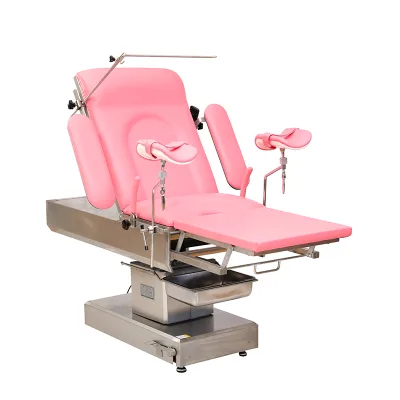

Operating Room Equipment Electric Obstetric Delivery Table Bed for Hospital
$770.00 - $870.00
MOQ: 1 Pieces


$5500.00 - $6400.00
MOQ: 1 Pieces

Hospital Three Sections Electric Baby Birth Medical Delivery Beds Electric Ldr Bed Delivery Table
$5500.00 - $6400.00
MOQ: 1 Pieces


Electric Ldr Obstetric Delivery Bed Portable Gynecological Exam Table and Delivery Table Hospital
$5500.00 - $6400.00
MOQ: 1 Pieces

Electric Table Medical Equipment Gynecology Operation Delivery Obstetric Bed Table
$890.00 - $1090.00
MOQ: 1 Pieces

Medical Electric Operating Table Gynecological Operating Table and Delivery Bed
$599.00 - $999.00
MOQ: 1 Pieces


Comprehensive Sourcing Guide
Strategic Sourcing Guide for Electric Delivery Tables in Hospital Settings
Procuring an electric delivery table for a hospital requires a meticulous approach that balances clinical functionality, regulatory compliance, and long-term operational reliability. These specialized medical devices are engineered to support obstetric procedures, ensuring patient safety and facilitating the medical team's access during childbirth. The market offers a variety of configurations, ranging from manual adjustments to fully electric systems with advanced positioning capabilities. Buyers must navigate a complex landscape of technical specifications, certification requirements, and supplier capabilities to make an informed decision. This guide outlines the critical factors for sourcing these essential pieces of equipment, drawing on verified product attributes and industry standards to provide a robust framework for procurement decisions.
Technical Specifications and Functional Capabilities
The core functionality of an electric delivery table is defined by its mechanical specifications and power requirements. When evaluating potential units, buyers should prioritize load-bearing capacity and range of motion. Verified data indicates that robust models often support a load capacity of up to 350kg, which is critical for accommodating diverse patient demographics and surgical equipment. The structural integrity is further supported by materials such as high-grade steel, ensuring durability under repeated use.
Positioning flexibility is paramount in obstetric care. Key attributes to verify include longitudinal sliding, kidney bridge elevation, and vertical adjustment ranges. Specific models in the current market demonstrate a longitudinal sliding capability of approximately 310mm and a kidney bridge elevation of 120mm, allowing for precise patient alignment during delivery. Vertical adjustment, or the table's ability to move up and down, is another critical metric. Observed specifications suggest a range from a minimum of 550mm to a maximum of 1000mm, with some units offering a broader range of 680mm to 980mm. This variability allows the table to be lowered for patient transfer and raised to an ergonomic working height for the medical staff.
Power systems must be compatible with the hospital's infrastructure. Electric operation tables typically operate on standard power supplies, with observed configurations supporting 110V/220V at 50/60Hz. The power consumption for these units is generally around 1.0kW, though this can vary based on the number of motors and auxiliary features. Buyers should also verify the physical dimensions, as the table must fit within the designated operating room or delivery suite. Standard dimensions often exceed 2050mm in length and 550mm in width, with some models measuring 1950mm by 550mm. The overall footprint, including the base and wheels, must be considered to ensure adequate maneuverability within the facility.
Compliance and Certification Verification
Regulatory compliance is non-negotiable when sourcing medical equipment for hospital use. Buyers must ensure that any electric delivery table meets the necessary safety and quality standards for their specific region. In the context of international trade and manufacturing, several certifications are frequently observed. These include FDA approval and ISOCE certification, which indicate adherence to specific safety and performance benchmarks. Additionally, the CE mark is a standard requirement for products entering the European market, signifying conformity with health, safety, and environmental protection standards.
Instrument classification is another vital compliance metric. Electric delivery tables are typically classified as Class II medical devices, which implies a moderate to high risk and necessitates special controls to ensure safety and effectiveness. Buyers should request documentation proving that the specific model under consideration holds the appropriate classification for its intended use.
Beyond product-level certifications, the manufacturing facility's quality management systems should be reviewed. While specific standards like ISO13485 are industry benchmarks for medical device quality management, buyers should verify if the supplier's production facility adheres to such rigorous standards. This verification process helps mitigate risks associated with manufacturing defects and ensures a consistent quality of output. It is essential to treat certification claims as observations that require validation through official documentation rather than assuming all listed products satisfy every standard without proof.
Cost Drivers and Pricing Structures
The pricing of electric delivery tables is influenced by a multitude of factors, including the complexity of the electric system, the quality of materials, and the level of customization available. The observed market price range is extensive, spanning from $0.01 to $26,000. This wide disparity often reflects differences in product tiers, from basic manual or semi-electric models to fully automated systems with advanced features. Buyers should be cautious of prices that seem abnormally low, as they may indicate compromised quality or a lack of essential safety features.
Minimum Order Quantity (MOQ) is another significant cost driver. The observed MOQ range varies from 1 to 50 units. For hospitals looking to equip a single delivery room, suppliers offering an MOQ of 1 are preferable, whereas larger hospital networks may benefit from bulk purchasing options that reduce the per-unit cost. Customization options, such as specific color requirements or tailored dimensions, can also impact the final price. While customization is available in the market, it often incurs additional charges and may extend the lead time.
Packaging and logistics costs should also be factored into the total cost of ownership. Products are typically shipped in wooden cases or cartons to protect the equipment during transit. The single package size can be substantial, with dimensions reaching up to 200x80x120 cm, and the gross weight can be significant, sometimes exceeding 10kg per unit depending on the configuration. These logistical factors can influence shipping costs and the handling requirements upon arrival at the hospital.
Typical Applications and Clinical Utility
Electric delivery tables are primarily designed for use in obstetrics and gynecology departments. Their primary application is to facilitate safe and efficient childbirth procedures. The ability to adjust the table's position allows medical professionals to optimize the patient's posture for different stages of labor and delivery. For instance, the kidney bridge elevation feature supports the patient's lower back, reducing strain and improving comfort during prolonged procedures.
The versatility of these tables extends to various gynecological surgeries and examinations. The electric controls enable smooth transitions between positions, such as the lithotomy position, which is essential for many pelvic procedures. The load capacity of up to 350kg ensures that the table can safely support patients of varying sizes, including those requiring bariatric care. Furthermore, the longitudinal sliding feature allows for precise repositioning of the patient without the need for manual lifting, reducing the risk of injury to both the patient and the medical staff.
For hospitals serving a diverse demographic, the availability of models suitable for different age groups, including middle-aged and older patients, is a key consideration. The design must accommodate the specific needs of these populations, ensuring stability and ease of use. The integration of electric controls also enhances the workflow in busy delivery rooms, allowing for quick adjustments that are critical in emergency situations.
Supplier Evaluation and Quality Assurance
Selecting the right supplier is as important as selecting the right product. Buyers should evaluate suppliers based on their track record, manufacturing capabilities, and after-sales support. The origin of the product is a relevant factor, with many manufacturers based in regions such as Hebei and Shandong in China. While these locations are hubs for medical device manufacturing, buyers should verify the specific factory's quality control processes.
After-sales service is a critical component of the procurement decision. Reliable suppliers offer online technical support to assist with installation, troubleshooting, and maintenance. A warranty period of one year is commonly observed, providing a baseline level of protection against manufacturing defects. However, buyers should inquire about the availability of extended warranty options and the terms of service coverage.
Quality control measures should be rigorous. Buyers should request evidence of testing procedures and quality assurance protocols. The use of high-quality materials, such as steel, and the adherence to strict manufacturing standards are indicators of a reliable supplier. Additionally, the packaging method, whether wooden case or carton, should be robust enough to prevent damage during shipping. The single gross weight and package dimensions should be clearly communicated to ensure proper logistics planning.
Long-Term Procurement and Maintenance Considerations
The lifecycle of an electric delivery table extends beyond the initial purchase. Long-term procurement considerations include maintenance, spare parts availability, and the potential for future upgrades. The shelf life of the equipment is typically around one year for certain components, but the overall unit is designed for long-term use. Buyers should establish a maintenance schedule to ensure the table remains in optimal condition.
The warranty period is a starting point for support, but buyers should plan for ongoing maintenance costs. Electric systems require regular inspection of motors, wiring, and control panels to prevent failures. The availability of spare parts is crucial for minimizing downtime. Suppliers that offer comprehensive technical support and a network of service technicians can significantly reduce the risk of operational disruptions.
Furthermore, the adaptability of the equipment to future hospital needs should be considered. As medical technology evolves, the ability to upgrade certain components or integrate new features can extend the useful life of the table. Buyers should also consider the environmental impact of the product, including the materials used in construction and the energy efficiency of the electric system. By focusing on these long-term factors, hospitals can ensure that their investment in electric delivery tables continues to provide value and support high-quality patient care for years to come.
Comparative Analysis of Key Specifications
To assist in the decision-making process, the following table summarizes key specifications observed across different models. This comparison highlights the variability in load capacity, dimensions, and power requirements, aiding buyers in selecting the most suitable option for their specific needs.
| Specification | Model A (Example) | Model B (Example) | Model C (Example) |
|---|---|---|---|
| Load Capacity | 350kg | 180kg | Variable |
| Table Dimensions | 2050mm x 550mm | 1950mm x 550mm | 1450mm x 590mm |
| Vertical Range | 550mm - 1000mm | 680mm - 980mm | 580mm - 1000mm |
| Longitudinal Slide | 310mm | 300mm+ | Variable |
| Power Supply | 220V, 50Hz | 110V/220V 50/60Hz | Electric |
| Certification | FDA, ISOCE | CE | Class II |
| Warranty | 1 Year | 1 Year | 1 Year |
| Origin | Hebei, China | Shandong, China | China |
This table illustrates that while core functions remain consistent, specific parameters vary. Buyers must match these specifications to their hospital's physical constraints and clinical requirements. The presence of certifications like FDA and ISOCE, along with the Class II instrument classification, underscores the importance of regulatory compliance in the selection process. By carefully analyzing these attributes, procurement teams can make data-driven decisions that prioritize patient safety and operational efficiency.
FAQs
What is the maximum load capacity for electric delivery tables?
Some models support a load capacity of up to 350kg to accommodate diverse patient needs. This high capacity ensures safety for bariatric patients and surgical equipment during obstetric procedures.
Can these tables be customized for specific hospital requirements?
Customization is available for features such as color and specific dimensions. Buyers should verify if tailored options incur additional charges or extend the lead time for delivery.
Which certifications are commonly found on these medical devices?
Common certifications include FDA, ISOCE, and CE marks indicating safety compliance. These certifications verify adherence to international standards for Class II medical devices used in hospitals.
How do the vertical adjustment ranges differ between models?
Vertical adjustment ranges vary, with some units moving from 550mm to 1000mm and others from 680mm to 980mm. This flexibility allows for ergonomic positioning during delivery and patient transfer.
What is the typical warranty period for electric operation tables?
The standard warranty period observed is one year for most models. This coverage typically protects against manufacturing defects, though extended options may be available from specific suppliers.
How is the power supply configured for these electric tables?
Power systems typically support 110V or 220V at 50Hz or 60Hz frequencies. This dual-voltage capability ensures compatibility with various hospital electrical infrastructures across different regions.
What materials are used to construct the table frame?
The structural frame is primarily constructed from high-grade steel for durability. This material choice ensures the table can withstand repeated use and support heavy loads safely.
Can buyers find suppliers with low minimum order quantities?
Yes, suppliers offer minimum order quantities ranging from one to fifty units. This flexibility allows hospitals to purchase single units for individual delivery rooms without bulk commitments.