Source Electric Signal Controlled Vacuum Gauge for Industrial, Civil, and Home Uses
Find 30 options for the Electric Signal Controlled Vacuum Gauge suitable for industrial, civil, and home applications. Buyers can compare features like local indication, spring tube materials, and connection types from suppliers in China.
Key considerations
Products List


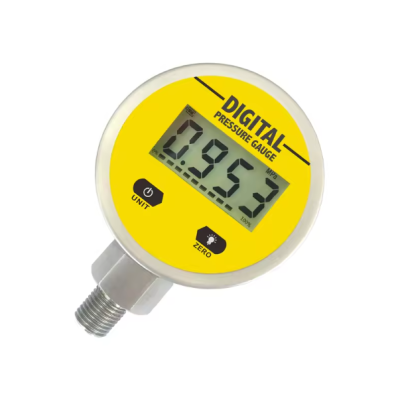


Comprehensive Sourcing Guide
Strategic Sourcing Guide for Electric Signal Controlled Vacuum Gauges
Understanding the Technical Architecture and Operational Modes
When sourcing an Electric Signal Controlled Vacuum Gauge, buyers must first distinguish between purely mechanical indicators and those integrated with electronic output capabilities. The core product category encompasses devices designed to measure vacuum pressure, often utilizing a spring tube mechanism where the deformation of a phosphor bronze element translates pressure changes into mechanical movement. In the context of electric signal control, the device functions not merely as a local indicator but as a sensor that converts physical pressure into an electrical signal for remote monitoring or automated control systems.
The structural integrity of these gauges is paramount. Common configurations include the spring pressure gauge structure, which relies on the elasticity of the spring tube, though some variants may employ fluid column pressure gauge structures for specific high-precision applications. The connection header is frequently constructed from copper alloy to ensure durability and corrosion resistance at the interface point, while the sheath is typically a steel panel to protect the internal mechanism from industrial hazards. The dial size is a critical visual specification, with 100mm being a standard dimension for industrial visibility, though smaller 60mm variants exist for compact installations.
Crucially, the "electric signal-controlled" attribute implies a dual-function capability. While the primary function remains local indication via a pointer, the device must also support an output mechanism. This allows the gauge to interface with PLCs, SCADA systems, or alarm triggers. The installation structure is predominantly direct mounting, ensuring a rigid connection to the process line, though the connection type can vary between radial and axial directions depending on the piping layout. Buyers should verify that the specific model, such as those designated with codes like Y-Z or YX-100A, explicitly supports the required signal transmission protocol, as not all vacuum gauges in this category include the necessary transducers for electric signal output.
Compliance, Certification, and Standard Verification
Navigating the regulatory landscape is essential for industrial procurement, particularly when the equipment is deployed in environments requiring strict safety or quality adherence. The market for these gauges often presents a mix of international and domestic standards. Buyers must verify that the product complies with specific certification requirements relevant to their region and industry. Common certifications observed in this sector include CE, ISO, Ks, and CMC. The presence of these marks indicates that the manufacturer has undergone testing for safety, electromagnetic compatibility, and quality management systems.
However, the standardization of these products can vary. Some manufacturers offer products that adhere to specific dimensional standards, such as the 100mm or 60mm dial sizes, while others may produce to "as your requirements" specifications. This flexibility is beneficial for custom projects but requires rigorous verification of the final product against the buyer's technical drawings. It is critical to distinguish between the physical standard of the gauge (e.g., dial size) and the regulatory standard (e.g., CE marking). A product may have a 100mm dial but still require independent validation to confirm its CE compliance for the specific application environment.
Furthermore, the origin of the product plays a significant role in compliance. Many of these instruments originate from manufacturing hubs in China, specifically regions like Jiangsu Changzhou, Jiangsu Suzhou, and Zhejiang. While these regions have robust manufacturing capabilities, the buyer must ensure that the specific supplier maintains the necessary quality management systems to consistently meet the claimed certifications. The "as your requirements" standard clause suggests that the supplier is willing to adapt, but the buyer must define the exact compliance matrix before production begins to avoid discrepancies in the final delivery.
Cost Drivers and Pricing Dynamics
The pricing of electric signal controlled vacuum gauges is influenced by a complex interplay of material costs, customization levels, and certification requirements. The observed market range for these products spans from approximately 1 USD to 1299 USD, reflecting the vast diversity in product complexity and application. At the lower end of the spectrum, prices often correspond to basic mechanical gauges or simple models with minimal customization. As the requirement shifts toward electric signal control, the inclusion of transducers, wiring, and specialized housing materials drives the cost upward.
Material composition is a primary cost driver. Gauges featuring stainless steel connection materials and chrome-plated cases generally command higher prices than those with standard copper alloy or steel panel constructions. The choice of spring tube material, typically phosphor bronze, is standard, but the quality and tolerance of this component affect the overall price. Additionally, the "Explosion Proof" and "Corrosion Resistant" features mentioned in product attributes add significant value and cost, as they require specialized engineering and testing to ensure safety in hazardous environments.
Customization is another major factor. The availability of OEM/ODM services allows buyers to tailor the gauge to specific needs, such as unique connection types, specific dial markings, or custom packaging. While the standard MOQ can range from 1 to 1000 units, larger orders often benefit from economies of scale. However, highly customized orders may incur higher per-unit costs due to the setup time and specialized tooling required. Buyers should also consider the packaging costs; options range from simple white boxes within cartons to robust wooden cases, which are necessary for heavy-duty industrial transport but add to the overall expense.
Typical Applications and Environmental Suitability
Electric signal controlled vacuum gauges are deployed across a wide spectrum of industries, ranging from heavy industrial manufacturing to specialized civil applications. The "Industrial" application category is the most prevalent, where these gauges monitor vacuum levels in processes such as vacuum furnaces, semiconductor manufacturing, and chemical processing. In these environments, the gauge must withstand harsh conditions, including vibration and potential chemical exposure. The "Resistance to Vibration" attribute is particularly relevant here, ensuring that the pointer remains stable and the signal output is not disrupted by machinery movement.
Beyond heavy industry, these gauges find use in "Home" or civil applications, although this is less common for high-end electric signal models. In such contexts, the focus shifts to reliability and ease of maintenance. The "Return and Replacement" after-sales service and the standard "1 Year" warranty are critical value propositions for buyers in these sectors. The ability to operate in "Explosion Proof" environments makes these gauges indispensable for the petrochemical and mining industries, where the presence of flammable gases or dust necessitates strict safety protocols.
The "Corrosion Resistant" feature is vital for applications involving acidic or alkalic media. Whether the gauge is installed in a radial or axial configuration, the connection material must be compatible with the process fluid. Stainless steel connections are preferred for corrosive environments, while copper alloy may suffice for less aggressive media. The measuring range, often specified as "Custimized Bar Vacuum," allows the gauge to be tailored to the specific vacuum level required by the process, ensuring accurate control and preventing system failure due to pressure deviations.
Supplier Evaluation and Service Capabilities
Selecting the right supplier requires a thorough evaluation of their technical capabilities, service offerings, and logistical reliability. The market offers a mix of suppliers providing standard products and those specializing in custom solutions. Key indicators of a capable supplier include the availability of OEM/ODM services, which demonstrate flexibility in meeting unique buyer requirements. The supplier's ability to provide "Return and Replacement" services and a clear warranty period, typically one year, is a strong indicator of their confidence in product quality.
Geographic location is another factor to consider. Suppliers located in Jiangsu Changzhou, Jiangsu Suzhou, and Zhejiang have established reputations in the manufacturing sector. However, the specific origin should not be the sole determinant of quality. Buyers must verify the supplier's track record in producing electric signal controlled gauges, ensuring they have the necessary expertise to integrate the electrical components with the mechanical pressure sensing elements. The "prod_standard" being listed as "as your requirements" suggests a high degree of customization, which requires a supplier with robust engineering support to manage the design and testing phases effectively.
Logistical capabilities are also critical. The "prod_packing" options, ranging from wooden cases to cartons, indicate the supplier's ability to handle different shipping requirements. For international procurement, the supplier must be able to provide secure packaging that protects the delicate dial and electrical connections during transit. Additionally, the "Selling Units" being listed as "Single item" suggests that the supplier can accommodate small batch orders, which is beneficial for prototyping or small-scale projects, though bulk orders may offer better pricing.
Quality Control and Long-Term Procurement Considerations
Ensuring long-term reliability requires a proactive approach to quality control. Buyers should implement a verification process that includes checking the accuracy of the gauge against known standards. The "Accuracy" attribute, often linked to "Application:Industrial" or "Application:Civil," should be verified through third-party testing if the application is critical. The "Local Indication Type" and "Electric Signal-controlled" functions must both be tested to ensure they operate in harmony without interference.
Long-term procurement considerations also involve the availability of spare parts and technical support. A supplier that offers a "1 Year" warranty is a baseline, but buyers should inquire about the availability of replacement parts for the spring tube, dial, or electrical components. The "Sheath" being made of steel panel and the "Case Material" being chrome suggests a durable build, but the long-term performance depends on the quality of the assembly. Regular maintenance schedules should be established to check for leaks, corrosion, or signal drift.
Finally, buyers should consider the scalability of their procurement strategy. As production needs grow, the supplier must be able to maintain consistent quality and lead times. The "MOQ" range of 1 to 1000 units indicates flexibility, but buyers should negotiate terms that allow for volume discounts without compromising on the "as your requirements" customization. By focusing on suppliers with proven track records in certification, material quality, and after-sales support, buyers can secure a reliable supply chain for their Electric Signal Controlled Vacuum Gauge needs.
FAQs
How does the Electric Signal Controlled Vacuum Gauge function?
The device functions as both a local indicator and an electric signal controller. It uses a spring tube mechanism to measure vacuum pressure and converts this into an electrical signal for remote monitoring or automated control systems.
Which certifications are available for these industrial vacuum gauges?
Available certifications include CE, Ks, CMC, and ISO. These marks indicate compliance with safety and quality management standards, though specific product models may vary in their certification coverage.
What materials are used for the connection and case construction?
Connection materials typically include copper alloy or stainless steel for durability. The case is often made of chrome-plated material or a steel panel sheath to protect the internal mechanism from industrial hazards.
Can the gauge be customized for specific industrial requirements?
Yes, customization is available for specifications and standards. Buyers can request unique dial sizes, connection types, or packaging options like wooden cases or cartons to fit their specific project needs.
Where are these vacuum gauges typically manufactured?
Products originate from manufacturing hubs in China, specifically Jiangsu Changzhou, Jiangsu Suzhou, and Zhejiang. These regions host factories capable of producing both standard and customized electric signal controlled units.
What is the typical accuracy range for industrial applications?
Accuracy is often linked to industrial or civil application requirements. While specific numerical values vary by model, the devices are designed to provide reliable local indication and stable electric signal output.