Source Electronic Pallet Forklift Scale for warehouses, docks, and logistics
Explore 30 listings of Electronic Pallet Forklift Scale options with capacities from 1T to 5T and various fork dimensions. Buyers can compare specifications like LCD or LED displays, battery types, and load capacities to find the right equipment for industrial weighing and material handling tasks.
Key considerations
Products List


Weighing/Printing Electronic Forklift Scale Digital Hand Pallet Truck Scales
$115.00 - $220.00
MOQ: 1 Pieces


Heavy Duty Hand Pallet Scale Electronic Forklift 3ton Pallet Truck Scale
$1050.00 - $1230.00
MOQ: 1 Pieces
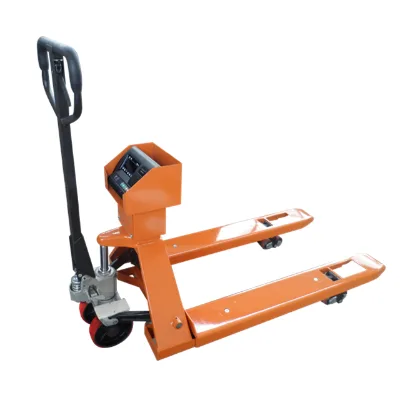


Electronic Weighing Scale 2000kg Lifting Cargo Digital Weighing Pallet Scale
$128.00 - $599.00
MOQ: 1 Pieces

Wholesale 3tons Digital Hand Forklift Scale Electronic Weighing Pallet Truck Scale
$128.00 - $599.00
MOQ: 1 Pieces

20tons Cheaper Electronic Weighing Scale Forklift Scale Crate and Pallet Scale
$250.00 - $500.00
MOQ: 1 Sets

2024 Wholesale Forklift Scale 1500kgs 2000kgs Electronic Pallet Scale for Logistics
$199.00 - $499.00
MOQ: 1 Pieces

Workshop Lifting Scales 1tons 2tons 2.5tons Electronic Pallet Scale for Logistics Use
$249.00 - $500.00
MOQ: 1 Pieces


Comprehensive Sourcing Guide
Strategic Sourcing Guide for Electronic Pallet Forklift Scales
The integration of weighing capabilities directly into material handling equipment represents a significant advancement in industrial efficiency. For procurement professionals investigating the core keyword "Electronic Pallet Forklift Scale," the market offers a convergence of heavy-duty logistics machinery and precision measurement technology. This guide synthesizes available product attributes and industry standards to provide a disciplined framework for evaluating these specialized assets. The primary objective is to distinguish between standard powered pallet trucks and those engineered with integrated electronic weighing systems, ensuring that procurement decisions are grounded in verified technical specifications rather than marketing assertions.
Technical Architecture and Core Specifications
Understanding the technical architecture of an Electronic Pallet Forklift Scale requires a granular analysis of its structural components and operational parameters. Based on observed product data, these units are fundamentally classified as electronic platform scales or powered pallet trucks with integrated measurement functions. The structural integrity is often maintained through the use of carbon steel or stainless steel, materials selected for their resistance to corrosion and ability to withstand high-load environments. The choice between these materials often depends on the specific application environment, such as food processing versus general warehousing.
The weighing mechanism itself is a critical differentiator. These units typically feature an accuracy class of III, which aligns with standard industrial requirements for trade and process control. The display interface is a vital component for operator interaction, with observed configurations including both LCD and LED display types. The graduation value, or the smallest increment the scale can reliably display, is a key metric for precision; observed data indicates a graduation value of 10k, which must be verified against the specific load requirements of the buyer's operations. The load capacity for these units generally ranges from 1 ton to 5 tons, with specific models offering capacities of 1t or 2t. This range allows for versatility in handling various palletized goods without requiring a separate weighing station.
The powertrain is another essential technical consideration. These are not manual devices but powered units driven by DC motors, with specific drive motor powers observed at 1.2kw and lifting motor powers at 0.8kw. The energy source is typically a 48V 32ah battery, ensuring sufficient runtime for continuous operation. The physical dimensions of the forks are equally critical for compatibility with standard pallets. Observed specifications include fork lengths ranging from 1600mm to 2000mm, with fork thicknesses of 60mm. The distance between inside forks is standardized at 365mm, while the outer distance of the forks can vary between 550mm and 685mm. These dimensions ensure that the scale can accommodate standard Euro pallets and other common shipping containers.
Operational Performance and Ergonomics
Beyond static specifications, the dynamic performance of an Electronic Pallet Forklift Scale dictates its suitability for high-throughput environments. The running speed of these units is typically observed between 4 and 4.5 km/h, a pace that balances efficiency with safety in crowded warehouse aisles. The lifting speed, which directly impacts cycle time, ranges from 15 to 19 mm/s. This lifting capability is controlled by the lifting motor and is synchronized with the weighing system to ensure that weight readings are stable before the operator proceeds.
Safety and control are managed through advanced braking systems. The observed brake types include electronic and electromagnetic brakes, which provide reliable stopping power in both loaded and unloaded states. The maximum fork height is generally limited to 200mm, indicating that these units are primarily designed for transport and weighing on the ground level rather than high-level stacking. The minimum fork height of 85mm allows for easy entry under low-profile pallets. The overall dimensions of the unit, including the battery and chassis, are substantial, with some models measuring approximately 1900mm in length, 685mm in width, and 1320mm in height. The total weight of the unit, including the battery, is observed to be around 282 kg, a factor that influences floor load requirements and maneuverability.
Compliance, Certification, and Standard Verification
When sourcing electronic pallet forklift scales, compliance with international standards is paramount. While specific certification status such as CE or ISO9001 may be observed in general market contexts, buyers must verify these claims directly with the supplier rather than assuming their presence based on general category knowledge. The accuracy class of III is a specific standard observation that should be confirmed in the product datasheet. This classification ensures that the device meets the requirements for non-automatic weighing instruments used in commercial transactions or process control.
Buyers should also scrutinize the product standard codes provided by manufacturers. For instance, specific model numbers like GS-PS or YK-A23 may correspond to internal manufacturing standards that define the dimensional tolerances and electrical safety protocols. The physical standard dimensions, such as 265mm180mm90mm for certain components, serve as reference points for integration but do not replace the need for a full safety audit. It is essential to request documentation proving that the electrical components, including the DC motor and battery system, meet the relevant safety regulations for the destination market. The absence of explicit certification claims in the provided data underscores the need for due diligence; buyers must demand third-party test reports or certificates of conformity before finalizing a purchase.
Cost Drivers and Procurement Economics
The cost of an Electronic Pallet Forklift Scale is influenced by a complex interplay of factors, including material composition, accuracy class, and battery capacity. The use of stainless steel, while offering superior corrosion resistance, typically commands a higher price point compared to carbon steel alternatives. Similarly, the inclusion of high-precision load cells and digital display systems adds to the manufacturing cost. The observed price range in the market spans from 100 to 1230 USD, though this wide variance likely reflects differences in capacity, brand positioning, and the inclusion of optional accessories.
Minimum Order Quantity (MOQ) is another economic factor to consider. The observed MOQ range is between 1 and 10 units, offering flexibility for small-scale operations while potentially providing volume discounts for larger procurement projects. The packaging method, whether wooden cases, corrugated cartons, or wooden pallets, also impacts logistics costs. Wooden pallets are often preferred for heavy machinery to prevent damage during transit, but they add weight and volume to the shipment. Buyers should calculate the total landed cost, including shipping, insurance, and potential customs duties, rather than focusing solely on the unit price. The condition of the product, typically listed as "New," ensures that the buyer receives a fully functional unit with a full warranty, which is a critical consideration for long-term operational continuity.
Typical Applications and Operational Scenarios
Electronic pallet forklift scales are designed for a variety of industrial applications where efficiency and accuracy are paramount. The primary use case is in warehouses and distribution centers where goods need to be weighed during the picking, packing, or shipping process. By integrating the weighing function into the transport vehicle, companies can eliminate the need for separate weighing stations, thereby streamlining the workflow and reducing labor costs. The automatic measure method allows for real-time data capture, which can be integrated into warehouse management systems (WMS) for inventory tracking.
In manufacturing environments, these scales are used for quality control and process monitoring. The ability to weigh raw materials or finished goods directly on the pallet facilitates immediate verification of batch weights, ensuring compliance with production specifications. The robust construction, with a load capacity up to 5 tons, makes these units suitable for heavy industrial applications, such as steel mills or chemical plants, where durability is essential. The optional color customization allows companies to brand their equipment or use color-coding to designate specific zones or functions within a facility. The square shape of the scale platform provides a stable base for various types of loads, enhancing safety during transport.
Supplier Evaluation and Quality Assurance
Selecting the right supplier for electronic pallet forklift scales requires a rigorous evaluation process. Buyers should prioritize suppliers who provide transparent technical documentation, including detailed specifications for the load cells, battery life, and display accuracy. The origin of the product, often listed as China, should be verified against the supplier's manufacturing capabilities and quality control processes. It is crucial to assess the supplier's track record in delivering electronic weighing equipment, as the integration of mechanical and electronic systems requires specialized expertise.
Quality control measures should be a central part of the procurement strategy. Buyers should request pre-shipment inspection reports that verify the accuracy of the weighing system under various load conditions. The graduation value of 10k and the accuracy class of III must be validated through independent testing. Additionally, the structural integrity of the carbon steel or stainless steel frame should be inspected for weld quality and material consistency. The packing method, whether wooden case or corrugated carton, should be evaluated to ensure it protects the sensitive electronic components during transit. Suppliers who offer customization options, such as specific fork dimensions or display types, demonstrate a higher level of flexibility and customer focus.
Long-Term Procurement and Maintenance Considerations
Long-term procurement success depends on the availability of spare parts and the ease of maintenance. The electronic components, including the DC motor, battery, and display unit, are subject to wear and tear and may require replacement over time. Buyers should inquire about the warranty period and the availability of service centers in their region. The battery specification of 48V 32ah is a standard configuration, but compatibility with replacement batteries from third-party vendors should be confirmed to avoid supply chain disruptions.
The operational lifespan of the unit is also influenced by the maintenance schedule. Regular calibration of the weighing system is necessary to maintain the accuracy class of III. Buyers should establish a maintenance protocol that includes periodic checks of the brake system, battery charge levels, and structural integrity of the forks. The optional nature of certain features, such as color customization, should be considered in the context of long-term branding and asset management. By focusing on these long-term factors, procurement professionals can ensure that their investment in electronic pallet forklift scales delivers sustained value and operational efficiency.
FAQs
What capacity ranges are available for electronic pallet forklift scales?
These units typically offer load capacities ranging from 1 ton to 5 tons, with specific models supporting 1t or 2t loads. This range allows for versatile handling of various palletized goods without requiring a separate weighing station.
How is the accuracy of these electronic scales classified?
The weighing mechanism generally features an accuracy class of III, which aligns with standard industrial requirements for trade and process control. This classification ensures the device meets requirements for non-automatic weighing instruments used in commercial transactions.
Which display types are commonly found on these scales?
Observed configurations include both LCD and LED display types for operator interaction. The display interface is a vital component for viewing weight readings and operational status during the transport and weighing process.
Can the product be customized for specific industrial needs?
Yes, customization is available for these units to meet specific requirements. Buyers can often request options such as specific fork dimensions, display types, or color customization to designate zones or functions within a facility.
What materials are used to construct the scale frame?
The structural integrity is maintained through the use of carbon steel or stainless steel. These materials are selected for their resistance to corrosion and ability to withstand high-load environments in various industrial settings.
What are the standard dimensions for the forks on these trucks?
Fork lengths typically range from 1600mm to 2000mm with a thickness of 60mm. The distance between inside forks is standardized at 365mm, ensuring compatibility with standard Euro pallets and common shipping containers.
How much does the unit weigh including the battery?
The total weight of the unit, including the battery, is observed to be around 282 kg. This factor influences floor load requirements and maneuverability when transporting heavy loads in warehouse aisles.