Source Electronic Lock Smart Cabinet for Office, School, and Gym
Find 30 Electronic Lock Smart Cabinet options from Chinese manufacturers. Compare features like CE certification, steel construction, and various door configurations for office, school, and gym environments. These units offer customizable sizes, multiple lock types, and durable materials suitable for high-traffic areas. Buyers can evaluate weight capacities and installation methods to select the best fit.
Key considerations
Products List


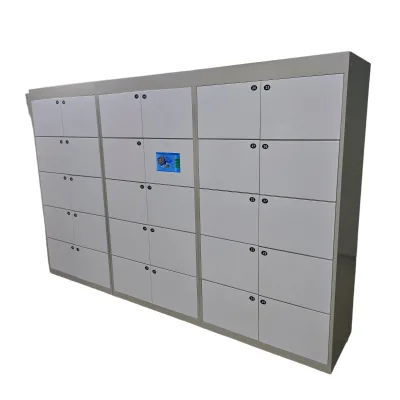


Smart Electronic Locker Cabinet with Key Lock for Inventory Management
$1800.00 - $2800.00
MOQ: 2 Pieces


Smart Metal Cabinet Pin Code Digital Lock Electronic Smart Storage Parcel Locker
$900.00 - $1800.00
MOQ: 1 Pieces


Facial Recognition Smart Electronic Touch Screen Metal Intelligent Steel Cabinet Locker
$2000.00 - $5000.00
MOQ: 1 Pieces

Best Price Electronic Locker Smart Locker Intelligent Logistic Locker
$1700.00 - $2300.00
MOQ: 1 Pieces

Smart Electronic Touch Screen Storage Locker with Fingerprint Recognition
$2000.00 - $5000.00
MOQ: 1 Pieces


Electronic Storage Box Smart Intelligent Key Handle Storage Cabinet Locker
$640.00 - $645.00
MOQ: 20 Pieces

Smart Key Management Cabinet Durable Key Safe Box Smart Key Management Cabinet
$640.00 - $645.00
MOQ: 20 Pieces


Electronic Key Storage RFID Key Locker Cabinet Real Time Key Tracking Cabinet
$640.00 - $645.00
MOQ: 20 Pieces


Comprehensive Sourcing Guide
Electronic Lock Smart Cabinet Sourcing Guide
Procurement teams must first distinguish between the structural configurations available in the current market, as observed listings indicate a split between combined type and assembled structures. Buyers should verify whether the unit requires a wall-mount or floor-mount installation, as the product attributes explicitly list both options depending on the specific model selected. This distinction is critical for facility planning, particularly when integrating these cabinets into existing office, school, or hospital environments where space constraints vary significantly.
The functional scope extends beyond simple storage to include advanced features like space-saving designs and water resistance, which are essential for high-traffic areas such as gyms or factories. Sourcing decisions must account for the variety of door closure types, ranging from automatic self-closing mechanisms to manual operation, alongside the specific lock types available, including electronic keypads and combination locks. Understanding these operational differences ensures the selected unit aligns with the intended usage frequency and security requirements of the target facility.
Product Scope and Observed Listing Signals
Market observations reveal a wide price spectrum ranging from $2.50 to $15,000, driven by variations in material composition and compartment counts. Buyers should note that the number of doors and compartments can vary significantly, with options including 5, 10, 15, 20, or 30 units, directly impacting the overall footprint and cost. The minimum order quantities also fluctuate between 1 and 1000 units, requiring procurement strategies that balance immediate needs against bulk purchasing advantages to optimize the total cost of ownership.
Material selection is a primary signal of quality, with listings citing sheet metal, stainless steel, and acrylic as common top and body materials. The thickness of the steel typically ranges from 0.6mm to 1.2mm, a specification that buyers must verify to ensure durability against daily wear and tear. Additionally, the presence of eco-friendly features, such as zero formaldehyde emissions, serves as a key differentiator for projects prioritizing indoor air quality and environmental compliance in sensitive environments like schools and hospitals.
Technical Specifications to Verify
Dimensional accuracy is paramount, as observed specifications include widths of 520mm and depths of 520mm, with heights reaching up to 1800mm or 1912mm depending on the model. Buyers must cross-reference these dimensions against their physical space constraints, noting that some units are designed with a folded structure while others are permanently assembled. The weight capacity, observed between 112 and 155 pounds, further dictates the suitability of the cabinet for storing heavy equipment or dense inventory loads.
Power requirements and electrical compatibility are critical technical factors, with listings specifying 110V 60Hz and 115V 60Hz inputs for electronic locking mechanisms. Procurement teams must verify that the facility's power infrastructure matches these requirements to prevent operational failures. Furthermore, the handle material, often aluminum or stainless steel, and the specific door handle types, such as recessed pull handles or coin-operated locks, must be selected to match the security level and user interface preferences of the end-users.
Compliance and Safety Documentation
Regulatory compliance is a non-negotiable aspect of sourcing, with observed standards including CE certification and ISO compliance for specific models. Buyers should request proof of these certifications to ensure the product meets international safety and quality benchmarks, particularly when importing from regions like Guangdong or Henan in China. The presence of Chinese standards alongside international marks indicates a dual-compliance approach, but verification of the specific test reports is necessary to confirm the validity of these claims for the intended market.
Safety documentation must also address the physical construction and material safety, specifically regarding the claim of zero formaldehyde emissions and water resistance. These attributes are vital for maintaining a healthy environment in enclosed spaces like offices and hotels. Procurement teams should ensure that the supplier provides detailed material safety data sheets and construction warranties that explicitly cover the durability of the metal components and the reliability of the electronic locking systems under various environmental conditions.
Cost Drivers and Commercial Terms
The total cost of ownership is heavily influenced by the customization options available, as the market data confirms that customization is a standard offering for these units. Buyers should evaluate the cost implications of specific requests, such as custom colors or tailored compartment configurations, which may increase the base price significantly. The payment terms, typically involving T/T or L/C, also play a role in the financial planning, requiring careful negotiation to align with the company's cash flow and risk management policies.
Shipping and packaging costs represent another significant variable, with observations indicating the use of plywood cases and various shipping methods. The weight of the units, often around 200kg, necessitates robust logistics planning to prevent damage during transit. Buyers must clarify whether the quoted price includes freight and insurance or if these are separate line items, as the final landed cost can vary drastically depending on the destination and the chosen shipping method.
Supplier Qualification and Quality Control
Supplier qualification should focus on the origin of the product, with observed listings pointing to manufacturers in Guangdong and Henan, China. Buyers must verify the production capabilities of these suppliers to ensure they can consistently deliver the required specifications, such as the specific model numbers like DKC or DBS. The ability to provide a single item or handle large orders up to 1000 units indicates the scalability of the supplier's operations, which is essential for meeting diverse procurement needs.
Quality control processes must be rigorously assessed, particularly regarding the assembly and finish of the metal components. The observation of features like easy assembly and durable construction suggests that the manufacturing process is designed for efficiency, but buyers should still request quality assurance protocols. Inspecting the finish of the aluminum and stainless steel handles, as well as the integrity of the electronic locks, is crucial to ensure the product meets the high standards expected for commercial and institutional use.
Long-Term Procurement Checks
Sustainability and long-term maintenance are key considerations for the lifecycle of the smart cabinet, especially given the eco-friendly and durable features highlighted in the product attributes. Buyers should establish a maintenance schedule that accounts for the electronic components and the mechanical wear on the door handles and locks. The availability of spare parts and the supplier's support for repairs will determine the longevity of the investment, particularly in high-usage environments like gyms and factories.
Future-proofing the procurement strategy involves monitoring the evolution of electronic lock technology and compatibility with existing building management systems. As the market offers both electronic keypad locks and combination locks, buyers should ensure the selected system can be upgraded or integrated with new security protocols without requiring a complete replacement. Regular audits of the supplier's performance and product updates will help maintain a secure and efficient storage solution over the long term.
FAQs
What customization options are available for electronic lock smart cabinets?
Customization is available for electronic lock smart cabinets to meet specific buyer requirements. You can select from various door closure types, including automatic self-closing or manual options. The structure can be combined or assembled, and the number of compartments ranges from 5 to 30. Colors and dimensions can also be adjusted according to customer needs for a tailored solution.
Which certifications apply to these smart lockers?
These smart lockers comply with CE and ISO standards, ensuring adherence to international quality and safety norms. Some products also meet Chinese standards and feature RoHS compliance. These certifications verify that the electronic lock mechanisms and structural materials meet rigorous regulatory requirements for use in offices, schools, and hospitals across global markets.
Can the Electronic Lock Smart Cabinet be wall or floor mounted?
Yes, the Electronic Lock Smart Cabinet supports both wall mount and floor mount installation methods. This flexibility allows for optimal space utilization in various environments. The unit weighs approximately 200kg and features a combined type structure, ensuring stability regardless of the chosen mounting configuration for secure storage in commercial or institutional settings.
What power requirements do these smart cabinets have?
These smart cabinets typically require 110v or 115v at 60hz power input. This standard electrical requirement ensures compatibility with common power supplies in many regions. The electronic lock mechanisms operate efficiently on this voltage, providing reliable access control for lockers used in gyms, hotels, and offices without needing specialized high-voltage infrastructure.
What materials are used in the construction of these lockers?
The lockers are constructed from sheet metal, stainless steel, and acrylic materials. The top material is sheet metal, while handles may be aluminum, stainless steel, or metal. This combination ensures durability and water resistance. The thickness ranges from 0.6 to 1.2mm, providing a sturdy structure that is eco-friendly and resistant to formaldehyde emissions.
How many compartments are available in these smart lockers?
These smart lockers are available with 5, 10, 15, 20, or 30 compartments. The number of doors matches the compartment count, offering flexible storage solutions. Each unit can include up to 10 shelves, maximizing vertical space. This variety allows buyers to select the exact capacity needed for their specific operational requirements in schools or workplaces.