Source Electronic Paper Gum Tape Dispenser for Office Work, Handicrafts, Outpacking
Compare 30 listings for the Electronic Paper Gum Tape Dispenser suitable for office work, handicrafts, and outpacking. Buyers can review models like CR-Dispenser and GSBZJ-008 with varying speeds and tape capacities.
Key considerations
Products List


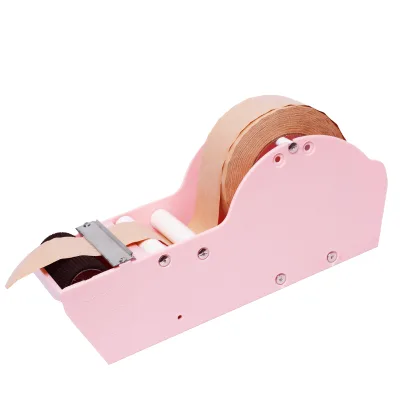
Semi-Automatic Gummed Paper Dispenser Large Roll Packing Tape Dispenser
$250.00 - $300.00
MOQ: 1 Pieces

Semi-Automatic Manual Gummed Paper Tape Dispenser for All Carton Sealing Purposes
$300.00 - $350.00
MOQ: 1 Pieces




Comprehensive Sourcing Guide
Strategic Sourcing Guide for Electronic Paper Gum Tape Dispensers
The procurement landscape for specialized packaging machinery, specifically devices utilizing electronic paper technology in conjunction with gummed tape dispensing mechanisms, requires a nuanced approach. Buyers entering this sector must distinguish between manual, semi-automatic, and fully automatic configurations, as the operational efficiency and cost structures vary significantly across these categories. The core keyword "Electronic Paper Gum Tape Dispenser" suggests a convergence of digital display capabilities for operational parameters and traditional adhesive tape dispensing functions. While the market offers a spectrum of solutions ranging from simple manual tools to complex automated systems, the procurement strategy must be grounded in verified technical attributes rather than speculative marketing claims. This guide outlines the critical factors for sourcing these units, focusing on technical specifications, compliance verification, cost analysis, and quality assurance protocols derived from observed industry data.
Technical Specifications and Operational Configurations
Understanding the technical architecture of the dispenser is the first step in any successful procurement process. The available market data indicates a clear divergence in product models, ranging from specific manual serrated knife variants to fully automatic carton sealing units. For buyers seeking "electronic paper" integration, the focus should be on models that feature digital interfaces for tape length control and speed monitoring. Observed specifications reveal that automatic models often include precise dispensing capabilities, with tape length settings ranging from 10 to 999 centimeters. This range allows for significant flexibility in packaging different box sizes, a critical requirement for logistics and fulfillment centers.
Furthermore, the physical dimensions of the machinery are paramount for facility planning. High-end automatic units have been observed with dimensions such as 520mm in length, 340mm in width, and 270mm in height. These measurements define the footprint required on a production line. The speed of operation is another vital metric; observed data points to a dispensing speed of approximately 430.4mm per second, contingent on paper length constraints. Buyers must verify if the specific model they are evaluating supports this speed or if it is limited by the mechanical properties of the consumable materials. The bearing capacity and weight of the units also play a role; some units are noted with a bearing specification of 0.5kg, while the shipping weight for larger sets can reach 14kgs. These figures are essential for calculating logistics costs and ensuring the receiving facility has adequate structural support.
Material Compatibility and Consumable Requirements
The performance of a gum tape dispenser is inextricably linked to the materials it processes. The supply chain for these machines must align with the specific consumables they are designed to handle. Data indicates that the primary consumable material for these systems is absorbent kraft paper, often in the form of water-activated tape. This tape is available in both reinforced and non-reinforced varieties, each offering different tensile strengths and adhesion properties. The dispenser must be capable of wetting the tape effectively, which implies the need for a dedicated water tank. Observed models feature a water tank capacity of 1.5 liters, which dictates the frequency of refilling and the operational continuity of the machine.
In addition to the tape itself, the machine's construction materials must be durable. The product attributes list both metal and plastic as primary materials for the dispenser bodies. Metal components, such as serrated blades, are often used for cutting mechanisms, while plastic parts may be utilized for housing or non-load-bearing components. The maximum diameter of the tape roll that the dispenser can accommodate is a critical specification; observed units support rolls up to 200mm in diameter. Similarly, the maximum length of the tape roll is noted to be 600mm. Procurement teams must ensure that the selected model matches the roll specifications of their existing inventory to avoid compatibility issues that could lead to production stoppages.
Compliance, Certification, and Safety Standards
While specific certification data for every unit may not be explicitly listed in general product catalogs, buyers must conduct rigorous due diligence regarding compliance. The industry standard for machinery often includes certifications such as CE, RoHS, ISO 9001, ISO 14001, and ISO 45001. Although these are listed as background information, they represent the baseline expectations for safe and environmentally compliant equipment. Buyers should explicitly request proof of these certifications from the supplier before finalizing a purchase. The absence of such documentation should be treated as a red flag, particularly for machinery intended for use in regulated environments or export markets.
Safety is paramount when dealing with automated cutting and dispensing mechanisms. The presence of metal serrated blades and moving parts necessitates strict adherence to safety standards. Buyers should verify that the machine includes necessary safety interlocks and emergency stop features. The origin of the product is another compliance factor; observed data points to manufacturing origins in Anhui, China, and other regions within China. Understanding the regulatory environment of the manufacturing location can provide insights into the quality control rigor applied during production. Buyers should also check for any specific regional standards that the machine must meet, such as electrical safety standards for the automatic motors and control systems.
Cost Drivers and Total Cost of Ownership
The pricing for electronic paper gum tape dispensers varies widely, with observed ranges spanning from $0.10 to $700.00. This broad spectrum reflects the difference between simple manual tools and complex automatic systems. The cost drivers include the level of automation, the quality of materials used in construction, and the complexity of the electronic interface. Manual models, which may feature cartoon styles or simple metal serrated blades, tend to be at the lower end of the price range. In contrast, fully automatic units with digital displays, precise speed control, and larger water tanks command higher prices.
Beyond the initial purchase price, buyers must consider the total cost of ownership (TCO). This includes the cost of consumables, maintenance, and energy consumption. The lifetime of the machine is a significant factor; observed data suggests a product lifetime of 3 years for certain models. This longevity directly impacts the amortization of the initial investment. Additionally, the packaging and shipping costs must be factored in, as some units come in independent wooden packages or cartons with specific quantities per container, such as 36 pieces or 24 pieces per carton. The shipping weight of 14kgs for certain sets also influences freight costs. Buyers should calculate the cost per unit of packaging output to determine the true economic viability of the investment.
Supplier Evaluation and Quality Assurance
Selecting the right supplier is as critical as selecting the right machine. The market contains a variety of models with different specifications, such as the CR-Dispenser series and the GSBZJ-008 model. Buyers should evaluate suppliers based on their ability to provide consistent product quality and after-sales support. The minimum order quantity (MOQ) can range from 1 to 3000 units, which offers flexibility for both small businesses and large enterprises. However, a low MOQ does not necessarily indicate a lack of quality; it may simply reflect the supplier's business model.
Quality assurance protocols should be a central part of the supplier evaluation process. Buyers should request sample units to test the dispensing accuracy, the durability of the water tank, and the reliability of the electronic interface. The consistency of the tape cutting mechanism is particularly important; any deviation in the 10-999cm range can lead to material waste. Furthermore, the supplier's ability to provide spare parts, such as code tapers or replacement blades, is essential for long-term maintenance. The origin of the product, specifically Anhui China, suggests a concentration of manufacturing capabilities in that region, which buyers can leverage for site visits or third-party inspections.
Long-Term Procurement and Application Scenarios
The application scenarios for these dispensers are diverse, ranging from office work to handicrafts and large-scale outpacking. The versatility of the machines allows them to be used in various settings, but the specific requirements of each application must be matched to the machine's capabilities. For office environments, manual or semi-automatic models with a small specification size may be sufficient. In contrast, industrial outpacking operations will require fully automatic units with high-speed dispensing and large roll capacities.
Long-term procurement considerations include the scalability of the solution. As a business grows, the demand for packaging may increase, necessitating a transition from manual to automatic systems. Buyers should plan for this transition by selecting suppliers who offer a range of models that can be upgraded or expanded. The availability of customization options is also a key factor; observed data confirms that customization is available for these products. This allows buyers to tailor the machine to their specific workflow requirements, such as adjusting the dispensing speed or modifying the water tank capacity.
Conclusion
Sourcing electronic paper gum tape dispensers requires a balanced approach that weighs technical specifications against cost and compliance requirements. By focusing on verified data regarding dimensions, material compatibility, and operational speeds, buyers can make informed decisions that align with their operational needs. The wide range of available models, from manual serrated knife tools to fully automatic carton sealers, offers flexibility for different market segments. However, the success of the procurement depends on rigorous supplier evaluation, adherence to safety standards, and a clear understanding of the total cost of ownership. As the packaging industry continues to evolve, the ability to integrate electronic paper technology with traditional dispensing mechanisms will become increasingly important for maintaining efficiency and reducing waste. Buyers must remain vigilant in their due diligence to ensure that the selected equipment meets both current and future operational demands.
FAQs
What materials are used for electronic paper gum tape dispensers?
These dispensers are constructed from metal and plastic materials. Metal components often include serrated blades for cutting, while plastic parts are used for housing, ensuring durability for office work and handicraft applications.
Which specifications define the tape roll capacity?
The maximum diameter of the tape roll is 200mm and the maximum length is 600mm. These dimensions ensure compatibility with standard rolls used in manual and automatic sealing operations.
How is the dispensing length controlled on automatic models?
Automatic models allow dispensing tape lengths ranging from 10 to 999 centimeters. This adjustable range supports various box sizes and packaging requirements in industrial outpacking scenarios.
Can the water tank capacity be customized for continuous use?
Standard units feature a 1.5-liter water tank designed for water-activated tape. Customization is available to meet specific operational needs, though the base capacity supports extended use without frequent refilling.
What is the expected lifetime of the automatic machine?
The observed product lifetime for these machines is 3 years. This duration reflects the durability of the mechanical properties and construction materials used in the full automatic filling and sealing process.
Which packing configurations are available for bulk orders?
Packing options include 36 pieces per carton, 24 pieces per carton, or independent wooden packages. These configurations vary by model and are selected based on the specific shipping and storage requirements.
What are the dimensions of the large automatic carton sealer?
The large automatic unit measures 520mm in length, 340mm in width, and 270mm in height. These dimensions define the footprint required for installation in office or industrial workspaces.