Find EN-71 certified sports kendama for kids, schools, and events
Source 30 verified options for EN-71 certified sports kendama designed for children and enthusiasts. Buyers can compare eco-friendly wooden models, plastic variants, and customizable OEM options with diverse age ranges and certifications like ASTM and CE.
Key considerations
Products List
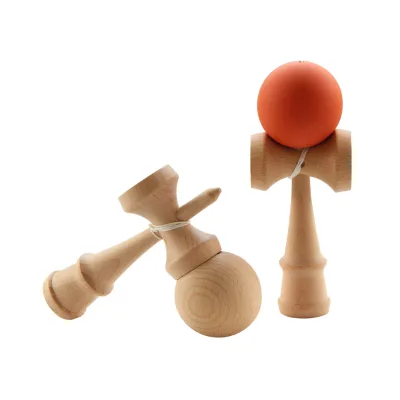
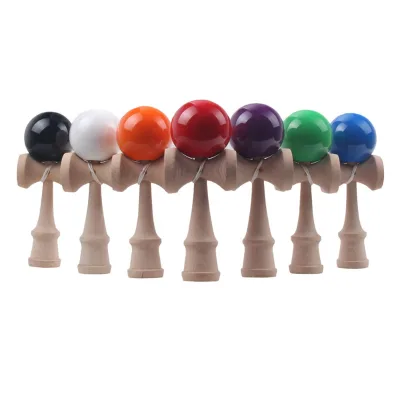


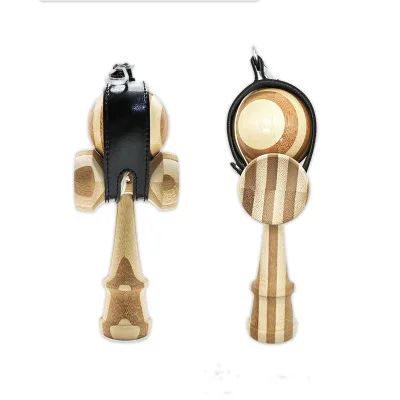


$4.99 - $16.99
MOQ: 1000 PIECE



Comprehensive Sourcing Guide
Sourcing Guide for EN-71 Certified Sports Kendama
The global market for traditional wooden toys has seen a resurgence in demand for skill-based games that combine physical dexterity with cognitive development. Among these, the kendama has emerged as a prominent product, particularly for buyers seeking items that align with educational and developmental goals. When sourcing a product described as an "EN-71 certified sports kendama," procurement professionals must navigate a landscape where specific product attributes, material compositions, and regulatory compliance intersect. This guide provides a structured approach to evaluating suppliers and products based on verified data points and industry standards, ensuring that the final procurement decision is grounded in factual evidence rather than marketing assertions.
Understanding Product Attributes and Functional Specifications
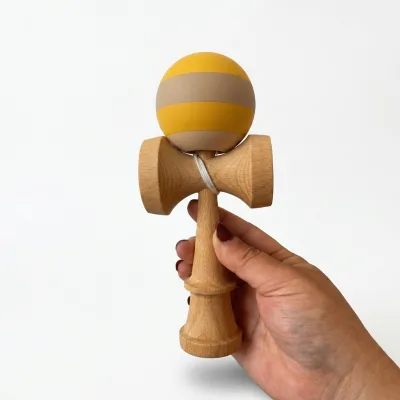
The foundation of any successful sourcing decision lies in a precise understanding of the product's physical and functional characteristics. In the context of kendama, the product is fundamentally defined as a "Playing" item, yet it is simultaneously categorized under "Other Educational Toys" with a specific focus on "Educationl" utility. This dual nature requires buyers to look for specifications that balance recreational appeal with developmental benefits. The observed product data indicates a distinct "Style" described as "Innovative," suggesting that modern designs may deviate from traditional forms while retaining the core mechanics of the game.
Material composition is a critical differentiator in this category. The supplied facts explicitly identify "wood" as a primary material, alongside mentions of "Eco-friendly" attributes. This distinction is vital for buyers targeting markets with strict environmental regulations or consumers prioritizing sustainability. The product is also described as "Colorful," which aligns with the "Color" attribute observed in the data, indicating that aesthetic variety is a standard feature. Furthermore, the "Gender" is listed as "Unisex," and the "Player" count is "Single," confirming that these are individual skill games rather than team-based sports equipment.
Technical dimensions also play a significant role in the user experience. The data presents specific size variations, with one entry noting a size of "18*7cm" and another referencing a standard of "23cm." This discrepancy highlights the importance of verifying the exact dimensions required for the target demographic. The "Single package size" is recorded as "20X8X8 cm," and the "Single gross weight" is "0.200 kg." These figures are essential for calculating shipping costs and determining the most efficient packing configuration. Additionally, the "Weight" of the component parts is noted to range between "10-35g," which influences the difficulty level and the tactile feel of the toy.
Compliance and Certification Verification
For any toy intended for international distribution, particularly in Europe and North America, compliance with safety standards is non-negotiable. The core keyword "EN-71 certified" refers to a suite of European safety standards for toys. The provided product facts confirm that several listings explicitly state "EN71" and "ASTM" as certifications. Specifically, the data lists "EN71 ASTM" and "ENASTM,CE" as available certifications. It is important to note that while "EN71" is a standard, the specific test results or the scope of the certification (e.g., mechanical safety, flammability, chemical migration) must be verified on a per-shipment basis.
The presence of "CE" certification in the data further supports the claim of European market readiness. However, buyers must distinguish between a supplier's claim of certification and the actual possession of valid test reports. The data mentions "Test: En71" as a standard, but it does not provide specific test report numbers or dates. Therefore, a robust procurement strategy must include a requirement for the supplier to provide current, third-party test reports that correspond to the specific batch of goods being ordered. Relying solely on the "Certificate" field in a product listing is insufficient for high-volume orders.
Furthermore, the "Plastic Type" is identified as "PP" (Polypropylene) in some listings, which implies that the product may contain plastic components in addition to wood. This necessitates checking for compliance with chemical safety standards regarding plasticizers and heavy metals, which are often covered under the EN-71 Part 3 and ASTM F963 standards. The "Standard" field in the data lists "23cm," which appears to be a dimensional standard rather than a safety standard, reinforcing the need for buyers to carefully parse the difference between physical specifications and regulatory compliance.
Cost Drivers and Pricing Structures
The pricing landscape for kendama products is highly variable, as evidenced by the observed listed price range of $0.59 to $40,000. This wide disparity is not indicative of a single product type but rather reflects the spectrum from low-cost promotional items to high-end, bulk industrial orders or specialized customizations. The "Selling Units" are listed as "Single item," suggesting that the base price refers to individual units, while the high-end figures likely represent total order values for large quantities.
A primary cost driver in this category is the Minimum Order Quantity (MOQ). The data shows an MOQ range from 1 to 2000 units, with specific entries listing "20" and "1000PCS" as common thresholds. Suppliers with lower MOQs often charge a higher unit price to cover setup and administrative costs, whereas suppliers requiring 1000 units or more can offer more competitive pricing due to economies of scale. Buyers must align their order volume with the supplier's MOQ to optimize costs.
Material sourcing is another significant factor. The use of "wood" and "Eco-friendly" materials typically commands a premium over synthetic alternatives, especially if the wood is sustainably sourced or treated with specific non-toxic finishes. The "Customization" attribute is marked as "Available," and "Logo Print" options like "Simple Color" or "Logo Sticker" are noted. Customization services, including OEM branding and specific packaging requirements like "Color Box" or "PVC Tube," will invariably increase the unit cost. Additionally, the "Sample time" of 7 days and "Sample Time" of 7-10 days indicates that the production cycle includes a prototyping phase, which adds to the overall timeline and potentially the cost if rush fees are applied.
Typical Applications and Target Demographics
The versatility of the kendama allows it to serve multiple applications, ranging from educational tools to recreational sports equipment. The "Usage" attribute is described as "Widely Used" and specifically noted for "Outdoor,Indoor" environments. This flexibility makes the product suitable for a variety of settings, including schools, playgrounds, and home environments. The "Type" is classified as "Other Educational Toys," and the "Description" explicitly mentions "Educationl," suggesting that the product is marketed towards developmental play.
Age range is a critical factor in application. The data lists a broad spectrum of "Age Range," including "0 to 24 Months," "2 to 4 Years," "5 to 7 years," "8 to 13 Years," and "14 Years & up." This indicates that kendama designs vary significantly to accommodate different motor skill levels. For instance, products targeting "0 to 24 Months" likely have larger, simpler components, while those for "14 Years & up" may feature more complex ball configurations and sharper edges. The "Name1" attribute, "kendama balls," further emphasizes the core component that defines the gameplay.
The "Brand Name" varies from specific commercial names like "piggyfun" to generic "OEM" labels, indicating that the product is often sold as a white-label item. This is particularly relevant for buyers looking to create their own brand. The "Customized" attribute confirms that branding is a common requirement. The "Style" being "Innovative" suggests that these toys are often used in marketing campaigns aimed at modernizing traditional play, appealing to parents and educators who seek alternatives to digital entertainment.
Supplier Evaluation and Production Capabilities
When evaluating potential suppliers, buyers must look beyond the basic product listing and assess the supplier's production capacity and logistical capabilities. The "Place of Origin" is consistently listed as "ZHE," "Zhejiang, China," or "ZheJiang,China(Mainland)," indicating a concentration of manufacturing in this specific region. This geographic concentration can be advantageous for supply chain consolidation but requires verification of the specific factory's capabilities.
Production capacity is often inferred from the "Qty/Ctn" (Quantity per Carton) and "Ctn Meas" (Carton Measurement). The data shows a "Qty/Ctn" of 240 units and a "Ctn Meas" of "586065cm," with a "GW/NW" (Gross Weight/Net Weight) of "22/20kg." These figures are essential for calculating container loading efficiency and shipping costs. A supplier who can consistently pack 240 units per carton with a net weight of 20kg demonstrates a standardized and efficient packing process.
The "Sample time" of 7 days and "Sample Time" of 7-10 days provides insight into the supplier's responsiveness. A shorter sample time generally indicates a more agile production line, which is beneficial for buyers needing to validate product quality before committing to large orders. The "Logo Print" options, such as "Simple Color" and "Logo Sticker," suggest that the supplier has established printing capabilities, but buyers should verify the quality of these prints on actual samples.
Quality Control and Long-Term Procurement Considerations
Ensuring consistent quality is paramount in the toy industry, where safety and durability are paramount. The "Certificate" field lists "EN71 ASTM" and "CE," but these are static claims. Effective quality control requires a dynamic approach, including pre-shipment inspections and random sampling. Buyers should verify that the "Test: En71" mentioned in the data corresponds to the specific materials and finishes used in the current production run.
Long-term procurement considerations involve the stability of the supply chain. The "Customization: Available" and "Customized" attributes suggest that the supplier is willing to adapt to changing market needs. However, buyers must ensure that the "Eco-friendly" claims are backed by verifiable material certifications, especially if the product is marketed to environmentally conscious consumers. The "Packing" options, including "Color Box" and "cartons," offer flexibility, but the durability of the packaging must be sufficient to protect the "Colorful" and "Innovative" product during transit.
The "Weight" range of 10-35g for the components and the "Single gross weight" of 0.200 kg for the package are critical for logistics planning. Variations in these weights can affect shipping costs and inventory management. Buyers should establish clear specifications for weight tolerances to avoid receiving products that are too heavy or too light, which could impact the user experience and safety.
Comparative Analysis of Product Variants
To assist in decision-making, the following table summarizes key attributes observed in the supplied data, highlighting the variations available in the market.
| Attribute | Variant A (Standard) | Variant B (Bulk/OEM) | Variant C (Custom) |
|---|---|---|---|
| Model Number | TH2118 | AT11482 | Custom |
| Material | Wood | Wood | Wood/PP |
| Certification | EN71 ASTM | ENASTM, CE | EN71 |
| MOQ | 20 | 1000 PCS | Negotiable |
| Age Range | 2-14+ Years | 0-13 Years | Specific |
| Packing | Color Box | Color box or cartons | PVC Tube |
| Sample Time | 7 Days | 7-10 Days | 7 Days |
| Brand | piggyfun | OEM | Custom Logo |
| Origin | ZHE | ZheJiang, China | China |
This comparison illustrates that while the core product remains a wooden kendama, the specifics of certification, MOQ, and packaging can vary significantly. Buyers must carefully match these attributes to their specific market requirements and logistical constraints.
In conclusion, sourcing EN-71 certified sports kendama requires a meticulous approach that balances product specifications, regulatory compliance, and supplier capabilities. By focusing on verified data points such as material composition, certification status, and production metrics, buyers can mitigate risks and ensure the delivery of high-quality, safe, and engaging products. The diversity in age ranges, customization options, and packaging styles offers ample opportunity for strategic sourcing, provided that due diligence is maintained throughout the procurement process.
FAQs
What certifications are required for this kendama?
The product must hold EN71 and ASTM certifications for international safety compliance. Some listings also include CE certification to meet European standards. Buyers should request specific test reports for each batch to verify these claims before ordering.
Which materials are used to make the kendama?
The primary material is wood, described as eco-friendly in the product specifications. Some variations may include PP plastic components. This combination ensures durability while maintaining the traditional feel of the toy for various age groups.
Can I customize the logo and packaging?
Yes, customization is available for logo printing and packaging styles. Suppliers offer options like simple color printing or logo stickers on the product. Packaging can be selected as color boxes or cartons depending on the order requirements.
What is the minimum order quantity for this item?
The minimum order quantity varies between 20 and 1000 pieces depending on the supplier. Some vendors accept orders as low as 20 units, while others require 1000 pieces for standard pricing. Buyers must check specific supplier terms to align with their volume needs.
How long does it take to receive a sample?
Sample preparation typically takes 7 to 10 days for delivery. This timeline allows for the creation of prototypes with custom logos or specific dimensions. Rush fees may apply if a faster turnaround is required for urgent product validation.
Where are these kendama products manufactured?
The products originate from Zhejiang, China, specifically noted as ZHE or Mainland China. This region is a known hub for toy manufacturing with established supply chains. Buyers should verify the specific factory location within this province for logistics planning.
What age range is suitable for this toy?
The kendama is designed for a wide age range from 0 to 24 months up to 14 years and older. Different models cater to specific developmental stages, with sizes and weights adjusted for motor skill levels. Ensure the selected model matches the target user's age group.