Find EMV Certified Fixed POS System with Thermal Printer for Hotel, Restaurant, Supermarket
Source 30 EMV Certified Fixed POS System with Thermal Printer options for hotel, restaurant, and supermarket applications. Compare models like Hbapos Hab-Q3 and HBA-S100 featuring Windows OS, Intel CPUs, and customizable configurations to find the right solution.
Key considerations
Products List


POS 15.6 Inch Touch Monitor POS System with 2D Scanner Thermal Printer
$365.00 - $369.00
MOQ: 1 Pieces

POS Terminal 15.6 Inch Windows POS System with Scanner Thermal Printer
$365.00 - $369.00
MOQ: 1 Pieces


POS System 80mm Thermal Invoice Printer Cheap Desktop Thermal Receipt Ticket Printer
$19.90 - $28.50
MOQ: 2 Pieces

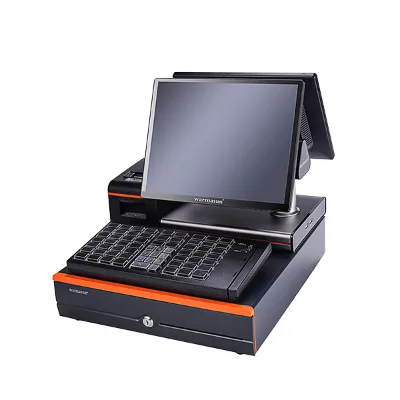


All in One Handheld POS Terminal with Electronic Cash Register Thermal Printer
$160.00 - $180.00
MOQ: 1 Pieces
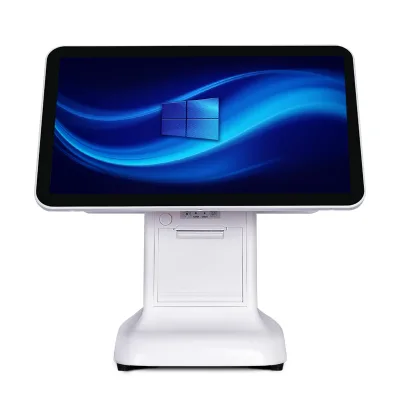
15.6 Inch Desk Stand POS System with Optional Fingerprint Recognition Built-in Thermal Printer
$259.00 - $399.00
MOQ: 1 Minimum
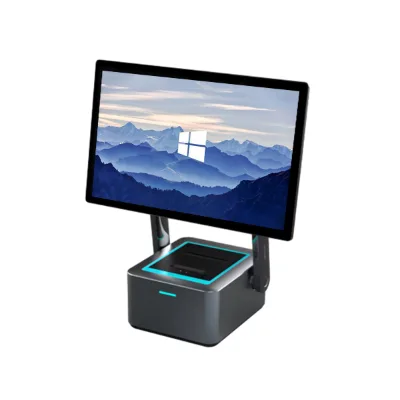


Comprehensive Sourcing Guide
Strategic Sourcing Guide for EMV Certified Fixed POS Systems with Thermal Printers
Technical Architecture and Core Specifications
When evaluating a fixed Point of Sale (POS) system equipped with a thermal printer, the primary focus must be on the integration of hardware components that ensure operational stability in high-volume environments. The core architecture typically centers on a fixed form factor, designed to remain stationary at a checkout counter or service desk, distinguishing it from mobile or handheld alternatives. The system's processing power is a critical determinant of performance, with Intel-based processors serving as a standard baseline for reliable transaction handling. Buyers should verify that the selected unit utilizes an Intel CPU, as this architecture offers the necessary throughput for running complex operating systems and managing peripheral communication without latency.
The operating environment for these systems is predominantly Windows-based, with specific configurations often supporting Windows 7, Windows 10, or Windows 11. This software flexibility allows businesses to deploy industry-specific applications while maintaining compatibility with legacy or modern POS software suites. Storage capacity is another vital technical specification; the internal solid-state drive (SSD) configuration varies significantly across models, with observed ranges including 64GB, 128GB, 256GB, and 512GB options. The choice of storage directly impacts boot times and the ability to store transaction logs locally, which is essential for systems that may experience intermittent network connectivity.
Memory (RAM) allocation is equally critical for multitasking capabilities. Available configurations often include 4GB, 8GB, and 16GB options, allowing buyers to match the system's memory to their specific application load. For a fixed POS system, the inclusion of a thermal printer is a non-negotiable feature for many retail and hospitality sectors. The printer specifications typically adhere to an 80mm width standard, ensuring compatibility with receipt paper rolls used in most commercial settings. The system's ability to manage multiple peripherals, such as barcode scanners, cash drawers, and customer displays, is facilitated through robust connectivity options, often including support for WiFi and NFC capabilities.
Compliance and Certification Verification
In the financial and retail sectors, regulatory compliance is not merely a preference but a mandatory requirement for processing card transactions. The core keyword specifically highlights "EMV certified" systems, indicating that the hardware must meet the standards set by the EMVCo organization for chip card transactions. Verification of this certification is the first step in the procurement process. Buyers must confirm that the specific POS terminal model carries the EMV certification mark, which ensures that the device can securely read chip cards and process transactions in compliance with global banking standards.
Beyond EMV, a comprehensive compliance check should include other international and regional certifications. The supplied data indicates that many units in this category also carry CE, FCC, and CCC certifications. The CE mark signifies conformity with health, safety, and environmental protection standards for products sold within the European Economic Area. The FCC certification is essential for devices operating in the United States, ensuring that electromagnetic interference is within acceptable limits. The CCC mark is a mandatory certification for products sold in China, covering safety and quality standards.
Buyers must treat these certifications as specific attributes of the model being sourced rather than universal guarantees for all listed products. It is imperative to request current certification documentation from the supplier for the exact model number, such as the Hab-Q3, HBA-X10, or HBA-S100, as certification status can vary between production batches or specific configurations. The presence of these certifications on the product listing is a strong indicator of compliance, but physical verification of the certification labels on the device itself is recommended upon receipt. Additionally, the system's network management capabilities should be verified to ensure it supports secure data transmission protocols required for financial transactions.
Cost Drivers and Pricing Variables
The pricing of fixed POS systems with thermal printers is influenced by a complex matrix of hardware specifications, certification status, and customization options. The observed market range for these systems spans from approximately $1 to over $600 USD, reflecting the vast difference between basic entry-level units and high-end configurations. Several key factors drive these cost variations. First, the internal hardware configuration, specifically the combination of CPU speed, RAM capacity, and SSD storage size, is a primary cost driver. A system equipped with an Intel Celeron processor, 4GB of RAM, and a 64GB SSD will naturally be priced lower than a unit with higher-tier components and larger storage capacities.
Second, the inclusion of optional peripherals significantly impacts the final price. While the base unit includes the thermal printer and touch screen, add-ons such as customer displays, NFC modules, and barcode readers are often listed as optional features. The decision to bundle these accessories with the main unit will increase the total cost. Furthermore, the customization availability noted in product attributes suggests that buyers can request specific branding or interface modifications, which may incur additional fees.
The minimum order quantity (MOQ) also plays a role in the effective unit cost. Observed MOQ ranges from 1 to 50 units, meaning that buyers purchasing in bulk may negotiate better pricing tiers compared to single-unit purchases. However, buyers must be cautious of the wide price disparity; a unit priced at the lower end of the spectrum may lack certain certifications or have lower durability ratings compared to a premium model. The weight of the unit, ranging from 4.5kg to 10kg, can also be an indirect cost factor, influencing shipping logistics and packaging requirements. Buyers should analyze the total cost of ownership, including potential shipping costs based on the product's weight and dimensions, rather than focusing solely on the unit price.
Typical Applications and Industry Fit
Fixed POS systems with thermal printers are designed to serve a diverse range of industries where transaction speed, reliability, and durability are paramount. The primary application sectors identified include hotels, restaurants, hospitality venues, and supermarkets. In the hospitality and restaurant sectors, the system's ability to handle "POS for Consuming" functions is critical. This involves managing complex order entries, table management, and split billing, all of which require a responsive touch screen and a reliable thermal printer for immediate receipt generation. The fixed nature of the system ensures it remains securely in place during high-traffic service periods.
For supermarkets and retail environments, the "POS for Transfering" function is often relevant, facilitating inventory transfers and stock management. The system's compatibility with barcode scanners and cash drawers makes it ideal for high-volume checkout lanes where speed is essential. The 80mm thermal printer ensures that receipts are printed quickly and legibly, a necessity for customer satisfaction in retail settings. Additionally, the system's support for various card types, including Magcard and IC Card, allows it to accommodate a wide range of payment methods, from traditional magnetic stripe cards to modern chip cards.
The versatility of the system extends to its ability to integrate with other devices. The compatibility with barcode scanners and printers allows for a seamless workflow where inventory checks and sales transactions are synchronized. The operating system's flexibility, supporting Windows 7, 10, or 11, enables the deployment of specialized software tailored to specific industry needs, such as hotel management systems or point-of-sale applications for fast food chains. The fixed form factor is particularly advantageous in environments where the terminal is not intended to be moved frequently, such as at a cashier's station or a dedicated service counter.
Supplier Evaluation and Quality Control
Evaluating suppliers for fixed POS systems requires a rigorous approach to ensure that the products meet the specified technical and compliance standards. The first step is to verify the supplier's ability to provide detailed product specifications that match the observed attributes, such as the specific model numbers (e.g., HBA-Q3, HBA-S100) and the exact certification details. Buyers should request a comprehensive datasheet that outlines the CPU type, RAM options, SSD capacity, and the specific certifications held by the unit. It is crucial to confirm that the supplier can provide proof of EMV, CE, FCC, and CCC certifications for the specific batch being ordered.
Quality control measures should be a central part of the supplier evaluation process. Buyers should inquire about the manufacturing standards and the testing procedures employed by the supplier. The product attributes indicate that the systems are packed in cartons and foam, suggesting a focus on protecting the device during transit. However, buyers should verify the packaging standards to ensure that the unit arrives in pristine condition, especially given the weight and fragility of the internal components. The warranty period, typically listed as one year, is another critical factor. Buyers should clarify the terms of the warranty, including what is covered, the process for claims, and the availability of technical support.
The place of origin, often listed as Guangdong or Guangzhou, China, provides insight into the manufacturing ecosystem. While this region is known for its electronics manufacturing capabilities, buyers should still conduct due diligence on the specific factory's reputation and quality control history. The ability to customize the product, as noted in the attributes, is a positive indicator of a supplier's flexibility and customer service orientation. However, buyers must ensure that customization does not compromise the system's compliance or performance. Finally, the supplier's lead time and ability to meet the minimum order quantity requirements should be discussed to ensure that the procurement timeline aligns with business needs.
Long-Term Procurement and Maintenance Considerations
Procuring a fixed POS system is a long-term investment that requires careful consideration of future maintenance, scalability, and support. The operating system version, whether Windows 7, 10, or 11, has significant implications for long-term viability. Buyers should prioritize systems running on supported versions of Windows to ensure continued security updates and software compatibility. The availability of spare parts, such as thermal printer heads and power adapters, is another critical factor. A system with a 64GB or 128GB SSD may require an upgrade or replacement as data storage needs grow, so the supplier's ability to provide upgrade paths or compatible components should be assessed.
The warranty period of one year is a standard baseline, but buyers should explore options for extended warranties or service contracts that cover hardware failures and software support. The system's network management capabilities are essential for remote monitoring and troubleshooting, reducing downtime and maintenance costs. Buyers should verify that the supplier offers remote support services or has a local technical team capable of addressing hardware issues promptly. The weight and dimensions of the unit, such as the 452748CM or 484312CM specifications, should be considered in the context of the physical space available at the point of sale.
Finally, the compatibility with future technologies, such as NFC and advanced barcode readers, ensures that the system remains relevant as payment methods and retail technologies evolve. The ability to customize the system allows businesses to adapt to changing operational requirements without needing to replace the entire unit. By focusing on these long-term factors, buyers can ensure that their investment in a fixed POS system with a thermal printer provides a reliable and scalable solution for their business operations.
FAQs
What certifications do these fixed POS systems hold?
These systems typically hold EMV, CE, FCC, and CCC certifications. Buyers must verify that the specific model, such as HBA-Q3 or HBA-S100, carries these marks as certification status can vary between production batches.
Which operating systems are supported by the POS units?
The units support Windows 7, Windows 10, and Windows 11 operating systems. This flexibility allows businesses to deploy industry-specific applications while maintaining compatibility with legacy or modern POS software suites.
Can the system be customized for specific business needs?
Yes, customization is available for these fixed POS systems. Buyers can request specific branding or interface modifications, though they must ensure that customization does not compromise the system's compliance or performance.
What are the available storage and memory configurations?
Available RAM includes 4GB, 8GB, and 16GB options, while SSD storage ranges from 64GB to 512GB. The choice of storage directly impacts boot times and the ability to store transaction logs locally.
Where are these POS systems manufactured?
The products originate from Guangdong or Guangzhou, China. While this region is known for electronics manufacturing, buyers should conduct due diligence on the specific factory's reputation and quality control history.
What is the typical warranty period for these devices?
The standard warranty period is one year. Buyers should clarify the terms of the warranty, including what is covered, the process for claims, and the availability of technical support.