Source Engraved Metal Alloy Shank Button for Jackets, Trousers, and Bags
Explore 30 options for the Engraved Metal Alloy Shank Button, featuring durable plating and eco-friendly materials. Compare specifications like 15mm to 28mm sizes, nickel-free compositions, and SGS-tested quality for jackets, trousers, and bags; compare the available evidence and request quotations based on your requirements.
Key considerations
Products List


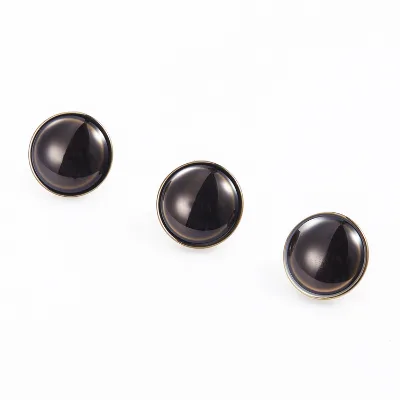


Custom Color Plated Silver Metal Bowknot Shank Button for Suit Coat Buttons
$0.02 - $0.16
MOQ: 1000 Pieces


Metal Button Zinc Alloy Metal Foot Shank Button for Garment Accessories
$0.04 - $0.25
MOQ: 5000 Pieces


Decorative Alloy Button Making Custom Logo Raising Shirt Metal Snap Shank Buttons
$0.03 - $0.04
MOQ: 1000 Pieces


Comprehensive Sourcing Guide
Engraved Metal Alloy Shank Button Sourcing Guide
Engraved metal alloy shank buttons occupy a distinctive niche in garment trims: the shank construction hides the attachment point behind the fabric, while surface engraving delivers branding, texture, and a premium tactile impression. Buyers typically source these components for jackets, trousers, sweaters, coats, uniforms, hats, and bags, where the button is both a functional closure and a visible brand element. Because the alloy base is plated, painted, or otherwise finished, the sourcing decision hinges on balancing decorative ambition against durability requirements such as washability and abrasion resistance.
This guide is written for procurement teams evaluating listings on wholesale platforms and preparing to engage manufacturers directly. It walks through the signals visible on product pages, the technical details that must be confirmed before sampling, the safety documentation that matters for apparel compliance, the commercial levers that shape landed cost, and the qualification steps that separate reliable trim partners from opportunistic listings. Treat every product-page attribute as an observation about that specific listing rather than a guarantee across a supplier's catalog, and verify each claim at sample and pre-production stages.
Product Scope and Observed Listing Signals
Listings in this category display a wide specification spread that buyers should read carefully. Observed models include SK-755, SK-758, SK-747, SK-795, SK-466, and SK-006, with stated diameters ranging from 15mm to 20mm and one listing specifying 28mm*21mm. Shape is consistently round, material is metal, and style descriptors vary from "EU & US" and "Luxurious" to "Street," "OL," and "Fashion" — signals that the same factory serves formalwear, casual denim, and streetwear lines with different design languages. Model numbers are the primary handle for reordering, so record them exactly.
Other recurring listing attributes include customization availability, non-adjustable construction, color-matching options, and usage spanning jackets, trousers, sweaters, hats, shoes, and bags. Some listings declare "Not Stock" while others confirm stock availability, which directly affects replenishment speed. Technics are described as plating and painting or plating/engrave/embossed, confirming that engraved shank buttons sit within a broader finishing capability. Buyer takeaway: use the model number and diameter as anchor identifiers, then confirm that customization, stock status, and finish techniques quoted in chat match the listing before committing to samples.
Technical Specifications to Verify
Diameter is the first specification to lock down, since observed listings range from 15mm through 20mm and a larger 28mm*21mm format suited to coats. Diameter must be measured on the actual button face, not inferred from photos, and confirmed against your garment's buttonhole or button placement pattern. For shank buttons, also verify shank height and hole clearance: the shank must be tall enough for the fabric layers of a jacket or coat to sit flat without pulling, which matters especially for heavy denim and outerwear. Request dimensional drawings with tolerances, not just nominal sizes.
Construction and finish details deserve equal rigor. Confirm the alloy composition family with the supplier, the plating layers, and whether engraving is done before or after plating, as this affects edge sharpness and finish longevity. Ask how the shank is joined to the button cap — molded, riveted, or assembled — because attachment strength determines whether the button survives industrial laundering and daily stress. Finally, clarify color-matching procedure: supply a physical or Pantone reference, and request a plated sample under your approval before bulk, since metallic tones shift noticeably between batches.
Compliance and Safety Documentation
For metal buttons, the headline safety concerns are lead and nickel. Observed listings state lead content of less than 90 ppm, nickel-free construction, and features described as eco-friendly, sustainable, washable, durable, and lead-free. Buyers should treat these as listing claims to be substantiated: request the supplier's test reports and confirm they were issued by the named third-party laboratories — SGS, BV, and Intertek appear in the listings — and that the tested samples correspond to your actual production batch or an identifiable model. Testing against applicable regulations in your destination market remains the buyer's responsibility.
One observed listing cites Oeko-Tex Standard 100 and BSCI certification. Verify certificate scope and validity directly, since certificates can cover a product family, a material type, or a facility, and coverage may not extend to your specific engraved button model. For childrenswear or export markets with small-parts requirements, confirm shank pull strength testing as well. Build a simple documentation checklist — material declaration, lead and nickel test reports, certificate copies with scope, and batch-level retest agreements — and make it a condition of purchase orders rather than an optional courtesy from the supplier.
Cost Drivers and Commercial Terms
Observed listings show prices from roughly $0.01 to $4.50 per unit with minimum order quantities from 1 piece up to 20,000 pieces, a spread that reflects everything from sample-quantity purchases to bulk production runs. The main cost drivers you control are diameter, plating complexity (multi-layer or antique finishes cost more than single-tone plating), engraving depth and custom tooling, color-matching effort, and packing specification. Custom engraved logos typically require mold or die charges amortized over the order, so ask for tooling cost quoted separately from unit price.
Commercial terms should be captured in writing before sampling escalates. Observed MOQ references include 1,000 pieces on one shank-button listing; confirm your target model's actual MOQ, since listings in this category vary widely. Clarify packing format — one listing specifies polybag plus carton with packing belt — and whether inner-bag quantities match your garment factory's line-feed needs. Negotiate whether sample and tooling fees are creditable against a first bulk order, and define price validity windows, since alloy and plating input costs move. Always quote FOB-equivalent terms with weight and carton dimensions so freight can be compared across suppliers.
Supplier Qualification and Quality Control
Product-page signals are only a starting filter. One observed listing supports a 7-day sample order lead time, which is a useful screening question: ask every candidate supplier how quickly they can produce an engraved pre-production sample with your logo. Prioritize suppliers whose listings show third-party testing engagement, customization capability, and coherent model numbering, then move qualification offline — request business licensing information, ask for factory photos or a video walkthrough, and verify whether they manufacture buttons or trade them, since traders add a layer to every corrective action.
Quality control should be specified in the purchase order, not improvised on arrival. Define an AQL sampling plan for incoming inspection covering diameter, plating color against the approved sample, engraving clarity, shank attachment strength, and surface defects such as plating bubbles or scratches. Require a pre-production sample ("golden sample") that both parties sign off, and reference it in every shipment dispute. For first orders, consider a during-production inspection rather than only a final one, since plating batches are harder to sort after packing. Document rejection criteria and remedies — rework, replacement, or credit — before the deposit is paid.
Long-Term Procurement Checks
Sustained supply of an engraved shank button depends on continuity of tooling and finish consistency. Confirm with your supplier that custom molds and engraving dies are retained for an agreed period and whether they are exclusive to your orders. Because several observed listings state "Not Stock," plan for production lead time on replenishment rather than assuming shelf availability; maintain a safety stock of finished buttons at your garment factory proportional to your production cadence, and set reorder triggers tied to garment cutting schedules, not button stock-outs.
Batch-to-batch consistency is the second long-term risk. Metallic plating and color-matched finishes can drift across production runs, so retain approved golden samples from every order and compare each new lot against them under the same light source before release to the sewing line. Review test reports periodically rather than relying on a single initial certificate, especially when the supplier changes alloy source or plating subcontractor. Finally, conduct an annual supplier review covering defect rates, on-time delivery, communication responsiveness, and willingness to re-quote honestly — and qualify a second source for your highest-volume button models before you need one.
FAQs
What materials and finishes are used for these shank buttons?
These buttons are crafted from metal alloy with plating and painting techniques. The finish is luxurious and color-matching, ensuring they blend seamlessly with various garments. The durable construction supports washable and sustainable use, making them suitable for jackets, trousers, and bags.
Can I customize the logo on these engraved metal alloy shank buttons?
Yes, customized logos are accepted for these buttons. The manufacturer supports personalization to meet specific brand requirements. This customization option allows businesses to add unique branding to their apparel or accessories, enhancing product identity while maintaining the high-quality metal construction and durable finish.
What certifications do these metal alloy buttons hold?
These buttons hold Oeko-Tex Standard 100 and BSCI certifications. They are lead-free, with lead content less than 90 PPM. Independent tests by SGS, BV, and Interk verify quality. These certifications ensure the products meet international safety and ethical standards for global apparel sourcing.
What is the minimum order quantity for these shank buttons?
The standard minimum order quantity is 1000 pieces. However, the supplier supports sample orders within seven days for evaluation. While the general MOQ is 1000, specific models may have different thresholds, so buyers should confirm exact requirements for their desired model number and customization needs.
Are these buttons available in stock or made to order?
Availability varies by model. Some uniform shank buttons are kept in stock for immediate dispatch, while others are not stocked and require production. Buyers should check specific model numbers like SK-755 or SK-747 to determine current stock status and lead times for customized or non-stocked items.
What specifications are available for these engraved metal alloy shank buttons?
Specifications include various sizes such as 15mm, 17mm, 18mm, 20mm, and 28mm by 21mm. Models like SK-755 and SK-795 offer different dimensions. The shank style suits jackets, trousers, and bags. Buyers can select the precise size and model number that fits their garment design requirements.