Source Environmental Noise Cancellation Wired Headphones for Call Center, Gaming, and Travel
Source 30 models of Environmental Noise Cancellation Wired Headphones designed for call center operations, gaming, and travel. Buyers can compare specifications including driver units, connector types, and noise-cancelling features across various styles and materials.
Key considerations
Products List


Professional Heavy Duty Wired Noise Cancelling Headphone for Walkie Talkie
$75.00 - $85.00
MOQ: 1 Pieces


3.5mm D-Shape Style Single-Sided Wired Earhook Headphones with Cord Dynamic Driver
$12.55 - $13.00
MOQ: 100 Pieces


Professional Call Center Wired Headphones with Noise Cancelling Microphone
$23.99 - $25.99
MOQ: 300 Pieces


Ground Support Great Passive Noise Reduction Wired Headset for Push Back
$100.00 - $200.00
MOQ: 30 Pieces



Comprehensive Sourcing Guide
Strategic Sourcing Guide for Environmental Noise Cancellation Wired Headphones
The procurement of wired headphones designed for environmental noise cancellation represents a specialized segment within the broader audio equipment market. Unlike wireless solutions that rely on battery power and complex radio frequency protocols, wired variants offer distinct advantages in latency, reliability, and power independence. For buyers in the B2B sector, particularly those sourcing for call centers, gaming, or industrial environments, understanding the specific technical architecture and compliance landscape is critical. This guide synthesizes available product attributes and industry standards to provide a disciplined framework for evaluating suppliers and selecting the right hardware for operational needs.
Technical Architecture and Driver Configuration
The core functionality of noise-cancelling wired headphones relies on a combination of passive isolation and active electronic processing. In the context of the available product data, the technology landscape includes both dynamic drivers and hybrid configurations. A notable specification observed in high-performance wired models involves a driver unit comprising a 7.8mm dynamic driver paired with a single balanced armature receiver. This hybrid approach is engineered to deliver a wide frequency response, ensuring that the noise cancellation is effective across the spectrum of human speech and environmental background sounds. The impedance of these units is typically standardized at 16Ω±10%, a value that ensures compatibility with a broad range of audio sources, from mobile devices to dedicated call center consoles.
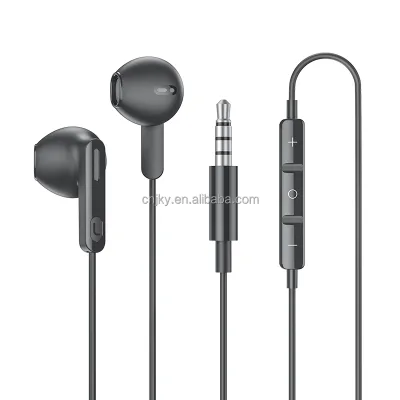
Connectivity remains a primary differentiator in the wired category. While some units utilize a standard 3.5mm connector, others may offer optional connectors or specific line-control configurations. The presence of a built-in microphone is a non-negotiable feature for applications requiring two-way communication, such as call centers or two-way radio integration. The microphone technology often utilizes electret elements, which provide consistent sensitivity and durability. Furthermore, the physical construction of the cable is vital; materials such as PU (polyurethane) are frequently specified for the wire material due to their flexibility and resistance to tangling and wear. Buyers must verify that the cable length, often standardized around 1 meter, aligns with the ergonomic requirements of the specific workstation or mobile use case.
Compliance, Certification, and Safety Standards
When sourcing audio equipment for commercial deployment, verifying compliance with international management and safety standards is essential. The supply chain for these devices often includes suppliers who hold ISO and BSCI certifications. These certifications indicate that the manufacturer adheres to specific management system standards for quality and social compliance, respectively. While specific product-level safety certifications are not explicitly detailed in the general product attributes, the presence of these management certifications suggests a baseline of operational reliability.
Water resistance is another critical compliance metric, particularly for headphones intended for outdoor or industrial use. The observed data points to an IPX-4 waterproof standard for certain models. This rating signifies protection against water splashes from any direction, making the device suitable for environments where light rain or sweat might be present. However, buyers should not assume this rating applies to all wired noise-cancelling models without explicit verification. For applications requiring higher durability, such as heavy-duty call center headsets, the physical construction must be robust. The use of ABS plastic and metal components in the housing contributes to the structural integrity required for long-term daily use.
Cost Drivers and Pricing Dynamics
The pricing structure for wired noise-cancelling headphones is influenced by several variable factors, including the complexity of the driver assembly, the quality of the microphone, and the level of customization offered. The observed market range for these products spans from $0.50 to $299.00 USD. This wide disparity reflects the difference between basic consumer-grade units and specialized industrial headsets. The lower end of the spectrum typically corresponds to models with simpler driver configurations and standard materials, while the higher end often includes advanced hybrid drivers, premium build materials, and extensive customization options.
Minimum Order Quantity (MOQ) is a significant cost driver in B2B procurement. The data indicates an MOQ range from 1 to 3000 units. Suppliers offering an MOQ of 1 are typically catering to small businesses or prototyping needs, whereas those requiring 3000 units are optimized for large-scale manufacturing runs. The ability to accept small orders can be a strategic advantage for buyers testing new product lines or fulfilling urgent, low-volume requirements. Additionally, the availability of private mold customization is a key factor; products marked as having "No private mold" are generally off-the-shelf items with lower unit costs but less brand differentiation. Conversely, OEM options allow for branding and specific feature tailoring, which may increase the unit price but adds value to the final product offering.
Typical Applications and Use Cases
The versatility of wired noise-cancelling headphones allows them to serve a diverse array of professional and consumer applications. The primary use cases identified include call centers, gaming, mobile phone usage, and portable media playback. In a call center environment, the emphasis is on clear voice transmission and the ability to filter out ambient office noise. The presence of line-control features and dedicated microphones supports this function, enabling hands-free operation and easy volume adjustment. For gaming, the low latency provided by wired connections is superior to many wireless alternatives, ensuring that audio cues are synchronized perfectly with visual action. The observed wireless delay time of 51-60 ms is relevant for Bluetooth models, but wired connections inherently eliminate this variable, offering near-instantaneous audio transmission.
Outdoor and travel applications also benefit from the reliability of wired connections. Unlike wireless headsets that may suffer from battery depletion or signal interference, wired models provide consistent performance. The "Heavy Duty" classification found in certain product names suggests a design specifically for rugged environments, such as construction sites or outdoor events where durability is paramount. Furthermore, the integration with two-way radios and walkie-talkies highlights the utility of these devices in security and logistics sectors. The ability to support voice control assistants like Siri and Google Assistant, even in wired configurations, adds a layer of convenience for users managing multiple tasks simultaneously.
Supplier Evaluation and Quality Control
Evaluating suppliers requires a rigorous assessment of their technical capabilities and quality assurance processes. Buyers should prioritize suppliers who demonstrate transparency regarding their chipset technology and manufacturing processes. The use of specific chipsets, such as those from JL (JieLian), can indicate a focus on cost-effective yet reliable performance for Bluetooth and wired hybrid solutions. However, for purely wired models, the focus shifts to the quality of the driver units and the assembly of the cable and connectors.
Quality control measures should include verification of the driver unit specifications, such as the 7.8mm dynamic driver and balanced armature combination, to ensure they meet the stated impedance and frequency response. Buyers must also inspect the physical build quality, checking for the use of durable materials like ABS plastic and metal. The warranty period is another critical indicator of supplier confidence; a standard 12-month warranty is observed in the market, which serves as a baseline for after-sales support. Suppliers offering customization services should be evaluated on their ability to maintain quality standards while modifying product designs. The presence of "No private mold" options suggests a reliance on existing tooling, which can reduce lead times but may limit design flexibility.
Long-Term Procurement Considerations
Sourcing wired headphones for long-term deployment requires a strategic approach to inventory management and supplier relationships. The availability of small orders is a significant advantage for buyers who need to adapt quickly to changing market demands without committing to large stock levels. However, for stable, high-volume requirements, negotiating favorable MOQs and lead times is essential. The origin of the products, predominantly China, implies a mature supply chain with access to a wide range of components and manufacturing expertise.
Buyers should also consider the lifecycle of the product. Wired headphones are generally more durable than their wireless counterparts due to the absence of rechargeable batteries, which degrade over time. The 12-month warranty period provides a safety net, but the inherent robustness of the wired design suggests a longer operational life. When planning for future procurement, buyers should assess the supplier's ability to maintain consistent quality across different production batches. The standardization of features, such as the 3.5mm connector and specific driver sizes, facilitates easier replacement and maintenance. Finally, the environmental impact of the materials used, such as the PU wire and ABS plastic, should be considered in the context of corporate sustainability goals, ensuring that the chosen suppliers align with broader organizational values.
Comparative Analysis of Product Attributes
To facilitate decision-making, the following table summarizes key attributes observed in the current market landscape for wired noise-cancelling headphones. This comparison highlights the variance in specifications that buyers must navigate when selecting a supplier.
| Attribute Category | Specific Observation | Relevance to Procurement |
|---|---|---|
| Driver Technology | 7.8mm Dynamic + Single Balanced Armature | Indicates high-fidelity audio suitable for professional use. |
| Impedance | 16Ω±10% | Ensures compatibility with standard audio sources. |
| Connector Type | 3.5mm, Optional, Aux | 3.5mm is standard; "Optional" requires clarification for specific needs. |
| Microphone | Electret, with Microphone, Line-Control | Essential for call center and two-way radio applications. |
| Waterproof Standard | IPX-4 | Suitable for light rain/sweat; not for submersion. |
| Material | ABS Plastic, Metal, PU Wire | Balances durability with flexibility and weight. |
| Certifications | ISO, BSCI | Indicates management system compliance; verify product-specific safety. |
| Warranty | 12 Months | Standard industry baseline for consumer and commercial goods. |
| Customization | Available, OEM, No Private Mold | OEM allows branding; "No Private Mold" limits design changes. |
| Origin | China | Mature supply chain; verify logistics and lead times. |
This structured approach to sourcing ensures that buyers can make informed decisions based on verified data rather than marketing claims. By focusing on technical specifications, compliance, and supplier reliability, organizations can secure high-quality wired noise-cancelling headphones that meet their specific operational requirements.
FAQs
What driver configuration is used in high-performance wired models?
High-performance wired models often use a hybrid configuration with a 7.8mm dynamic driver paired with a single balanced armature receiver. This setup ensures a wide frequency response and effective noise cancellation across speech and environmental sounds.
Which waterproof standard applies to outdoor or industrial use cases?
Certain models meet the IPX-4 waterproof standard, offering protection against water splashes from any direction. This rating makes the devices suitable for environments with light rain or sweat, though it does not cover submersion.
How does the cable material affect durability and flexibility?
The cable material is frequently specified as PU (polyurethane) to ensure flexibility and resistance to tangling and wear. This choice supports long-term daily use in rugged environments like call centers or construction sites.
Can buyers find suppliers with ISO and BSCI management certifications?
Yes, the supply chain includes suppliers who hold ISO and BSCI certifications for quality and social compliance. These certifications indicate a baseline of operational reliability for commercial deployment of the audio equipment.
What is the typical impedance value for compatibility with audio sources?
The impedance is typically standardized at 16Ω±10% to ensure compatibility with a broad range of audio sources. This value supports connection to mobile devices, call center consoles, and other standard audio equipment.
Which connector types are commonly available for wired connections?
Connectivity options include standard 3.5mm connectors, optional connectors, and Aux inputs. The presence of a built-in microphone and line-control features supports hands-free operation for various professional applications.
How does the MOQ range vary for different order volumes?
The Minimum Order Quantity ranges from 1 to 3000 units depending on the supplier and production capacity. Suppliers offering an MOQ of 1 cater to small businesses, while higher MOQs optimize large-scale manufacturing runs.