Source Environmental Friendly Silicon PU Court for basketball, outdoor, indoor
Compare 16 listings of Environmental Friendly Silicon PU Court materials featuring shock absorption and durability. Buyers can evaluate thickness, tensile strength, and friction factors for basketball, outdoor, and indoor applications.
Key considerations
Products List


Having Rich Experience Silicon PU Sports Court for Sports College Basketball Courts
$15.00 - $20.00
MOQ: 1000 Square Meters

Best Choice Silicon PU Sports Court for Sports College Basketball Courts
$15.00 - $20.00
MOQ: 1000 Square Meters

High Quality Silicon PU Sports Court for High Standard Ball Game Venues
$15.00 - $20.00
MOQ: 1000 Square Meters

Silicon PU Sports Court for Various Types of Stadium Construction (Excluding Football)
$15.00 - $20.00
MOQ: 1000 Square Meters

Best Seller Silicon PU Sports Court for Sports Surfaces for Sports College Basketball Courts
$15.00 - $20.00
MOQ: 1000 Square Meters

Eco-Friendly Sports Court Surface with High-Performance Silicon PU Quality
$13.00 - $24.00
MOQ: 1000 Square Meters

Premium Sports Court Material Crafted From Eco-Friendly Silicon PU
$13.00 - $24.00
MOQ: 1000 Square Meters

Sustainable Sports Court Material with ISO9001 Certification for Performance
$13.00 - $24.00
MOQ: 1000 Square Meters

Advanced Eco-Friendly Sports Court Surface with ISO9001 Certification
$13.00 - $24.00
MOQ: 1000 Square Meters

Superior Performance Sports Court Surface with ISO9001 Certified Quality
$13.00 - $24.00
MOQ: 1000 Square Meters

ISO9001 Certified High-Performance Sports Court Surface for Eco-Friendly Use
$13.00 - $24.00
MOQ: 1000 Square Meters
Comprehensive Sourcing Guide
Strategic Sourcing Guide for Environmental Friendly Silicon PU Court Materials
The global demand for sustainable and high-performance sports surfaces has elevated the profile of Silicon PU court materials, particularly those marketed as environmentally friendly. For procurement professionals in the construction and sports facility sectors, sourcing these materials requires a disciplined approach that balances technical performance with verified environmental claims. This guide provides a comprehensive framework for evaluating suppliers, understanding product specifications, and ensuring long-term value without relying on unverified marketing assertions. The focus remains on objective analysis of available data points and industry-standard verification methods.
Understanding Material Composition and Technical Specifications
The foundation of any successful procurement decision lies in a clear understanding of the material's physical and chemical properties. Silicon PU court materials are distinct from traditional polyurethane systems due to the incorporation of silicone components, which often enhance durability and weather resistance. When evaluating potential suppliers, buyers must scrutinize the specific material composition listed in product datasheets. Available data indicates that these materials are primarily composed of polyurethane and materials with silicone components, creating a hybrid system designed for superior performance.
A critical technical parameter is the thickness of the applied layer. Consistent data points highlight a standard thickness of 8.0mm, which is often associated with professional-grade court installations. This dimension is not merely a measurement but a determinant of the surface's ability to absorb impact and provide the necessary shock absorption for athlete safety. Buyers should verify that the specified thickness is maintained throughout the application process, as deviations can compromise the structural integrity of the court.
The mechanical properties of the material are equally vital. The tensile strength of the product is a key indicator of its resistance to tearing and stretching under load. Observed specifications list tensile strength values ranging from 1.2MPa to specific psi measurements such as 50 psi and 70 psi. Similarly, the elongation at break, which measures the material's ability to stretch before failing, is reported at 386%. These figures suggest a highly elastic material capable of withstanding dynamic loads without permanent deformation. Additionally, the firmness of the surface, often measured in psi, is a crucial factor for player comfort and performance, with observed ranges including 9-13 psi and 5-8 psi depending on the specific product grade.
Verifying Environmental Claims and Safety Standards
The term "environmentally friendly" is frequently used in the sports surface industry, yet it requires rigorous verification to avoid greenwashing. Procurement teams must demand concrete evidence regarding the environmental protection level of the material. Available product attributes explicitly mention an "Environmental Friendly" classification and an "Eco-Friendly" feature, which should be supported by third-party testing.
One of the primary safety concerns in sports surface manufacturing is flame retardancy. High-performance courts must meet strict fire safety standards to ensure the safety of athletes and spectators. Data indicates that certain Silicon PU products achieve a Level I Flame Retardant Property, a classification that suggests a high degree of resistance to ignition and flame spread. Buyers should insist on seeing the specific test reports that validate this Level I rating, as this is a non-negotiable safety requirement for most public and commercial facilities.
Furthermore, the chemical composition must be free from harmful substances. The presence of silicone components often contributes to the material's stability and resistance to UV degradation, but the sourcing of raw materials must be transparent. Buyers should verify that the manufacturing process adheres to strict environmental standards, potentially looking for certifications that confirm the absence of volatile organic compounds (VOCs) or other hazardous chemicals. While specific certification bodies like ISO9001 and SGS are mentioned in product listings, these should be treated as indicators of a quality management system rather than guarantees of the specific environmental attributes of the final product. The buyer must request the actual test certificates to confirm that the specific batch of material meets the claimed environmental standards.
Cost Drivers and Pricing Structure Analysis
Understanding the cost structure of Silicon PU court materials is essential for budgeting and financial planning. The observed price range for these products in the market spans from 13 to 24 USD per unit, though the specific unit of measurement (square meter, kilogram, or barrel) must be clarified in every quote. This variability in pricing is driven by several factors, including the thickness of the material, the complexity of the formulation, and the volume of the order.
The Minimum Order Quantity (MOQ) is a significant cost driver in the procurement of these materials. Data indicates an MOQ range of 200 to 1000 square meters. For smaller projects, this threshold can present a logistical challenge, potentially requiring the buyer to consolidate orders or negotiate with suppliers to accommodate smaller quantities. Conversely, larger orders may benefit from economies of scale, though the price per unit may not decrease linearly with volume.
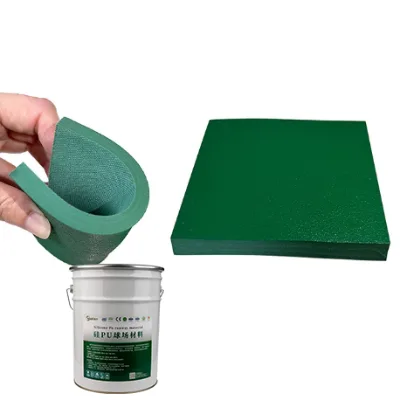
Packaging and logistics also play a role in the total cost of ownership. The material is typically supplied in barrels, drums, or cans, with some specifications noting wooden pallets with wrapping film and bandages for larger shipments. The choice of packaging affects the shipping cost and the risk of damage during transit. Buyers should evaluate the "Price Term" offered by suppliers, such as FOB (Free on Board) or CIF (Cost, Insurance, and Freight), as these terms determine who bears the cost and risk of transportation. Understanding these terms is crucial for accurate cost estimation, especially for international procurement where shipping costs can fluctuate significantly.
Typical Applications and Performance Requirements
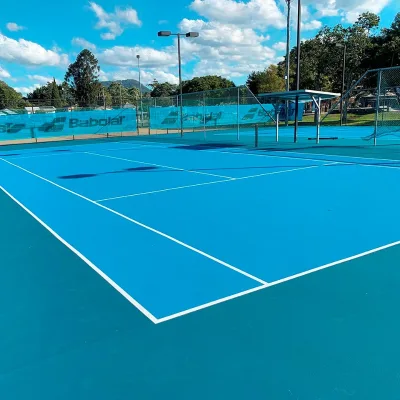
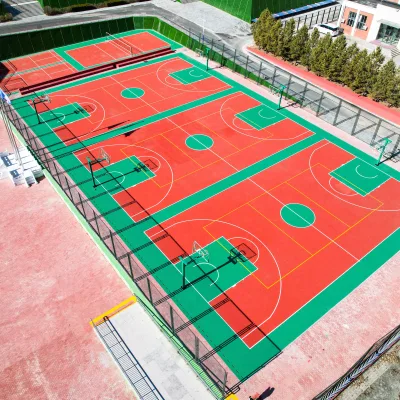
Silicon PU court materials are versatile and suitable for a wide range of applications, from professional sports venues to community recreational centers. The primary application identified is for basketball courts, where the material's shock absorption and rebound properties are critical for player safety and game quality. However, the material is also described as suitable for all pitches, indicating its adaptability to various sports surfaces including tennis, volleyball, and multi-purpose courts.
The performance requirements for these courts are stringent. The surface must provide excellent shock absorption, with observed rates exceeding 45% and even 53% in some product variants. This level of shock absorption helps reduce the impact on athletes' joints, minimizing the risk of injury. Additionally, the material must possess high friction factors to ensure proper traction. While specific friction factor values are listed as 0 in some contexts, this likely refers to a specific test condition or a placeholder; buyers should verify the actual sliding-resistance value, which is reported as 90 bpn (British Pendulum Number) at 20℃. This metric is a standard measure of slip resistance and is essential for ensuring player safety during high-intensity movement.
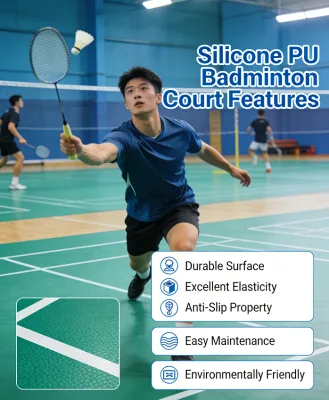
Durability is another key consideration. The material is marketed with a lifespan of over 10 years, supported by features such as anti-UV resistance, wear-resistance, and anti-skid properties. These features ensure that the court maintains its performance characteristics even under harsh weather conditions and heavy usage. The "Good Shock Absorption & Good Tensile and Rebound" properties are central to the material's value proposition, making it a preferred choice for high-performance sports facilities.
Supplier Evaluation and Quality Control Protocols
Selecting the right supplier is as important as selecting the right material. Buyers should evaluate potential suppliers based on their manufacturing capabilities, quality control processes, and after-sales support. The data indicates that many suppliers operate as "Factory direct sale" entities, which can offer cost advantages but requires careful vetting of their production capacity and quality assurance systems.
Quality control should be a continuous process, starting from the raw material stage through to the final application. Buyers should request detailed information about the supplier's quality management systems, including any ISO certifications or other relevant standards. While ISO9001 is mentioned in the context of some suppliers, it is important to verify that this certification covers the specific production lines used for Silicon PU materials. Additionally, third-party testing by organizations like SGS provides an independent validation of the product's performance and safety claims.
The supplier's ability to provide after-sales service is another critical factor. An "After Sales Guarantee" is listed as a feature of some products, which implies that the supplier is willing to stand behind their product's performance. Buyers should clarify the terms of this guarantee, including what constitutes a defect, the process for claiming warranty, and the expected response time. The availability of OEM/ODM services is also a significant advantage for buyers with specific branding or customization needs, allowing for tailored solutions that meet unique project requirements.
Long-Term Procurement and Lifecycle Management
Procuring Silicon PU court materials is not a one-time transaction but a long-term commitment to the facility's performance and safety. Buyers should consider the lifecycle of the material, including maintenance requirements and potential replacement needs. The observed durability of over 10 years suggests a long service life, but regular maintenance is essential to maximize this lifespan.
Sustainability is a growing concern in the construction and sports industries. Buyers should prioritize suppliers who demonstrate a commitment to environmental responsibility throughout their supply chain. This includes the sourcing of raw materials, the manufacturing process, and the disposal of waste. The "Environmental Friendly" and "Eco-Friendly" attributes of the material should be supported by a comprehensive sustainability report that details the supplier's efforts to reduce their environmental footprint.
Finally, buyers should establish a clear communication channel with their supplier for ongoing support and technical assistance. The availability of professional sports performance experts can be invaluable in troubleshooting issues and optimizing the court's performance. By maintaining a strong relationship with a reliable supplier, buyers can ensure that their sports facilities remain safe, durable, and high-performing for years to come.
Comparative Analysis of Product Attributes
To assist in the decision-making process, the following table summarizes key product attributes observed in the market for Silicon PU court materials. This comparison highlights the variability in specifications and the importance of verifying each claim against the specific needs of the project.
| Attribute | Observed Value / Range | Verification Requirement |
|---|---|---|
| Material Composition | Polyurethane, Silicone components | Request chemical composition report |
| Thickness | 8.0mm, 8mm | Verify on-site measurement |
| Tensile Strength | 1.2MPa, 50 psi, 70 psi | Confirm test standard used |
| Elongation at Break | 386% | Verify test method |
| Shock Absorption | >45%, >53% | Request third-party test data |
| Sliding Resistance | 90 bpn (20℃) | Verify temperature conditions |
| Flame Retardancy | Level I | Check fire safety certification |
| Durability | Over 10 Years | Review warranty terms |
| MOQ | 200 - 1000 sqm | Confirm project scale compatibility |
| Origin | China (Guangzhou, Shenzhen, Anhui) | Verify factory location |
| Certification | ISO9001, SGS | Request valid certificates |
By adhering to these guidelines and maintaining a rigorous approach to verification, procurement professionals can successfully source high-quality, environmentally friendly Silicon PU court materials that meet the demanding requirements of modern sports facilities.
FAQs
What is the standard thickness for this court material?
The standard thickness is 8.0mm for professional court installations. This dimension ensures adequate shock absorption and structural integrity for athlete safety during high-impact sports.
Can the material be customized for specific project needs?
Yes, customization is available for various project requirements. Buyers can request tailored solutions through OEM or ODM services to meet unique design or performance specifications.
Which certifications verify the environmental safety of the product?
The product holds ISO9001 and SGS certifications to verify quality and safety standards. These certifications indicate adherence to strict manufacturing protocols and environmental protection levels.
How much shock absorption does the surface provide?
The surface provides a shock absorption rate exceeding 45% and up to 53% in some variants. This high rate helps reduce impact on athletes' joints and minimizes injury risks.
What is the minimum order quantity for procurement?
The minimum order quantity ranges from 200 to 1000 square meters depending on the supplier. Buyers should verify specific MOQ requirements as they vary by manufacturer and order volume.
How durable is the Silicon PU material over time?
The material is designed to last over 10 years with proper maintenance. Features like anti-UV resistance and wear-resistance ensure long-term performance in various weather conditions.