Source Environmental Pyranometer for Solar Farms, Weather Stations, and Agriculture
Find 30 verified Environmental Pyranometer models with varying spectral ranges, output signals, and stability ratings. Buyers can compare technical specifications like sensitivity, non-linearity, and response time to select the right sensor for solar monitoring, meteorological research, or agricultural applications.
Key considerations
Products List

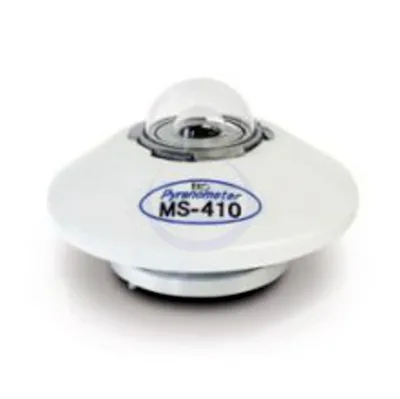
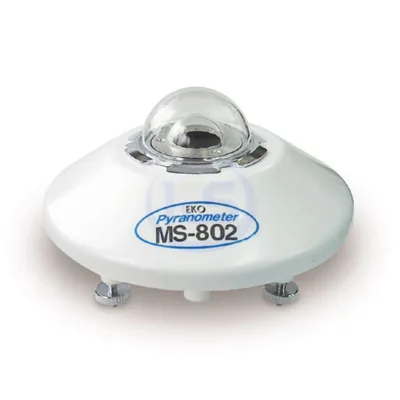
Sensitive Pyranometer for Accurate Solar Radiation and Environmental Monitoring
$1483.00 - $1618.00
MOQ: 1 Pieces


High-Performance Pyranometer for Accurate Solar Radiation Monitoring Solutions
$1483.00 - $1618.00
MOQ: 1 Pieces



High Precision and High Stability Temperature Programmed Chemisorption Analyzer Tester
$2000.00 - $3000.00
MOQ: 1 Pieces


Comprehensive Sourcing Guide
Strategic Sourcing Guide for Environmental Pyranometers
Understanding the Core Instrument and Technical Baseline
When initiating a procurement strategy for environmental pyranometers, buyers must first establish a clear understanding of the instrument's fundamental purpose: measuring global solar radiation on a horizontal surface. This data is critical for meteorological stations, solar energy plant optimization, and agricultural research. The market offers devices with varying degrees of sophistication, but the core technical requirements remain consistent regarding spectral response and output capabilities. Based on current product observations, the spectral range for these instruments typically spans from 280 nm to 3000 nm, or in specific configurations, 300 nm to 3200 nm. This wide range ensures the device captures the majority of the solar spectrum relevant to terrestrial energy applications.
A critical technical parameter for buyers to verify is the sensitivity of the sensor. Observed units demonstrate a sensitivity range of 7 to 14 μV/(W/m²), which is a standard metric for thermopile-based sensors. This value indicates how much electrical output is generated per unit of incident solar power. Buyers should also note the output signal types, which are essential for integration with data loggers and control systems. Common configurations include analog outputs such as 0-5V, 0-20mV, and 4-20mA current loops, as well as digital communication via RS485. The RS485 interface is particularly valuable for long-distance transmission in industrial settings, often featuring a built-in transmission module for stability.
The physical construction of the pyranometer is equally vital for durability in outdoor environments. The housing material is frequently identified as metal, specifically aluminum alloy, which offers a balance of corrosion resistance and structural integrity. The shape is typically cylindrical, designed to minimize wind resistance while protecting the internal sensor elements. A key feature for long-term reliability is the desiccant system. Many units come equipped with a built-in desiccant, often silica-based, to prevent moisture accumulation inside the housing, which can degrade the sensor's performance over time. The ingress protection rating is a non-negotiable specification for outdoor deployment, with IP67 being a common standard observed in high-quality units, ensuring protection against temporary immersion and dust.
Compliance, Certification, and Standard Verification
In the procurement of scientific instrumentation, compliance with international standards is the primary indicator of data reliability. While specific certification documents must be verified for each batch, the industry generally references ISO 9060 for classifying the quality of pyranometers and ISO 9847 for the calibration of solar radiation sensors. Buyers should not assume a product meets these standards based on marketing materials alone; instead, they must request the specific calibration certificate that references these standards. The provided context notes that some products carry CE certification, which indicates compliance with European health, safety, and environmental protection standards, but this does not automatically equate to ISO 9060 classification.
When evaluating a supplier's documentation, the buyer must look for explicit statements regarding the spectral range measurement. For instance, some units are specified to measure a spectral range of 280~3000 nm, while others may be optimized for 300-3200 nm. The difference, though seemingly minor, can impact the accuracy of measurements in specific atmospheric conditions. Furthermore, the directional response is a crucial metric for compliance. A high-quality pyranometer should exhibit a cosine correction of less than 10% up to an angle of 80 degrees. This ensures that the sensor accurately measures radiation even when the sun is low on the horizon, a common scenario in high-latitude regions.
Buyers should also scrutinize the non-linearity specifications. Observed data indicates non-linearity values of less than 2% per year or ±1% within a specific range of 100 to 1000 W/m². These figures are critical for applications requiring high precision, such as photovoltaic plant performance monitoring. If a supplier cannot provide a clear non-linearity curve or specific percentage values, the data integrity of the instrument is questionable. Additionally, the zero drift, or temperature drift, should be minimal. Specifications showing a drift of less than ±4 W/m² for a 5K temperature change are indicative of a stable sensor. The absence of such data in a product specification sheet should be treated as a red flag during the supplier evaluation phase.
Cost Drivers and Pricing Structure Analysis
The pricing of environmental pyranometers is influenced by several distinct factors, ranging from the complexity of the output signals to the level of customization required. The observed price range in the market spans from $1 to $12,000, a variance that reflects the difference between basic research-grade sensors and fully integrated, high-precision systems. The lower end of the spectrum typically corresponds to units with simpler analog outputs and standard housing, while the higher end includes models with advanced digital interfaces, enhanced cosine correction, and specialized calibration certificates.
One of the primary cost drivers is the output signal type. Units offering multiple output options, such as a combination of 4-20mA, 0-5V, and RS485, often command a higher price due to the additional circuitry required. Similarly, the inclusion of a built-in transmission module for RS485 communication adds to the manufacturing cost compared to external module configurations. The material composition also plays a role; aluminum alloy housings are standard, but specialized coatings or treatments for extreme environments can increase the unit price.
Customization is another significant factor. While some suppliers offer non-customized, off-the-shelf models, others provide options for OEM branding or specific configuration adjustments. The availability of customization allows buyers to tailor the instrument to their specific site requirements, but this flexibility often comes with a higher unit cost and potentially longer lead times. The minimum order quantity (MOQ) is another economic consideration. Observed MOQs range from 1 to 2 units, suggesting that the market is accessible for small-scale projects, such as single-station meteorological setups, without requiring bulk purchasing commitments. However, buyers should be aware that unit prices may decrease with volume, and suppliers may have different pricing tiers for orders exceeding the MOQ.
Typical Applications and Deployment Scenarios
Environmental pyranometers are deployed across a diverse range of industries, each with unique requirements for data accuracy and environmental resilience. In the renewable energy sector, these instruments are essential for the design and operation of solar photovoltaic (PV) plants. Accurate solar radiation data is necessary for predicting energy yield, optimizing panel tilt angles, and monitoring the performance ratio of the plant. In these applications, the stability of the sensor over time is paramount, with stability figures of less than ±1.5% per year being a desirable benchmark.
Meteorological services also rely heavily on pyranometers for climate monitoring and weather forecasting. These institutions require instruments that can withstand harsh weather conditions, including extreme temperatures and high winds. The storage conditions of the device, typically ranging from 10°C to 60°C at 20%-90% relative humidity, must be compatible with the local climate. For agricultural applications, pyranometers help in managing irrigation schedules and predicting crop yields based on solar exposure. In these scenarios, the response time of the sensor, often specified as ≤30 seconds for 95% response, ensures that rapid changes in cloud cover are captured accurately.
The installation environment also dictates the choice of accessories. Many suppliers offer optional installation brackets, including horizontal brackets or adjustable mounts, which are crucial for ensuring the sensor is perfectly level. The cable length is another consideration; a standard length of 3 meters is common, but buyers should verify if this is sufficient for their specific site layout or if extension cables are needed. The temperature effect of the sensor, which should be less than 4% in the range of -10°C to 40°C, is particularly important for applications in regions with significant temperature fluctuations.
Supplier Evaluation and Quality Control Protocols
Selecting a reliable supplier for environmental pyranometers requires a rigorous evaluation process that goes beyond price comparison. Buyers should prioritize suppliers who provide transparent technical documentation and are willing to share calibration data. The origin of the product, often China for these types of instruments, is a factual observation, but the quality control processes employed by the manufacturer are the true differentiators. Buyers should inquire about the production process, noting that "Normal Wirewound" is a common method, but the precision of this process determines the sensor's accuracy.
Quality control should include a verification of the desiccant system. A built-in desiccant is a standard feature in high-quality units, but buyers must ensure that the desiccant is replaceable or that the unit is designed to maintain its dryness over the expected lifespan. The ingress protection rating, such as IP67, should be verified through third-party testing reports rather than relying solely on supplier claims. Additionally, the response time and non-linearity specifications should be cross-referenced with independent test results if available.
When evaluating a supplier, buyers should also consider the availability of after-sales support and calibration services. Since pyranometers require periodic calibration to maintain accuracy, a supplier that offers a clear calibration schedule and support infrastructure is preferable. The packaging of the unit, typically 1 PC per package, should be robust enough to prevent damage during transit. Finally, buyers should verify the supplier's ability to handle the specific voltage requirements of the site, as supply voltages can range from 5VDC to 24VDC, and compatibility issues can lead to operational failures.
Long-Term Procurement and Lifecycle Management
Procuring environmental pyranometers is not a one-time transaction but part of a long-term lifecycle management strategy. The stability of the sensor, often specified as less than ±1.5% per year, is a key indicator of how long the instrument will remain accurate without recalibration. Buyers should plan for a maintenance schedule that includes regular checks of the desiccant and visual inspections of the housing for signs of wear or damage. The temperature drift characteristics, such as a zero drift of less than ±4 W/m² for a 5K change, should be monitored over time to detect any degradation in performance.
The supply voltage requirements, ranging from 12-24V or 5VDC to 24VDC, must be compatible with the site's power infrastructure. In remote locations, power stability can be a challenge, and buyers should consider units with a wide supply voltage range to ensure reliable operation. The cable length of 3 meters is a standard specification, but for large-scale deployments, buyers may need to plan for cable extensions or signal repeaters to maintain data integrity.
Finally, buyers should consider the obsolescence and upgrade path of the equipment. As technology evolves, the interface standards and data protocols may change. Units with RS485 communication offer a degree of future-proofing, as this protocol is widely supported and adaptable. By understanding the technical specifications, compliance requirements, and lifecycle needs of environmental pyranometers, buyers can make informed decisions that ensure the long-term success of their solar monitoring and meteorological projects. The observed data, including spectral ranges, sensitivity, and output types, provides a solid foundation for these decisions, provided that the buyer verifies these details against the specific needs of their application.
FAQs
What is the spectral range for these environmental pyranometers?
The spectral range typically measures between 280 and 3000 nanometers or 300 to 3200 nanometers depending on the specific model. This wide range ensures the device captures the majority of solar radiation relevant to terrestrial energy applications and meteorological studies.
Which output signals are available for these sensors?
Available output signals include 4-20mA, 0-5V, 0-20mV, and RS485 digital communication. The RS485 interface often features a built-in transmission module for stability, while the 4-20mA loop may use an external module depending on the configuration.
How stable is the sensor performance over time?
The stability is typically less than 1.5 percent per year, ensuring reliable long-term data collection. Non-linearity is also controlled at less than 2 percent per year or within 1 percent for specific power ranges, maintaining accuracy for photovoltaic monitoring.
Can these units operate in harsh outdoor weather conditions?
Yes, the units feature an IP67 ingress protection rating and are housed in aluminum alloy for durability. They include a built-in desiccant to prevent moisture damage and can withstand storage conditions ranging from 10 to 60 degrees Celsius at high humidity.
What is the minimum order quantity for purchasing these devices?
The minimum order quantity ranges from 1 to 2 units, making them accessible for small-scale projects. This low threshold allows buyers to procure single-station meteorological setups without requiring bulk purchasing commitments from the supplier.
Which certifications do these environmental pyranometers typically hold?
These devices commonly carry CE certification indicating compliance with European safety standards. While they may reference industry standards like ISO 9060, buyers should verify specific calibration certificates rather than assuming automatic compliance based on marketing materials alone.
How is the cosine correction performance defined for these instruments?
Cosine correction is specified as less than 10 percent up to an angle of 80 degrees. This ensures accurate measurement of radiation even when the sun is low on the horizon, which is critical for high-latitude regions and agricultural applications.