Source Ergonomic Hand Seeders for Corn, Beans, and Peanuts
Compare 30 Ergonomic Hand Seeders designed for efficient sowing in agriculture. Buyers can review specifications for corn, beans, and peanut planting with options ranging from manual labor to automatic mechanization.
Key considerations
Products List


$24.00 - $27.00
MOQ: 50 Pieces

$38.00 - $40.00
MOQ: 100 Pieces


$40.00 - $42.00
MOQ: 50 Pieces






Comprehensive Sourcing Guide
Strategic Sourcing Guide for Ergonomic Hand Seeders in Modern Agriculture
The global agricultural sector increasingly relies on specialized manual equipment to bridge the gap between traditional farming methods and high-tech mechanization. For buyers seeking Ergonomic Hand Seeders, the procurement landscape is defined by a diverse array of manual planting solutions designed for specific crops and field conditions. These devices, often categorized as simple planting machines or drilling seeders, offer a cost-effective alternative to large-scale machinery while maintaining high precision in sowing operations. This guide synthesizes observed market data to provide a disciplined framework for evaluating, sourcing, and integrating these tools into agricultural supply chains.
Technical Specifications and Functional Diversity
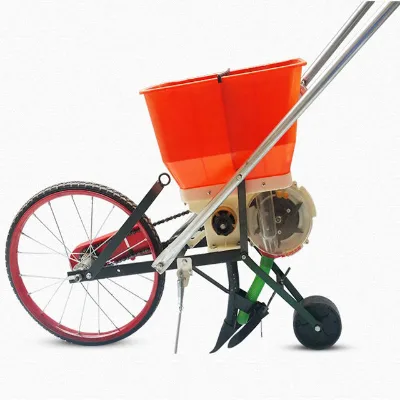
Understanding the technical architecture of Ergonomic Hand Seeders is the first step in accurate procurement. The market presents a spectrum of mechanization levels, ranging from purely manual labor-driven units to more complex systems. A primary observation in the current supply base is the prevalence of "Simple Planting Machines" that rely on manual labor as their power source. These units are engineered for efficiency in small to medium-sized plots where heavy machinery is impractical.
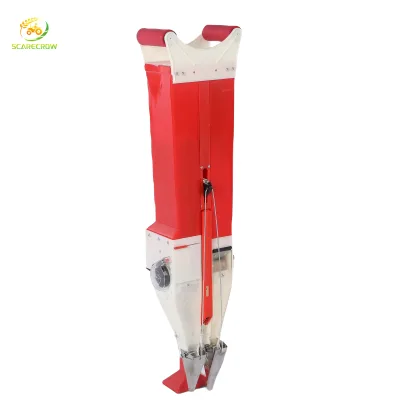
The functional core of these devices is the sowing mechanism. Buyers must distinguish between different sowing types based on crop requirements. The market includes "Drilling Seeders," which are ideal for row crops like corn, beans, and peanuts, ensuring consistent seed depth and spacing. Conversely, "Dibble Seeders" are observed for specific applications requiring precise placement, while "Precision Seeders" represent a higher tier of accuracy, often featuring adjustable row spacing ranges. For instance, specific models in the supply chain demonstrate a row spacing adjustability between 14 and 56 cm, a critical specification for farmers growing crops like cotton, sorghum, leek, radish, cabbage, and rapeseed.
Material composition is another vital technical differentiator. High-quality units are constructed from durable composites and metals to withstand field conditions. The observed standard for robust hand seeders includes a combination of ABS and PC plastics, stainless steel components for structural integrity, and rubber elements for grip and shock absorption. This material mix ensures the equipment remains lightweight yet resistant to corrosion and wear. Furthermore, the physical dimensions of these machines vary significantly; observed specifications include sizes such as 582353 cm, 532357 cm, and 5224.556 cm, allowing buyers to select units that fit specific storage constraints and operator ergonomics.
Operational Applications and Crop Compatibility
The versatility of Ergonomic Hand Seeders is a primary driver for their adoption across diverse agricultural sectors. These machines are not monolithic; they are tailored to specific botanical requirements. The most common applications observed in the market involve staple crops such as corn, beans, peanuts, rice, wheat, and various tubers. Some advanced manual units are explicitly designed for a broader range of produce, including fruit, rapeseed, and leafy vegetables like cabbage and leeks.
The ditching mode is a critical operational parameter that dictates how the seeder interacts with the soil. The supply chain features units with "Intermittent Ditching" capabilities, suitable for varied soil textures, as well as "Continuous Ditching" models for uniform trenching. This distinction is essential for buyers targeting specific soil types or crop rotation schedules. Additionally, the fertilization aspect cannot be overlooked. While many hand seeders focus solely on sowing, the market also includes integrated systems labeled as "Full-size Fertilizer" or "Pneumatic Wide Fertilizer" machines. These units allow for simultaneous fertilization and sowing, streamlining the planting process and reducing labor hours.
For buyers targeting specific regions, the crop compatibility data is paramount. A model suitable for corn and beans may not be optimal for rice or wheat without specific configuration adjustments. Therefore, procurement strategies must align the seeder's mechanical design with the intended crop portfolio. The observed application fields are strictly agricultural, confirming that these tools are built for professional or semi-professional farming environments rather than casual gardening.
Compliance, Certification, and Quality Standards
In the B2B procurement of agricultural machinery, compliance and certification serve as proxies for quality and safety. The market data indicates a clear trend toward standardized manufacturing practices. Buyers should prioritize suppliers who can provide evidence of third-party verification. Observed certifications in the supply chain include SGS and ISO9001, which signal adherence to international quality management systems. Additionally, specific regional certifications like CE are noted, indicating compliance with European safety and health standards, which is particularly relevant for exporters targeting the European market.
It is crucial for buyers to verify that the certification applies to the specific product model being purchased, as some listings may associate certifications with the manufacturer's general portfolio rather than individual units. The condition of the equipment is another standard metric; the vast majority of available units are listed as "New," ensuring that buyers receive products with full operational life and no prior wear.
When evaluating suppliers, buyers should request documentation that explicitly links the certification to the product model number, such as HX-A036, HX-A009, or MS-12. These model identifiers are essential for traceability. Furthermore, the manufacturing origin plays a role in compliance; observed production hubs include Taizhou and Shandong, regions known for their agricultural machinery clusters. Buyers should verify that the origin aligns with their logistical preferences and any trade regulations regarding import duties or agricultural equipment standards in their target market.
Cost Drivers, MOQ, and Packaging Logistics
The financial structure of sourcing Ergonomic Hand Seeders is influenced by several variables, including unit price, minimum order quantity (MOQ), and packaging efficiency. The observed price range in the market is extensive, spanning from $0.55 to $6,500. This wide disparity reflects the difference between basic manual tools and more complex, feature-rich units with pneumatic or precision mechanisms. Buyers must align their budget with the required functionality; a simple manual seeder will naturally fall at the lower end of this spectrum, while integrated fertilizing systems will command higher prices.
MOQ values are equally variable, ranging from 1 unit to 1,000 units. This flexibility allows small-scale distributors to test the market with low-volume orders while enabling large agricultural cooperatives to secure bulk pricing. However, buyers should be aware that lower MOQs may come with higher per-unit costs, whereas bulk orders often unlock volume discounts but require significant capital outlay and storage capacity.
Packaging is a critical logistical consideration that impacts shipping costs and product protection. The market utilizes various packaging standards, including "1PCS/CTN" for individual units and "10PCS/CTN" or "10PCS/Bulk" for larger shipments. The gross weight (G.W.) of these packages is a key factor in freight calculations, with observed weights ranging from 10 kg to 10.5 kg per carton. Buyers must ensure that the packaging standard (e.g., Carton Box vs. Bulk) matches their distribution channel requirements. For instance, retail-ready packaging may require individual cartons, while wholesale distribution might favor bulk packing to minimize handling time.
Supplier Evaluation and Quality Control Protocols
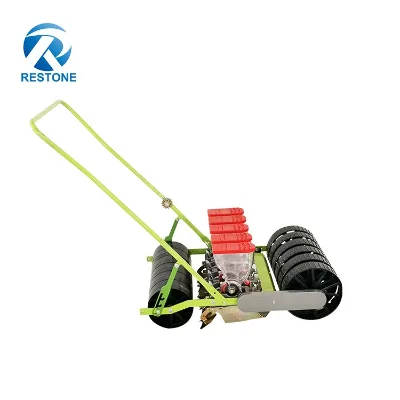
Selecting the right supplier requires a rigorous evaluation process that goes beyond price comparison. Buyers should assess the supplier's ability to provide consistent product attributes, such as the "8 mouths, 7 mouths, 6 mouths, and 5 Mouths" configurations observed in certain models. This variability indicates a supplier's capacity for customization, which is listed as an available attribute in the market. A reliable supplier should demonstrate flexibility in meeting specific buyer requirements regarding handle packaging, color schemes (e.g., Red and Green), and specific model configurations.
Quality control protocols should be established to verify the mechanical integrity of the seeders. Buyers must inspect the "Condition" of the units upon receipt to ensure they are indeed new and free from manufacturing defects. The "Handle" component, often a critical ergonomic feature, should be checked for durability and comfort. Additionally, the "Fertilizing Machine Type" and "Ditching Mode" should be tested to ensure they function as advertised. For precision seeders, the accuracy of the row spacing adjustment (14-56 cm) must be verified against the manufacturer's specifications.
Buyers should also evaluate the supplier's responsiveness to quality issues. Given the range of certifications like SGS and ISO9001, suppliers should be able to provide test reports or quality assurance documents that validate their claims. The absence of specific test data in the general market listing suggests that buyers must actively request this information during the negotiation phase.
Long-Term Procurement and Maintenance Considerations
Sourcing Ergonomic Hand Seeders is not merely a transactional event but a strategic decision with long-term implications. The durability of the materials, such as the ABS + PC + Stainless Steel + Rubber composite, directly influences the lifespan of the equipment. Buyers should consider the maintenance requirements of the specific model; for example, pneumatic systems may require more frequent checks than simple mechanical seeders.
The customization availability noted in the market offers a pathway for long-term partnerships. Suppliers that offer customization can adapt their products to evolving agricultural needs, such as changing crop varieties or soil conditions. This flexibility can extend the utility of the equipment, reducing the need for frequent replacements. Furthermore, the standardization of packaging (e.g., 1pcs/ctn or 582353 CM) facilitates easier inventory management and replacement part ordering.
Buyers should also consider the "Application Field" consistency. As agriculture evolves, the demand for specific crops may shift. A supplier with a broad application range, covering corn, rice, wheat, tubers, and fruits, provides a more resilient supply chain solution. This versatility ensures that the purchased equipment remains relevant even as market demands change. Finally, maintaining a relationship with suppliers who adhere to strict standards like ISO9001 and CE ensures a baseline of quality and safety that protects the buyer's reputation and operational efficiency over the long term.
Conclusion
The procurement of Ergonomic Hand Seeders requires a nuanced understanding of technical specifications, market variability, and supplier capabilities. By leveraging the observed data on models, certifications, and applications, buyers can make informed decisions that balance cost, quality, and functionality. The wide range of options, from simple manual units to precision pneumatic systems, offers solutions for diverse agricultural needs. Success in this sector depends on rigorous supplier evaluation, clear communication of requirements, and a commitment to quality standards that ensure the longevity and reliability of the equipment in the field.
FAQs
What power source do these Ergonomic Hand Seeders use?
These Ergonomic Hand Seeders primarily rely on manual labor as their power source. While some advanced models may feature pneumatic systems, the majority of observed units are designed for simple operation without external electricity, making them suitable for small to medium plots.
Which certifications are available for these planting machines?
Available certifications include SGS, ISO9001, and CE for specific models. Buyers should verify that the certification applies to the specific product model, such as HX-A036 or MS-12, to ensure adherence to international quality management systems and safety standards.
How is the row spacing adjusted on precision seeder models?
Precision seeder models feature an adjustable row spacing range between 14 and 56 cm. This adjustability allows farmers to accommodate various crops like cotton, sorghum, and radish, ensuring consistent seed depth and spacing across different field conditions.
What materials are used to construct these durable seeders?
High-quality units are constructed from a combination of ABS, PC, stainless steel, and rubber. This material mix ensures the equipment remains lightweight yet resistant to corrosion and wear, providing structural integrity for long-term agricultural use in various environments.
Can these machines be customized for specific crop requirements?
Customization is available for these planting machines to meet specific buyer needs. Suppliers offer variations in mouth configurations, such as 5, 6, 7, or 8 mouths, and can adjust handle packaging or color schemes to align with distinct agricultural applications.
What is the typical minimum order quantity for these seeders?
The minimum order quantity ranges from 1 to 1000 units depending on the supplier and model. This flexibility allows small-scale distributors to test the market with low-volume orders while enabling large agricultural cooperatives to secure bulk pricing for their operations.