Source Ergonomic Handle Metal Garden Rake for lawn, farm, and garden
Find 30 options for an Ergonomic Handle Metal Garden Rake designed for efficient soil loosening and leaf cleanup. Compare specifications from verified suppliers to select the right tool for your agricultural or landscaping needs.
Key considerations
Products List
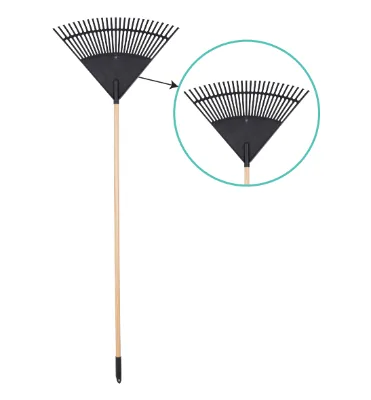
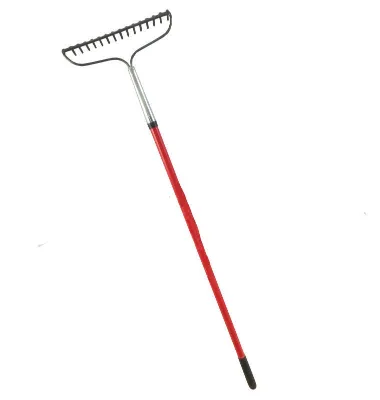
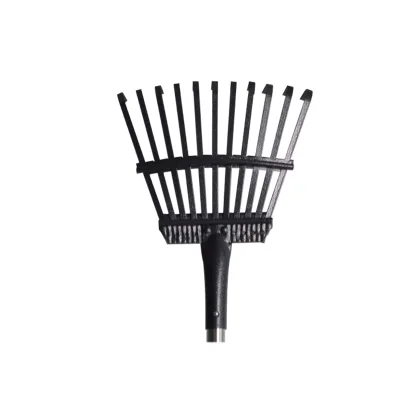
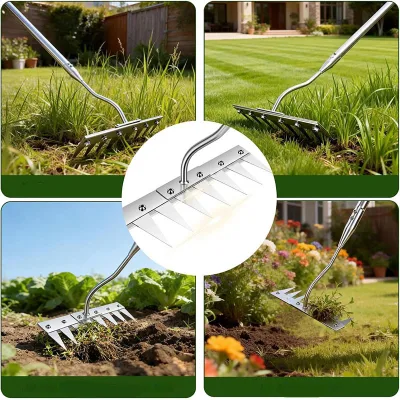




Comprehensive Sourcing Guide
Sourcing Guide for Ergonomic Handle Metal Garden Rakes
Understanding Product Variants and Core Specifications
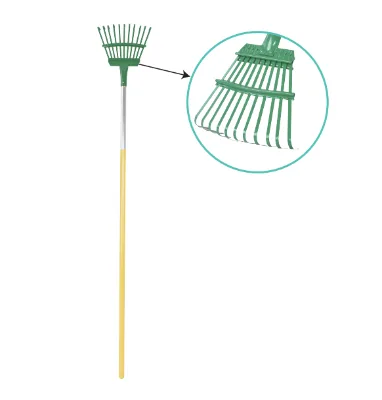
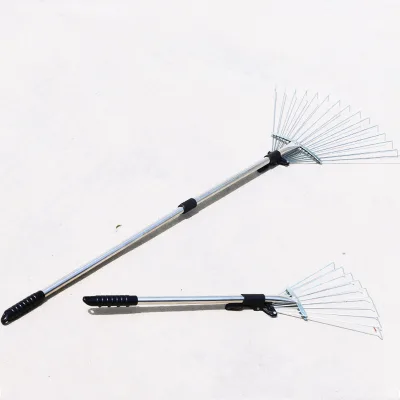
When sourcing an Ergonomic Handle Metal Garden Rake, buyers must first navigate the significant variance in product definitions found in the current market. The term "ergonomic handle" implies a design focused on user comfort and reduced physical strain, yet the available data indicates a spectrum of handle materials and configurations. While some listings explicitly specify an "Aluminum Handle," others describe the handle simply as "Metal" or "Steel," and a few highlight an "adjustable handle" feature. This variation suggests that "ergonomic" in this context may refer to the adjustability of the handle length or the specific material choice of aluminum, which offers a lighter weight compared to steel, thereby reducing fatigue during prolonged use.
The core construction of these rakes typically involves a metal head, with specific references to "Steel" and "Metal" as the primary materials for the tines and frame. The product names observed range from "Gardening Leaf Rake" and "Stainless steel rake" to "Wire rake," "Grass rake," and "Weed rake." This diversity indicates that a single supplier or a specific product line may not cover all ergonomic needs. A buyer seeking a specific ergonomic profile must verify whether the "adjustable handle" feature is standard or an option, as this is a critical differentiator for ergonomic performance. Furthermore, the rake types vary from those designed to "Loosen the soil" to those intended for "Garden Grass Leaf Clean," meaning the ergonomic benefit must be matched to the specific application.
The physical specifications also present a wide range. While some entries list a size of "1/4 in," others mention "2 in (5.08cm)" or simply "Others" and "Customized Size." This lack of standardization in the provided data underscores the importance of verifying the exact tine width and handle length before placing an order. The "Number of tines" is noted as "8" in specific instances, but this is not a universal constant. Buyers should treat these figures as observations of specific models rather than industry-wide standards. The power source is consistently listed as "hand," confirming these are manual tools, and the usage spans "Garden," "Farming Agricultural," and "Garden Tools."
Material Selection and Durability Considerations
The material composition is a primary driver of both the cost and the longevity of the garden rake. The supplied facts confirm that "Steel" and "Metal" are the dominant materials for the rake head. In the context of metal garden rakes, steel is generally preferred for its tensile strength and resistance to bending when encountering compacted soil or rocky terrain. However, the distinction between "Steel" and "Stainless steel" is critical. One listing explicitly mentions "Stainless steel rake," which implies a higher resistance to corrosion compared to standard carbon steel. This is particularly relevant for tools used in "Farming Agricultural" settings or in humid garden environments where rust can compromise the structural integrity of the tines.
The handle material further complicates the material selection process. While the core keyword specifies an "ergonomic handle," the data shows options ranging from "Aluminum Handle" to generic "Metal" handles. Aluminum is often chosen for ergonomic applications because it is significantly lighter than steel, reducing the overall weight of the tool and minimizing the effort required to lift and maneuver the rake. This weight reduction is a key component of ergonomic design. However, if the handle is described merely as "Metal," it could be steel, which would add weight but potentially offer greater durability against impact.
Buyers must also consider the connection between the handle and the head. The "adjustable handle" feature mentioned in the data suggests a mechanism that allows the user to modify the tool's length. This mechanism must be robust enough to withstand the torque applied during raking without loosening or failing. The material of the adjustment mechanism itself is not explicitly detailed in the provided facts, but it is a critical point of failure to investigate. Additionally, the "Packing" is listed as "Carton" or "Carton Package," which is standard for shipping but does not indicate the protective quality of the packaging during transit.
Compliance, Certification, and Safety Standards
In the realm of B2B procurement for garden tools, compliance and certification are often the most ambiguous areas when relying on general product listings. The provided data contains a low-confidence background note regarding "FSC" (Forest Stewardship Council) certification, but this is explicitly flagged as background and should not be used for concrete claims. This is a crucial distinction for buyers, as FSC certification typically applies to wood products, and the current data focuses heavily on metal and aluminum components. If a buyer requires FSC certification, they must verify if any wooden components (such as a handle grip or shaft) are present in the specific model they are considering, as the primary materials listed are metal.
There are no specific safety standards, such as ISO or ANSI ratings, explicitly listed in the supplied facts. This absence means that buyers cannot assume a product meets specific international safety benchmarks based solely on the provided text. Instead, the focus should be on verifying the "Quality" claims, which are described as "High Quality" in one listing. This is a subjective term and must be substantiated through third-party testing or detailed technical specifications provided by the supplier.
Buyers should also be aware of the "Place of Origin," which is listed as "China" and specifically "Hebei, China." While this does not inherently indicate a lack of quality, it does suggest that the supply chain originates from a specific manufacturing hub. Buyers should verify if the supplier adheres to the safety regulations of their target market, such as the European Union's CE marking or the United States' ASTM standards for garden tools. Without explicit mention of these certifications in the data, the buyer must request proof of compliance directly from the supplier. The "Warranty" is listed as "6 months" for one product, which provides a baseline for the manufacturer's confidence in their product, but this should be compared against industry norms for similar tools.
Cost Drivers and Pricing Dynamics
The pricing landscape for ergonomic handle metal garden rakes is characterized by significant volatility, as evidenced by the observed listed price range of 0.5 to 13.22 USD. This wide disparity suggests that the final cost is heavily influenced by specific product attributes, order volume, and customization levels. The lower end of the price spectrum likely corresponds to basic models with standard metal handles and fixed sizes, while the higher end may reflect specialized features such as adjustable handles, stainless steel construction, or custom branding.
A major cost driver is the "Customized Support" offered by suppliers. The data indicates that suppliers provide OEM (Original Equipment Manufacturer), ODM (Original Design Manufacturer), and OBM (Original Brand Manufacturer) services. The ability to customize the "Logo," "Color," and "Size" adds value but also increases the unit cost. For instance, a "Customized Color" or a specific "Aluminum Handle" configuration will likely cost more than a standard steel model. The "Model Number" variations, such as "YX08156" or "R," further suggest that different SKUs carry different price points based on their specific feature sets.
Order volume is another critical factor in determining the final price. The Minimum Order Quantity (MOQ) varies drastically, ranging from 10 pieces to 2000 pieces. A buyer requesting a small order of 10 pieces will likely face a higher per-unit cost compared to a bulk order of 1000 pieces. The data shows specific MOQs of 500 pcs, 1000 pcs, and 10 pcs, indicating that suppliers have different thresholds for different product lines. Buyers must align their procurement strategy with these MOQs to optimize costs. If a buyer needs a small quantity for testing, they may need to pay a premium, whereas large-scale procurement can leverage the lower end of the price range.
Payment terms also play a role in the financial dynamics of the transaction. The observed payment methods include "T/T" (Telegraphic Transfer) and "T/T/Ali" (likely referring to Alibaba's trade assurance or similar platform-specific payment methods). These terms affect the cash flow and risk profile for the buyer. Standard T/T terms often require a deposit before production, which ties up capital, while platform-specific payments may offer more protection but potentially higher transaction fees.
Supplier Evaluation and Operational Capabilities
Evaluating suppliers for ergonomic handle metal garden rakes requires a deep dive into their operational capabilities and flexibility. The data reveals that suppliers offer a wide range of "Customized Support," including OEM, ODM, and OBM. This flexibility is a strong indicator of a mature manufacturing base capable of adapting to specific buyer requirements. However, the variation in "MOQ" values suggests that not all suppliers are suitable for all order sizes. A buyer looking for a small batch of 50 units may find it difficult to source from a supplier with a 1000-piece MOQ, necessitating a search for suppliers with lower thresholds, such as the 10-piece or 500-piece options observed.
The "Place of Origin" is consistently listed as China, with a specific mention of Hebei. This concentration of manufacturing in Hebei, a known industrial hub for metal products, suggests a robust supply chain for metal components. However, buyers should verify the specific factory's capacity and history. The "Product Name" variations, such as "Gardening Leaf Rake," "Stainless steel rake," and "Wire rake," indicate that some suppliers may offer a broad portfolio of rake types, while others may specialize in specific niches.
The "Feature" of an "adjustable handle" is a key differentiator that suppliers may or may not offer. Buyers should explicitly ask suppliers if this feature is standard or an add-on, as it directly impacts the ergonomic value proposition. Additionally, the "Packing" method is listed as "Carton," which is standard, but buyers should inquire about the durability of the packaging to ensure the tools arrive in pristine condition, especially given the metal construction which can be prone to scratching or bending if not properly protected.
The "Quality" claim of "High Quality" is subjective and must be validated. Buyers should request samples to test the durability of the metal tines and the stability of the adjustable handle mechanism. The "Warranty" of 6 months provides a baseline for the supplier's commitment, but buyers should negotiate terms that reflect the expected lifespan of the tool, which can be several years for high-quality metal rakes.
Quality Control and Long-Term Procurement Strategy
Establishing a robust quality control (QC) protocol is essential when sourcing metal garden rakes, particularly those with ergonomic features like adjustable handles. The "Number of tines" is listed as "8" in one instance, but this is not a universal standard. Buyers must define their own QC criteria regarding the number, spacing, and sharpness of the tines. The "Material" being "Steel" or "Metal" requires verification of the grade and thickness to ensure the tines do not bend under pressure. A common failure point in metal rakes is the junction between the handle and the head; this area must be inspected for weld quality or mechanical fastening integrity.
For long-term procurement, consistency is key. The "Model Number" variations suggest that suppliers may change specifications over time. Buyers should lock in a specific model number, such as "YX08156" or "R," and ensure that the supplier commits to maintaining these specifications for future orders. The "Customized Size" option allows for flexibility, but it also introduces the risk of inconsistency if not managed carefully. Buyers should require detailed technical drawings and specifications for any customized orders to ensure that the "Ergonomic" design is maintained across production batches.
The "Usage" of the rakes, ranging from "Garden" to "Farming Agricultural," implies different wear and tear profiles. Agricultural use may require more robust construction than light garden use. Buyers should align their QC standards with the intended application. For example, if the rakes are for heavy-duty farming, the QC process should include stress testing to ensure the metal can withstand high loads. The "Power source" being "hand" means that the tool relies entirely on the user's strength, making the weight and balance critical factors in the QC process.
Finally, the "Payment" terms of "T/T" and "T/T/Ali" should be integrated into the procurement strategy. Establishing a clear payment schedule tied to QC milestones, such as pre-production sample approval, mid-production inspection, and final shipment inspection, can mitigate risks. The "Warranty" of 6 months should be clearly defined in the contract, outlining the conditions under which replacements or repairs will be provided. By combining these strategies, buyers can ensure a steady supply of high-quality, ergonomic metal garden rakes that meet their specific operational needs.
Strategic Comparison of Product Attributes
To facilitate decision-making, the following table summarizes the key attributes observed in the market for ergonomic handle metal garden rakes. This comparison highlights the variability in specifications and the need for precise verification.
| Attribute | Observed Values | Implication for Buyer |
|---|---|---|
| Handle Material | Aluminum, Metal, Steel | Verify weight and durability; Aluminum is lighter for ergonomics. |
| Handle Feature | Adjustable, Fixed | "Adjustable" is a key ergonomic feature; confirm availability. |
| Tine Material | Steel, Stainless Steel | Stainless steel offers better corrosion resistance; verify grade. |
| Tine Count | 8 (Specific model) | Not universal; verify count for specific soil types. |
| Minimum Order Qty | 10, 500, 1000, 2000 pcs | MOQ varies widely; align order size with supplier thresholds. |
| Price Range | $0.50 - $13.22 USD | Price depends heavily on customization and volume. |
| Customization | Logo, Color, Size, OEM/ODM | High flexibility; confirm costs for custom features. |
| Origin | China, Hebei, China | Verify factory location and compliance with local standards. |
| Warranty | 6 months | Baseline warranty; negotiate for longer terms if needed. |
| Usage | Garden, Farm, Agricultural | Match tool specs to intended application intensity. |
This table underscores that while the core keyword "Ergonomic Handle Metal Garden Rake" is consistent, the execution varies significantly. Buyers must use this data as a starting point for detailed inquiries rather than a definitive specification sheet. The variability in MOQ, price, and material composition requires a tailored approach to sourcing, ensuring that the final product meets the specific ergonomic and durability requirements of the buyer's target market.
FAQs
What customization options are available for the handle and logo?
Suppliers offer OEM, ODM, and OBM support with customizable logos and colors. You can request specific handle types like aluminum or adjustable metal handles to suit ergonomic needs while maintaining the steel or stainless steel head construction.
Which minimum order quantities apply to different rake models?
MOQs vary significantly depending on the specific product model and customization level. Some listings require as few as 10 pieces, while others set thresholds at 500 or 1000 pieces, so you must verify the exact requirement for your chosen SKU.
How is the handle material selected for ergonomic performance?
Handles are typically made from aluminum or metal to reduce weight and fatigue during use. Aluminum handles are preferred for lighter weight, while adjustable metal handles allow for length customization to fit different user heights and working styles.
Can I source stainless steel rakes for agricultural farming use?
Yes, stainless steel rakes are available for both garden and farming agricultural applications. These models offer high corrosion resistance and durability, making them suitable for heavy-duty soil loosening and grass cleaning tasks in various environments.
What payment terms are standard for these garden tool orders?
Standard payment methods include T/T and T/T/Ali, which are common for international trade. Buyers should confirm the specific deposit and balance schedule with the supplier before finalizing the order to ensure smooth transaction processing.
How do packaging and shipping affect the final delivery cost?
Products are typically packed in cartons designed to protect the metal components during transit. While carton packaging is standard, buyers should verify if additional protective measures are needed for long-distance shipping to prevent damage to the adjustable handles.