Source Excavator Hydraulic Stump Puller for Forestry, Farms, Construction
Find 30 Excavator Hydraulic Stump Puller models with varying weights from 60kg to 2000kg and compatible with excavators ranging from 2 to 25 tons. Buyers can compare specifications like cut diameter, material grades, and customization options for forestry, farm, and construction applications.
Key considerations
Products List


Hydraulic Land Clearing Machine Tree Stump Puller for Sk210 Excavator
$4400.00 - $5000.00
MOQ: 1 Pieces


Durable Hydraulic Stump Puller for Excavators - Reliable Spare Parts
$1250.00 - $1850.00
MOQ: 1 Pieces


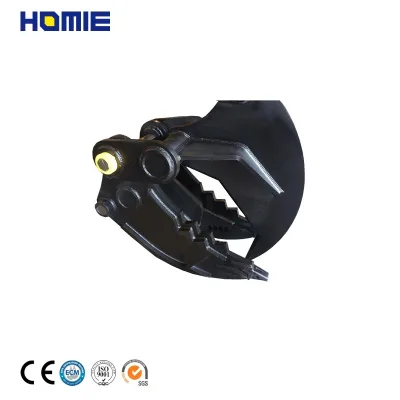

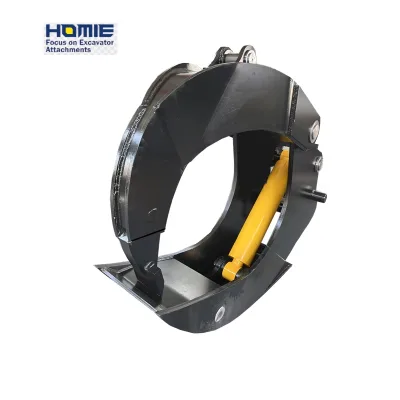
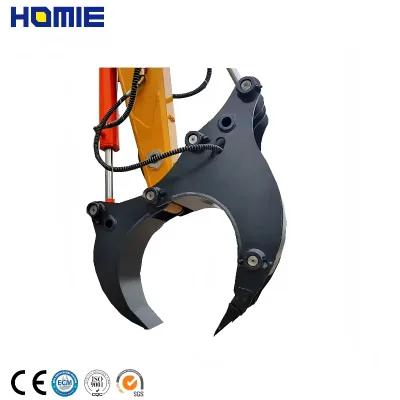
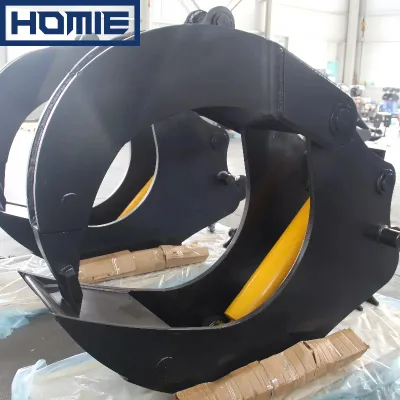


Hydraulic Stump Remover Tree Root Puller Mounted on 30-35ton Excavator for Sale
$580.00 - $3999.00
MOQ: 1 Pieces


Removes Tree Stumps Excavator or Skid Steer Attched Hydraulic Stump Grinder
$1300.00 - $3150.00
MOQ: 1 SET


Comprehensive Sourcing Guide
Strategic Sourcing Guide for Excavator Hydraulic Stump Pullers
Understanding the Technical Architecture and Operational Scope
When sourcing an Excavator Hydraulic Stump Puller, buyers must first distinguish between general wood chipping equipment and specialized stump removal attachments. The core keyword "Excavator Hydraulic Stump Puller" refers to a heavy-duty attachment designed to be mounted on the boom of an excavator to extract tree stumps and roots from the ground. Based on observed market data, these units are primarily engineered for forestry tree cutting and stump removal applications, serving industries ranging from farms and home use to large-scale construction works.
The technical architecture of these machines relies heavily on hydraulic power. While some general wood chippers in the market may utilize diesel power sources, the specific category of stump pullers and root cutters typically operates via hydraulic systems driven by the host excavator. This distinction is critical for compatibility. The observed specifications indicate that these attachments are designed for a broad range of excavator tonnage, with specific models tailored for 2-25 ton machines, while others are optimized for the 7-15 ton and 17-23 ton ranges. Some high-capacity units are explicitly rated for 17t-25t excavators.
A primary technical differentiator is the jaw opening size and cutting diameter. The market features units with maximum jaw opening sizes reaching up to 1700mm, allowing for the extraction of massive root systems. Conversely, other specifications list a maximum cut diameter of 320mm, which may apply to specific chipping functions or smaller stump processing variants. The physical dimensions of the equipment are substantial, with standard packing dimensions observed around 1100 cm by 850 cm by 600 cm. The weight of these attachments varies significantly depending on the model and intended load capacity, ranging from compact 60kg units to heavy-duty 2000kg systems, with intermediate models weighing approximately 1260kg.
The material composition is a vital aspect of the technical specification. High-performance units are constructed from wear-resistant steel grades, specifically citing Q355mn Steel, Q355b, Q690d, and Nm400. These materials are selected to withstand the extreme abrasion and impact forces encountered during stump extraction. The core components often include a hydraulic motor, and the design may feature a single cylinder configuration. The rotation capability of the cutting mechanism is described as unlimited, facilitating continuous operation without mechanical restriction.
Compliance, Certification, and Regulatory Standards
In the B2B procurement of heavy machinery, verifying compliance with international standards is non-negotiable. For excavator hydraulic stump pullers, the primary certification observed in the market is the CE mark. This indicates conformity with health, safety, and environmental protection standards for products sold within the European Economic Area. Buyers should also look for ISO certifications, specifically ISO9001, which validates the manufacturer's quality management systems. Some product listings explicitly combine CE and ISO certifications, suggesting a higher level of regulatory adherence.
Beyond certifications, the physical standards of the product must be verified. While some data points list specific dimensions as "prod_standard" (e.g., 1100 cm * 850 cm * 600 cm), these likely represent the shipping or operational footprint rather than a universal engineering standard. Buyers must ensure that the specific model they procure meets the safety standards required by their local jurisdiction. The "New" condition of the products listed implies that they are manufactured to current safety regulations, but this should be confirmed with the supplier.
It is important to note that while certifications like CE and ISO are present in the observed data, they are not guaranteed for every single listing in a broad market search. Buyers must treat these as attributes to be verified on a per-supplier basis. The absence of a specific certification in a product description should trigger a direct inquiry rather than an assumption of non-compliance. Furthermore, the "Standard" attribute for some models lists the model name itself (e.g., HM08), which may indicate an internal company standard rather than an external regulatory body standard. Procurement teams must distinguish between internal model designations and external compliance certifications.
Cost Drivers and Pricing Dynamics
The pricing for excavator hydraulic stump pullers is influenced by several key factors, primarily the tonnage compatibility, material quality, and the complexity of the hydraulic system. The observed price range in the market spans from $155 to $6,000 USD. This wide variance suggests a segmentation of the market into different tiers of equipment. The lower end of the price spectrum likely corresponds to smaller, lighter units (e.g., 60kg models) or simpler attachments, while the higher end reflects heavy-duty, high-tonnage compatible units (e.g., 2000kg models) constructed from premium wear-resistant steels like Nm400.
Material costs are a significant driver. The use of Q355b, Q690d, and Nm400 steels, which are known for their high strength and wear resistance, will inherently increase the manufacturing cost compared to standard carbon steel. Similarly, the inclusion of a hydraulic motor as a core component adds to the overall value and price. The customization options available, such as specific color requirements or tailored dimensions, also contribute to cost variations.
The Minimum Order Quantity (MOQ) is another critical factor in the total cost of ownership. The observed MOQ range is between 1 and 5 sets. Most suppliers appear to accept a single set as the minimum order, which is favorable for buyers looking to test a specific model or replace a single unit. However, buyers should be aware that ordering larger quantities might unlock volume discounts, though specific discount structures are not publicly standardized in the general market data.
Typical Applications and Industry Suitability
Excavator hydraulic stump pullers are versatile tools designed for a diverse array of applications. The primary use case is forestry tree cutting and stump removal, where the machine's ability to handle large root systems is essential. The "High Efficiency" keyword associated with these products highlights their role in streamlining land clearing operations.
The applicability extends beyond forestry. The equipment is suitable for farms, where land clearing for agriculture is common, and for home use, where smaller units may be employed for garden maintenance. In the construction sector, these attachments are vital for site preparation, removing obstacles left by demolished structures or old landscaping. The observation that the product is suitable for "All Famous Excavator Brands" indicates a high degree of compatibility with major manufacturers, allowing buyers to integrate the attachment into existing fleets without extensive modification.
The specific model selection depends heavily on the target application. For instance, a model rated for 17t-23t excavators is ideal for large-scale commercial forestry or heavy construction, whereas a 2-25 ton range model offers flexibility for mid-sized operations. The "Unlimited" rotation feature ensures that the tool can handle stumps of varying orientations, making it suitable for uneven terrain often found in farm and forestry environments.
Supplier Evaluation and Verification Protocols
When evaluating potential suppliers for excavator hydraulic stump pullers, buyers must adopt a rigorous verification process. The origin of the products is a significant data point, with the majority of observed listings originating from Shandong, China, and Yantai City, China. While these regions are known manufacturing hubs, buyers should not assume quality based solely on geography. Instead, they should verify the supplier's track record and production capacity.
One of the most critical verification steps is the inspection of the product's condition and quality assurance processes. The market data indicates that "Video Outgoing-Inspection" and "Testing Video" are provided by suppliers. Buyers should insist on receiving these videos before finalizing a purchase to visually confirm the build quality, the condition of the steel, and the assembly of the hydraulic components. This visual evidence serves as a proxy for a physical inspection, reducing the risk of receiving substandard goods.
Customization capabilities are another indicator of supplier maturity. The availability of customization, including color requirements and potentially other specifications, suggests a flexible manufacturing process. However, buyers must ensure that customization does not compromise the structural integrity or safety of the attachment. The "Online Service" attribute implies that the supplier offers remote support, which is crucial for troubleshooting hydraulic issues or maintenance queries.
Quality Control and Performance Verification
Quality control in the manufacturing of stump pullers focuses on the durability of the materials and the reliability of the hydraulic system. The use of "Wearable Steel" and specific grades like Q355mn and Nm400 is a direct response to the need for high durability. Buyers should verify that the steel grades listed in the product specifications match the actual material used in the final product, as this directly impacts the lifespan of the attachment.
The "New" condition of the products is a baseline expectation, but buyers should look for evidence of rigorous testing. The provision of testing videos is a positive signal, but it should be complemented by clear documentation of the testing parameters. While specific test results are not detailed in the general market data, the presence of CE and ISO certifications implies that the products undergo standardized testing procedures.
Performance claims such as "High Efficiency" should be treated as observations rather than guaranteed metrics. Buyers should request performance data specific to their intended application, such as the time required to remove a stump of a specific diameter. The "Max Jaw Opening Size" and "Max Cut Diameter" are critical performance metrics that must align with the buyer's operational needs. For example, a unit with a 1700mm jaw opening is significantly more capable than one with a 320mm cut diameter, and the buyer must ensure the selected model matches the scale of their operations.
Long-Term Procurement and Maintenance Considerations
Procuring an Excavator Hydraulic Stump Puller is a long-term investment that requires careful consideration of maintenance and lifecycle costs. The "Customization" option allows buyers to tailor the equipment to their specific needs, which can extend the useful life of the machine by ensuring it is used within its optimal parameters. The "Wooden Box" and "Wooden Case" packaging observed in the market indicates that the suppliers are mindful of protecting the equipment during transit, which is essential for maintaining the condition of the hydraulic components and steel surfaces.
Maintenance is a key factor in the long-term success of the attachment. The reliance on a hydraulic motor means that buyers must have access to spare parts and technical expertise. The "Online Service" offered by suppliers is a valuable resource for remote diagnostics, but buyers should also consider the availability of local service providers. The "Single" cylinder configuration may simplify maintenance compared to multi-cylinder systems, but this should be confirmed with the supplier.
Buyers should also consider the lead time and logistics. While specific lead times are not provided in the general data, the origin in China implies international shipping considerations. The "MOQ" of 1 set allows for flexible ordering, but buyers should plan for potential delays in shipping and customs clearance. The "Condition: New" status ensures that the buyer is receiving a product with a full lifespan ahead, but proper storage and handling are required to maintain this condition until deployment.
In summary, sourcing an Excavator Hydraulic Stump Puller requires a balanced approach that considers technical specifications, compliance, cost, and supplier reliability. By focusing on verified certifications, material quality, and performance data, buyers can secure a high-quality attachment that meets their operational demands while minimizing risk. The wide range of available models, from 60kg to 2000kg, ensures that there is a solution for every application, provided the buyer conducts thorough due diligence.
FAQs
What certifications do excavator hydraulic stump pullers have?
Most units carry CE certification, and some listings include ISO9001. Buyers should verify these marks on specific product pages as they are not guaranteed for every listing in the market.
Which excavator tonnage ranges are compatible with these attachments?
Models are available for 2-25 ton machines, with specific variants for 7-15 ton and 17-23 ton excavators. Some heavy-duty units are explicitly rated for 17t-25t applications.
What materials are used to construct the cutting components?
Manufacturers use wear-resistant steel grades such as Q355b, Q690d, Nm400, and Q355mn. These materials are selected to withstand the extreme abrasion and impact forces during stump extraction.
Can buyers request custom colors for the equipment?
Yes, customization is available including specific color requirements. Buyers should confirm these options with the supplier as they may affect the final pricing and production timeline.
How is the product packaged for international shipping?
Items are typically packed in wooden boxes or wooden cases to ensure protection during transit. This packaging standard is observed across multiple listings from Chinese manufacturing hubs.
What is the minimum order quantity for these attachments?
The minimum order quantity is generally 1 set, though some suppliers may require up to 5 sets. Buyers should check individual listings as MOQs can vary between vendors.
Do suppliers provide video inspection services before shipment?
Yes, video outgoing-inspection and testing videos are provided by many suppliers. Buyers should request these videos to visually confirm build quality and component assembly before finalizing the purchase.