Source Eyelash Tweezers for Eyelash Extensions, Makeup, and Volume
Find 30 Eyelash Tweezers from verified suppliers with varying tip types and materials. Compare specifications like tip width, angle, and model numbers to select the right tool for eyelash extensions, daily makeup, or volume application.
Key considerations
Products List




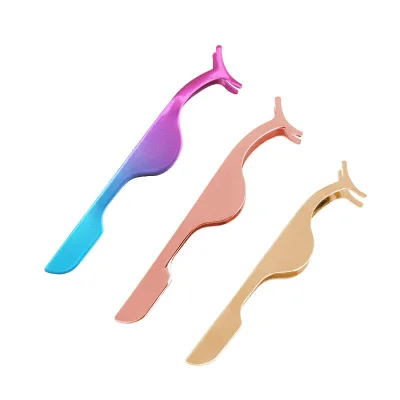


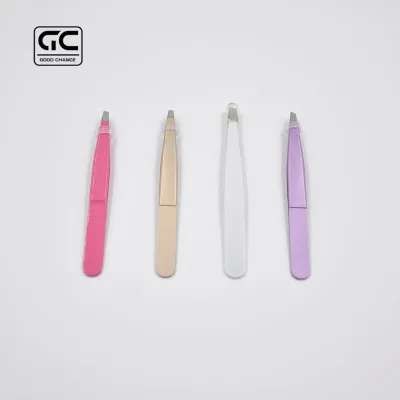


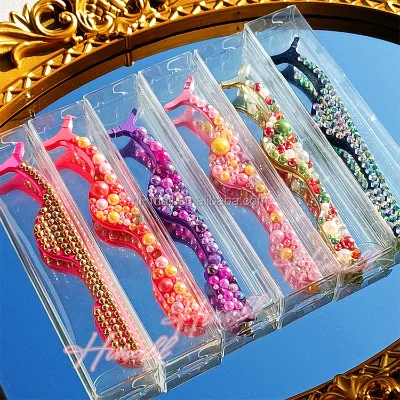


Comprehensive Sourcing Guide
Strategic Sourcing Guide for Eyelash Tweezers in the Global Beauty Supply Chain
The global demand for precision beauty tools has elevated the Eyelash Tweezers category from a simple accessory to a critical component in professional makeup and lash extension services. For B2B procurement professionals, sourcing these items requires a nuanced understanding of material science, geometric precision, and supply chain logistics. The market presents a diverse array of options, ranging from standard manual tools to specialized instruments designed for volume lashes and specific application techniques. This guide synthesizes available market data to provide a structured approach for evaluating suppliers, verifying product specifications, and ensuring long-term procurement success without relying on unverified claims or specific vendor recommendations.
Technical Specifications and Geometric Precision
The efficacy of an eyelash tweezer is fundamentally dictated by its physical geometry and material composition. In the current market, stainless steel remains the dominant material choice due to its corrosion resistance, durability, and ability to maintain a sharp edge over time. Buyers must scrutinize the specific tip configurations, as the angle and width directly influence the tool's utility for different lash techniques.
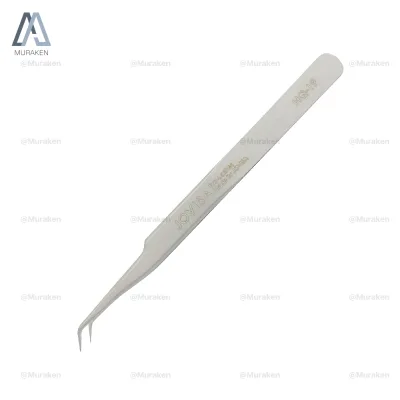
Data indicates a significant variation in tip angles, with observed specifications including 35-degree and 45-degree angles. These variations are not merely aesthetic; a 35-degree angle may offer a different leverage point compared to a 45-degree angle, affecting the grip on individual lashes. Furthermore, tip width is a critical specification. Market observations show tip widths ranging from 0.5 cm to 0.9 cm. A narrower tip, such as 0.5 cm, is typically preferred for isolated lash application where precision is paramount, while a slightly wider tip might be utilized for volume fans or general brow grooming.
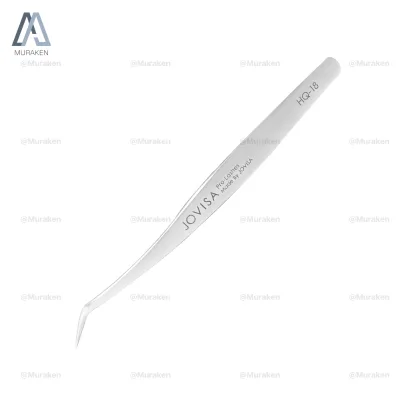
The model numbers associated with these tools, such as HQ-18, HQ-19, TZS101, TZS104, TZS108, TZS110, and TZS112, serve as identifiers for specific design iterations. Each model often correlates with a distinct set of dimensions and weights. For instance, one observed specification lists a length of 12 cm with a weight of 14.5 g, while another variant measures 12.7 cm and weighs 16.4 g. These weight differences can impact user fatigue during extended professional sessions. Buyers should request detailed dimension sheets for each model number to ensure the tool matches the ergonomic requirements of their target end-users.
Material Integrity and Manufacturing Origins
Understanding the provenance of the product is essential for quality assurance. The supply chain for Eyelash Tweezers is geographically diverse, with significant manufacturing hubs identified in Pakistan and China, specifically within the Guangdong province. The origin location often influences the manufacturing standards, labor costs, and logistical lead times.
Stainless steel is the universal material observed across the listings, but the grade of steel is rarely explicitly detailed in standard product summaries. Buyers must verify the specific alloy grade (e.g., 304, 316) to ensure resistance to rust and chemical degradation from sanitizing agents. The "Drive Type" for these tools is consistently listed as manual, indicating a reliance on the user's hand strength and the mechanical advantage provided by the spring tension and pivot point.
When evaluating suppliers from different regions, procurement teams should consider the implications of the "Place of Origin." Products originating from Guangdong, China, are often associated with high-volume manufacturing capabilities and established export infrastructure. Conversely, items from Pakistan may offer unique design perspectives or cost structures. Regardless of origin, the "Customization" attribute is widely available, suggesting that many manufacturers are capable of tailoring specifications, packaging, and branding to meet specific buyer requirements. This flexibility is a key differentiator in the B2B landscape.
Compliance, Certification, and Standardization
In the beauty and personal care sector, compliance is a non-negotiable aspect of procurement. While specific certification statuses are not universally asserted in the provided product data, buyers must actively verify that suppliers adhere to relevant international safety and quality standards. The "prod_standard" field in some listings is marked as "customized," which implies that the manufacturer can align their production processes with specific buyer requirements or regional regulations.
However, the absence of a specific standard number in a listing does not imply non-compliance; rather, it necessitates a proactive verification process. Buyers should request documentation confirming adherence to standards such as ISO 9001 for quality management or specific material safety data sheets (MSDS) for the stainless steel used. The "prod_packing" options, ranging from OPP bags to plastic tubes and PU bags, also play a role in compliance, particularly regarding hygiene and protection during transit.
For products intended for professional use, the "Tips" attribute often mentions "Periodic Cleaning." This suggests that the design allows for sanitation, a critical factor in preventing cross-contamination. Buyers should ensure that the surface finish of the tweezers allows for effective sterilization without degrading the tool's precision. Additionally, the "OEM&ODM" capability being marked as "Yes" indicates that suppliers are prepared to handle private label requirements, which often come with their own set of compliance and intellectual property considerations.
Cost Drivers and Pricing Dynamics
The pricing structure for Eyelash Tweezers is influenced by a complex interplay of factors, including material costs, manufacturing complexity, and order volume. The observed price range in the market spans from $0.07 to $6.11 USD. This wide disparity highlights the difference between basic, mass-produced units and high-precision, specialized tools.
The Minimum Order Quantity (MOQ) is another significant cost driver, with observed ranges extending from 1 unit to 6,000 units. A low MOQ of 1 suggests that some suppliers cater to small businesses or sampling needs, while an MOQ of 6,000 indicates a focus on large-scale wholesale distribution. Buyers must balance their inventory needs against the unit price; typically, higher volumes result in lower per-unit costs, but the initial capital outlay increases.
The "Selling Units" attribute, listed as "Single item" in some contexts, implies that products can be sold individually, which is beneficial for retail packaging. However, for B2B buyers, the "Customized" packing options allow for bulk packaging strategies that can further optimize logistics costs. The "Feature" of being "Convince and Portable" (likely meaning convenient and portable) adds value but may also influence the price point if it requires specialized packaging or design engineering.
Supplier Evaluation and Quality Control
Selecting the right supplier requires a rigorous evaluation process that goes beyond the initial product listing. Buyers should prioritize suppliers who demonstrate transparency in their manufacturing capabilities and quality control measures. The availability of "Customization" and "OEM&ODM" services suggests a supplier's willingness to collaborate, but this must be backed by a robust quality assurance framework.
Quality control should focus on the consistency of the tip geometry. Variations in the "Tip Type" (Pointed, Slanted, Rounded) and "Tip Angle" can significantly affect the tool's performance. A supplier must be able to guarantee that the 35-degree or 45-degree angles are consistent across the entire production batch. Similarly, the "Durable" feature listed in the attributes requires validation through stress testing to ensure the spring mechanism does not lose tension over time.
Buyers should also assess the supplier's ability to maintain the "High Precision High Closure" attribute, which is crucial for volume tweezers. This level of precision often requires advanced machining equipment and skilled labor. Requesting samples for physical inspection is a mandatory step. These samples should be tested for grip strength, alignment, and ease of use. The "Features" of being "Durable" and suitable for "Daily Personal" or "Professional" use must be verified through practical application.
Typical Applications and Market Segmentation
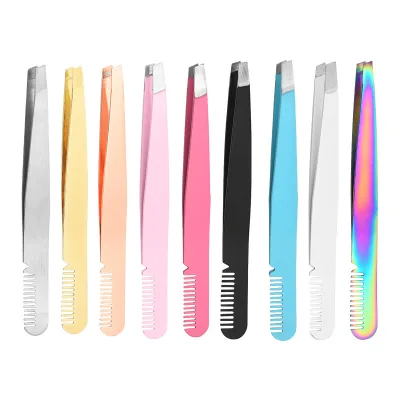
Eyelash Tweezers serve a variety of applications, ranging from daily personal grooming to professional lash extension services. The "Use" attribute highlights categories such as "Makeup Tweezers," "Eyebrow Clip Tweezers Tool," and "Perfect Volume Eyelashes." This segmentation allows buyers to target specific market niches.
For the professional lash extension market, the "Keyword" of "Eyelash Extension Tweezers" and the "Styles" of "Volume Tweezers" are critical. These tools require a higher degree of precision and are often associated with specific model numbers like TZS101 or TZS112. The "Tip Type" for these applications is often pointed or slanted to facilitate the picking and placement of individual lashes.
In contrast, the "Lower Special Eyelash Curler" and general "Eyebrow Clip" applications may prioritize durability and ease of use over extreme precision. The "Feature" of being "Portable" is particularly relevant for travel-sized kits or personal use cases. Understanding these distinctions helps buyers curate a product portfolio that meets the diverse needs of their customer base. The "Usage" of "Daily Personal" suggests a market for affordable, high-volume tools, while "Perfect Volume Eyelashes" points to a premium segment where performance justifies a higher price point.
Long-Term Procurement Considerations
Sourcing Eyelash Tweezers is not a one-time transaction but a strategic partnership that requires long-term planning. The "Customized" nature of the "prod_packing" and "prod_standard" offers opportunities for brand differentiation, but it also introduces complexity in supply chain management. Buyers must ensure that their suppliers can maintain consistency in customization over time, especially as order volumes scale.
Lead times and production capacity are critical factors. While specific lead times are not provided in the data, the high MOQs observed suggest that suppliers may have minimum production runs that affect delivery schedules. Buyers should negotiate clear terms regarding production timelines and capacity to avoid stockouts during peak demand periods.
Furthermore, the "Tip" maintenance requirement of "Periodic Cleaning" implies that the product lifecycle includes ongoing care. Buyers should consider whether their suppliers offer replacement parts or warranty services, although this is not explicitly stated in the current data. The "Standard" of 10.1x3x1.5cm or 17.8x6.1x0.7cm for packaging dimensions indicates that logistics planning must account for the physical footprint of the products.
In conclusion, successful procurement of Eyelash Tweezers demands a meticulous approach to verifying technical specifications, understanding material origins, and evaluating supplier capabilities. By focusing on the observable data points such as tip angles, material composition, and model variations, buyers can make informed decisions that align with their strategic goals. The diversity in the market, from the 0.5 cm to 0.9 cm tip widths and the various model numbers, offers ample opportunity for differentiation, provided that quality and compliance remain the central pillars of the sourcing strategy.
FAQs
What material are the Eyelash Tweezers made of?
The Eyelash Tweezers are constructed from stainless steel, ensuring durability and resistance to corrosion. This material choice supports the requirement for periodic cleaning and maintains the precision needed for volume eyelash applications.
Which tip angles are available for these tools?
Available tip angles include 35 degrees and 45 degrees, offering different leverage points for specific lash techniques. Buyers should select the angle that best matches their preferred grip and application style for optimal performance.
Can buyers customize the packaging and branding?
Yes, customization is available for both the product packaging and branding through OEM and ODM services. Manufacturers offer options like OPP bags, plastic tubes, and PU bags to meet specific buyer requirements and market standards.
What is the minimum order quantity for these tweezers?
The minimum order quantity ranges from 1 to 6000 units depending on the supplier and specific product configuration. This flexibility allows both small businesses and large wholesalers to source the tools according to their inventory needs.
Where are these Eyelash Tweezers manufactured?
Manufacturing origins include Pakistan and China, with specific production hubs located in Guangdong. The place of origin influences logistics and production standards, so buyers should verify the specific location for their order.
How do tip widths vary across different models?
Tip widths vary between 0.5 cm and 0.9 cm to suit different application needs such as isolated lashes or volume fans. Specific models like HQ-18 and HQ-19 have distinct dimensions and weights to support ergonomic usage.