Source F5 Spray Paint Ceiling Filter for Booths, Auto Shops, and Industrial Use
Find and compare 30 F5 Spray Paint Ceiling Filter options for automotive and industrial applications. Evaluate specifications such as filtration grade, material composition, and resistance levels to select the right medium filter for your spray booth needs.
Key considerations
Products List


Hot Sell Specially Designed for Paint Spraying Systems Ceiling Filters
$4.50 - $6.50
MOQ: 1 Square Meters


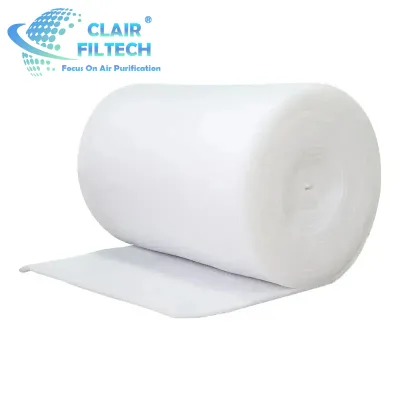


F5 Ceiling Filter Spray Booth Filter Media Air Filter Ceiling Cotton
$2.30 - $2.70
MOQ: 100 Square Meters


Wholesale F5 Ceiling Filter for Paint Spray Booth Top Air Intake Filtration
$2.50 - $2.70
MOQ: 1000 Square Meters

Ceiling Filter for Paint Booth Paint Booth Ceiling Filter Manufacturers
$1.95 - $2.30
MOQ: 2 Square Meters


600g F5/EU5/M5 Roof Ceiling Filter for Auto Spray Painting Booth Factory Supply
$2.50 - $2.70
MOQ: 20 Square Meters

High Quality Polyester Fiber Ceiling Filter for Spray Booth Paint Shop
$2.40 - $2.90
MOQ: 20 Square Meters

Comprehensive Sourcing Guide
F5 Spray Paint Ceiling Filter Sourcing Guide
Sourcing F5 spray paint ceiling filters requires a disciplined approach to balancing filtration efficiency with airflow dynamics in industrial environments. These filters are primarily designed for use in spray booths and automotive painting facilities, where maintaining a clean, particle-free atmosphere is critical for coating quality. The core function of an F5-rated filter is to capture medium-sized particulates, typically those greater than or equal to 1 micrometer, ensuring that overspray and ambient dust do not settle on freshly painted surfaces. Buyers must understand that while the "F5" designation refers to a specific European filtration class, the physical construction and material composition of the filter media are equally important for long-term performance in high-humidity or chemically aggressive environments.
The procurement process for these ceiling filters involves navigating a variety of product configurations, from standard roll goods to pre-cut panels. Suppliers often offer customization options, allowing buyers to specify dimensions such as 1.6m x 20m or 2.0m x 20m, or to request specific weights like 420g/sqm or 600g/sqm to match their existing HVAC infrastructure. It is essential to verify whether the product is supplied as a continuous roll or as individual panels, as this impacts installation labor and waste. Additionally, the presence or absence of a clapboard frame can significantly affect how the filter integrates with ceiling grids, making it a key decision point during the specification phase.
Product Scope and Observed Listing Signals
The market for F5 spray paint ceiling filters presents a wide range of product listings, with observed prices varying significantly from low-cost options to premium specialized units. This price dispersion often reflects differences in material density, glue application methods, and packaging standards. Buyers should note that some listings offer filters with a weight of 250g/sqm, while others provide heavier media at 600g/sqm, which directly correlates with dust holding capacity and service life. Understanding these variations is crucial for accurate total cost of ownership calculations, as a lower initial price may result in more frequent replacements and higher operational downtime.
Listing signals also reveal diverse material compositions, with synthetic fibers and polyester being common choices for the filter media. The surface structure may include fiberglass net, cloth net, or PE net, each offering different levels of durability and resistance to tearing during installation. Some products are described as having full glue or surface glue bonding, which affects the structural integrity of the filter under high airflow conditions. Buyers must carefully review these material attributes to ensure compatibility with their specific spray booth requirements, particularly regarding chemical resistance and static dissipation properties.
Technical Specifications to Verify
When evaluating technical specifications, the filtration class is a primary determinant of performance, with F5/M5 (EN779) and EU5 (Eurovent) being standard classifications for medium filtration. These ratings indicate the filter's ability to capture particles in the medium size range, which is essential for protecting the final paint finish in spray booths. Buyers should verify the rated air velocity, which is often specified around 0.3 m/s, to ensure the filter does not create excessive pressure drop across the ceiling plenum. Matching the airflow rate, such as 1080 m³/h, to the booth's fan capacity is critical to maintaining consistent air exchange rates and preventing turbulence that could disturb the paint application.
Other critical technical parameters include the initial and final resistance values, which typically range from 35 Pa to 430 Pa, indicating the pressure drop across the filter as it loads with dust. The dust holding capacity, often cited around 500g/m², provides an estimate of the filter's lifespan before replacement is necessary. Temperature and humidity limits are also vital, with short peak temperatures up to 130°C and humidity levels up to 100°C being common specifications. Buyers must ensure that the selected filter can withstand the environmental conditions of their specific facility, particularly in regions with high ambient humidity or in booths with heated curing cycles.
Compliance and Safety Documentation
Safety compliance is non-negotiable in spray booth environments, where flammable vapors and dust pose significant risks. The flammability rating of the filter media, such as F1 according to DIN 53438, is a critical safety document that buyers must request and verify. This rating indicates the filter's resistance to ignition and flame spread, which is essential for preventing fire hazards in areas where paint overspray accumulates. Buyers should ensure that all supplied filters come with valid test reports or certificates confirming their flammability classification, as non-compliant materials can void insurance policies and violate local fire codes.
In addition to flammability, buyers should inquire about the filter's static properties and chemical resistance, although these may not always be explicitly listed in standard product descriptions. It is advisable to request material safety data sheets (MSDS) for the filter media and adhesives to ensure they do not off-gas harmful substances that could contaminate the paint finish. While specific certification bodies may vary by region, verifying that the supplier adheres to recognized international standards for industrial filtration is a key step in mitigating liability and ensuring workplace safety.
Cost Drivers and Commercial Terms
Several factors influence the final cost of F5 spray paint ceiling filters, with material weight and customization being primary drivers. Heavier filters, such as those at 600g/sqm, generally command higher prices due to the increased amount of media and adhesive used, but they offer superior dust holding capacity and longer service intervals. Customization options, including specific sizes, colors, or surface treatments, can also add to the cost, as they require additional production steps and potentially lower economies of scale. Buyers should evaluate these cost drivers against their operational needs to determine the most cost-effective solution for their specific application.
Commercial terms, including minimum order quantities (MOQ) and packaging, also play a significant role in the procurement decision. Observed MOQs can range from 1 to 1000 units, depending on the supplier and the level of customization required. Packaging methods, such as PE bags, PP bags, or cartons, affect the ease of storage and handling, with some suppliers offering combined packaging for added protection. Buyers should negotiate clear terms regarding shipping, returns, and quality guarantees, ensuring that any defects or non-conformities are addressed promptly to avoid production delays.
Supplier Qualification and Quality Control
Supplier qualification is a critical step in ensuring the reliability of F5 spray paint ceiling filters. Buyers should assess the supplier's manufacturing capabilities, including their ability to produce consistent filter media with uniform weight and density. Verification of production standards, such as adherence to EN779 or other relevant international norms, is essential for ensuring product consistency. Additionally, buyers should inquire about the supplier's quality control processes, including in-line testing for resistance, airflow, and dimensional accuracy, to minimize the risk of receiving substandard products.
Communication and responsiveness are also key indicators of supplier reliability. Buyers should evaluate the supplier's ability to provide technical support, including assistance with specification selection and installation guidance. A qualified supplier should be able to provide samples for testing before committing to a large order, allowing buyers to verify performance in their actual operating conditions. Building a relationship with a supplier who demonstrates transparency and a commitment to quality can lead to better pricing, improved service, and more reliable supply chains over time.
Long-Term Procurement Checks
Long-term procurement success depends on establishing a robust framework for ongoing performance monitoring and supplier evaluation. Buyers should implement a system for tracking filter replacement frequency, pressure drop trends, and paint quality outcomes to assess the effectiveness of the selected F5 filters. This data can be used to negotiate better terms with suppliers, such as volume discounts or extended warranties, based on demonstrated performance. Regular audits of supplier quality and delivery performance can help identify potential issues early, allowing for proactive management of the supply chain.
Furthermore, buyers should stay informed about advancements in filtration technology and changing regulatory requirements that may impact their operations. Engaging with industry associations and attending trade shows can provide insights into new products and best practices for spray booth filtration. By maintaining a proactive approach to procurement and continuously evaluating supplier performance, buyers can ensure that their spray painting operations remain efficient, safe, and cost-effective in the long run.
FAQs
What is the filtration grade of the F5 Spray Paint Ceiling Filter?
The filtration grade is F5, meeting EN779 and Eurovent EU5 standards. This medium filter uses synthetic fiber material to capture particles greater than or equal to 1 micron with an arrestance of at least 95 percent according to Ashrae52.1-1992.
Can the F5 Spray Paint Ceiling Filter be customized for specific sizes?
Yes, customization is available for various dimensions including 0.7 by 20 meters or 1.6 by 20 meters. The product supports custom sizes and can be produced with different thicknesses ranging from 20 to 25 millimeters to fit specific spray booth requirements.
How does the F5 Spray Paint Ceiling Filter handle high temperatures?
The filter can withstand short temperature peaks up to 130 degrees Celsius. It is designed for use in spray booths where heat resistance is critical, ensuring stability during operation while maintaining its structural integrity under thermal stress.
What is the dust holding capacity of the F5 Spray Paint Ceiling Filter?
The dust holding capacity is 500 grams per square meter. This high capacity allows the filter to operate effectively for extended periods before requiring replacement, making it suitable for continuous industrial spray painting applications in various environments.
Which materials are used to construct the F5 Spray Paint Ceiling Filter?
The filter is constructed from synthetic fiber and polyester materials. It features a surface made of fiberglass net, cloth net, or PE net, and uses full glue or surface glue to ensure durability and effective filtration performance in spray booth applications.
What is the initial resistance of the F5 Spray Paint Ceiling Filter?
The initial resistance is 35 pascals, which ensures low energy consumption during operation. The final resistance reaches 430 pascals, indicating the pressure drop as the filter accumulates dust, helping users plan maintenance schedules effectively for their spray booths.