Source Fine Jewelry Set for Wedding, Anniversary, and Gift
Explore 30 Fine Jewelry Set options to compare materials, plating styles, and customization services. This catalog supports buyers in evaluating specifications for wedding, anniversary, and gift applications with clear sourcing details; compare the available evidence and request quotations based on your requirements.
Key considerations
Products List


Fine Jewelry Set for Women Vintage Style Earrings and Necklace with for Gift
$16.54 - $19.46
MOQ: 30 set


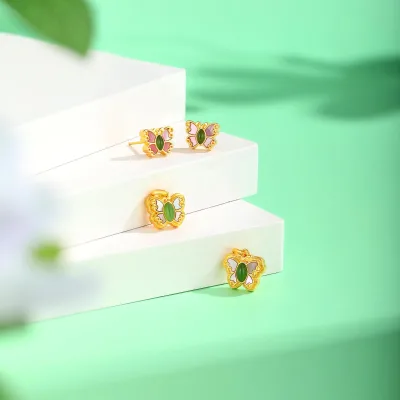
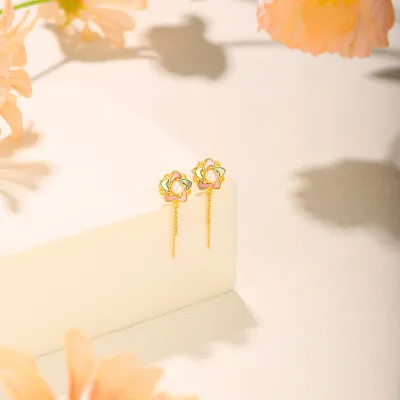


Comprehensive Sourcing Guide
Fine Jewelry Set Sourcing Guide
A Fine Jewelry Set sourcing exercise begins with a clear definition of what the buyer actually needs: matched pieces sold together as a coordinated collection, typically built around a necklace with complementary earrings, bracelets, or rings. In the B2B sourcing context, sets are more complex than single-piece orders because every component must match in metal composition, plating tone, and stone quality, and any mismatch across components becomes immediately visible to the end customer. Buyers should therefore treat a set as a single quality unit, not a bundle of independent items, and structure inspection criteria accordingly.
The listings observed in this category share several consistent signals worth noting. Common attributes include 925 sterling silver accessory materials, cubic zirconia stones, casting production, and wax setting, with plating options spanning rhodium, rose gold, yellow gold, black gold, and platinum. Stated minimum order quantities in the observed range vary from 10 to 200 pieces, and listed prices span from under one dollar to just over one hundred dollars, reflecting the wide spread between simple silver pieces and stone-set collections. These figures are observations from individual listings, not guarantees, and must be confirmed with each supplier before committing to an order.
Product Scope and Observed Listing Signals
The observed listings cover several recognizable product types within the Fine Jewelry Set category. Some listings are explicitly typed as jewelry sets, while others are necklaces with pendant designs in heart or geometric shapes, which can function as the anchor piece of a set. Suitable-for attributes include unisex, female, and female-and-male designations, so buyers can position products across different customer segments. Application fields listed include gifting, wedding, anniversary, and party occasions, with usage extending to decoration, collection, and in some listings religious purposes. Length specifications such as 45cm necklaces appear, and colors commonly include silver, gold, and white tones.
Style descriptors in the listings cluster around "fashion" and "simple," which indicates the category serves both statement-driven gift jewelry and minimalist everyday collections. Customization is broadly available, with several listings marked as customized or offering OEM/ODM service, size customization, and flexible packing arrangements. Buyers should treat these attributes as listing-level observations rather than category-wide promises: one supplier may confirm 925 sterling silver with cubic zirconia, while another may only offer silver-plated copper bases. Mapping each observed attribute against your target market position is the first scoping step before requesting quotations.
Technical Specifications to Verify
The most important technical verification is metal composition and purity. Listings in this category reference 92.5% purity and 925 sterling silver accessory materials, but also list copper as a base material, so buyers must confirm exactly which metal applies to every component of the set, not just the showcase piece. Request written confirmation of silver content, whether the piece is solid silver or silver-plated, and how plating thickness is controlled. Plating options observed—rhodium, rose gold, yellow gold, black gold, platinum—should be specified per SKU with tone references agreed in advance, because "gold" alone leaves too much room for variation between production batches.
Beyond metal, verify stone and setting details. Listings reference cubic zirconia stones, wax setting processes, and "plain silver" variants, so clarify which stones are genuine set stones versus glued or wax-fixed components, and request stone specification sheets covering size, cut, and clarity grading where applicable. Dimensions also need full confirmation: a stated 45cm necklace length and square or heart pendant shapes must be translated into a measured spec sheet covering chain length, pendant dimensions, clasp type, and weight. Observed weight standards such as 35G exist in listings but should be re-confirmed against finished samples, since weight tolerance directly affects both cost and perceived quality.
Compliance and Safety Documentation
Compliance requirements for fine jewelry sets depend heavily on the destination market, and the buyer—not the supplier—is ultimately responsible for ensuring products meet them. Nickel release limits, lead and cadmium restrictions, and precious metal marking rules differ across the US, EU, and other markets, so begin by confirming which regulations apply to your sales channels and then ask suppliers to demonstrate conformity. The observed listings reference SGS certification, which is a meaningful signal, but a certificate reference in a listing is not the same as a valid, current test report covering your specific SKU and batch.
Request copies of actual test reports rather than accepting certificate logos, and check that reports identify the correct product model, materials, and testing scope. The listing data shows model numbers such as 621460152468 and S19032903; when you place orders, ensure test documentation maps to your own order numbers so there is no ambiguity later. Also confirm whether testing covers the finished plated product or only the base metal, since plating layers can affect compliance results. For markets with hallmarking or purity marking requirements, agree in writing how 925 stamps are applied and who bears responsibility for marking accuracy across all set components.
Cost Drivers and Commercial Terms
Price dispersion in the observed listings—from under one dollar to over one hundred dollars—reflects the main cost drivers buyers must understand before comparing quotations. Base metal choice is the largest factor: solid 925 sterling silver carries material-cost exposure that copper or plated alternatives do not, and silver pricing fluctuates, so agree on a price-adjustment mechanism for material-sensitive orders. Stone content is the second driver, since cubic zirconia adds cost through both material and setting labor, and wax setting versus mechanical setting changes unit economics. Plating selection also matters, with rhodium and multi-tone plating commanding different prices from single-tone finishes.
Commercial terms should be negotiated as a complete package rather than a unit price alone. Observed MOQs range from 10 to 200 pieces and delivery times range from roughly 10–15 days to 45 days, so confirm both figures for your specific configuration instead of assuming category averages. Sample timelines of around 10 days appear in listings, but sample cost, sample credit against bulk orders, and packing terms (OPP bag with strong carton, or customer-specified packing) all need explicit agreement. Finally, clarify Incoterms, payment structure, and whether customization or OEM/ODM work carries tooling or setup fees that only surface after the quotation stage.
Supplier Qualification and Quality Control
Supplier qualification for jewelry sets should start with capability evidence rather than price. Because listings indicate casting production, wax setting, and in-house plating options, ask prospective suppliers to describe their production flow and identify which processes are performed in-house versus subcontracted; subcontracted plating is a common source of quality inconsistency and lead-time risk. Verify the OEM/ODM and customization claims by commissioning a small custom sample before any bulk commitment, and evaluate whether the returned sample matches your drawings in plating tone, stone placement, and finishing quality. The Guangzhou, China origin observed in listings points to a mature jewelry manufacturing cluster, but cluster membership does not guarantee individual supplier quality.
Quality control should be structured around the set as a unified product. Build an inspection checklist covering plating adhesion and tone consistency across all pieces, stone security under pull and torsion checks, clasp function, weight against the agreed standard, and dimensional accuracy against the spec sheet. Conduct inspection at two points: a pre-production sample approval, and a final random inspection before shipment using an agreed sampling plan. For orders below container scale, third-party inspection is inexpensive insurance and should be budgeted into the landed cost. Document every defect found with photographs so corrective actions are verifiable rather than verbal.
Long-Term Procurement Checks
Long-term value in this category comes from repeatable consistency, not from the first successful order. Establish a requalification rhythm: re-run material and compliance testing periodically, especially for silver-content and plating specifications, because suppliers may change sub-suppliers or plating baths over time without notice. Track batch-level consistency by retaining sealed golden samples from every approved production run and comparing future deliveries against them. Monitor whether quoted delivery times—observed in listings at ranges from 10–15 days up to 45 days—remain realistic as your order volume grows, and build buffer time into seasonal buying calendars for wedding and gifting peaks.
Relationship management also deserves structured attention. Prefer suppliers who respond to specification changes with written confirmations rather than verbal assurances, and who provide updated documentation when models, packing standards, or certificates change. Keep your own records of model numbers, agreed weights, plating references, and packing requirements for every SKU so that reorders are unambiguous even after staff changes on either side. Finally, review total cost of ownership annually: reorder rates, defect rates, and correction costs often reveal that a modestly higher unit price from a consistent supplier delivers better economics than the cheapest initial quotation.
FAQs
What materials are used in these fine jewelry sets?
The fine jewelry sets are crafted from high-quality copper and 925 sterling silver. Some pieces feature cubic zirconia accessories and plain silver stones. The materials are selected for durability and aesthetic appeal, ensuring a premium feel for every wearer while maintaining structural integrity for daily use.
Can I customize the design of the Fine Jewelry Set?
Yes, customization is available for these fine jewelry sets through OEM and ODM services. Buyers can request specific shapes like hearts or geometry, along with various plating options including rhodium, rose gold, yellow gold, and black. This flexibility allows for unique branding and tailored designs.
What is the minimum order quantity for these fine jewelry sets?
The minimum order quantity varies by product model, ranging from 10 to 30 pieces. Specific models require 10, 20, or 30 pieces as their baseline. This flexible MOQ structure supports both small boutique orders and larger wholesale purchases, accommodating diverse business needs effectively.
How long does delivery take for these fine jewelry sets?
Delivery times typically range from 10 to 45 days depending on the specific product model and order complexity. Sample production may take around 10 days, while bulk manufacturing can require 15 to 30 days or up to 45 days. These timelines ensure quality control and timely fulfillment.
Are these fine jewelry sets certified for quality assurance?
Yes, the fine jewelry sets come with SGS certification to ensure quality and safety standards are met. This certification provides buyers with confidence in the product's material integrity and manufacturing processes. It serves as a reliable verification of compliance with international standards for jewelry production and trade.
What plating options are available for the fine jewelry sets?
Multiple plating options are available, including rhodium, rose gold, yellow gold, black gold, platinum, and silver. These finishes enhance the visual appeal and durability of the jewelry. Buyers can select the plating that best matches their brand identity or customer preferences for a polished and professional look.