Source Flexible Fire Retardant Wire and Cable Sleeve for Automotive, Machines, and Communications
Find 30 verified options for Flexible Fire Retardant Wire and Cable Sleeve designed for wire protection, machine safety, and automotive harnessing. Compare specifications including thermal ratings, voltage limits, and certifications like UL and RoHS from suppliers in Shenzhen.
Key considerations
Products List


Flexible Copper Braided Cable Sleeve for Enhanced Durability and Protection
$0.88 - $1.28
MOQ: 1000 Meters


Nylon Expandable Braided Cable Sleeve Ultimate Protection Not Flame Retardant
$0.05 - $1.17
MOQ: 1000 Meters


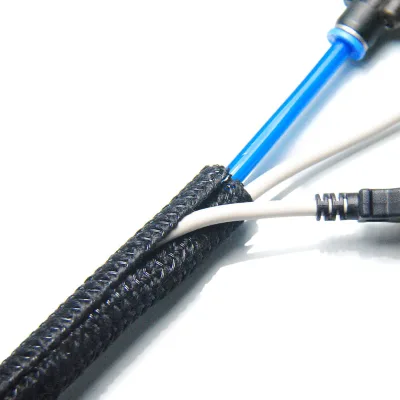

Comprehensive Sourcing Guide
Strategic Sourcing Guide for Flexible Fire Retardant Wire and Cable Sleeves
Understanding Technical Specifications and Material Composition
When sourcing flexible fire retardant wire and cable sleeves, the primary objective is to identify products that offer robust thermal protection without compromising mechanical flexibility. The core material composition typically involves fiberglass braiding coated with silicone resin, creating a hybrid insulation system. This combination is critical for applications requiring high-temperature resistance while maintaining the ability to bend around complex harnessing geometries. The observed product attributes indicate a working temperature range that can extend from -60°C up to +260°C, with specific thermal ratings noted at 200°C and 250°C depending on the specific model configuration.
Buyers must scrutinize the thermal endurance claims, as these define the operational lifespan of the sleeve under stress. Evidence suggests that high-performance variants undergo aging tests at 400°C ±5°C for six hours without cracking, a metric that serves as a strong indicator of material integrity. The chemical classification often falls under organic or hybrid insulation materials, which influence the sleeve's interaction with surrounding electrical components. Furthermore, the voltage rating is a decisive factor; observed specifications range from 10-15kV to maximum voltages of 10kV to 19kV. Procurement teams should verify that the selected sleeve's voltage rating exceeds the system's peak operating voltage to prevent dielectric breakdown.
The physical dimensions are equally vital for a successful installation. The inside diameter (ID) of these sleeves varies significantly, with observed ranges spanning from 0.5mm to 45.0mm in some configurations, and broader sizes from 6mm to 100mm in others. Specific models may offer custom sizing, including discrete increments like 4mm, 5mm, 8mm, 12mm, 15mm, 18mm, 25mm, and 28mm. The flexibility of the material is a non-negotiable attribute, ensuring that the sleeve can be easily installed on existing wire bundles or routed through tight spaces in automotive and machinery environments. The braided structure, often reinforced with tinned copper for shielding in specific variants, provides mechanical strength and tensile strength described as excellent.
Compliance Verification and Certification Standards
In the B2B procurement of industrial safety components, verifying compliance with international standards is paramount. The supply chain for flexible fire retardant sleeves is heavily regulated, and buyers must demand evidence of specific certifications before finalizing orders. The most frequently observed certifications for these products include UL, RoHS, Reach, and ISO9001. Some suppliers also provide IATF16949 certification, which is particularly relevant for automotive harnessing applications where quality management systems are strictly enforced.
Fire resistance is a critical compliance metric. The product attributes explicitly mention VW-1 (Vertical Wire) fire resistance, a standard that indicates the material will self-extinguish when the flame source is removed. This is distinct from other flammability ratings and is essential for ensuring safety in high-risk environments. Buyers should not assume that all listed products meet every certification; instead, they must request current test reports that confirm the specific batch or model number against the claimed standards. The presence of certifications like UL and RoHS indicates that the materials do not contain restricted hazardous substances and meet specific safety benchmarks for electrical equipment.
It is important to distinguish between general certifications and specific product standards. While background knowledge may reference standards like UL 1441 or UL 94, procurement decisions should rely on the explicit certification data provided by the supplier. The absence of a specific certification on a product listing should not be interpreted as a failure but rather as a signal to request documentation. Buyers should verify that the supplier's quality management system is certified, as this often correlates with the consistency of the product's fire resistance and thermal properties. The "Freely Supply" sample policy observed in the market allows buyers to physically test these certifications before committing to large-volume orders, a practice that significantly reduces procurement risk.
Cost Drivers and Pricing Dynamics
The pricing of flexible fire retardant wire and cable sleeves is influenced by a complex interplay of material costs, manufacturing complexity, and order volume. The observed price range in the market spans from $0.01 to $67.50 per unit, a wide disparity that reflects differences in diameter, material thickness, and certification levels. Smaller diameter sleeves with standard specifications generally fall at the lower end of this spectrum, while custom-sized, high-voltage, or heavily shielded variants command premium prices.
Volume is a primary cost driver. The Minimum Order Quantity (MOQ) ranges from 1 unit to 10,000 units, indicating that suppliers offer flexibility for prototyping but require significant volume commitments for cost-effective pricing. Buyers seeking to minimize inventory costs should negotiate based on their projected annual usage rather than immediate needs. The packaging method also impacts the final cost; products are typically shipped in cartons, with specific configurations like 20 meters per roll. Bulk packaging, such as "many rolls in cartons," can reduce per-unit shipping costs but may require higher upfront capital.
Customization is another significant factor affecting price. While customization is available, it often incurs additional tooling or setup fees. Buyers should weigh the cost of custom diameters against the potential savings of using standard sizes. The origin of the product, specifically Shenzhen, China, suggests a competitive manufacturing base, but logistics costs and lead times can vary. Buyers must consider the total landed cost, including freight and duties, rather than focusing solely on the unit price. The "Freely Supply" sample policy can also be a cost-saving measure, allowing for validation without the expense of purchasing full inventory.
Typical Applications and Industry Use Cases
Flexible fire retardant sleeves are designed for a diverse array of industrial applications where thermal protection and electrical safety are critical. The primary use cases identified include wire and cable protection, machine protection, and automotive harnessing. In the automotive sector, these sleeves protect wiring harnesses from high temperatures generated by engines and exhaust systems, as well as from abrasion and chemical exposure. The high thermal endurance and flexibility make them ideal for routing wires through tight engine bays where standard insulation might fail.
The communication industry also relies heavily on these sleeves to protect critical data cables from environmental hazards and fire risks. In this context, the flame retardant properties ensure that a fire in one part of the system does not propagate along the cable bundle. Machine protection applications involve shielding cables in industrial machinery, where heat from motors, hydraulic systems, or friction can degrade standard insulation. The ability of the sleeve to withstand temperatures up to 260°C ensures longevity in these harsh environments.
Additionally, the sleeves are used for electric wire insulation in high-voltage applications, with voltage ratings up to 19kV. This makes them suitable for power transmission and distribution equipment. The shielding capabilities of tinned copper braided variants add an extra layer of protection against electromagnetic interference (EMI), which is crucial in sensitive electronic systems. The versatility of the product, ranging from small diameters for delicate sensors to large diameters for heavy-duty power cables, allows for a single product line to serve multiple sectors. Buyers should match the specific application's thermal and mechanical requirements to the product's technical specifications to ensure optimal performance.
Supplier Evaluation and Quality Assurance Protocols
Evaluating suppliers for flexible fire retardant sleeves requires a rigorous approach to quality assurance. Buyers should prioritize suppliers who demonstrate transparency in their manufacturing processes and provide clear documentation of their certifications. The presence of ISO9001 and IATF16949 certifications suggests a commitment to quality management, but buyers must verify that these certifications are current and applicable to the specific product lines being purchased.
The ability to provide samples is a key indicator of supplier confidence and reliability. The observed "Freely Supply" sample policy allows buyers to conduct physical inspections and performance testing before placing large orders. This step is crucial for verifying the claimed thermal rating, flexibility, and fire resistance. Buyers should test the samples under conditions that mimic the actual application environment, checking for cracking, melting, or loss of flexibility after exposure to heat.
Supplier location, specifically Shenzhen, China, is a common origin for these products, but buyers should assess the supplier's logistical capabilities and lead times. The packaging standards, such as "by Carton" or "20m/Roll," should be consistent and robust enough to prevent damage during transit. Communication regarding customization options and lead times for non-standard sizes is also essential. A reliable supplier will be responsive to inquiries about technical specifications and willing to provide test reports for specific batches.
Long-Term Procurement Considerations and Risk Management
Long-term procurement of flexible fire retardant sleeves involves more than just securing a low unit price; it requires a strategy for managing supply chain risks and ensuring product consistency. The wide range of observed MOQs (1 to 10,000) suggests that buyers can start with small orders for validation but should plan for larger commitments to secure better pricing. However, buyers must be cautious of suppliers who offer extremely low prices without clear justification, as this may indicate compromised material quality or falsified certifications.
Standardization is a key strategy for long-term success. By selecting a limited range of standard diameters and materials that meet the majority of application needs, buyers can simplify their inventory management and reduce the risk of obsolescence. The availability of customization should be reserved for unique applications where standard sizes cannot meet the requirements. Buyers should also establish a relationship with suppliers who can provide consistent quality over time, rather than switching vendors frequently based on short-term price fluctuations.
Risk management also involves monitoring changes in regulatory standards. As environmental and safety regulations evolve, the requirements for fire resistance and material composition may change. Suppliers with strong R&D capabilities and a history of maintaining certifications like RoHS and Reach are better positioned to adapt to these changes. Buyers should regularly review their supplier's certification status and request updated test reports to ensure continued compliance. Finally, maintaining a buffer stock of critical components can mitigate the impact of supply chain disruptions, ensuring that production lines remain operational even if lead times increase.
Comparative Analysis of Product Attributes
To facilitate informed decision-making, the following table summarizes the key technical and commercial attributes observed in the market for flexible fire retardant wire and cable sleeves. This comparison highlights the variability in specifications and helps buyers identify the most suitable options for their specific needs.
| Attribute | Observation Range / Specific Value | Relevance to Procurement |
|---|---|---|
| Material | Fiberglass, Silicone Resin, Tinned Copper | Determines thermal and mechanical properties. |
| Working Temperature | -60°C to +260°C (Thermal Rating 200°C/250°C) | Critical for high-heat environments. |
| Fire Resistance | VW-1 (Self-extinguishing) | Essential for safety compliance. |
| Voltage Rating | 10-15kV, 10kV-19kV, <10kV | Must exceed system operating voltage. |
| Inside Diameter | 0.5mm-45.0mm, 6mm-100mm, Custom | Must match wire bundle size. |
| Certifications | UL, RoHS, Reach, ISO9001, IATF16949 | Mandatory for regulatory compliance. |
| MOQ | 1 to 10,000 units | Influences initial investment and pricing. |
| Packaging | Carton, 20m/Roll, Custom | Affects storage and handling logistics. |
| Origin | Shenzhen, China | Impacts lead time and shipping costs. |
| Sample Policy | Freely Supplied | Allows for pre-purchase validation. |
This table serves as a reference point for buyers to cross-reference their specific requirements against available market data. It underscores the importance of verifying each attribute individually, as no single product may satisfy all criteria simultaneously. By using this structured approach, buyers can navigate the complexities of the market and secure high-quality, compliant flexible fire retardant sleeves that meet their operational and safety standards.
FAQs
What certifications do flexible fire retardant wire and cable sleeves typically have?
These sleeves commonly carry UL, RoHS, Reach, and ISO9001 certifications. Some automotive variants also include IATF16949 certification to ensure quality management standards are met for harnessing applications.
How does the working temperature range affect product selection?
The working temperature typically ranges from -60°C to +260°C depending on the specific model. Buyers must verify the thermal rating matches their application, as some variants are rated for 200°C or 250°C.
Can I get samples of flexible fire retardant wire and cable sleeves before ordering?
Yes, suppliers frequently offer freely supplied samples for testing purposes. This allows buyers to verify thermal endurance, flexibility, and fire resistance claims before committing to larger volume orders.
Which specifications are available for inside diameter sizing?
Available inside diameters range from 0.5mm to 45.0mm in some models and 6mm to 100mm in others. Custom sizes are also available to fit specific wire bundles or machinery requirements.
What is the minimum order quantity for these sleeves?
The minimum order quantity varies significantly, ranging from 1 unit to 10,000 units depending on the supplier. Smaller orders are suitable for prototyping, while bulk purchases often secure better pricing.
Where are these products typically manufactured?
Most products originate from Shenzhen, China, specifically Guangdong province. This location is a common hub for manufacturing fiberglass and silicone resin coated sleeves used in global supply chains.