Source Flushable Clumping Cat Litter for Indoor Use, Pet Cages, and Homes
Find 30 options for Flushable Clumping Cat Litter from suppliers in China. Compare specifications including material, dust levels, and packaging types to select the best fit for your business needs.
Key considerations
Products List




Comprehensive Sourcing Guide
Strategic Sourcing Guide for Flushable Clumping Cat Litter
Understanding Product Categories and Material Composition
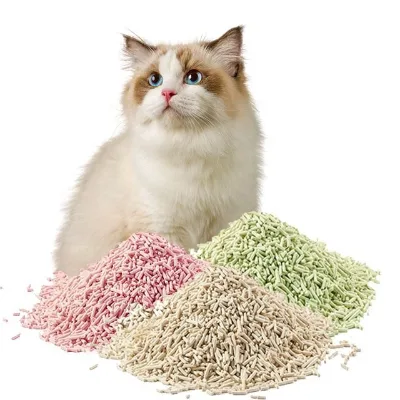
The market for Flushable Clumping Cat Litter is defined by a distinct shift from traditional clay-based products to plant-derived alternatives that prioritize environmental sustainability and user convenience. When sourcing this category, buyers must first distinguish between the primary material compositions available. The supply chain currently features three dominant material profiles: corn starch, cassava (tapioca) starch, and tofu fiber. Each material offers unique performance characteristics that align with specific buyer requirements regarding clumping speed, dust generation, and biodegradability.
Corn starch-based litters are often highlighted for their natural composition and ability to form solid clumps upon contact with moisture. These products typically rely on the gelatinization properties of starch to bind waste, creating a structure that is easy to scoop and flush. Similarly, cassava starch variants offer comparable clumping mechanics, often marketed with specific claims regarding low dust and high absorption rates. The tofu-based category represents a significant segment, utilizing soy fiber to create a lightweight, highly absorbent product. These materials are frequently associated with the "flushable" attribute, a critical feature for modern pet owners who prefer not to dispose of waste in landfills.
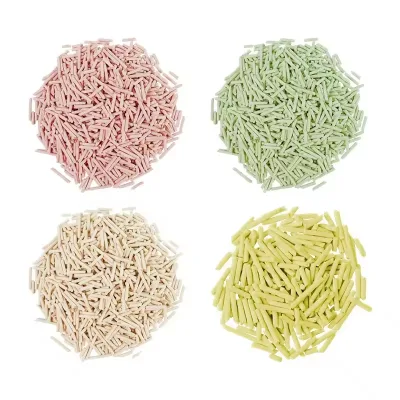
The distinction between these materials is not merely semantic; it dictates the manufacturing process and the resulting physical properties of the final product. Buyers should note that while all three materials can be engineered to be flushable, the density and granule size vary significantly. For instance, mineral sand-based litters, while offering high absorption, generally do not meet the flushable criteria due to their density and potential to clog plumbing systems. Therefore, when defining a product specification, the material source must be explicitly stated to ensure the "flushable" claim is technically valid. The supply data indicates that manufacturers often utilize specific granule sizes, ranging from 1.0mm to 3.8mm, to optimize the balance between clumping integrity and flushability.
Technical Specifications and Performance Metrics
Evaluating the technical specifications of Flushable Clumping Cat Litter requires a focus on granule morphology, absorption capacity, and dust control. The physical form of the litter is paramount; granules must be uniform enough to ensure consistent clumping but varied enough to allow for effective liquid absorption. The standard granule size for high-performance products in this sector typically falls within the 1.0mm to 3.8mm range, though custom sizing is frequently available to meet specific client requests. This range ensures that the litter can effectively encapsulate solid waste without breaking apart during the scooping process, a common failure point in lower-quality formulations.
Absorption capacity is another critical metric. High-quality plant-based litters often demonstrate absorption rates significantly higher than traditional clay, with some specifications citing figures around 300%. This high absorption rate is essential for the "flushable" claim, as it ensures that the waste is fully contained within a solid mass before it enters the plumbing system. If the absorption is insufficient, the litter may disintegrate in water, leading to potential blockages. Furthermore, the dust content must be minimized. Specifications often highlight "low dust" or "99% dust-free" characteristics, which are crucial for both respiratory health and the cleanliness of the pet's environment.
Clumping ability is the defining functional attribute of this product category. The mechanism relies on the interaction between the plant starch and moisture. When urine contacts the litter, the starch swells and binds the granules together. A successful clump should remain intact when lifted and should not crumble into smaller pieces that could clog drains. The "clumping" feature is often paired with "flushable" and "decomposable" attributes, creating a product that is environmentally friendly and convenient. Buyers should verify that the clumping agent is natural and does not rely on synthetic binders that might compromise the biodegradability of the product.
Compliance, Certification, and Safety Standards
Navigating the regulatory landscape for pet products requires rigorous attention to certifications and safety standards. While the pet industry is less regulated than the food or pharmaceutical sectors, the "flushable" claim introduces plumbing and environmental considerations that demand verification. Buyers must ensure that suppliers provide documentation confirming the product's safety for septic systems and municipal sewage networks. The presence of an MSDS (Material Safety Data Sheet) is a fundamental requirement, as it details the chemical composition and safety handling procedures for the product.
In addition to MSDS, other certifications may be relevant depending on the target market. Some suppliers offer custom certifications, which can be tailored to specific regional requirements or buyer specifications. The "flushable" attribute often requires third-party testing to validate that the product breaks down within a specific timeframe under standard plumbing conditions. While specific test results are not universally standardized across all suppliers, the expectation is that the product will be non-toxic, scent-free, and free from harmful additives.
The "Toxin Free" and "Scent Free" attributes are critical for consumer trust. Buyers should verify that the product does not contain artificial fragrances or chemicals that could irritate a pet's respiratory system or skin. The "Plant Based" and "Natural" labels are common marketing terms, but they must be backed by the actual material composition, such as corn starch, cassava, or tofu. Furthermore, the "Biodegradable" and "Compostable" claims require evidence that the product can break down in a composting environment without leaving harmful residues.
Cost Drivers and Pricing Structures
The pricing of Flushable Clumping Cat Litter is influenced by several factors, including raw material costs, manufacturing complexity, and packaging requirements. The cost of plant-based materials like corn starch, cassava, and tofu can fluctuate based on agricultural yields and global market conditions. Unlike clay, which is mined and processed with relatively low energy input, plant-based litters require agricultural sourcing and often more complex processing to achieve the desired granule size and clumping properties.
Packaging plays a significant role in the overall cost structure. The supply data indicates a variety of packaging options, including 3-side seal bags, stand-up pouches, and woven bags. The choice of packaging material, such as PP (polypropylene) bags with PE (polyethylene) inner linings, affects both the unit cost and the logistics of shipping. Larger volume orders, such as those in 5kg, 10kg, 20kg, or 24kg formats, typically benefit from economies of scale, reducing the per-unit cost. However, the MOQ (Minimum Order Quantity) can vary significantly, ranging from 1 ton to 5 tons depending on the supplier and the specific product configuration.
Lead times and customization options also impact the final price. Custom designs, logos, and specific packaging requests often incur additional setup costs and longer lead times. Buyers should be aware that while the base price of the product may be competitive, the total landed cost must account for these variables. The observed price range in the market is broad, reflecting the diversity of product qualities, packaging options, and order volumes. Buyers should negotiate based on the total cost of ownership, including shipping, duties, and potential rework costs for non-compliant shipments.
Supplier Evaluation and Quality Control Protocols
Selecting the right supplier for Flushable Clumping Cat Litter requires a thorough evaluation of their manufacturing capabilities, quality control systems, and track record. Buyers should prioritize suppliers who demonstrate transparency in their production processes and are willing to share detailed information about their raw material sourcing. The ability to offer OEM (Original Equipment Manufacturer) and ODM (Original Design Manufacturer) services is a strong indicator of a supplier's flexibility and capacity to meet specific brand requirements.
Quality control should be a central component of the supplier evaluation. Buyers must verify that the supplier has established protocols for testing granule size, clumping performance, and dust levels. The "99% dust-free" claim, for example, should be supported by regular internal testing or third-party verification. Additionally, the supplier should have a robust system for batch-to-batch consistency, ensuring that the product performance remains stable over time.
The location of the manufacturing facility is another factor to consider. Suppliers located in regions with strong agricultural sectors, such as Shandong and Qingdao in China, may have better access to raw materials like corn starch and tofu, potentially reducing costs and lead times. However, buyers should also consider the logistics of shipping from these locations to their target markets. The "Customization" attribute is widely available, allowing buyers to tailor the product to their specific needs, but this requires clear communication and detailed specifications to avoid misunderstandings.
Long-Term Procurement and Market Trends
The long-term viability of sourcing Flushable Clumping Cat Litter depends on understanding evolving market trends and consumer preferences. The demand for sustainable, eco-friendly pet products is growing, driven by a conscious consumer base that prioritizes environmental impact. This trend suggests that plant-based, biodegradable, and compostable litters will continue to gain market share over traditional clay products. Buyers should position their procurement strategy to align with these trends, focusing on suppliers who can deliver on sustainability claims.
The "flushable" attribute is a key differentiator, but it also carries regulatory risks. As plumbing standards and environmental regulations evolve, the definition of "flushable" may become more stringent. Buyers should stay informed about changes in local plumbing codes and sewage regulations to ensure their products remain compliant. Additionally, the "customizable" nature of the product allows for innovation in packaging and branding, which can help differentiate products in a crowded market.
Sourcing relationships should be built on long-term partnerships that prioritize mutual growth and quality. Buyers should look for suppliers who are committed to continuous improvement and are willing to invest in R&D to enhance product performance. The ability to offer free samples is a positive indicator of a supplier's confidence in their product quality. By maintaining open communication and setting clear expectations, buyers can mitigate risks and ensure a steady supply of high-quality Flushable Clumping Cat Litter.
Comparative Analysis of Material Options
To assist buyers in making informed decisions, the following table compares the key attributes of the primary material options available in the current market. This comparison highlights the strengths and potential considerations for each material type based on the observed product data.
| Attribute | Corn Starch Litter | Cassava Starch Litter | Tofu Fiber Litter |
|---|---|---|---|
| Primary Material | Corn Starch | Cassava (Tapioca) Starch | Tofu (Soy) Fiber |
| Clumping Ability | High | High | High |
| Flushable | Yes | Yes | Yes |
| Dust Level | Low | Low | Low |
| Absorption | High (up to 300%) | High | High |
| Biodegradable | Yes | Yes | Yes |
| Typical Granule Size | 1.0mm - 3.8mm | 1.0mm - 3.8mm | 1.0mm - 3.8mm |
| Packaging Options | PP Bag + PE Bag | PP Bag + PE Bag | PP Bag + PE Bag |
| Customization | Available | Available | Available |
| Certification | MSDS | MSDS | MSDS/Custom |
This comparison underscores the similarities in performance across the three main material types, with the primary differentiators often lying in the specific sourcing of the raw material and the brand's positioning. Buyers should select the material that best aligns with their target market's preferences and their brand's sustainability narrative.
FAQs
What materials are used for Flushable Clumping Cat Litter?
Flushable Clumping Cat Litter is typically made from plant-based materials like corn starch, cassava starch, or tofu fiber. These natural ingredients allow the litter to form solid clumps when wet while remaining biodegradable and safe for flushing in compatible plumbing systems.
Can I customize the packaging and logo for this product?
Yes, customization is available for both packaging and logos. Buyers can request specific bag types such as stand-up pouches or woven bags, and suppliers accept customized logos with OEM and ODM services to meet unique branding requirements.
What is the minimum order quantity for these products?
The minimum order quantity varies by supplier, with observed ranges from 1 ton to 5 tons. Some manufacturers accept smaller orders starting at 1 ton, while others may require a minimum of 5 tons depending on the specific product configuration and material used.
Are these cat litters dust-free and safe for pets?
Many options are designed to be low dust or 99% dust-free to ensure respiratory safety. The products are often toxin-free, scent-free, and made from natural ingredients like corn starch or tofu, making them safe for indoor use and sensitive pets.
What certifications do suppliers typically provide for this litter?
Suppliers commonly provide MSDS (Material Safety Data Sheet) certification to verify product safety and composition. Some vendors also offer custom certifications upon request to ensure compliance with specific regional regulations or buyer standards for environmental and health safety.
How does the clumping mechanism work for these litters?
The clumping mechanism relies on plant starches like corn or cassava that swell and bind upon contact with moisture. This creates solid, scoopable clumps that remain intact during disposal, facilitating the flushable claim when used with appropriate plumbing infrastructure.