Source Foldable Rotating 3-in-1 Cleaning Brush for Kitchen, Bathroom, and Car
Find and compare 30 available foldable rotating 3-in-1 cleaning brush options from verified suppliers. Evaluate features like bristle materials, ABS construction, and customizable packaging to find the right tool for home, car, or apparel maintenance needs.
Key considerations
Products List


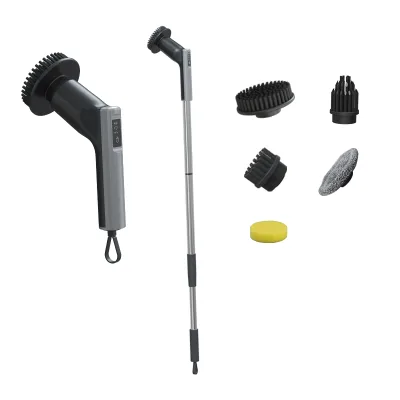
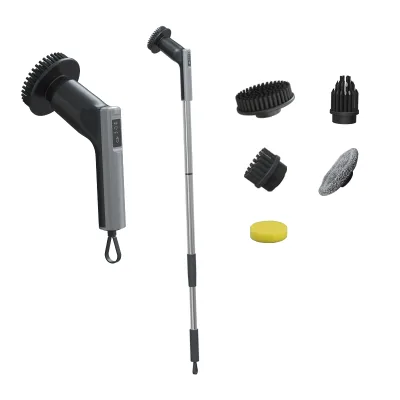
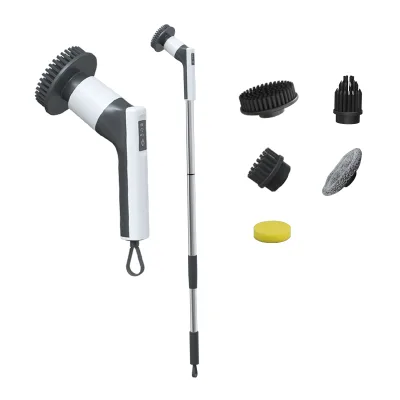


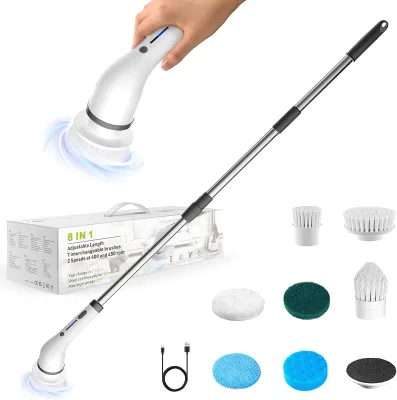
Multifunction 8 in 1 Cordless Scrubber Cleaning Brush with 8 Replaceable Brush Heads
$12.80 - $14.50
MOQ: 100 pieces


Comprehensive Sourcing Guide
Foldable Rotating 3-in-1 Cleaning Brush Sourcing Guide
Product Scope and Observed Listing Signals
The market for foldable rotating 3-in-1 cleaning brushes presents a diverse array of products that blend manual ergonomics with modern design aesthetics. Based on observed listing signals, buyers will encounter items described simply as "Cleaning Brush" or "Kitchen Cleaning Brush," alongside more specialized descriptors like "Electric face cleanser" or "Electric cleaning brushes for household." This variance indicates that the core keyword often serves as a broad category umbrella, encompassing both traditional manual tools and motorized variants. The "3-in-1" designation typically refers to interchangeable heads or multi-functional designs that allow a single handle to address different cleaning tasks, such as floor scrubbing, toilet cleaning, or kitchen degreasing. Buyers must carefully distinguish between static manual brushes and those with rotating mechanisms, as the latter often imply an electric or battery-powered component, which significantly alters the technical and compliance requirements.
Visual and attribute data from current listings reveal a strong emphasis on customization and modern styling. Many suppliers highlight "Customized" options, accepting OEM/ODM requests and offering logo customization, which is critical for private label buyers. The observed styles range from "Modern" to "Hand" held designs, with colors frequently listed as "Multicolor" or specific solid tones. Packaging varies widely, with some items shipped in simple OPP bags or polybags, while others utilize more premium color boxes or cartons. This diversity in presentation suggests that the "foldable" and "rotating" features are not standardized across all listings; some products may be foldable for storage but lack rotation, while others may rotate but be rigid. Procurement teams must verify these specific mechanical features against the product model numbers, such as MS012-736317210575 or HV-CT-036, to ensure the physical product matches the marketing claims.
Technical Specifications to Verify
When evaluating the technical specifications of these brushes, the first priority is confirming the mechanism of rotation and the method of power delivery. Listings mention materials such as ABS plastic and silicone, which are standard for durable, water-resistant handles and brush heads. However, the presence of terms like "Electric face cleanser" and "Charge Time: 3-4Hours" in some entries suggests that certain "rotating" brushes are battery-operated devices. Buyers must explicitly verify whether the rotating function is manual (e.g., a twisting handle mechanism) or motorized. If motorized, the voltage, battery type, and charging interface must be confirmed to ensure compatibility with the target market’s electrical standards. The absence of explicit voltage data in some summaries necessitates direct inquiry with the supplier to avoid receiving incompatible power sources.
Dimensional accuracy and material composition are equally critical for functional assessment. Observed specifications include a wide range of sizes, from compact handles measuring 7.1x7.3x7 cm to larger units with retractable lengths up to 110 cm. The brush head material is frequently cited as "Bristle," but the type of bristle (natural vs. synthetic) and its density are not always detailed. For cleaning brushes intended for hard surfaces like floors or toilets, bristle stiffness is a key performance indicator. Additionally, the "foldable" aspect requires verification of the hinge mechanism’s durability. Buyers should request images or videos demonstrating the folding action to ensure it locks securely during use and does not collapse under pressure. The product weight, observed at around 100g for some items, provides a baseline for ergonomics, but heavier electric models will require different handling considerations.
Compliance and Safety Documentation
Safety documentation varies significantly depending on whether the cleaning brush is a passive manual tool or an active electronic device. For manual brushes, the primary concern is material safety, particularly if the bristles or handles come into contact with food preparation areas or human skin. While some listings mention "Eco-Friendly" attributes, buyers should request specific material safety data sheets (MSDS) or declarations of conformity for the plastics and bristles used. Certifications such as ISO 9001:2015, which appear in background data, indicate quality management systems but do not guarantee product safety. Buyers must ensure that the ABS plastic and silicone components are free from harmful substances like BPA or phthalates, especially if the product is marketed for kitchen or personal care use.
If the product includes electric components, such as the "Electric cleaning brushes" noted in some listings, regulatory compliance becomes more complex. Certifications like CE, mentioned in the background context, are essential for selling in European markets, but they must be verified for the specific model. Buyers should confirm that the charging components and internal wiring meet relevant electrical safety standards. For products intended for the US market, UL or ETL certification may be required. It is crucial to distinguish between the certification of the supplier’s factory and the certification of the specific product unit. Buyers should ask for test reports from accredited laboratories that validate the safety of the electrical components, including overload protection and insulation resistance, to mitigate liability risks.
Cost Drivers and Commercial Terms
The cost structure for foldable rotating cleaning brushes is influenced by several key factors, including material complexity, packaging, and customization levels. The observed price range of $0.01 to $150 USD reflects this disparity, with basic manual brushes at the lower end and complex electric models with premium packaging at the higher end. The inclusion of rotating mechanisms, especially if motorized, adds significant cost due to the need for motors, batteries, and electronic controls. Buyers should analyze the bill of materials to understand the cost breakdown, paying attention to the quality of the ABS plastic and the type of bristles used. Customization, such as adding a logo or modifying the color, often incurs additional setup fees, which should be factored into the total landed cost.
Commercial terms, particularly Minimum Order Quantity (MOQ), vary widely across suppliers. The observed MOQ range of 1 to 20,000 units allows for flexibility, with some suppliers accepting small orders for testing or niche markets, while others require larger volumes for cost efficiency. A common MOQ observed is 10 units, which is accessible for small businesses. However, buyers should be aware that lower MOQs may come with higher per-unit prices. Packaging options also impact cost; items shipped in simple polybags are cheaper to produce and ship than those in custom color boxes or blister packs. Buyers should negotiate packaging specifications to balance brand presentation with shipping efficiency, considering that bulky packaging can increase freight costs significantly.
Supplier Qualification and Quality Control
Supplier qualification for cleaning brushes requires a focus on manufacturing capability and quality assurance processes. Given that many suppliers are located in China, with origins noted in Zhejiang and Guangdong provinces, buyers should verify the supplier’s production capacity and lead times. These regions are known for their plastic manufacturing and electronics assembly expertise, which is relevant for both manual and electric brush variants. Buyers should request evidence of the supplier’s ability to handle OEM/ODM requests, including their design support and prototyping capabilities. A reliable supplier should be able to provide samples that match the agreed-upon specifications, including the folding mechanism and rotation function.
Quality control measures should be established before placing large orders. Buyers should define clear acceptance criteria for visual defects, such as cracks in the ABS plastic or misaligned bristles. For electric models, functional testing of the rotation and charging features is essential. It is advisable to implement a pre-shipment inspection (PSI) to verify that the products meet the agreed-upon standards. Buyers should also inquire about the supplier’s defect rate and their policy for handling defective units. Establishing a clear communication channel for quality issues can help resolve problems quickly and maintain supply chain continuity. Additionally, verifying the supplier’s business license and export rights ensures that they are a legitimate entity capable of fulfilling international orders.
Long-Term Procurement Checks
Long-term procurement success depends on continuous monitoring of product performance and supplier reliability. Buyers should track customer feedback regarding the durability of the folding mechanism and the effectiveness of the rotating cleaning action. If issues arise, such as hinges breaking or motors failing, buyers should work with the supplier to implement corrective actions. Regular audits of the supplier’s quality control processes can help prevent recurring defects. Buyers should also stay informed about changes in material regulations and safety standards in their target markets, ensuring that the products remain compliant over time.
Sustainability and environmental considerations are increasingly important in the cleaning tool industry. Buyers should explore opportunities to source brushes made from recycled plastics or biodegradable bristles, aligning with growing consumer demand for eco-friendly products. Engaging with suppliers who have strong environmental management systems can enhance brand reputation. Additionally, buyers should consider the end-of-life disposal of the products, particularly for electric models with batteries. Developing a take-back program or partnering with recycling facilities can help manage waste responsibly. By focusing on these long-term factors, buyers can build a resilient and sustainable supply chain for foldable rotating cleaning brushes.
FAQs
How does a foldable rotating 3-in-1 cleaning brush work?
The brush combines three cleaning functions in one tool, with a rotating head powered either manually or by an electric motor in rechargeable models. The foldable handle lets it extend for floor or window cleaning and collapse for compact storage. Electric versions typically require 3-4 hours of charging before use, and interchangeable heads cover kitchen, toilet, car, and apparel cleaning tasks.
Can the foldable rotating 3-in-1 cleaning brush be customized with a logo?
Yes, logo customization is accepted, and both OEM and ODM cooperation is welcome from suppliers. Most listings indicate customized and non-customized options, with customization available on request. Packing can also be tailored, with common choices including polybag, color box, blister pack, or OPP bag, and custom packing arrangements can be negotiated directly with the supplier when ordering.
What is the typical MOQ for a foldable rotating 3-in-1 cleaning brush?
Minimum order quantities vary by model and supplier, with observed listings ranging from as low as 1 piece up to 20,000 pieces. Some suppliers explicitly accept small orders, and one listing states an MOQ of 10. If you need a trial or sample order, filter for suppliers advertising small orders accepted or a low stated MOQ.
What materials are used in foldable rotating 3-in-1 cleaning brushes?
Common materials include ABS plastic for the handle and body, silicone for soft-touch parts or brush heads, and bristle for the brush head itself. Listings describe bristle heads suitable for kitchen, floor, toilet, car, window, and apparel use. Silicone and ABS construction is typical for electric face and household cleaning variants, offering an eco-friendly, easily cleaned, and stocked feature set.
Which brush sizes and dimensions are available for this product?
Observed specifications include a 21.5 by 6.8 cm brush, a 24 by 13 cm brush, and a 27 by 3 cm brush, plus a retractable model measuring 26 cm that extends to 110 cm. Handle and bracket components are listed at 7.1 by 7.3 by 7 cm and 11.3 by 9.3 by 4.9 cm respectively. Confirm exact dimensions per model number before ordering.
How is the foldable rotating 3-in-1 cleaning brush packed for shipping?
Packing options vary by model and include OPP bag, polybag, color box, blister pack with color box at 12 pieces per carton, and plain carton packing. One listing shows a single package size of 43 by 33 by 9 cm, and a product weight around 100 g for a hand-style brush. Customized packing is available, so request your preferred method when requesting a quotation.
What features do electric models of this cleaning brush offer?
Electric household cleaning brush models, such as the T3 and AE-8688, feature a rotating head for house cleaning with a retractable handle extending to 110 cm. They use ABS construction, charge in 3-4 hours, and are marketed for household cleaning use by both men and women. Some electric variants also serve as face cleansers with cleansing and electric face cleanser features listed.
Where are these cleaning brushes manufactured and what styles are offered?
Products originate from China, with listings showing origins in Zhejiang and Guangdong provinces. Styles include modern hand-held designs and electric models, with a cleaning or kitchen cleaning brush description. Feature sets commonly highlight easily cleaned construction, eco-friendly and stocked availability, multicolor options, multiple scent variants for scented items, and modern styling suited to home use.