Source Forging Crawler Crane Upper Roller for Excavators, Cranes, and Carriers
Compare 30 verified options for the Forging Crawler Crane Upper Roller designed for excavators, crawler cranes, and carrier rollers. Specifications include materials like 40Mn2 and 50Cr, with customizable sizes and delivery times ranging from 5 to 15 days.
Key considerations
Products List


Crawler Chassis Undercarriage Parts Excavator Track Roller Bottom Roller
$99.00 - $5000.00
MOQ: 1 Pieces


Excavator Carrier Roller Upper Roller Assembly Forged Steel Components
$99.00 - $5000.00
MOQ: 1 Pieces

Excavator Track Roller Carrier Roller Upper Roller for Mining Equipment
$99.00 - $5000.00
MOQ: 1 Pieces


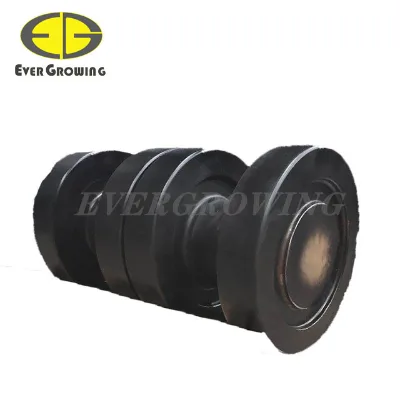


Excavator Undercarriage Excavator Spare Parts Front Crawler Crane Roller E325
$80.00 - $100.00
MOQ: 1 Pieces

Heavy-Duty Lower Upper Bottom Roller for Rotary Drilling Rigs Undercarriage
$10.00 - $20.00
MOQ: 1 Pieces


Comprehensive Sourcing Guide
Strategic Sourcing Guide for Forging Crawler Crane Upper Rollers
Understanding the Technical Architecture of Forged Components
The procurement of crawler crane upper rollers requires a deep understanding of the specific manufacturing techniques that define component longevity and structural integrity. In the heavy machinery sector, the upper roller is a critical undercarriage component responsible for supporting the track chain and maintaining proper tension. The core keyword "forging" indicates a specific metallurgical process where metal is shaped using compressive forces, typically resulting in a grain structure that follows the contour of the part. This is distinct from casting, where molten metal is poured into a mold. While some market listings may offer a choice between "Forging / Casting," the forging process is generally preferred for high-stress applications like crawler crane rollers due to its superior fatigue resistance and impact strength.
When evaluating technical specifications, buyers must look for precise material compositions that align with the operational demands of the equipment. The supplied data indicates that high-performance upper rollers are frequently manufactured from alloy steels such as 40Mn2, 40Cr, and 50Mn. These materials are selected for their ability to withstand the immense loads and abrasive conditions encountered in excavation and construction. The presence of 35MnBH in some specifications suggests the use of boron-alloyed steels, which enhance hardenability during heat treatment. The physical dimensions of these rollers are not one-size-fits-all; specifications range from specific pitch measurements, such as 90–592 pitch, to model-specific designs for machines like the IHI CCH700, IHI CCH2500, and ZOOMLION QUY100. Furthermore, the surface finish is a critical technical attribute, with "Smooth" finishes often cited to reduce friction and wear on the track chain. The hardness depth is another vital metric, with observed ranges indicating a case hardening depth of 8–12mm, ensuring that the wear-resistant layer extends sufficiently deep to handle prolonged contact with the track links.
Compliance Standards and Certification Verification
In the global B2B market for heavy machinery parts, compliance with international quality management systems is a non-negotiable baseline for supplier evaluation. Buyers must verify that the supplier holds valid certifications that attest to their manufacturing consistency and safety protocols. The provided facts highlight ISO9001 as a recurring certification, often noted with the condition "New," indicating that the parts are manufactured to current quality standards. Additionally, ISO45001:2018 is referenced, which is the international standard for occupational health and safety management systems. This certification is particularly relevant for suppliers of heavy industrial components, as it demonstrates a commitment to safe manufacturing practices that can reduce the risk of defects caused by human error or unsafe working conditions.
Beyond general management certifications, specific product certifications such as CE (Conformité Européenne) are essential for buyers targeting markets in Europe or regions that recognize European safety standards. The presence of "CE, ISO9001: Condition:New" in the data suggests that certain suppliers are capable of meeting these dual requirements. However, buyers should not assume that every listed product automatically carries these certifications. Instead, the procurement process must include a direct request for current, valid certificate copies. It is also important to distinguish between the certification of the manufacturing facility and the certification of the specific batch of parts. While the data mentions "ISO9001:2008" as a background standard, the current industry norm has shifted toward newer iterations of the standard, and buyers should verify that the supplier is operating under the most recent version of the ISO9001 standard to ensure up-to-date quality controls.
Cost Drivers and Pricing Dynamics in the Market
The pricing of forged crawler crane upper rollers is influenced by a complex interplay of material costs, manufacturing complexity, and order volume. The observed price range in the market spans from $1.50 to $5,000 USD, a wide spectrum that reflects the diversity of part sizes, material grades, and customization levels. A lower price point typically corresponds to smaller, standard-sized rollers or those produced with less intensive heat treatment processes. Conversely, the upper end of the price range likely corresponds to heavy-duty models designed for large excavators and cranes, such as the PC2000 or Sumitomo SC650-2, which require larger ingots of high-grade alloy steel and more extensive machining.
Material costs are a primary driver of the final price. The use of 40Cr, 50Mn, and 40Mn2 steels involves higher raw material costs compared to carbon steel, and the specific alloying elements like boron (in 35MnBH) further increase the base cost. Additionally, the heat treatment process, specifically "High frequency quenching," adds significant value but also cost. This process is necessary to achieve the surface hardness of HRC52-58, which is critical for the roller's lifespan. Buyers should also consider the packaging costs, as the data indicates options ranging from simple pallets to "Plywood Pallet & Crate" or "Export Standard" packaging. While these packaging solutions are essential for protecting the rollers during international shipping, they contribute to the total landed cost. Finally, the Minimum Order Quantity (MOQ) plays a role in unit pricing. With an observed MOQ range of 1 to 10 pieces, buyers purchasing single units for immediate replacement may face a higher per-unit cost compared to those placing bulk orders that allow the supplier to optimize production runs.
Typical Applications and Model Compatibility
The versatility of forged crawler crane upper rollers is evident in their application across a wide array of heavy machinery models. The data explicitly links these components to specific manufacturers and machine series, including IHI (Kobelco), ZOOMLION, Sumitomo, PC (Komatsu), and EX (Hitachi). For instance, specific part numbers such as 195-30-01980 and 195-30-01083 are associated with particular undercarriage systems, highlighting the importance of exact model matching. The "Application" attribute is consistently listed as "Excavator," confirming that these rollers are integral to the undercarriage systems of tracked excavators and crawler cranes.
Compatibility is not merely about physical fitment but also about performance matching. The pitch range of 90–592 suggests that these rollers are designed to accommodate various track widths and chain pitches, which vary significantly between small compact excavators and massive mining cranes. Buyers must ensure that the part number or model designation provided by the supplier matches the original equipment manufacturer (OEM) specifications of their machine. The data lists models such as PC200, PC220, EX200, ZX240, and the IHI CCH series, indicating that a single supplier may stock a vast inventory of parts for different brands. However, the "Customized" model designation also appears, suggesting that for older or non-standard machinery, bespoke manufacturing may be required. In such cases, the buyer must provide precise dimensional drawings or the original part number to ensure the forged roller meets the exact geometric and load-bearing requirements of the specific crane or excavator.
Supplier Evaluation and Production Capabilities
When evaluating potential suppliers for forged crawler crane upper rollers, buyers must assess the supplier's production capabilities beyond simple inventory availability. The "Technique" attribute lists both "Forging" and "Casting," and it is crucial to verify which method the supplier utilizes for the specific part in question. For high-stress applications, forging is generally superior, and buyers should confirm that the supplier has dedicated forging presses and the expertise to control the grain flow during the shaping process. The presence of "High frequency quenching" in the process list indicates that the supplier possesses advanced heat treatment facilities, which are essential for achieving the required surface hardness of HRC52-58.
Lead time is another critical factor in supplier evaluation. The observed delivery times range from 5 to 15 days, which is relatively short for custom-manufactured heavy machinery parts. This suggests that many suppliers maintain a stock of semi-finished goods or have streamlined production lines for standard models. However, for customized parts, the lead time may extend beyond these figures. Buyers should also consider the origin of the products, with "Shandong, China" and "Jining, Shandong China" being prominent locations. These regions are known for their heavy machinery manufacturing clusters, but buyers should verify the specific factory location to ensure transparency and to assess the logistics implications. The "Condition: New" attribute is standard for these parts, but buyers should request photos or videos of the actual production line to confirm that the parts are indeed new and not refurbished or reconditioned.
Quality Control and Long-Term Procurement Considerations
Ensuring the quality of forged crawler crane upper rollers requires a robust quality control (QC) framework that extends beyond the final inspection. The "Surface Hardness" of HRC52-58 and "Hardness Depth" of 8–12mm are specific metrics that must be verified through non-destructive testing or destructive sampling of sample batches. Buyers should insist on a Certificate of Analysis (CoA) for each batch, which documents the material composition, heat treatment parameters, and hardness test results. The "Finish: Smooth" attribute implies a need for precise machining, and buyers should check for surface defects such as cracks, porosity, or uneven grinding that could compromise the roller's performance.
Long-term procurement considerations involve building a relationship with a supplier who can offer consistency and support. The "Customization" attribute being available is a significant advantage, allowing buyers to adapt parts to unique machine configurations or to improve upon OEM designs. However, customization introduces variability, and buyers must establish clear communication channels for design approvals. The "Pallet" and "Plywood Case/Pallet" packaging options are essential for protecting the rollers during transit, but buyers should also consider the environmental impact and disposal of packaging materials. Finally, the "Delivery Time" of 5-15 days allows for relatively quick replenishment, but buyers should maintain a safety stock to mitigate the risk of supply chain disruptions. By focusing on these technical, logistical, and quality aspects, buyers can secure a reliable supply of high-performance forged crawler crane upper rollers that ensure the continued operation of their heavy machinery fleets.
FAQs
What materials are used for forging crawler crane upper rollers?
These rollers are typically made from alloy steels such as 40Cr, 50Mn, and 40Mn2. Some specifications also include 35MnBH for enhanced hardenability during the heat treatment process.
Can I find forged crawler crane upper rollers with ISO certifications?
Yes, many suppliers offer parts certified under ISO9001 and ISO45001:2018 standards. Some listings also include CE certification for European market compliance, ensuring quality and safety.
How long is the delivery time for these forged components?
The standard delivery time ranges from 5 to 15 days depending on the order specifics. This timeframe applies to standard models, while customized parts may require additional processing time.
Which models of excavators are compatible with these upper rollers?
These rollers fit various models including IHI CCH700, PC200, EX200, and Sumitomo SC650-2. They also support customized specifications for other heavy machinery requiring specific pitch measurements.
What is the surface hardness of the forged crawler crane upper rollers?
The surface hardness typically ranges from HRC52 to HRC58 after high-frequency quenching. The hardness depth is observed to be between 8 and 12mm for optimal wear resistance.
Can the product be customized for specific machinery requirements?
Yes, customization is available for models, sizes, and colors to match specific operational needs. Buyers can request tailored dimensions or finishes to ensure perfect fitment for their equipment.
What packaging options are available for shipping these heavy parts?
Products are packed on pallets, in plywood cases, or using export standard packaging. These options ensure safe transit and protection against damage during international shipping logistics.