Find four-way stretch reversible sportswear set for Gym, Yoga, and Cycling
Source 30 verified listings for the four-way stretch reversible sportswear set featuring quick-drying polyester and custom logo options. Buyers can compare specifications, MOQs, and packing details for gym, yoga, and cycling applications.
Key considerations
Products List


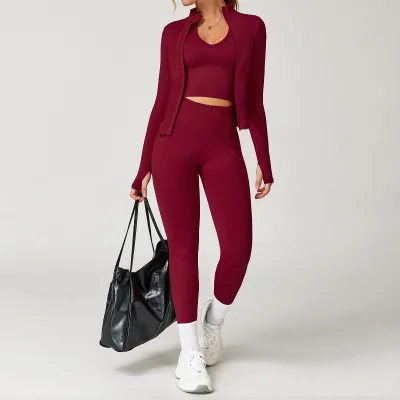

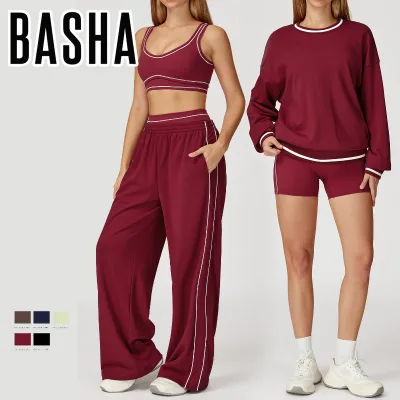


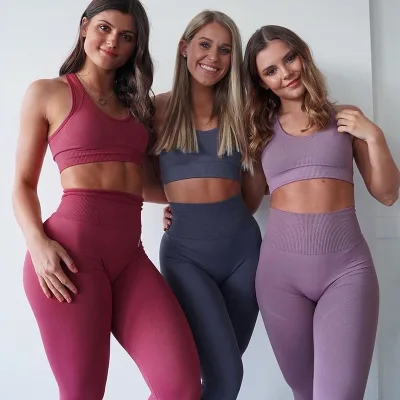


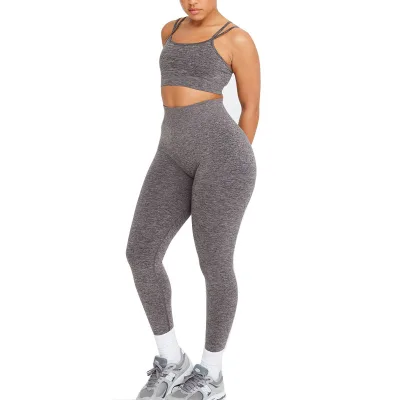


Comprehensive Sourcing Guide
Strategic Sourcing Guide for Four-Way Stretch Reversible Sportswear Sets
Understanding Technical Specifications and Material Composition
When sourcing a four-way stretch reversible sportswear set, the primary technical requirement is the fabric's ability to elongate and recover in both the warp and weft directions. This characteristic is essential for high-intensity activities where unrestricted movement is critical. Based on observed market data, the material composition for such sets frequently relies on synthetic blends that balance durability with elasticity. Specific observations indicate compositions such as 78% Nylon and 22% Spandex, or 85% Nylon and 15% Spandex. These ratios are indicative of a high-performance fabric designed to offer significant recovery after stretching, which is the defining feature of four-way stretch capabilities.
The construction of the garment also plays a pivotal role in its functionality. Technical specifications often include "Automated Cutting" for precision, ensuring that the pattern pieces align correctly to maintain the stretch properties throughout the garment. The stitching techniques are equally important; a "4 Needle 6 Thread" technique is frequently observed in high-quality sportswear. This method creates a flat, durable seam that can withstand the stress of repeated stretching without unraveling, a common failure point in lower-quality athletic apparel. Furthermore, the reversible nature of the set implies a dual-sided finish, which requires careful attention to the "Fashion Element" of the fabric, such as a "wrinkle" texture or a smooth finish, depending on the intended aesthetic.
The structural integrity of the set is often defined by its "Number of Pieces," with a "3 piece set" being a common configuration that includes a jacket, pants, and potentially an additional layer or accessory. The "Type" of the product is often categorized as a "Suit" or "Set," indicating a coordinated ensemble rather than a single item. The "Neckline" and "Sleeve Length" are critical fit variables; for instance, a "V-neck" paired with "Full" sleeve length offers a specific silhouette that must be maintained across both sides of the reversible design. Buyers must verify that the "Waist Type," such as "High," is consistent and comfortable on both sides of the garment, as reversible items often have different waistband constructions on each side to accommodate the dual-purpose design.
Compliance, Certification, and Standard Verification
In the B2B procurement of sportswear, compliance with safety and quality standards is non-negotiable, even if specific certification documents are not immediately visible in the product listing. While the supplied data mentions "prod_standard" values like "15155" or "Customized," these often refer to packaging dimensions or internal manufacturing tolerances rather than international safety certifications. Buyers must independently verify that the supplier adheres to relevant international standards for textile safety, such as REACH regulations in Europe or CPSIA standards in the United States, which govern the use of harmful chemicals in fabrics.
The "prod_standard" field in supplier listings can be ambiguous. When a standard is listed as "Customized," it implies that the product is made to specific buyer requirements rather than a pre-existing industry norm. In this scenario, the buyer must explicitly define the required standards in the purchase order. For instance, if the target market requires specific flammability ratings or colorfastness levels, these must be codified in the contract. The "Place of Origin" is listed as "Guangdong, China" in several observations, a region known for a dense concentration of textile manufacturers. While this indicates a robust supply chain, it also necessitates rigorous third-party auditing to ensure that the factory's internal quality control processes meet the buyer's specific compliance needs.
Furthermore, the "Supply Type" varies between "OEM Service" and "In-Stock Items." OEM (Original Equipment Manufacturer) services typically involve a deeper level of customization, where the supplier produces goods according to the buyer's specific design and compliance requirements. In contrast, "In-Stock Items" may have pre-existing compliance profiles that might not align with the buyer's specific market regulations. Therefore, when sourcing a reversible set, the buyer should prioritize suppliers offering OEM services if they require specific certifications, as this allows for greater control over the production process and material sourcing. The "Brand Name" observed, such as "ILivebrand," suggests that some suppliers operate under their own branding, which can complicate compliance tracking if the buyer intends to rebrand the product.
Cost Drivers and Pricing Dynamics
The pricing of four-way stretch reversible sportswear sets is influenced by a complex interplay of material costs, manufacturing complexity, and order volume. The observed price range in the market spans from $0.80 to $30.49 USD, a significant variance that reflects differences in material quality, design intricacy, and order quantity. The lower end of this spectrum likely corresponds to basic polyester blends with standard printing methods, while the higher end suggests premium nylon-spandex compositions with advanced features like heat transfer printing and custom packaging.
Material composition is a primary cost driver. The shift from standard polyester to high-performance blends like 78% Nylon / 22% Spandex or 85% Nylon / 15% Spandex increases the base cost of the fabric. Additionally, the "reversible" aspect of the garment adds to the manufacturing cost, as it often requires double the fabric usage or more complex finishing processes to ensure both sides are presentable and functional. The "Technical" aspect of the production, such as the "4 Needle 6 Thread" stitching, also contributes to labor costs, as this technique requires skilled operators and specialized machinery.
Order volume, represented by the "MOQ" (Minimum Order Quantity), is another critical factor. The observed MOQ range is vast, from 1 to 10,000 units. Buyers ordering small quantities, such as single items or small batches, will face a higher unit cost due to the fixed costs of setup and machine calibration. Conversely, larger orders benefit from economies of scale, reducing the per-unit cost significantly. The "Supply Type" also impacts pricing; "OEM Service" orders often have a higher upfront cost due to the customization of molds, patterns, and labels, whereas "In-Stock Items" may offer lower prices but less flexibility.
The "prod_packing" and logistics also influence the final landed cost. Options range from simple "1 PCS/Poly Bag" to more elaborate "Cardboard Box" packaging, with dimensions like "30322cm" or "Single package size: 24X36X1 cm" affecting shipping efficiency. The "Shipping" methods available, including "DHL\EMS\UPS\FedEx\by Sea\by Air," offer different cost structures. Air freight is faster but more expensive, while sea transportation is cost-effective for large volumes but requires longer lead times. Buyers must balance these logistics costs against their inventory needs and cash flow requirements.
Typical Applications and Usage Scenarios
The versatility of four-way stretch reversible sportswear sets makes them suitable for a wide array of athletic and recreational activities. The "Usage" field in product data highlights applications in "Gym," "Yoga," "Sports," "Cycling," "Fitness," "Martial Arts & Boxing," and "Tennis." This broad applicability stems from the fabric's ability to provide comfort and freedom of movement across different intensity levels. The "Occasion" tags further refine these uses, indicating suitability for "Yoga Sports Gym Tennis," suggesting that the design is optimized for both high-movement sports and lower-impact wellness activities.
For gym and fitness enthusiasts, the "Four-Way Stretch" property is essential for exercises like weightlifting, HIIT, and bodyweight training, where the fabric must move with the body without restricting range of motion. The "Reversible" feature adds a layer of style and utility, allowing athletes to switch looks or hide sweat stains by turning the garment inside out. In cycling and martial arts, the durability of the "4 Needle 6 Thread" stitching is crucial to withstand the friction and stress of dynamic movements. The "Pattern" options, ranging from "Patterned" to "Solid," allow brands to cater to different aesthetic preferences, with "Solid" designs often preferred for professional team uniforms and "Patterned" designs for casual or fashion-forward athletic wear.
The "Type" of the set, often described as a "Suit" or "Set," implies a coordinated look that is ideal for team sports or group fitness classes. The "Number of Pieces" being a "3 piece set" suggests a comprehensive outfit that covers the entire body, providing uniformity and professional appearance. The "Logo Custom" and "Supported Services" like "Custom Name and Number" make these sets highly adaptable for team identification, allowing organizations to brand the apparel for specific events or leagues. The "Style" of "Sets" further reinforces the idea of a complete, coordinated ensemble that is ready for immediate use in various sporting contexts.
Supplier Evaluation and Selection Criteria
Selecting the right supplier for four-way stretch reversible sportswear sets requires a thorough evaluation of their capabilities, reliability, and alignment with the buyer's needs. The "Supply Type" is a key indicator; suppliers offering "OEM Service" are generally better equipped to handle custom designs, specific material requirements, and branding needs compared to those offering only "In-Stock Items." The "Service" attributes, such as "Logo, Label, Tag Customization," indicate the supplier's flexibility in adding value-added services that are crucial for brand differentiation.
The "prod_model" numbers, such as "TZ4520-7," "TZ4520-9," "2WSS-06," and "CXCK-9149," serve as unique identifiers for specific product lines. Buyers should request detailed specifications for each model to ensure they match the required technical parameters. The "prod_packing" details, including "Cardboard Box" or "Sea Transportation" options, provide insight into the supplier's logistics capabilities and attention to detail in product presentation. A supplier that offers robust packaging options is more likely to have a mature supply chain capable of handling international shipping requirements.
The "Place of Origin" being "Guangdong, China" suggests a concentration of manufacturing expertise, but buyers must verify the specific factory's capacity and reputation. The "Lead Time" is another critical factor; while some suppliers offer "7 days sample order lead time," bulk production times can vary significantly. Buyers should confirm the "7 days sample order lead time" capability and understand how this translates to full production cycles. The "Shipping" methods available, including "DHL\EMS\UPS\FedEx\by Sea\by Air," indicate the supplier's logistical network and ability to meet diverse delivery needs.
Quality Control and Long-Term Procurement Considerations
Maintaining consistent quality in four-way stretch reversible sportswear sets requires a robust quality control (QC) framework. The "Technics" of "4 Needle 6 Thread" and "Automated Cutting" are strong indicators of a high-quality manufacturing process, but these must be verified through pre-production samples and in-line inspections. Buyers should request physical samples to test the "Four-Way Stretch" capability, ensuring the fabric recovers fully after stretching and does not sag or deform over time. The "Material Composition" must be verified to ensure it matches the stated percentages, such as 78% Nylon / 22% Spandex, as deviations can affect the garment's performance and durability.
The "Printing Methods," such as "Heat Transfer" or "Heat-Transfer Printing," are critical for the longevity of the design. Buyers should test the print for colorfastness and adhesion to ensure it does not crack or fade after washing. The "Logo Custom" and "Supported Services" like "Custom Name and Number" must be executed with precision to maintain the brand's professional image. The "prod_standard" of "Customized" implies that the buyer has a role in defining the quality benchmarks, so clear specifications must be documented in the purchase order.
Long-term procurement considerations involve building a sustainable relationship with the supplier. The "Supply Type" of "OEM Service" allows for continuous improvement and adaptation to market trends. Buyers should monitor the supplier's ability to meet "7 days sample order lead time" consistently, as this indicates responsiveness and operational efficiency. The "Shipping" options and "prod_packing" details should be reviewed periodically to ensure they remain cost-effective and reliable. Finally, the "Brand Name" and "prod_model" consistency should be maintained to ensure brand identity and product recognition in the market. By focusing on these technical and operational aspects, buyers can secure a reliable supply of high-quality four-way stretch reversible sportswear sets that meet their specific requirements.
FAQs
Can I get custom logos and names on these sportswear sets?
Yes, customization for logos, names, and numbers is accepted for these sets. Suppliers offer services like heat transfer printing and customized logo printing to meet specific branding needs for teams or events.
What material composition is used for these stretch sportswear sets?
The sets are typically made from blends such as 78% Nylon and 22% Spandex or 85% Nylon and 15% Spandex. These synthetic blends provide the necessary four-way stretch and recovery for high-intensity activities.
How many pieces are included in a standard set?
A standard set often consists of a 3-piece configuration including a jacket and pants. This coordinated ensemble is designed to provide a complete look suitable for gym, yoga, and various ball sports.
What is the minimum order quantity for these sportswear sets?
The minimum order quantity ranges from 1 to 10,000 units depending on the supplier and product model. Buyers can find options for single items or large bulk orders to suit different inventory needs.
Which stitching technique ensures durability for these athletic suits?
High-quality sets often utilize a 4 Needle 6 Thread stitching technique for flat and durable seams. This method prevents unraveling during repeated stretching and is essential for garments used in martial arts or cycling.
What are the available shipping methods for these products?
Shipping options include DHL, EMS, UPS, FedEx, sea transport, and air freight. The choice depends on the urgency of the order and the total volume being shipped from the origin in Guangdong, China.
Can I order samples with a quick lead time?
Yes, some suppliers support sample orders with a lead time of just 7 days. This allows buyers to verify quality and customization options before committing to larger production runs.