Source Four-Stroke Turbocharged Diesel Engine for Generators, Pumps, and Construction
Find and compare 30 four-stroke turbocharged diesel engine options for industrial applications. Review specifications including cylinder configurations, power ratings, and cooling types to identify suitable models for your sourcing needs.
Key considerations
Products List


$5000.00 - $10000.00
MOQ: 1 Pieces

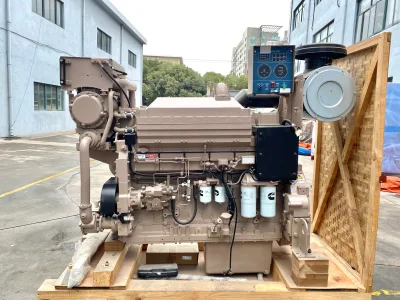


6 Cylinders Water Cooled Diesel Engine for Generator Diesel Generator Engine
$1900.00 - $2800.00
MOQ: 1 Pieces


Comprehensive Sourcing Guide
Four-Stroke Turbocharged Diesel Engine Sourcing Guide
Procuring a four-stroke turbocharged diesel engine requires a disciplined approach to technical verification and commercial due diligence. Buyers must navigate a market where specifications vary significantly across models, ranging from compact four-cylinder units to heavy-duty six-cylinder configurations. The core keyword "four-stroke turbocharged diesel engine" often serves as a broad category header, but actual listings may include naturally aspirated variants or engines with different cylinder counts. Therefore, the primary objective is to isolate the specific technical attributes that match your operational requirements, ensuring that the "turbocharged" or "supercharged" designation is explicitly confirmed in the product data rather than assumed from the title.
This guide provides a structured framework for evaluating suppliers and products based on observed market signals and standard industry practices. It emphasizes the importance of cross-referencing critical performance metrics such as rated output, fuel consumption, and cylinder arrangement against your application needs. By focusing on verifiable data points and standard compliance documentation, buyers can mitigate the risk of receiving equipment that does not meet their power, efficiency, or dimensional constraints. The following sections detail the specific steps required to validate product scope, technical integrity, and supplier reliability.
Product Scope and Observed Listing Signals
The current market landscape for diesel engines exhibits a wide variance in product configurations, which can complicate initial sourcing efforts. Observed listings indicate a price range from approximately $10 to over $35,000 USD, reflecting the diversity from small auxiliary engines to large industrial power units. Minimum Order Quantities (MOQ) typically range from 1 to 10 units, suggesting that suppliers are flexible for both single-unit replacements and small fleet expansions. Buyers should note that while the core keyword implies a turbocharged configuration, actual product attributes may list "Naturally Aspirated" or "Supercharged" intake pressure impulses. It is critical to verify the specific intake method for each model, as this directly impacts performance characteristics and compatibility with existing exhaust and cooling systems.
Product models observed in the market include specific designations such as QC6112ZLD, QC498T, and QC4112ZLD, each representing distinct engine families. The QC6112ZLD, for instance, is a six-cylinder, water-cooled, direct-injection engine with a rated output of 165 kW, while the QC498T is a four-cylinder unit with a lower output of 36.8 kW. These models demonstrate that the "four-stroke" attribute is consistent across the board, but other critical features like bore and stroke dimensions, cylinder liner types (wet vs. dry), and flywheel specifications vary significantly. Buyers must treat these model-specific attributes as definitive observations rather than generic category traits, ensuring that the selected engine matches the physical and performance requirements of the target machinery.
Technical Specifications to Verify
When evaluating technical specifications, the cylinder configuration and cooling method are primary decision factors. Engines may be configured as four-cylinder or six-cylinder units, with arrangements typically being inline or L-shaped. The cooling system is predominantly water-cooled, but the type of cylinder liner—whether wet or dry—has implications for maintenance and longevity. For example, some models feature wet liners which allow for easier replacement, while others use dry liners for enhanced structural rigidity. Buyers must verify the bore and stroke dimensions, such as 6-112135 mm or 98105 mm, to ensure proper displacement and power output alignment with their application. Mismatched dimensions can lead to inadequate power delivery or excessive fuel consumption.
Performance metrics such as rated speed, torque, and fuel consumption rate are equally critical for operational efficiency. Observed data indicates rated speeds of 1500 RPM or 2400 RPM, with corresponding torque values like 190 N.m at 1800 RPM for specific models. Fuel consumption rates vary, with some engines claiming less than 196 g/kW.h, while others list higher values around 238 g/kW.h. Buyers should also verify the flywheel specifications, including the type (e.g., SAE11.5") and ring gear tooth count (e.g., 133 or 144 teeth), as these determine compatibility with transmission and generator sets. Additionally, the fan diameter, observed at 550 mm or 640 mm, must be checked to ensure adequate cooling airflow within the intended installation space.
Compliance and Safety Documentation
Compliance with emission standards is a mandatory requirement for most industrial and commercial applications. Buyers must verify the emission stage of the engine, with observed models meeting Stage II standards. This classification is crucial for ensuring that the engine can be legally operated in regions with strict environmental regulations. While specific certification marks may not be listed in every product description, buyers should request official documentation confirming compliance with relevant local and international emission directives. Failure to verify this can result in significant penalties or the inability to deploy the equipment in regulated markets.
Safety and operational documentation should also include detailed manuals for installation, maintenance, and troubleshooting. Buyers should ensure that the supplier provides comprehensive guides covering the four-stroke cycle, compression-ignition principles, and reciprocating piston movement specifics. These documents are essential for training maintenance personnel and ensuring the longevity of the engine. Additionally, buyers should verify that the engine packaging, such as bakelite wooden cases or plywood cases, meets international shipping standards to prevent damage during transit. Proper packaging documentation helps in claiming insurance in case of transit damage and ensures that the engine arrives in optimal condition.
Cost Drivers and Commercial Terms
The cost of a diesel engine is influenced by several factors, including cylinder count, rated output, and the complexity of the cooling and intake systems. Higher-rated outputs, such as 165 kW, naturally command higher prices compared to lower-output units like 36.8 kW. The type of cylinder liner and the presence of turbocharging or supercharging also impact the final price. Buyers should request detailed quotations that break down these costs to understand the value proposition of each model. It is important to note that the observed price range is broad, so comparing apples-to-apples based on specific technical attributes is essential for accurate cost evaluation.
Commercial terms, including payment methods, lead times, and warranty conditions, should be clearly defined in the purchase agreement. While specific lead times are not provided in the observed data, buyers should negotiate realistic delivery schedules based on the supplier's production capacity. Warranty terms should cover critical components such as the cylinder block, pistons, and crankshaft. Buyers should also clarify the scope of after-sales support, including the availability of spare parts and technical assistance. Understanding these commercial terms helps in managing cash flow and minimizing operational risks associated with equipment failure or delays.
Supplier Qualification and Quality Control
Supplier qualification is a critical step in ensuring the reliability of the procurement process. Buyers should verify the supplier's manufacturing capabilities, including their experience with four-stroke diesel engines and their quality control processes. Factories that produce engines with specific model designations like QC6112ZLD should have established production lines and testing facilities. Buyers may request factory audits or third-party inspection reports to verify the supplier's ability to maintain consistent quality standards. This due diligence helps in identifying suppliers who are capable of meeting the technical and commercial requirements of the order.
Quality control measures should include rigorous testing of the engines before shipment. Buyers should inquire about the types of tests performed, such as performance testing, leak testing, and durability testing. While specific test results are not provided in the observed data, buyers should request certificates of conformity or test reports for the specific batch of engines being purchased. Additionally, buyers should verify the supplier's ability to provide customization options, as indicated by the "Available" customization attribute. This flexibility can be crucial for adapting the engine to specific application requirements, such as custom mounting configurations or specialized cooling systems.
Long-Term Procurement Checks
Long-term procurement success depends on the supplier's ability to provide consistent support and spare parts availability. Buyers should establish a relationship with suppliers who have a robust supply chain for critical components such as cylinder liners, pistons, and fuel injectors. The availability of spare parts is essential for minimizing downtime and ensuring the longevity of the engine fleet. Buyers should also verify the supplier's commitment to product updates and improvements, as engine technology continues to evolve with advancements in fuel efficiency and emission control.
Regular performance monitoring and maintenance planning are also key to long-term procurement success. Buyers should implement a preventive maintenance schedule based on the manufacturer's recommendations for the specific engine models in use. This includes regular checks of the cooling system, fuel system, and lubrication system. By maintaining a proactive approach to maintenance, buyers can extend the operational life of the engines and reduce the total cost of ownership. Additionally, buyers should periodically review supplier performance and market trends to ensure that their procurement strategy remains aligned with their operational needs and budget constraints.
FAQs
What is the rated output of the QC6112ZLD engine?
The rated output is 165kw for the QC6112ZLD model. This high-speed diesel engine features a six-cylinder configuration with water cooling and direct injection for efficient performance.
Can I customize the four-stroke diesel engine specifications?
Yes, customization is available for these combustion engines. Buyers can request specific adjustments to meet operational needs while maintaining the core four-stroke compression-ignition design.
What is the fuel consumption rate for the 165kw model?
The fuel consumption rate is less than 196g per kilowatt-hour. This efficiency is achieved through the direct injection chamber type and supercharged intake pressure impulse system.
Which flywheel cover type is standard for these engines?
Standard flywheel cover types include SAE2#, SAE3#, and SAE4# depending on the specific model configuration. These covers protect the flywheel ring gear which has either 133 or 144 teeth.
How is the engine cylinder arrangement configured?
The cylinder arrangement form is L-shaped for the six-cylinder variant. The four-cylinder models feature a vertical in-line layout with wet or dry cylinder liners depending on the specific unit.
What is the emission standard for the QC498T engine?
The QC498T engine meets the Stage II emission standard. This model produces 36.8kw at 2400rpm with a displacement of 3.168 liters and a bore and stroke of 98 by 105.
What packaging is used for shipping these diesel engines?
Packaging options include Bakelite wooden cases or plywood cases. The specific packing method depends on the model, such as the QC6112ZLD which uses a Bakelite wooden case for protection.