Source four-way stretch horse riding breeches for training, competition, and work
Find 30 listings for four-way stretch horse riding breeches suitable for training, competition, and work. Buyers can compare features like moisture wicking, durability, and customization options across multiple suppliers in Guangdong, China.
Key considerations
Products List
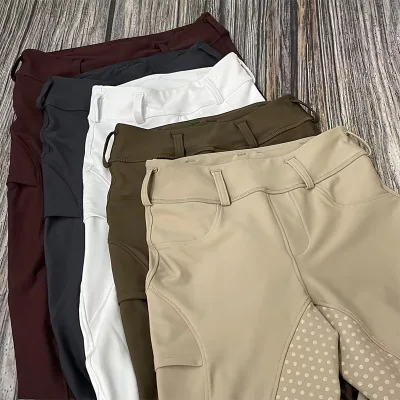
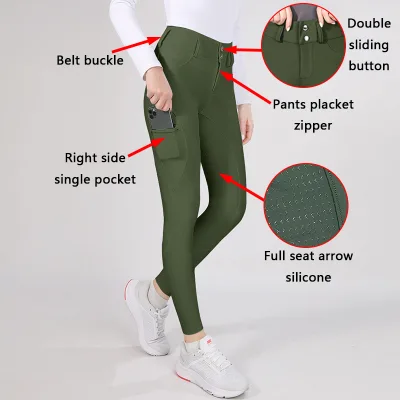
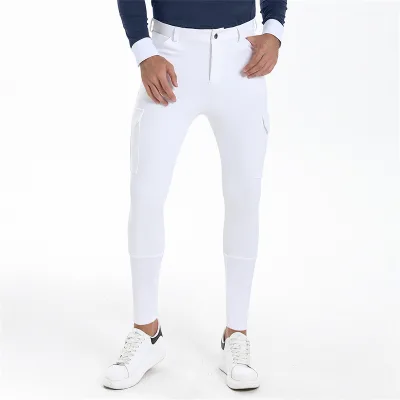
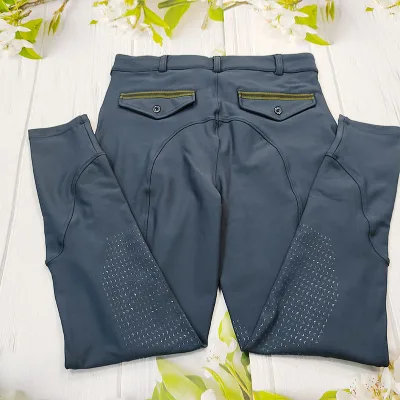
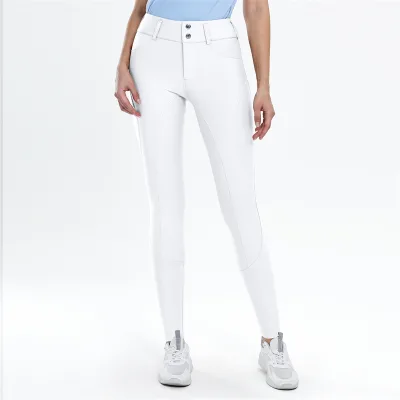
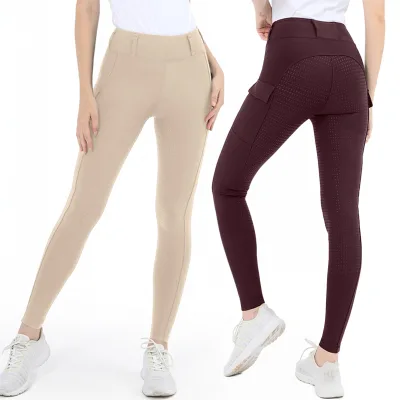


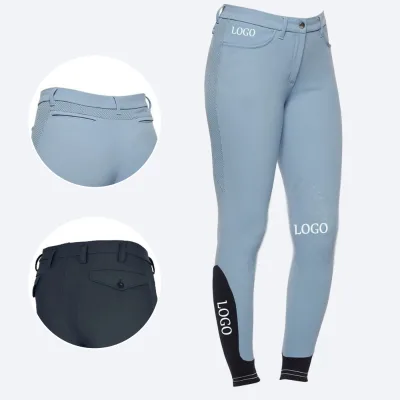
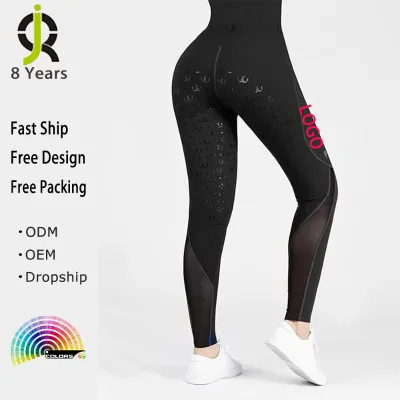
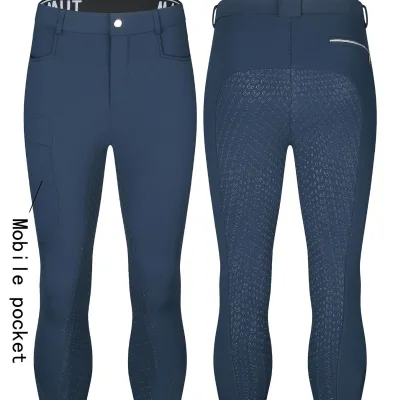

for Equestrian Competitions Breathable and Wear-Resistant Riding Breeches
$17.80 - $18.80
MOQ: 20 Pieces

Breathable and Sweat-Wicking Riding Breeches for Equestrian Competition
$17.80 - $19.80
MOQ: 10 Pieces

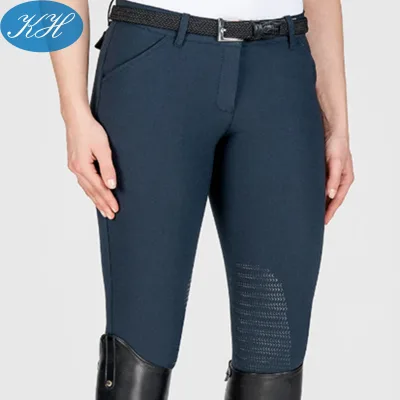
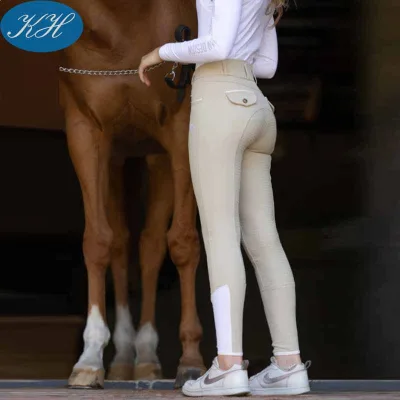
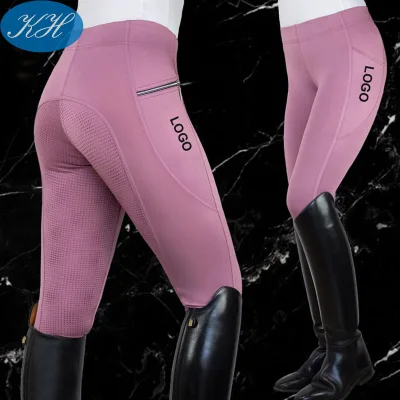


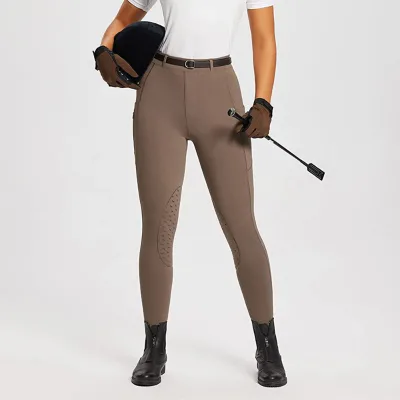
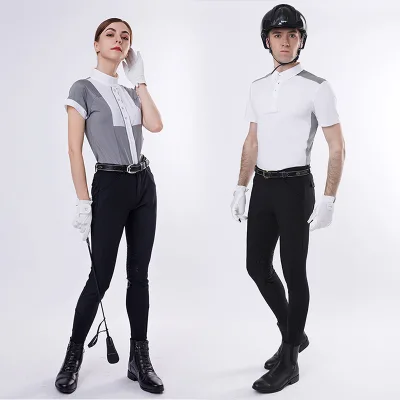
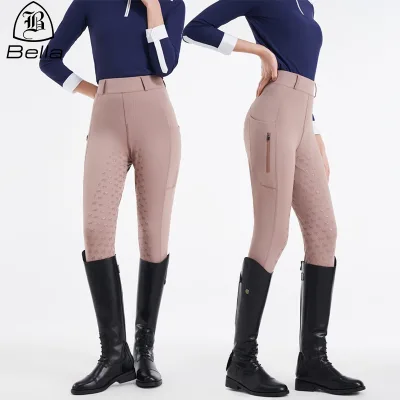


Horse Riding Pants Jodhpur & Breeches Full Seat Silicone Equestrian Riding Pants Horse
$24.00 - $27.00
MOQ: 100 Pieces
Comprehensive Sourcing Guide
Strategic Sourcing Guide for Four-Way Stretch Horse Riding Breeches
Understanding Technical Specifications and Material Composition
When sourcing four-way stretch horse riding breeches, the primary technical differentiator lies in the fabric composition and the mechanical properties of the textile. The core requirement for equestrian apparel is the ability to move in all directions—forward, backward, and diagonally—without restricting the rider's position in the saddle. Based on observed product data, the material composition varies significantly across listings, which directly impacts performance and durability.
One common specification observed involves a blend of 78% Polyester and 22% Spandex. This ratio suggests a high-performance synthetic fabric designed for durability and significant elasticity. The presence of 22% Spandex is critical for achieving the "four-way stretch" capability, allowing the fabric to recover its shape after repeated stretching during deep seat positions. Another observed material specification lists a blend of 80% Nylon and 20% Spandex. Nylon is often chosen for its superior abrasion resistance and softness against the skin, which is vital for preventing chafing during long riding sessions. A third variation noted in the market includes a "Recycled fabric" composition of 75% Polyester and 25% Spandex. This indicates a growing trend toward sustainability, where buyers must verify the source of the recycled content to ensure it meets specific environmental standards.
The "Textile" category is also mentioned broadly in some listings, which requires buyers to request specific fiber breakdowns before placing orders. The fit is consistently described as "Regular," and the style is identified as "Jodhpurs" or "Stretch Breeches." These terms imply a specific cut that is tighter at the ankle and looser at the thigh, designed to fit securely into tall boots or jodhpur boots. The rise style is typically "Mid rise," which provides coverage and comfort without digging into the waist during movement. Understanding these material and cut specifications is the first step in defining the technical requirements for a procurement request.
Compliance, Certification, and Quality Verification
In the B2B procurement of equestrian gear, compliance and certification are often areas of ambiguity. While some background knowledge suggests standards like ISO 9001:2015 or Oeko-Tex are relevant to the textile industry, the supplied product data does not explicitly confirm that any specific listing holds these certifications. Therefore, buyers must treat these as verification points rather than assumed attributes.
When evaluating suppliers, the procurement team should explicitly request proof of compliance with relevant safety and quality standards. For instance, if the product claims to be "color fast" or "anti-pilling," as noted in several feature lists, the buyer should ask for third-party test reports that validate these claims under specific washing and friction conditions. The "Feature" attributes observed include "Durable," "breathable," "moisture wicking," and "Good fastness." These are performance claims that require empirical evidence. A buyer should not accept these descriptors at face value but should require a test report from an accredited laboratory to verify moisture-wicking efficiency and color fastness ratings.
Furthermore, the "Care instructions" observed vary, with some listings specifying "Hand Wash Only," while others allow "Machine Washable" or "Dry Clean Only." This inconsistency highlights the need for clear quality control protocols. The buyer must ensure that the care instructions provided by the supplier align with the intended usage environment. For competition or training gear that undergoes frequent washing, a "Machine Washable" specification is preferable, but it must be backed by data showing the fabric retains its elasticity and color after multiple cycles. If a supplier claims "Customized Logo Accept" or offers "Customized Logos, Hangtag, Care Labels," the buyer must verify the durability of these customizations to ensure they do not peel or fade, which would damage the brand's reputation.
Cost Drivers and Pricing Dynamics
The pricing structure for four-way stretch horse riding breeches is influenced by several key variables, including material composition, customization complexity, and order volume. The observed listed price range in the market spans from $11.29 to $27 USD. This significant variance suggests that the lower end of the price spectrum likely corresponds to standard production runs with basic material blends, while the higher end may reflect premium fabrics, such as the recycled polyester blends or higher nylon content, and more complex customization options.
Material costs are a primary driver. The shift from standard polyester blends to recycled fabrics or high-nylon compositions often increases the base cost of the garment. Additionally, the "MOQ" (Minimum Order Quantity) plays a crucial role in unit pricing. The observed MOQ range is between 2 and 500 pieces, with specific listings showing MOQs of 10 pieces and 100 pieces. Suppliers with lower MOQs may charge a premium per unit to cover the setup costs of smaller production runs. Conversely, larger orders typically benefit from economies of scale, reducing the unit cost.
Customization is another significant cost factor. The data indicates that suppliers offer "Customized Logos," "Hangtag," "Care Labels," and "Packaging Bags." Each of these elements adds a layer of complexity to the manufacturing process. For example, printing a custom logo on a four-way stretch fabric requires specific inks and curing processes to ensure the print does not crack when the fabric stretches. The "Single package size" varies from 30x27x1 cm to 30x25x5 cm, and the "Single gross weight" ranges from 0.5 kg to 1.0 kg. These variations affect shipping costs, which are often factored into the final landed cost. Buyers must balance the desire for customization against the budget constraints, understanding that higher customization levels will likely push the unit price toward the upper end of the observed range.
Typical Applications and Usage Scenarios
The versatility of four-way stretch horse riding breeches makes them suitable for a wide range of equestrian activities. The observed "Usage" and "Application" fields in the product data highlight several distinct scenarios. The primary applications include "Training," "Competition," "RIDING," and "Work." This broad categorization indicates that these breeches are not limited to high-level show jumping or dressage but are also essential for daily stable work and training sessions.
For "Training" and "Work," the durability and comfort features are paramount. The "Durable" and "moisture wicking" attributes are critical here, as riders in training environments often spend long hours in the saddle, requiring fabrics that manage sweat and resist wear from frequent mounting and dismounting. The "Anti-pilling" feature is particularly valuable for training gear, as it ensures the breeches maintain a professional appearance despite rigorous use.
In "Competition" and "Equestrian show" settings, the aesthetic and fit become more critical. The "Four-way stretch" and "Quick dry" features ensure that the rider remains comfortable and unencumbered during performance. The "Color" options observed, including "White," "Pink," "Light Grey," "Navyblue," "Black," "Burgundy," and "Dark Grey," allow buyers to select colors that meet specific competition dress codes. For instance, white breeches are traditional for upper-level dressage, while darker colors like Navy or Black are common for eventing and show jumping. The "Fit: Regular" and "Type: Jodhpurs" suggest a classic silhouette that is universally accepted in most competitive disciplines.
Additionally, the "Style: Sports" and "Outdoor" classifications indicate that these breeches can also be used for general equestrian sports outside of formal competition, such as trail riding or recreational hacking. The "Closure type: Zipper, Button" provides flexibility in how the garment is secured, catering to different rider preferences for comfort and ease of use.
Supplier Evaluation and Sourcing Strategy
Evaluating suppliers for four-way stretch horse riding breeches requires a multi-faceted approach that goes beyond price comparison. The "Place Of Origin" for the observed products is consistently "Guangdong, China," a major manufacturing hub for textiles. While this region offers access to a vast supply chain, buyers must conduct rigorous due diligence to ensure quality consistency.
Key evaluation criteria should include the supplier's ability to handle customization. The data shows that suppliers offer "Customized Logos," "Hangtag," and "Packaging Bags." A capable supplier should demonstrate a clear workflow for managing these custom elements, including proofing processes and quality checks on the final printed or embroidered goods. The "Sample lead time" of 5-7 workdays and "Delivery time" of 5-7 days are attractive metrics, but buyers should verify if these timelines are consistent across different order sizes and customization levels.
The "Brand Name" field in the data includes "no brand" and "MC," indicating a mix of OEM (Original Equipment Manufacturer) and private label opportunities. Buyers seeking to build their own brand should look for suppliers who are transparent about their manufacturing processes and willing to collaborate on design and material selection. The "Support Sample" attribute is a positive indicator, suggesting the supplier is willing to produce samples for quality verification before committing to a large order.
Buyers should also assess the supplier's responsiveness to quality concerns. The "Feature" list includes "Good fastness" and "Breathable," but without a clear quality control protocol, these claims may not hold up in practice. A reliable supplier will have a documented QC process that includes pre-production, in-line, and final inspections. The "Single gross weight" and "Single package size" data can also be used to verify that the supplier is consistent in their packaging and shipping practices, which is essential for logistics planning.
Quality Control and Long-Term Procurement Considerations
Establishing a robust quality control (QC) framework is essential for long-term procurement success in the equestrian apparel sector. Given the technical nature of four-way stretch fabrics, QC must focus on both the material properties and the construction of the garment. The "Material" specifications vary, with some listing "78% Polyester 22% Spandex" and others "80% nylon+20%Spandex." Buyers must ensure that the fabric used in the final production matches the approved sample exactly, as even slight deviations in the spandex percentage can alter the stretch recovery and durability.
Key QC checkpoints should include testing for "Four-way stretch" performance, ensuring the fabric returns to its original shape after being stretched to 150% of its length. "Color fastness" testing is also critical, especially for the "White," "Pink," and "Light Grey" options, which are more prone to showing dirt or fading. The "Anti-pilling" feature should be verified through abrasion testing to ensure the fabric does not develop a fuzzy surface after repeated washing.
For long-term procurement, buyers should consider the scalability of the supplier. The "MOQ" range of 2 to 500 pieces suggests flexibility, but buyers planning to scale their operations should negotiate terms that allow for incremental increases in order volume without significant price hikes. The "Delivery time" of 5-7 days is efficient, but buyers should have contingency plans for potential delays, especially during peak seasons.
Additionally, the "Care instructions" observed, such as "Hand Wash Only" or "Machine Washable," should be clearly communicated to the end-user to prevent premature wear. If the supplier offers "Customized Logos," the durability of the logo application must be tested to ensure it withstands the rigors of equestrian activities. Finally, buyers should maintain open communication with suppliers regarding any changes in material sourcing or manufacturing processes to ensure that the product quality remains consistent over time. By focusing on these technical and operational details, buyers can secure a reliable supply of high-quality four-way stretch horse riding breeches that meet the demands of the equestrian market.
FAQs
What material composition is common for these breeches?
Common materials include 78% polyester with 22% spandex or 80% nylon with 20% spandex. Some listings also specify recycled fabric blends of 75% polyester and 25% spandex to ensure durability and four-way stretch.
How many sizes are typically available for purchase?
Available sizes usually include S, M, L, XL, XS, and XXS. Buyers should verify specific size charts as options may vary slightly between different model numbers like MSK001 or MSK019.
Can suppliers provide customized logos and packaging?
Yes, suppliers accept customized logos, hangtags, care labels, and packaging bags. This customization allows buyers to create a unique brand identity while maintaining the standard product features like regular fit and mid rise.
What is the typical minimum order quantity for these items?
Minimum order quantities range from 2 to 500 pieces depending on the supplier. Specific listings show MOQs of 10 pieces or 100 pieces, so buyers must confirm the exact threshold before placing an order.
How long does delivery take for standard orders?
Standard delivery time is typically 5 to 7 days. Sample lead times also range from 5 to 7 workdays, allowing for quick turnaround on both prototypes and bulk production runs.
Which colors are available for these equestrian breeches?
Available colors include white, pink, navy blue, black, burgundy, green, khaki, and purple grey. Buyers can choose from over ten options to match specific competition dress codes or training uniform requirements.
Are these breeches suitable for competition and training?
Yes, they are designed for training, competition, riding, and work. The features like moisture wicking, anti-pilling, and four-way stretch make them versatile for both daily stable work and high-level equestrian events.