Source Four Wheel Drive Farm Tractor for Plowing, Tillage, and Sowing
Find 30 Four Wheel Drive Farm Tractor models from China suppliers. Compare specifications including power, drive types, and certifications like CE and ISO for lawn, garden, and farm applications.
Key considerations
Products List


China Four-Wheel Tractor for Sale, Four-Wheel Drive, Farm Agricultural Machinery
$2600.00 - $3200.00
MOQ: 1 Sets


200HP Tractor Farm Tractors Wheel Tractors 4WD China Four Wheel Drive
$23500.00 - $25000.00
MOQ: 1 Pieces

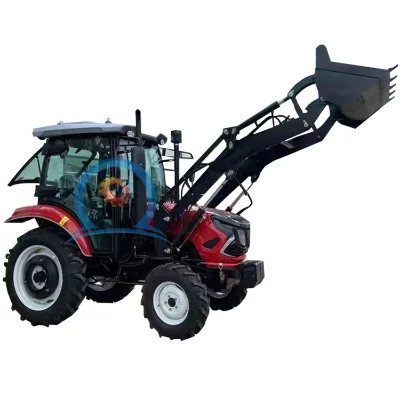
Hot Sale Four Wheel Drive Farm Wheel Tractor with Cabin for Agriculture
$6600.00 - $7000.00
MOQ: 1 sets
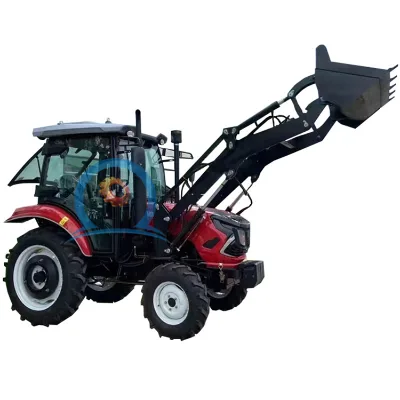


Good Condition 70HP Four Wheel Drive Farm Tractor Comes with Rotary Tiller
$7000.00 - $7600.00
MOQ: 1 Pieces

Farming Tractor Farm Tractor Agriculture Tractor for Agricultural Machine Use
$14000.00 - $16000.00
MOQ: 1 Pieces


Four Wheel Drive Agricultural Tractor for Farm Machinery Use 60HP 70HP 80HP
$2150.00 - $2223.00
MOQ: 1 Pieces


Comprehensive Sourcing Guide
Strategic Sourcing Guide for Four-Wheel Drive Farm Tractors
Selecting the right four-wheel drive farm tractor requires a disciplined approach that balances technical capability with supply chain reliability. In the global agricultural machinery market, the shift toward four-wheel drive (4WD) systems has become standard for medium to large-scale operations, offering superior traction and stability compared to two-wheel drive alternatives. This guide synthesizes observed market data and verified product attributes to assist procurement professionals in navigating the complexities of sourcing these heavy-duty assets. The focus remains on evidence-based evaluation, ensuring that decisions are grounded in the specific characteristics of available inventory rather than speculative marketing claims.
Technical Specifications and Powertrain Architecture
The core of any four-wheel drive tractor lies in its powertrain and drive configuration. Based on current market observations, these machines are predominantly categorized as wheel tractors with a through-drive mechanism. The drive wheel configuration is explicitly noted as 4WD, which is essential for heavy tillage and transport tasks where slip resistance is critical. Buyers should verify the specific type of drive, as the market offers both two-wheel and four-wheel drive options, but the core keyword dictates a focus on the latter.
Power delivery is a primary differentiator. The observed product range includes models powered by diesel engines, with specific references to high-horsepower variants such as a 240 HP unit. The engine brand is a critical component of the specification; for instance, Weichai is a documented engine supplier for these high-output models. When evaluating technical specs, procurement teams must look beyond the raw horsepower number. The number of gears is a vital operational metric, with observed configurations ranging from 16 forward and 16 reverse gears to optional setups offering 32 forward and 32 reverse gears. This gear diversity allows for precise speed control during delicate operations like sowing versus high-speed transport.
The transmission system often utilizes a chain drive mechanism, which must be inspected for durability under continuous running operation. The PTO (Power Take-Off) system is another technical pillar, with mechanical control being the standard observed method. Buyers should verify the PTO shaft speed, which typically operates at 540/1000rpm to ensure compatibility with a wide array of implements. Furthermore, the differential lock, often described as machinery-controlled, is essential for maintaining traction in uneven terrain. The wheelbase and gauge dimensions are also critical for stability; observed data indicates a wheelbase of approximately 2650mm with a gauge width adjustable between 1295mm and 1495mm. These physical dimensions directly impact the tractor's ability to navigate between crop rows and its overall center of gravity.
Compliance, Certification, and Emission Standards
Navigating the regulatory landscape is a non-negotiable aspect of international procurement. The agricultural machinery sector is subject to strict environmental and safety regulations. In the observed product data, CE certification is a recurring attribute, indicating compliance with European safety, health, and environmental protection requirements. Some listings also reference ISO certification, suggesting adherence to international quality management standards. However, buyers must treat these certifications as observations of specific listings rather than universal guarantees for all inventory. Verification of the specific certificate number and the issuing body is necessary before finalizing a purchase.
Emission standards present another layer of complexity. The market data highlights a range of emission compliance levels, including Euro II and Euro IV. The specific standard required depends heavily on the destination country's environmental laws. For instance, a model compliant with Euro IV is suitable for markets with stricter pollution controls, whereas Euro II might be acceptable in regions with less stringent regulations. Procurement teams must explicitly confirm the emission standard of the unit being sourced to avoid customs delays or legal non-compliance. The fuel type is consistently listed as diesel or a gas/diesel hybrid, which influences the engine's thermal efficiency and maintenance requirements.
Cost Drivers and Pricing Variables
The pricing structure for four-wheel drive farm tractors is highly variable, influenced by a complex matrix of specifications and market conditions. The observed price range in the current market spans from $1 to $50,000 USD. This wide disparity is not indicative of quality variance alone but reflects the vast difference in horsepower, model generation, and included features. A small, low-horsepower unit will naturally fall at the lower end of this spectrum, while a 240 HP model with advanced transmission options will command a premium price.
Several specific factors drive these costs. First, the power source and engine brand significantly impact the base price. High-output engines from reputable manufacturers like Weichai carry a higher cost premium. Second, the complexity of the transmission system, such as the optional 32f+32r gear configuration, adds to the manufacturing cost. Third, the size and weight of the tractor, categorized as small, medium, or large, affect material usage and shipping logistics. The standard counterweight, which is noted as "Have" in some specifications, adds to the overall weight and cost but is essential for operational safety.
Buyers should also consider the packaging and shipping requirements as part of the total cost of ownership. Observed packing methods include thin film, wooden boxes, and nude shipping. Wooden box packaging offers superior protection for long-distance international transport but incurs higher material and freight costs compared to nude shipping or thin film wrapping. The physical dimensions of the tractor, such as the standard size of 5320x2750x3120mm for larger models, directly influence freight volume and shipping expenses. Understanding these variables allows for a more accurate budget forecast and prevents unexpected cost overruns during the procurement process.
Typical Applications and Operational Scope
Four-wheel drive farm tractors are versatile assets designed for a broad spectrum of agricultural tasks. The observed usage categories include lawn tractors, garden tractors, and farm tractors, indicating a scalability from small-scale landscaping to large-scale farming. The functional capabilities are extensive, covering rotary tillage, sowing, plowing, fertilizing, and spraying. This multifunctionality makes 4WD tractors a central piece of equipment in modern farming operations, particularly for dry cultivating machinery.
The application field extends beyond traditional crop farming to include forestry and general agriculture. The traction type is listed simply as "traction," emphasizing the machine's primary role in pulling heavy loads and implements. The operation mode is described as "continuous running operation," suggesting these machines are built for endurance and high utilization rates. For example, a 60HP model or a 704 series tractor might be ideal for medium-sized farms requiring reliable power for tillage and transport. Conversely, larger models with 240 HP are suited for extensive arable machinery operations where high torque and sustained power are required.
The specific model numbers, such as 304-704, 504, 60HP, and 2404, often correlate with specific application tiers. The 2404 model, for instance, with its 240 HP output, is likely designed for heavy-duty plowing and large-scale field preparation. Understanding the intended application helps buyers select the correct horsepower and transmission configuration. A mismatch between the tractor's power and the intended task can lead to inefficient operations, excessive fuel consumption, or premature wear on the drivetrain.
Supplier Evaluation and Quality Assurance
Evaluating suppliers requires a focus on verifiable attributes rather than marketing promises. The observed product origin is China, which is a major hub for agricultural machinery manufacturing. While this provides access to a wide range of models, it necessitates rigorous due diligence regarding the supplier's quality control processes. Buyers should verify the condition of the equipment, which is consistently listed as "New." However, "New" can encompass various stages of production, so confirming the manufacturing date and storage conditions is prudent.
Customization is a key attribute observed in the market, with availability noted for various models. This flexibility allows buyers to tailor specifications to their specific operational needs, such as adjusting the wheel gauge or selecting specific engine brands. However, customization introduces complexity to the supply chain. Buyers must ensure that the supplier has the capacity to manage custom orders without compromising quality or delivery timelines. The service life of these tractors is estimated at 6-10 years, a metric that should be validated through historical data or warranty terms provided by the supplier.
Quality control should extend to the physical inspection of the tractor's components. The color is typically green, a standard industry aesthetic, but the finish quality can vary. The standard dimensions, such as 310015001970MM or 42.21.6M, should be cross-referenced with the physical product to ensure consistency. Buyers should request detailed inspection reports or third-party verification for critical components like the gearbox, differential lock, and engine. The presence of a standard counterweight and the integrity of the PTO shaft are also areas that require physical verification to ensure the machine meets the claimed specifications.
Long-Term Procurement and Maintenance Considerations
Sourcing a four-wheel drive farm tractor is a long-term investment that extends well beyond the initial purchase. The service life of 6-10 years implies that maintenance and spare parts availability are critical factors in the total cost of ownership. Buyers should assess the supplier's after-sales support structure, including the availability of technical manuals, spare parts catalogs, and local service networks. The gearbox, which may offer optional configurations, is a complex component that requires specialized maintenance. Ensuring that the supplier can provide genuine parts for the Weichai engine or other specified brands is essential for minimizing downtime.
The fuel type, primarily diesel, necessitates a strategy for fuel management and engine maintenance. Diesel engines require regular oil changes, filter replacements, and cooling system checks to maintain the 6-10 year service life. The emission standard compliance (Euro II or Euro IV) also dictates the type of maintenance required, as modern emission control systems add complexity to the engine architecture. Buyers should factor in the cost of these maintenance activities when calculating the long-term financial viability of the purchase.
Furthermore, the adaptability of the tractor to future farming needs is a key consideration. The customization options available, such as the 16f+16r or 32f+32r gearboxes, allow the machine to evolve with the farm's growing requirements. However, this flexibility must be balanced against the complexity of the machine. A more complex transmission system may require more skilled operators and higher maintenance costs. Procurement teams should evaluate the skill level of their operators and the availability of local mechanics capable of servicing these advanced systems. By prioritizing long-term support and maintenance capabilities, buyers can ensure that their investment in a four-wheel drive farm tractor delivers value throughout its entire service life.
FAQs
What certifications do four wheel drive farm tractors have?
Many models carry CE certification, and some listings also include ISO certification. These certifications indicate compliance with European safety and international quality standards, but buyers must verify specific certificate numbers for each unit before purchase.
Which engine brands are used in these tractors?
High-power models often utilize Weichai engines, particularly in units rated at 240 HP. Buyers should confirm the specific engine brand for their selected model to ensure compatibility with maintenance requirements and spare parts availability.
Can these tractors be customized for specific needs?
Customization is available for various models to tailor specifications to operational needs. Buyers can request adjustments to features like wheel gauge or engine configurations, though this may impact delivery timelines and requires clear communication with the supplier.
What is the typical service life of these machines?
The estimated service life ranges from 6 to 10 years for these agricultural assets. This duration depends on maintenance practices, operating conditions, and the quality of components like the gearbox and differential lock used in continuous running operations.
How many gears do these tractors typically have?
Standard configurations often include 16 forward and 16 reverse gears, with optional setups offering 32 forward and 32 reverse gears. This gear diversity allows for precise speed control during tasks ranging from delicate sowing to high-speed transport.
What emission standards do these tractors meet?
Observed units comply with either Euro II or Euro IV emission standards depending on the specific model and target market. Buyers must explicitly confirm the emission standard to ensure compliance with local environmental regulations and avoid customs delays.
What are the standard packaging options for shipping?
Packaging methods include thin film, wooden boxes, or nude shipping depending on the model. Wooden boxes offer superior protection for long-distance transport but incur higher costs, while nude shipping is a more economical option for certain routes.