Source FPV Brushless Motor for Racing, Freestyle, and Long-Range Drones
Explore 30 available options for the FPV Brushless Motor to compare specifications like KV rating, stator size, and weight. Buyers can evaluate diverse models ranging from 1300KV to 900KV for various drone applications.
Key considerations
Products List


Brushless Motor for RC Fpv Drone Motors Factory Price Fpv Motor for Drone
$10.00 - $14.00
MOQ: 10 Pieces


Fpv Motor 4214 400kv 600kv Brushless Fpv Drone Motor for Fpv 13inch 15inch Drone
$13.00 - $18.00
MOQ: 10 Pieces
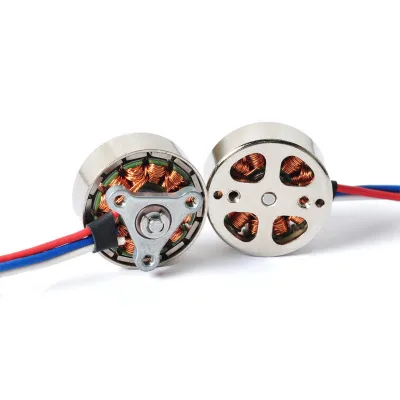
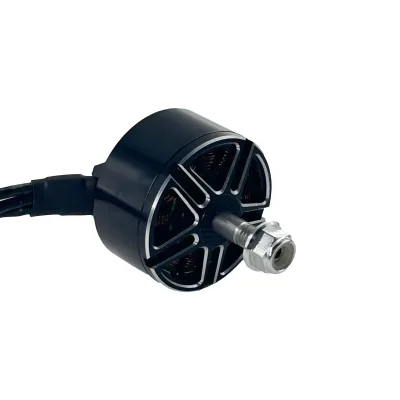
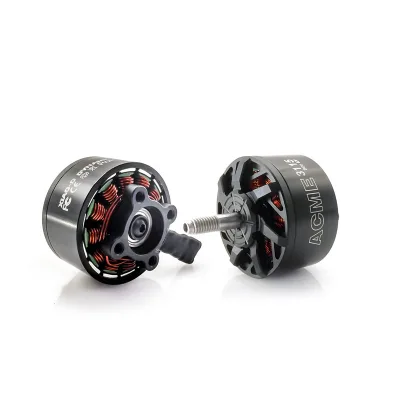

Comprehensive Sourcing Guide
Strategic Sourcing Guide for FPV Brushless Motors
The procurement of high-performance FPV (First Person View) brushless motors requires a nuanced understanding of technical specifications, supply chain dynamics, and quality assurance protocols. For buyers in the drone manufacturing or hobbyist distribution sectors, the market presents a diverse array of options ranging from lightweight racing components to heavy-lift industrial units. This guide synthesizes available product data and industry standards to provide a structured approach for sourcing these critical propulsion systems. The objective is to equip procurement teams with the knowledge to evaluate suppliers, verify product attributes, and mitigate risks associated with component failure or performance inconsistency.
Technical Specification Analysis and Performance Metrics
The core of any FPV motor selection process lies in the precise interpretation of technical data. The market offers motors with varying Kv ratings, which define the revolutions per minute (RPM) generated per volt of input. For instance, specific product listings indicate a "1300kv" rating, while others present a range of "900kv/640kv" or "1180kv/1350kv/1500kv." These variations directly influence the motor's suitability for different drone configurations. A lower Kv motor, such as the 900kv unit, is typically paired with larger propellers and higher cell counts (e.g., 6S or 7S LiPo batteries) to achieve high torque for heavy-lift applications, whereas higher Kv motors are often selected for agile, high-speed racing drones with smaller propellers.
Stator dimensions are equally critical for determining the motor's power envelope and physical footprint. Observed data points to a stator diameter of 28mm and a thickness of 7mm for specific models, while other entries reference a "3115" designation, implying a 31mm diameter and 15mm thickness. The number of stator poles also plays a vital role in efficiency and smoothness; a 12-pole configuration is a standard observation in the provided dataset. Buyers must verify that the stator diameter and thickness align with the intended frame design and that the pole count matches the expected magnetic field characteristics for the specific application.
Electrical parameters further dictate the motor's operational limits. The maximum continuous current and power ratings are essential for preventing thermal failure. Data indicates a maximum continuous current of 45A at 6S and a corresponding power output of 1150W for specific units. Other high-performance listings suggest maximum power ratings reaching 4000W or 4548W over short durations (60 seconds). The motor resistance, observed at 0.15 Ohms in certain models, serves as a key indicator of efficiency; lower resistance generally correlates with less heat generation and higher efficiency under load. Additionally, the no-load current, capped at 1A max at 10V in some instances, helps buyers assess baseline efficiency before the motor engages under load.
Application-Specific Selection Criteria
Selecting the correct motor requires a clear definition of the intended application. The product data highlights distinct use cases, ranging from "10inch FPV RC Drone" applications to general "Brushless Motor" categorizations. The weight of the motor is a decisive factor in this selection process. A lightweight unit weighing 53g is ideal for racing drones where agility and rapid acceleration are paramount. In contrast, a heavier unit weighing 239.8g is better suited for larger, more stable platforms requiring sustained lift.
Battery compatibility is another critical application variable. The observed data specifies a maximum LiPo cell range of 3-6S for certain models, while others support 5-7S configurations. Buyers must ensure that the motor's voltage rating matches their battery inventory and the desired flight profile. A mismatch in cell count can lead to underpowered performance or catastrophic motor failure due to over-voltage. Furthermore, the physical dimensions, such as a body length of 20mm or specific packing sizes like 404035mm, must be verified against the drone frame's motor mount specifications to ensure a proper fit without requiring extensive modification.
Cost Drivers and Pricing Dynamics
Understanding the cost structure of FPV brushless motors is essential for budgeting and margin analysis. The observed price range in the market spans from $0.96 to $32 USD, reflecting a vast disparity in quality, materials, and performance capabilities. Several factors drive these cost variations. The material composition is a primary driver; listings specify the use of aluminum and aluminum alloys for housings, which offer a balance of strength and weight reduction compared to steel or plastic alternatives. The quality of the copper windings, indicated by standard wire gauges such as 18AWG, also impacts the final price.
Minimum Order Quantity (MOQ) significantly influences the unit cost. The market data shows an MOQ range from 1 to 1000 units. Buyers purchasing single units or small batches will likely face higher per-unit costs, while those ordering in bulk can leverage economies of scale to reduce the price closer to the lower end of the observed range. Customization availability is another cost factor; the presence of customization options suggests that bespoke orders may incur additional setup fees or higher unit prices compared to standard off-the-shelf models. Buyers should request detailed cost breakdowns to understand how material choices, customization, and order volume affect the final price.
Supplier Evaluation and Geographic Considerations
When evaluating potential suppliers, geographic origin and production capabilities are key indicators of reliability. The provided data frequently cites "Guangdong China" and "China" as the production origins. Guangdong is a recognized hub for electronics manufacturing, offering a mature supply chain for components like motors. However, buyers should not rely solely on the region name; they must verify the specific factory's capacity and history.
Supplier evaluation should also focus on the consistency of product attributes. The dataset reveals multiple model numbers, such as "MT-1300," "BH-1300," "GW20156601," and "DX2812," indicating a diverse portfolio. A reliable supplier should demonstrate the ability to maintain consistent quality across these different models. Buyers should request samples to verify that the physical attributes, such as weight, dimensions, and electrical resistance, match the provided specifications exactly. Additionally, the availability of small orders is a positive indicator of supplier flexibility, with some listings explicitly stating "Small Orders: Accepted." This flexibility allows buyers to test the market or fulfill urgent needs without committing to large inventory investments.
Quality Control and Compliance Verification
Ensuring product quality is paramount in the FPV sector, where motor failure can result in lost inventory or safety hazards. While specific certification names are not universally provided in the dataset, buyers must verify compliance with relevant industry standards. The data mentions specific standards such as "18AWG 20cm" for wiring and dimensions like "37.5*33.6mm" for certain models. These specifications serve as benchmarks for quality control. Buyers should insist on test reports that confirm the motor's resistance, no-load current, and maximum continuous power ratings against these stated values.
Compliance checks should also extend to the manufacturing process. The use of aluminum alloys and the specific packing methods (e.g., "Carton" or specific box dimensions) suggest a level of standardization. However, buyers must verify that the packaging protects the motor during transit, as physical damage can compromise the internal bearings or windings. For applications requiring strict regulatory compliance, such as commercial drone operations, buyers should request documentation confirming adherence to local and international safety standards, even if the specific certification is not listed in the initial product description.
Long-Term Procurement and Supply Chain Resilience
Sourcing FPV brushless motors is not a one-time transaction but a long-term partnership. Buyers should consider the lead times and the supplier's ability to scale production. The observed MOQ of up to 1000 units suggests that some suppliers are geared towards volume production, while others cater to niche markets with lower quantities. A resilient supply chain requires a supplier who can maintain consistent quality and delivery schedules even during periods of high demand.
Customization capabilities offer a strategic advantage for long-term procurement. The availability of customization allows buyers to tailor motors to specific frame designs or performance requirements, creating a unique value proposition for their end customers. However, this requires clear communication of specifications and potentially longer lead times for the initial development phase. Buyers should also monitor the stability of the product models; frequent changes in model numbers or specifications can indicate instability in the supplier's product line. Establishing a relationship with a supplier who offers a stable range of proven models, such as the "3115 900KV" or "FE-R2810," can provide a solid foundation for consistent product offerings.
Comparative Overview of Key Specifications
To facilitate decision-making, the following table summarizes the key technical variations observed in the market data. This comparison highlights the diversity in performance metrics and physical attributes available to buyers.
| Feature | Model A (Lightweight) | Model B (Heavy Lift) | Model C (High Power) | Model D (General) |
|---|---|---|---|---|
| Kv Rating | 1300kv | 900kv / 640kv | 1180kv / 1500kv | Variable |
| Stator Size | 28mm x 7mm | 31mm x 15mm | 37.5mm x 33.6mm | Varies |
| Weight | 53g | 239.8g | N/A | N/A |
| Max Power | 1150W (6s) | N/A | 4000W / 4548W | N/A |
| Max Current | 45A (6s) | N/A | N/A | N/A |
| Battery Support | 3-6S | 10inch (Implied 6S+) | 5-7S | Varies |
| Material | Aluminum Alloy | Aluminum Alloy | Aluminum | Aluminum |
| Origin | Guangdong | China | Guangdong | China |
This table illustrates that there is no single "best" motor; the optimal choice depends entirely on the specific application requirements. Buyers must carefully match these specifications to their drone's weight, propeller size, and battery configuration to ensure optimal performance and longevity. By adhering to these rigorous evaluation criteria, procurement teams can secure high-quality FPV brushless motors that meet the demanding standards of the modern drone industry.
FAQs
What is the maximum continuous power for a 1300kv FPV Brushless Motor?
The maximum continuous power for a 1300kv FPV Brushless Motor is 1150 watts when running on a 6S battery. This rating ensures the motor operates safely without overheating during sustained flight conditions typical for racing drones.
How much does a 1300kv FPV Brushless Motor weigh?
A standard 1300kv FPV Brushless Motor weighs 53 grams. This lightweight design is ideal for racing drones where minimizing total weight improves agility and acceleration performance significantly.
Which battery cell count is compatible with the 1300kv FPV Brushless Motor?
The 1300kv FPV Brushless Motor supports LiPo batteries ranging from 3 to 6 cells. Buyers must ensure their battery voltage matches this range to prevent damage or underpowered performance during operation.
Can I customize the FPV Brushless Motor for specific drone frames?
Yes, customization is available for the FPV Brushless Motor to meet specific frame requirements. Buyers should contact suppliers directly to discuss tailored specifications such as wire gauge or mounting dimensions.
What is the stator size for the 1300kv FPV Brushless Motor?
The stator size for this FPV Brushless Motor measures 28 millimeters in diameter and 7 millimeters in thickness. These dimensions are critical for ensuring the motor fits correctly within standard drone frames.
What is the minimum order quantity for sourcing fpv brushless motors?
The minimum order quantity for sourcing fpv brushless motors ranges from 1 to 1000 units depending on the supplier. Small orders are accepted, allowing buyers to test products before committing to large bulk purchases.
Where are these fpv brushless motors manufactured?
These fpv brushless motors are manufactured in Guangdong, China. This region is a known hub for electronics production, offering a mature supply chain for high-quality drone components.