Source French Beaded Lace Mesh Fabric for Bridal, Wedding, and Home Textile
Compare 30 listings of French Beaded Lace Mesh Fabric featuring machine embroidery, polyester, and mesh materials. Buyers can evaluate customization options, fabric widths, and accessory details like beads and sequins for bridal gowns and home textiles.
Key considerations
Products List


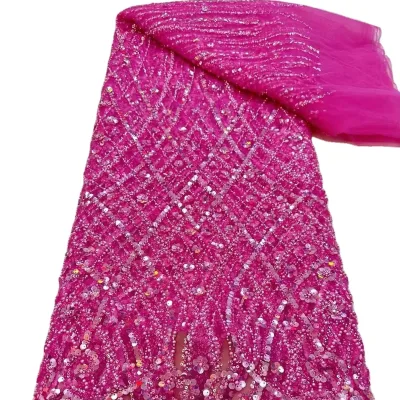
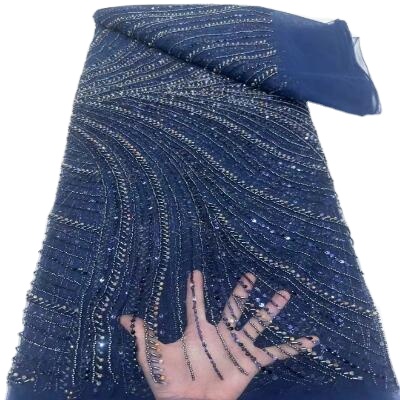


Europe America Style 3D Embroidery Lace Beading Sequin Mesh Fabric for Dress
$11.00 - $17.86
MOQ: 2 Meters

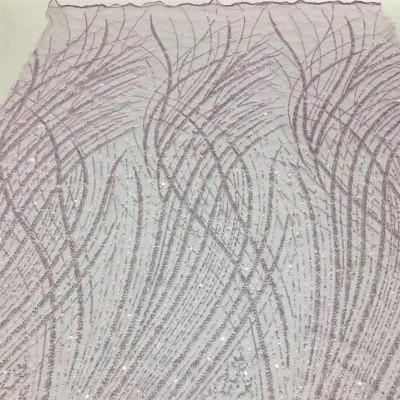


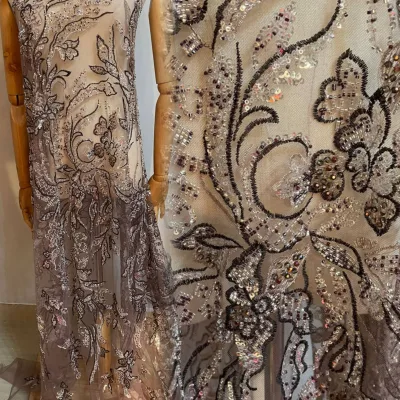
Comprehensive Sourcing Guide
Strategic Sourcing Guide for French Beaded Lace Mesh Fabric
Understanding Technical Specifications and Material Composition
When sourcing French Beaded Lace Mesh Fabric, the primary objective is to align the physical properties of the material with the specific demands of high-end garment construction. The core material composition for this category is predominantly polyester, often cited as 100% polyester in high-volume listings. This synthetic base provides the necessary durability and drape required for bridal gowns and fashion garments. The fabric itself is frequently described as a mesh structure, which serves as the foundational substrate for the intricate embroidery and beadwork. The width of the fabric is a critical dimension that dictates pattern layout and waste reduction. Available specifications indicate fabric widths ranging from 51/52 inches to 54/55 inches, with some high-standard rolls reaching 125-130 centimeters. Buyers must verify the exact width of the lot, as variations between 125cm and 130cm can significantly impact cutting efficiency.
The construction technique is a defining characteristic of this product. The fabric is produced using machine embroidery, a process that allows for consistent, high-density stitching patterns. The embroidery thread material is typically nylon, chosen for its strength and ability to hold complex shapes without fraying. The decoration often includes beads, sequins, and rhinestones, which are applied as accessories to the base mesh. These embellishments are not merely decorative; they add weight and texture, requiring the underlying mesh to have sufficient tensile strength. The product type is universally classified as lace, specifically designed for bridal gown manufacture and wedding dress grown fabric. The technical profile also includes specific model numbers such as B3090, B6390, HLJ240, and GKBT-174, which serve as unique identifiers for different design iterations. Buyers should treat these model numbers as specific references for design replication rather than generic descriptors.
Compliance, Certification, and Environmental Standards
In the realm of luxury textiles, compliance and environmental standards are increasingly critical for B2B buyers. While the supplied data does not list specific third-party certification bodies, it highlights a "Feature" attribute of being Eco-Friendly. This suggests that the manufacturing process or the raw materials may adhere to certain sustainability principles, though buyers must verify the exact scope of this claim. Another notable technical feature is the "Water Soluble" characteristic of some variants. This property is essential for applications where the lace is used as a temporary support or requires specific dissolution properties during the finishing process.
The standard for product dimensions is also a point of verification. One standard listed is 160x20x20cm, which likely refers to the packaging dimensions or a specific roll specification, while another standard mentions 140cm and 125-130cm, likely referring to width or length metrics. Buyers should not assume that all listed products meet these exact standards without confirmation. The "Standard" attribute in procurement data often refers to internal company standards or packaging norms rather than international ISO certifications. Therefore, the procurement strategy must include a request for specific compliance documentation regarding chemical usage, particularly for the nylon thread and polyester mesh, to ensure they meet the destination market's regulations. The origin of the goods is consistently listed as China, specifically from the Guangdong province, a major hub for textile manufacturing. This geographic concentration implies a mature supply chain but also necessitates rigorous due diligence regarding labor practices and environmental compliance in the specific facility.
Cost Drivers and Pricing Dynamics
The pricing structure for French Beaded Lace Mesh Fabric is influenced by several distinct factors. The observed price range in the market spans from $0.29 to $18.94 per unit. This wide disparity is not indicative of a single product line but rather reflects the complexity of the design, the density of the beadwork, and the quantity ordered. The lower end of the spectrum likely corresponds to simpler mesh fabrics with minimal embroidery, while the upper end represents heavy, fully beaded lace with intricate rhinestone applications. The "Selling Units" are often listed as single items, which can be misleading for bulk buyers; the actual cost driver is the Minimum Order Quantity (MOQ).
The MOQ range is observed between 1 and 5000 units. This flexibility allows for small-batch prototyping but creates a significant cost penalty for larger orders if the supplier does not offer tiered pricing. The customization options are a major cost driver. The availability of "Customization" and "OEM/ODM" services means that buyers can request specific color palettes, model numbers, or bead patterns. However, these customizations often incur setup fees and higher per-unit costs compared to stock items. The "Sample Free" attribute is a common incentive, yet the cost of shipping and the lead time for samples must be factored into the total cost of ownership. Additionally, the "7 days sample order lead time" suggests a relatively agile production process for prototypes, but bulk production lead times are not explicitly defined in the provided data and must be negotiated. The packing method, whether by roll or in OPP/Carton/Bag, also influences logistics costs, especially for heavy beaded fabrics that require robust packaging to prevent damage during transit.
Typical Applications and Design Integration
The application of French Beaded Lace Mesh Fabric is highly specialized, with the primary use case being bridal gown manufacture. The "Usage" attributes explicitly mention "Wedding Dress Grown Fabric," "Garment," "Bridal," and "Home Textile." This indicates that the fabric is versatile but optimized for high-visibility, high-value garments. The "Embroidery Application" is listed as "Life," which may refer to the lifelike quality of the patterns or the application in everyday luxury wear, though the dominant use remains in the bridal sector. The fabric is also suitable for "Wedding Dress Fashion Garments and Hometextiles," suggesting potential use in home decor items like table runners or curtain valances that require a similar aesthetic.
The design integration is critical for these applications. The "Decoration" features, including beads and sequins, add a three-dimensional quality that flat fabrics cannot achieve. The "Color" options are extensive, ranging from standard white and black to a wide spectrum including blue, purple, and green, with the possibility of customized colors. This variety allows designers to match specific wedding themes or fashion collections. The "Fabric Type" is identified as "Embroidery," which confirms that the visual texture is created through stitching rather than weaving alone. For buyers, this means the fabric requires specific handling during the sewing process to avoid damaging the beadwork. The "Product Type" as "Lace" implies a delicate nature, necessitating careful pattern cutting and assembly techniques. The "Feature" of being "Eco-Friendly" and "Water Soluble" opens up niche applications where the fabric might be used in temporary structures or specific textile arts that require dissolution.
Supplier Evaluation and Verification Protocols
Evaluating suppliers for French Beaded Lace Mesh Fabric requires a multi-faceted approach that goes beyond price comparison. The "Place of Origin" is consistently Guangdong, China, which is a known textile manufacturing hub. However, the presence of multiple model numbers (e.g., 9876, 10401, 10707, 10399A) suggests that many different manufacturers or trading companies may be listing similar products. Buyers must verify the actual manufacturer behind the listing. The "OEM/ODM: Yes, Welcome" attribute indicates that the supplier is capable of custom production, but this capability must be validated through a review of their past work and capacity.
The "Lead Time" for samples is noted as 7 days, which is a positive indicator of responsiveness. However, for bulk orders, the lead time is not specified in the provided data and must be explicitly requested. The "prod_packing" varies between "by Roll" and "OPP/Carton/Bag," which affects how the supplier handles inventory and shipping. Buyers should request photos of the actual packing to ensure the fabric is protected adequately, especially given the heavy nature of beaded lace. The "Customization" and "Customize" attributes are available, but the scope of these services must be clearly defined. Does the customization include the base mesh, the embroidery pattern, or the bead placement? The "Feature" of "Other" suggests that there may be unique selling points not captured by standard categories, which requires direct communication with the supplier to understand.
Quality Control and Long-Term Procurement Considerations
Quality control for beaded lace mesh fabric is paramount due to the complexity of the construction. The "Material" is polyester, and the "Embroidery Thread Material" is nylon, but the quality of these materials can vary significantly. Buyers should verify the tensile strength of the mesh and the durability of the bead attachment. The "Standard" of 125-130cm width must be strictly enforced to ensure consistency across production runs. Any deviation in width can lead to pattern mismatches in large-scale garment production. The "Fetures" (Features) of being "Eco-Friendly" and "Water Soluble" require specific testing to validate. Buyers should request test reports to confirm that the water-soluble properties function as intended and that the eco-friendly claims are substantiated by third-party data.
Long-term procurement considerations involve building a relationship with a supplier who can maintain consistency over time. The "Model Number" system (e.g., B3090, B6390) is useful for tracking specific designs, but buyers must ensure that the supplier can reproduce these models with the same quality in future batches. The "Application" of "Bridal Gown Manufacture" implies that the fabric will be used in high-stakes environments where defects are not acceptable. Therefore, a robust quality control plan is essential. This plan should include pre-production samples, in-process inspections, and final random inspections. The "Selling Units" being single items suggests that the supplier may be a trading company rather than a direct manufacturer, which can complicate quality control. Buyers should prioritize suppliers who offer direct factory access or have a proven track record of quality assurance in the bridal textile sector. The "Usage" in "Home Textile" and "Garment" also requires the fabric to withstand different handling conditions, making durability a key metric for long-term success.
Comparative Analysis of Fabric Attributes
To facilitate decision-making, the following table summarizes the key attributes observed in the market for French Beaded Lace Mesh Fabric. This comparison highlights the variability in specifications and helps buyers identify the specific requirements for their projects.
| Attribute Category | Observed Specification | Variability Notes | Procurement Implication |
|---|---|---|---|
| Material | 100% Polyester, Mesh | Consistent base material | Verify mesh density and strength |
| Embroidery Thread | Nylon Thread | Standard for durability | Check thread tensile strength |
| Fabric Width | 51/52", 54/55", 125-130cm | Significant variation | Confirm width for pattern layout |
| Decoration | Beads, Sequins, Rhinestone | High variability in density | Inspect bead attachment security |
| Customization | Available, OEM/ODM | Supported by most suppliers | Define scope of custom work |
| Origin | China (Guangdong) | Consistent geographic origin | Verify factory compliance |
| Lead Time (Sample) | 7 Days | Fast sample turnaround | Plan bulk lead times separately |
| Packing | Roll, OPP/Carton/Bag | Varies by supplier | Ensure protective packaging |
| Model Numbers | B3090, B6390, HLJ240, etc. | Specific design identifiers | Use for precise replication |
This table underscores the importance of verifying specific attributes before placing an order. The wide range in width and decoration density means that a "one-size-fits-all" approach to sourcing is ineffective. Buyers must align their specific project needs with the exact specifications provided by the supplier. The consistent origin and material base provide a stable foundation, but the variability in customization and decoration requires careful negotiation and quality control to ensure the final product meets the high standards expected in the bridal and fashion industries.
FAQs
Can I get samples of French Beaded Lace Mesh Fabric quickly?
Yes, sample orders are supported with a lead time of 7 days. Some listings indicate that samples can be free of charge, though shipping costs may apply. This allows buyers to verify the mesh quality and beadwork before committing to bulk production.
What is the typical width of French Beaded Lace Mesh Fabric?
The fabric width typically ranges from 51 to 55 inches or 125 to 130 centimeters. Specific models like HLJ240 and GKBT-174 adhere to these dimensions. Buyers must verify the exact width of the lot to ensure it matches their pattern layout requirements.
Which materials are used to make French Beaded Lace Mesh Fabric?
The base material is predominantly 100% polyester mesh, often combined with nylon embroidery thread. Some variants feature water-soluble properties for temporary support. The decorative elements include beads, sequins, and rhinestones attached via machine embroidery.
How does the MOQ vary for French Beaded Lace Mesh Fabric orders?
The minimum order quantity ranges from 1 unit to 5000 units depending on the supplier. Lower MOQs allow for small-batch prototyping, while higher volumes often secure better pricing. Customization requests may also influence the specific MOQ required for production.
Can suppliers customize the color and design of French Beaded Lace Mesh Fabric?
Yes, customization is acceptable and OEM or ODM services are welcome. Suppliers offer various color options including white, black, blue, purple, and green, or fully customized palettes. Buyers can request specific model numbers like B3090 for design replication.
What is the origin location for French Beaded Lace Mesh Fabric suppliers?
The products originate from China, specifically the Guangdong province. This region is a major hub for textile manufacturing and offers a mature supply chain. Buyers should verify specific facility details to ensure compliance with labor and environmental standards.
How is French Beaded Lace Mesh Fabric packed for shipping?
Packing methods vary between rolls and OPP, carton, or bag packaging. Rolls are common for standard fabric types, while heavy beaded versions may require robust cartons to prevent damage. Buyers should request photos of the actual packing to ensure adequate protection during transit.