Source full-auto food pillow packing machine for Fruit, Meat, Snack
Compare 30 full-auto food pillow packing machine options from verified Chinese suppliers. These machines support forming, filling, and sealing for vegetables, fruits, fish, meat, and snacks with customizable features.
Key considerations
Products List


Automatic Pillow Packing Machine for High-Speed Pillow Packaging Solutions
$2900.00 - $3500.00
MOQ: 1 Sets


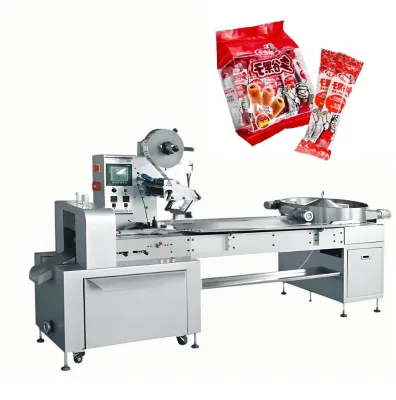


High Speed Horizontal Automatic Multi Function Pillow Packing Machine for Food Industry
$4000.00 - $5100.00
MOQ: 1 Pieces


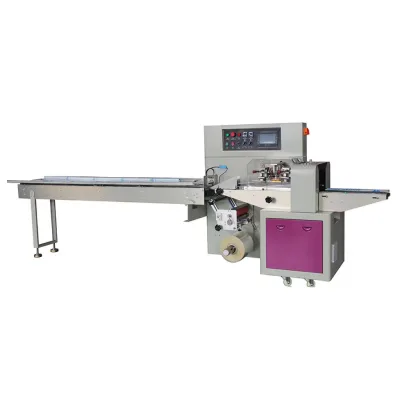
Comprehensive Sourcing Guide
Strategic Sourcing Guide for Full-Auto Food Pillow Packing Machines
Understanding Machine Forming and Sealing Capabilities
When evaluating a full-auto food pillow packing machine, the primary technical distinction lies in the forming species and the specific forming function the equipment executes. Based on current market observations, these machines are engineered to handle diverse product categories including vegetables, fruits, fish, meat, and snacks. The core mechanical operation typically involves a "Bag Moulding" process where the packaging film is shaped into a pillow configuration before the product is inserted. In other configurations, the forming species may be identified as "Melt Molding" or "Box Molding," indicating different thermal or mechanical approaches to shaping the container.
The forming function is critical for ensuring the integrity of the final package. Most advanced units in this category perform both "Forming" and "Seal" operations in a continuous cycle. The sealing method is often described generically as a "Sealing Method," which buyers must verify against their specific film requirements. The resulting output is consistently a "Pillow Bag," a standard format for food products that offers a compact profile and efficient shelf presence. Some machines offer versatility with "3 Sides Seal/Back Seal Available" options, allowing for customization based on the product's shape and the required barrier properties.
The driven type for these industrial units is predominantly "Electric," ensuring precise control over the sealing temperature and conveyor speed. The machine type is broadly classified as an "Auto Wrapping Machine" or a "Forming Filling Sealing Machine," depending on whether the filling mechanism is integrated or a separate upstream process. For liquid or semi-solid applications, the system may be categorized specifically as a "Weighing-type Filling Machine" or a "Filling and Sealing Machine" with a "Single-Head" filling valve. The feed cylinder structure is often noted as "Single-Room Feeding," which simplifies the logistics of product introduction into the forming station.
Technical Specifications and Performance Metrics
Technical due diligence requires a granular examination of the machine's physical dimensions, power consumption, and production capacity. The physical footprint of these units varies significantly. Observed standard dimensions include a configuration of approximately 3770mm in length, 670mm in width, and 1450mm in height, with a total weight of 500kg. Larger industrial models may reach dimensions of 4000mm in length, 1150mm in width, and 1700mm in height. These measurements are essential for factory floor planning and logistics coordination.
Production capacity is a key performance indicator that directly impacts operational efficiency. Buyers should verify the specific output rate, which in observed models ranges from 40 to 230 bags per minute. Specific model configurations may be rated at 40 bags per minute or 50 bags per minute. The machine's power consumption is another critical specification, with observed ratings around 2.5 kW. The operating voltage is typically standardized at 220V, which aligns with common industrial power supplies in many regions, though local grid variations must be confirmed.
The packaging film width is a vital constraint for machine selection. Available models support a film width range of 60mm to 320mm, accommodating a wide variety of product sizes. The automatic grade of the machinery is a crucial differentiator; while some units are fully "Automatic," others are classified as "Semi-Automatic." The distinction affects the level of human intervention required during operation. For applications involving liquids, the material type is specified as "Liquid," whereas solid products like snacks or meat are processed as "Solid" material types. The packaging material itself is typically "Film" or "Plastic," requiring the machine to handle specific thermal properties.
Compliance, Material Standards, and Safety Verification
In the realm of food processing equipment, material composition and adherence to standards are non-negotiable. The construction of the machine's contact parts is frequently specified as "SUS304" or "SUS316L" stainless steel. These grades are selected for their corrosion resistance and ability to meet food safety hygiene requirements. The machine's overall standard compliance often references specific dimensional and weight parameters, such as the 37706701450mm configuration and 500kg weight, which serve as baseline identifiers for model verification.
Buyers must rigorously verify the certification status of any potential supplier. While "CE" certification is a common background expectation for machinery exported to European markets, it should not be assumed without explicit documentation from the manufacturer. The presence of a "Machinery Test Report" is a strong indicator of quality assurance; this document should be requested to confirm that the machine has undergone functional and safety testing. The origin of the machinery is predominantly "China," with specific manufacturing hubs noted in locations such as Wenzhou, Zhejiang, and Fujian. Understanding the geographic origin helps in assessing logistics costs and supply chain reliability.
The packaging of the machine for export is another compliance-related detail. Units are typically shipped in a "Wooden Case" or "Export Wooden Case," which ensures protection during transit. This packaging standard is crucial for preventing damage to the delicate mechanical components during long-distance shipping. Buyers should ensure that the wooden packaging meets international phytosanitary standards to avoid customs delays.
Cost Drivers and Procurement Economics
The pricing landscape for full-auto food pillow packing machines is characterized by a wide variance. Observed listed prices in the market range from 870 USD to 28,800 USD. This significant spread is driven by several factors, including the level of automation, the complexity of the filling mechanism, the materials used in construction, and the specific customization options required. A machine priced at the lower end of the spectrum may be a semi-automatic unit with basic forming capabilities, while the higher-end models likely feature advanced weighing systems, multi-head filling valves, and integrated PLC controls.
The Minimum Order Quantity (MOQ) is another economic factor to consider. In the current market, the observed MOQ range is between 1 and 2 units. This low threshold suggests that these machines are often treated as standalone capital investments rather than bulk commodities, allowing buyers to purchase a single unit for pilot testing or initial production setup. However, buyers should be aware that the "Customization" feature is available, which may impact the final price and lead time. Customization can include changes to the forming species, specific voltage requirements, or tailored sealing methods to accommodate unique product shapes.
Lead times and production capacity are also intertwined with cost. While specific lead times are not explicitly provided in the general data, the production capacity of 40 to 230 bags per minute suggests that high-volume models may require more complex manufacturing processes, potentially extending the delivery window. Buyers should factor in the cost of the "Machinery Test Report" and the "Export Wooden Case" packaging into their total cost of ownership calculations.
Typical Applications and Product Compatibility
The versatility of these machines is a primary selling point, with applications spanning a broad spectrum of food and non-food categories. The primary application areas include "Vegetable, Fruit, Fish, Meat, and Snack" products. This indicates that the machines are robust enough to handle solid, irregularly shaped items. Furthermore, the scope extends to "Dairy Products," "Hair Care Products," "Skin Care Products," "Cosmetics," and "Cleaning, Detergent" items. This versatility suggests that the machines can be adapted for both food-grade and industrial-grade packaging needs.
The specific application dictates the choice of machine type. For instance, a "Weighing-type Filling Machine" is ideal for products where precise portion control is necessary, such as meat or dairy. In contrast, a "Forming Filling Sealing Machine" might be better suited for snack products where the primary goal is rapid wrapping. The "Single-Room Feeding" structure is particularly relevant for solid products that require a straightforward introduction into the packaging film. For liquid applications, the machine must be equipped with appropriate sealing methods to prevent leakage, and the material type must be confirmed as "Liquid."
The "Key Selling Points" of these machines often include "Easy to Operate," which is a critical factor for facilities with high turnover or limited technical staff. The ability to handle "Pillow Bag" formats ensures compatibility with existing retail packaging standards. Buyers should match the machine's forming species (Bag Moulding, Melt Molding, or Box Molding) to the specific product geometry to ensure optimal packaging efficiency.
Supplier Evaluation and Quality Assurance Protocols
Evaluating a supplier for a full-auto food pillow packing machine requires a focus on transparency and technical documentation. Buyers should prioritize suppliers who provide a "Machinery Test Report" as evidence of functional performance. The origin of the machine, whether from Wenzhou, Zhejiang, or Fujian, should be clearly stated, as regional manufacturing clusters often have specific reputations for quality and specialization.
When assessing the supplier, buyers must verify the "Automatic Grade" of the machine. Whether the unit is "Automatic" or "Semi-Automatic" must align with the buyer's operational capabilities and labor strategy. The "Customization" availability is a strong indicator of a supplier's flexibility; a supplier that can tailor the machine to specific film widths (60-320mm) or sealing methods adds significant value.
Quality control should be embedded in the procurement process. Buyers should request detailed specifications regarding the "Packaging Material" and "Material Type" compatibility. The use of "SUS304" or "SUS316L" stainless steel is a baseline requirement for food safety, and the supplier must provide material certificates to verify these claims. The "Main Function" of the machine, described as "Packing Sealing Wrapping Packaging," should be tested to ensure it meets the required throughput and sealing integrity standards.
Long-Term Procurement and Operational Sustainability
Long-term procurement considerations extend beyond the initial purchase price. The "Main Function" of the machine implies a continuous operational role, making reliability and maintenance support critical. The "Electric" driven type requires a stable power supply, and the 220V specification must be compatible with the buyer's local infrastructure. The "Production Capacity" of 40 to 230 bags per minute suggests that the machine is designed for high-volume environments, necessitating a robust maintenance schedule.
The "prod_packing" of "Wooden Case" or "Export Wooden Case" is a temporary measure, but the durability of the machine itself is a long-term asset. Buyers should consider the availability of spare parts, particularly for the "Filling Valve Head" and sealing components. The "Key Selling Points" of "Easy to Operate" suggest that the machine is designed for longevity with minimal operator error, reducing downtime and waste.
Finally, the "prod_standard" dimensions and weight are not just shipping metrics but indicators of the machine's structural integrity. A machine weighing 500kg and measuring 37706701450mm is a substantial piece of equipment that requires a dedicated foundation and maintenance plan. Buyers should plan for the long-term integration of the machine into their production line, ensuring that the "Forming Function" and "Sealing" capabilities remain consistent over years of operation. By focusing on these technical and operational details, buyers can secure a reliable asset that supports their packaging needs for years to come.
FAQs
What automatic grades are available for full-auto food pillow packing machines?
Both Automatic and Semi-Automatic grades are available for these machines. Buyers should verify the specific grade required for their production line, as Automatic units offer higher efficiency while Semi-Automatic options may reduce labor costs.
Which forming species can these machines handle for food packaging?
The machines support Bag Moulding, Melt Molding, and Box Molding forming species. The choice depends on the product type, with Bag Moulding commonly used for creating standard pillow bags for vegetables, fruits, and snacks.
Can these machines process liquid materials like dairy or detergents?
Yes, the machines can handle both solid and liquid material types. Specific models function as Weighing-type Filling Machines or Filling and Sealing Machines suitable for liquids, dairy products, and cleaning detergents.
What is the typical production capacity range for these units?
Production capacity ranges from 40 to 230 bags per minute depending on the model. Specific configurations may be rated at 40 or 50 bags per minute, allowing selection based on required throughput speeds.
Which stainless steel grades are used for machine construction?
Contact parts are typically constructed from SUS304 or SUS316L stainless steel. These materials ensure corrosion resistance and meet food safety hygiene standards required for processing meat, fish, and cosmetic products.
What is the standard voltage and power consumption for these machines?
The standard operating voltage is 220V with a power consumption of approximately 2.5 kW. This electrical specification aligns with common industrial power supplies, though local grid variations should be confirmed before installation.
How are these machines packaged for export from China?
Machines are shipped in Export Wooden Cases or standard Wooden Cases to ensure protection during transit. This packaging standard helps prevent damage to mechanical components and complies with international shipping requirements.