Source Fuji Guides Hard Fishing Rod for Jigging, Lure Casting, and Deep Sea
Compare 27 listings of Fuji guides hard fishing rod options featuring carbon construction and various power ratings. Buyers can evaluate models with jigging weights up to 260g and lure capacities suitable for deep sea applications.
Key considerations
Products List





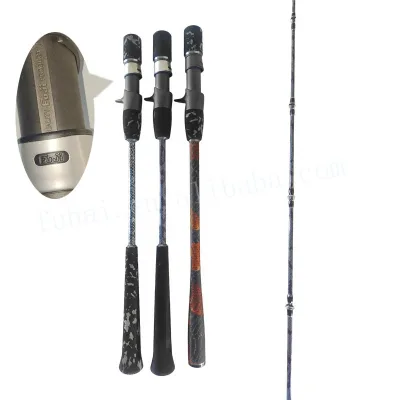
Comprehensive Sourcing Guide
Strategic Sourcing Guide for Fuji Guide Hard Fishing Rods
Understanding the Technical Profile of Fuji Guide Hard Fishing Rods
When sourcing hard fishing rods equipped with Fuji guides, buyers must first establish a clear understanding of the technical specifications that define performance and durability. The core keyword "fuji guides hard fishing rod" points to a specific segment of the market where high-modulus carbon fiber construction is paired with premium guide systems. Based on available product data, the material composition is predominantly carbon, which provides the necessary stiffness and sensitivity required for hard fishing applications. The handle material is frequently specified as EVA, offering a durable, non-slip grip that remains comfortable during extended use.
The power rating of these rods varies significantly to match different fishing techniques. Observations indicate a spectrum ranging from "Light" to "Medium" and "Medium Light" power ratings. This variation dictates the rod's ability to handle different lure weights and line tensions. For instance, specific models are designed with a lure weight range of 20-80 grams, while others are engineered for heavier jigging applications with a maximum lure weight capacity of 100 grams or jigging weights extending up to 260 grams. The line class is equally critical, with PE line ratings observed between 0.6-1.5# for lighter setups and extending to 1.0-3.0# or 1.5-3.0# for more robust applications.
The guide system itself is a primary differentiator. The supplied data explicitly mentions "FUJI a" and "FUJI Sic Guide" configurations. The Fuji Sic guide is renowned for its ceramic coating, which reduces friction and enhances casting distance. The physical dimensions of the rod, such as the tip and butt diameters, are precise indicators of the rod's action. For example, one model features a tip of 1.8mm and a butt of 7.4mm, while another exhibits a tip of 2.0 O/D and a butt of 11.2 O/D. These measurements are not arbitrary; they directly influence the rod's flex pattern and its ability to absorb the shock of a fighting fish.
Compliance, Certification, and Material Verification
In the realm of B2B procurement, verifying compliance and material authenticity is as important as the product's physical attributes. While the supplied context includes a low-confidence background note regarding ROHS certification, buyers must treat this with caution. ROHS (Restriction of Hazardous Substances) is a standard that limits the use of specific hazardous materials in electrical and electronic equipment, but its direct application to fishing rods is less standardized than in electronics. Therefore, buyers should not assume a product is ROHS compliant based solely on a general background mention. Instead, the procurement strategy must involve requesting specific, verifiable documentation from the supplier.
The material composition is a critical area for verification. The "Carbon" designation in the product attributes suggests the use of carbon fiber, a high-performance material. However, the grade of carbon (e.g., T30, T40, or higher modulus) is rarely explicitly stated in general product listings. Buyers should request material datasheets to confirm the modulus and tensile strength of the carbon fiber used. Similarly, the EVA handle material should be verified for density and resistance to UV degradation, as these factors determine the longevity of the grip in harsh marine environments.
Regarding the Fuji guides, authenticity is paramount. The market is flooded with counterfeit guide components that mimic the appearance of genuine Fuji parts but lack the engineering precision. Buyers must insist on proof of authenticity, such as batch numbers or direct verification from the guide manufacturer. The presence of "FUJI Sic" guides implies a specific ceramic coating technology that resists abrasion from monofilament and fluorocarbon lines. Without verified documentation, the performance claims associated with these guides cannot be guaranteed.
Cost Drivers and Pricing Structure Analysis
The pricing for hard fishing rods with Fuji guides is influenced by a complex interplay of factors, including material costs, manufacturing complexity, and component sourcing. The observed price range for these products spans from 7.99 USD to 265.33 USD. This wide disparity reflects the difference between entry-level models and high-end, specialized jigging rods. The lower end of the price spectrum likely corresponds to rods with standard carbon construction and basic guide setups, while the upper end represents rods with high-modulus carbon, advanced Fuji guide systems, and specialized actions.
A significant cost driver is the guide system itself. Genuine Fuji guides, particularly the Sic series, command a premium price compared to generic alternatives. The number of guides, their size, and the specific model of the reel seat also contribute to the final cost. For example, a rod featuring a FUJI reel seat and multiple Sic guides will inherently cost more than a rod with a standard reel seat and fewer guides. Additionally, the manufacturing process for multi-piece rods, such as those with 1.5 or 2 sections, involves more complex assembly and quality control, which can increase the unit price.
The Minimum Order Quantity (MOQ) is another critical factor in the cost structure. The observed MOQ range is between 1 and 200 units. For buyers with smaller initial orders, the unit cost may be higher due to the lack of economies of scale. Conversely, larger orders can negotiate better pricing, but they require a higher upfront capital commitment. Buyers should analyze their inventory turnover rates to determine the optimal order size that balances cost efficiency with cash flow management. The packaging method, whether "Bag+Tube" or "Carton," also impacts shipping costs and potential damage rates, which are indirect cost drivers that must be factored into the total landed cost.
Typical Applications and Performance Scenarios
Hard fishing rods equipped with Fuji guides are designed for specific, high-intensity fishing scenarios. The technical specifications provided in the product data point to several distinct applications. The "Lure Pole" designation and the lure weight ranges of 15-80 grams or 20-80 grams suggest these rods are ideal for casting lures, such as swimbaits, topwater plugs, and hard-bodied crankbaits. The "Light" to "Medium" power ratings make them suitable for targeting species that require a sensitive tip to detect subtle bites but have enough backbone to set the hook firmly.
For more aggressive fishing styles, the data highlights "Jigging" capabilities. Models with jigging weights ranging from 40-260 grams are engineered for vertical jigging, a technique often used in deep water to target pelagic species. The "Medium Light" power rating with a jig weight of 60-150 grams indicates a rod capable of handling moderate-depth jigging, while the heavier models with up to 260 grams are built for deep-water, heavy-duty jigging. The PE line ratings, such as 1.0-3.0#, align with these applications, providing the necessary strength to haul heavy jigs and fight strong fish.
The "Tenya" lure weight specification of 30-60# further narrows the application to specific bottom-fishing techniques common in Asian markets. These rods are designed to handle the heavy weights and strong currents associated with Tenya fishing. The closed length of 45cm to 91cm and the section count (1 to 2 pieces) indicate portability and ease of transport, making them suitable for both boat and shore fishing. The "M" action rating suggests a moderate-fast action, which is versatile for a wide range of techniques, from casting to jigging.
Supplier Evaluation and Sourcing Criteria
Selecting the right supplier for Fuji guide hard fishing rods requires a rigorous evaluation process that goes beyond price comparison. Buyers should prioritize suppliers who demonstrate a deep understanding of the technical specifications and can provide detailed product data. The presence of specific model numbers, such as "ECBLJ II C642FSL" or "EMJ-531C," indicates a level of product standardization that suggests a mature manufacturing operation. However, buyers must verify that these model numbers correspond to actual production runs and are not merely marketing placeholders.
The origin of the product is a key factor in supplier evaluation. The data indicates that the products originate from China, a major hub for fishing tackle manufacturing. While this offers cost advantages, it also necessitates a thorough vetting of the supplier's quality control systems. Buyers should inquire about the supplier's experience with Fuji components and their ability to source genuine parts. A supplier that can provide evidence of their supply chain relationships with Fuji or authorized distributors is preferable to one that relies on generic or unverified components.
Sample availability is another critical criterion. The data notes that samples "Could Supply," which is a positive indicator. Buyers should request samples of different models to personally test the rod's action, guide quality, and overall build. This hands-on evaluation allows for a direct comparison of the product against the technical specifications provided. Additionally, buyers should assess the supplier's responsiveness to technical inquiries and their willingness to provide detailed documentation regarding materials and manufacturing processes.
Quality Control and Inspection Protocols
Implementing a robust quality control (QC) protocol is essential to ensure that the hard fishing rods meet the required performance standards. Given the variability in the observed price range and the critical nature of the Fuji guide system, buyers should establish clear inspection criteria before accepting any shipment. The QC process should begin with a visual inspection of the rod blank for any signs of carbon fiber delamination, resin bubbles, or uneven wrapping. The handle material should be checked for consistency in texture and adhesion to the blank.
The guide system requires special attention. Each guide should be inspected for alignment, ensuring that the guides are perfectly straight and centered on the rod blank. The Fuji Sic guides should be checked for any cracks or imperfections in the ceramic coating. The reel seat must be securely attached and free of any play or wobble. For multi-piece rods, the joint connections must be tested for tightness and smoothness of operation. The "Bag+Tube" or "Carton" packaging should be evaluated to ensure it provides adequate protection against moisture and impact during transit.
Performance testing is the final step in the QC process. This involves loading the rod with the specified line and lure weights to verify that the action matches the "Light," "Medium," or "Medium Light" rating. The rod should be cycled through its full range of motion to check for any signs of fatigue or permanent deformation. For jigging rods, the ability to handle the maximum jig weight without failure is a critical test. Buyers should consider hiring third-party inspection agencies to conduct these tests on-site or at a neutral location to ensure unbiased results.
Long-Term Procurement and Relationship Management
Sourcing hard fishing rods with Fuji guides is a long-term endeavor that requires strategic planning and relationship management. The wide range of specifications and applications means that buyers should not rely on a single supplier for all their needs. Instead, they should develop a diversified supplier base that can provide a variety of models to meet different market demands. This approach mitigates the risk of supply chain disruptions and ensures access to the latest product innovations.
Building a strong relationship with suppliers is crucial for long-term success. Buyers should engage in regular communication with their suppliers to stay informed about new product developments, material changes, and market trends. This collaboration can lead to opportunities for customizations, such as specific guide configurations or unique color schemes, which can differentiate the buyer's product line in a competitive market. The "Customization: Available" attribute in the data suggests that suppliers are open to tailoring products to specific buyer requirements, which can be a significant competitive advantage.
Finally, buyers must plan for the lifecycle of the products. The durability of the carbon fiber and the longevity of the Fuji guides are key factors in customer satisfaction and brand reputation. By selecting high-quality products and maintaining strict QC standards, buyers can minimize returns and warranty claims. Regular feedback loops with end-users can provide valuable insights into product performance, allowing buyers to refine their sourcing strategies and continuously improve the quality of their offerings. This proactive approach ensures that the procurement of hard fishing rods remains a strategic asset rather than a mere transactional activity.
FAQs
What materials are used for the rod blank and handle?
The rod blank is constructed from carbon fiber to ensure stiffness and sensitivity. The handle material is specified as EVA, providing a durable and non-slip grip suitable for extended use in marine environments.
Which guide systems are featured on these fishing rods?
The rods are equipped with genuine FUJI guides, including FUJI Sic Guide configurations. These ceramic-coated guides reduce friction and enhance casting distance compared to generic alternatives.
Can buyers request samples before placing a bulk order?
Yes, suppliers indicate that samples could be supplied for evaluation. This allows buyers to personally test the rod action and guide quality before committing to a larger purchase volume.
What is the typical packaging method for these rods?
Packaging options include Bag+Tube or Carton depending on the specific model. This ensures adequate protection against moisture and impact during transit to the buyer's location.
How does the jigging weight capacity vary across models?
Jigging weights range from 40 grams up to 260 grams depending on the rod power. Specific models support lighter weights of 60-150 grams while others handle heavy-duty deep water applications.
What is the origin location for these fishing rod products?
The products originate from China, which is a major hub for fishing tackle manufacturing. Buyers should verify quality control systems given the concentration of suppliers in this region.