Source Gas Station Fuel Pump with Flow Meter for Oil Station, Industrial, and Fuel Dispenser
Compare 30 Gas Station Fuel Pump with Flow Meter options from Chinese manufacturers. These units support applications like oil stations and industrial use, featuring flow rates from 4-60L/min and various pump types including submersible and gear pumps.
Key considerations
Products List


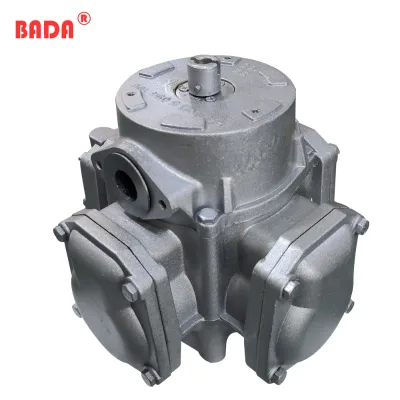


Gas Station Submersible Pump Type Petrol Pump Petrol Station Fuel Pumps Manufactures
$1150.00 - $2700.00
MOQ: 4 Pieces


Gas Station Fuel Petrol Pump Manufacturer Pump Fuel Dispenser LCD Display
$2000.00 - $3500.00
MOQ: 1 Pieces


Flowmeter for Liquefied Petroleum Gas Fuel Injection Pump at Gas Stations
$100.00 - $140.00
MOQ: 1 Pieces


Comprehensive Sourcing Guide
Strategic Sourcing Guide for Gas Station Fuel Pumps with Flow Meters
Understanding Technical Specifications and Operational Capabilities
When sourcing gas station fuel pumps equipped with flow meters, buyers must first distinguish between the diverse operational profiles available in the current market. The technical landscape is not monolithic; it encompasses systems designed for varying magnitudes of discharge and distinct operation modes. Observations from available product data indicate that units are categorized by their discharge magnitude, ranging from small and medium capacities to large-scale industrial requirements. This distinction is critical for matching the equipment to the specific throughput needs of a fuel station. For instance, a high-volume station requires a pump capable of large discharge, whereas a specialized or lower-volume site might utilize a small and medium magnitude unit.
The operation mode is another pivotal technical parameter. Buyers should verify whether the system operates in a "self-help" mode, which implies autonomous functionality, or a "normal" mode, which may require different operator interaction protocols. Furthermore, the oil transportation mode varies significantly between products. Some units are engineered as self-priming systems, allowing them to draw fuel without external assistance, while others rely on submersible pumping mechanisms. The latter is often associated with specific pump types such as submersible pumps, gear pumps, or vane pumps. Understanding these mechanical differences is essential for ensuring compatibility with the existing infrastructure of the fuel station.
The flow rate capabilities define the efficiency of the pump. Data suggests that specific models offer flow ranges such as 4-60 liters per minute or broader ranges like 5-50 liters per minute and 8-80 liters per minute. These figures are not universal; they represent specific product attributes that must be matched against the station's expected transaction volume. Additionally, the working voltage is a standard specification, with 220V appearing as a common requirement for electrical integration. The physical dimensions also play a role, with diameter specifications often exceeding 100mm for certain industrial-grade units. Buyers must ensure that the selected pump's physical and electrical specifications align with the station's power supply and spatial constraints.
Compliance, Certification, and Regulatory Standards
Navigating the regulatory landscape is a non-negotiable aspect of sourcing fuel dispensing equipment. The integrity of the transaction and the safety of the fuel station depend heavily on the certifications held by the manufacturer. While general market knowledge suggests various standards, specific product observations highlight the importance of verifying certifications such as ISO9001:2000, OIML, and ATEX. These certifications are not merely labels; they represent adherence to rigorous quality management systems, legal metrology requirements, and safety standards for explosive atmospheres, respectively.
The accuracy of the flow meter is a primary compliance metric. In the observed product data, an accuracy of 0.5% is noted for specific models. This level of precision is vital for financial transactions where fuel is sold by volume. Buyers must verify that the flow meter's accuracy rating meets the legal requirements of their jurisdiction, as discrepancies can lead to regulatory penalties and customer disputes. The product standard, such as SGS, also serves as a benchmark for quality assurance. However, buyers should not assume that every listed product automatically satisfies all certification requirements. It is imperative to request current certification documents and verify their validity with the issuing bodies.
Furthermore, the application of the equipment dictates the necessary compliance checks. Units designed for LPG (Liquefied Petroleum Gas) or oil transportation have different safety profiles compared to those for gasoline or diesel. The maximum pressure rating, observed at 18 bar for certain models, must be strictly adhered to during operation. Exceeding these pressure limits can compromise the structural integrity of the pump and the flow meter. Buyers should also check for specific standards related to the medium being handled, ensuring that the materials used are compatible with LPG, gasoline, diesel oil, or kerosene. The presence of international solenoid valves as available options suggests a need for compliance with international safety standards regarding valve actuation and shut-off capabilities.
Cost Drivers and Pricing Structures
The pricing of gas station fuel pumps with flow meters is influenced by a complex array of factors, resulting in a wide observed range from approximately $56.1 to $6,550. This variance is not arbitrary but reflects differences in specifications, customization levels, and included accessories. The magnitude of discharge is a primary cost driver; large-discharge pumps capable of handling high volumes typically command higher prices than their small and medium counterparts. Similarly, the complexity of the operation mode and the sophistication of the flow meter technology contribute significantly to the final cost.
Customization availability is another critical factor affecting price. Products that offer customization options allow buyers to tailor the equipment to specific site requirements, but this flexibility often comes at a premium. The packing method also influences the cost structure. While some units are shipped in standard cartons, others require wooden pallet packing for heavy-duty transport, adding to the overall expense. The inclusion of accessories such as motors, controllers, and specific hose configurations (1, 2, or 4 hoses) further differentiates the price points. A unit sold as a single item with a basic configuration will differ substantially in cost from a comprehensive package including a controller and multiple hoses.
The warranty period is a direct indicator of the manufacturer's confidence in their product and a component of the total cost of ownership. A 12-month warranty is a standard observation, but buyers should evaluate whether extended warranty options are available as part of the procurement package. The selling units, whether sold as single items or in bulk, also impact the unit price. Buyers must look beyond the sticker price and consider the total value proposition, which includes the durability of the pump type, the precision of the flow meter, and the reliability of the electrical components. Understanding these cost drivers enables buyers to negotiate effectively and select a solution that balances budget constraints with performance requirements.
Typical Applications and Medium Compatibility
The versatility of gas station fuel pumps is evident in their diverse application scenarios. These systems are designed to handle a wide spectrum of fuel types, including gasoline, diesel oil, kerosene, and LPG. The specific application dictates the necessary material compatibility and safety features. For instance, pumps intended for LPG must be rated for the specific pressure and volatility of liquefied petroleum gas, whereas those for gasoline and diesel oil focus on different chemical resistance profiles. The observed data indicates that certain models are explicitly designated for use with oil or fuel dispensers, highlighting the specialized nature of these applications.
In industrial settings, the application extends beyond simple retail fueling. Mechanical gas meters and flow meters are integral to monitoring and controlling the flow of various mediums in large-scale operations. The precision grade and the starting flow rate, noted as greater than 3 cubic meters per hour for certain models, are crucial for industrial applications where accurate measurement is paramount. The use of these pumps in oil stations requires robust construction to withstand continuous operation and harsh environmental conditions. The partnership with major industry players such as Petrochina, Cnooc, BP, Shell, GE, and Emerson suggests that these pumps are trusted in high-stakes environments where reliability is non-negotiable.
The specific model numbers, such as DJY-222A, LPG2, JSK50H, and the Censtar Classic Series, often correspond to specific application profiles. Buyers should carefully review the product name and usage details to ensure the pump is suitable for their specific fuel type. For example, a pump labeled for LPG use may not be suitable for gasoline without specific modifications or validation. The medium compatibility is a critical safety and operational consideration. Misapplication can lead to equipment failure, safety hazards, and regulatory violations. Therefore, buyers must verify that the pump's design and materials are explicitly rated for the intended medium before finalizing a purchase.
Supplier Evaluation and Service Capabilities
Selecting the right supplier is as important as selecting the right product. Buyers should evaluate suppliers based on their service capabilities, including OEM (Original Equipment Manufacturer) and ODM (Original Design Manufacturer) services. These services indicate the supplier's ability to customize products to meet specific buyer requirements, from branding to technical specifications. The availability of service options like OEM and ODM suggests a flexible manufacturing process capable of adapting to diverse market needs.
The origin of the product is another key evaluation criterion. Most observed products originate from China, specifically from regions like Zhejiang and Zhengzhou. While these regions are known for manufacturing capabilities, buyers should verify the specific production facilities and quality control measures in place. The brand name, such as BADA, serves as an identifier, but buyers should not rely solely on brand reputation. Instead, they should assess the supplier's track record, partnership history, and ability to provide after-sales support.
The supplier's ability to provide detailed technical documentation and support is crucial. Buyers should inquire about the availability of installation guides, maintenance manuals, and troubleshooting resources. The inclusion of accessories like motors, pumps, flow meters, and controllers in the package indicates a comprehensive solution, but the supplier must ensure that these components are compatible and function seamlessly together. Additionally, the supplier's responsiveness to inquiries and their willingness to provide samples or demonstrations can be indicative of their commitment to customer satisfaction. Evaluating these factors helps buyers build a reliable supply chain that supports long-term operational success.
Quality Control and Long-Term Procurement Considerations
Ensuring the quality of gas station fuel pumps requires a rigorous approach to quality control. Buyers should implement a verification process that includes checking the product's precision grade, flow rate accuracy, and pressure ratings against the provided specifications. The observed accuracy of 0.5% and the maximum pressure of 18 bar are specific data points that must be validated through testing or third-party inspection. Quality control should also extend to the physical construction, including the packing method and the durability of the materials used.
Long-term procurement considerations involve more than just the initial purchase. Buyers should evaluate the warranty terms, which are observed to be 12 months for certain models, and consider the availability of spare parts and maintenance services. The lifespan of the pump, the frequency of required maintenance, and the cost of replacements are all factors that influence the total cost of ownership. The availability of international solenoid valves and other accessories suggests that the system is designed for modularity, allowing for upgrades and repairs without replacing the entire unit.
Furthermore, buyers should consider the scalability of the solution. As fuel stations expand or change their operational needs, the ability to upgrade the pump or flow meter is essential. The customization options available in the market provide a pathway for future-proofing the investment. Buyers should also monitor the market for new standards and regulations that may impact the operation of their equipment. Staying informed about changes in certification requirements, such as updates to ISO or OIML standards, ensures that the procurement strategy remains compliant and effective over the long term. By prioritizing quality control and planning for the future, buyers can secure a reliable and efficient fuel dispensing system that meets their operational needs for years to come.
FAQs
What is the accuracy rating for the flow meter?
The observed accuracy rating is 0.5 percent for specific models. This precision is critical for financial transactions in oil stations where fuel is sold by volume.
Can the pump operate in self-help mode?
Yes, some units operate in a self-help mode implying autonomous functionality. Other models may function in a normal mode requiring different operator interaction protocols.
Which certifications are available for these pumps?
Available certifications include ISO9001:2000, OIML, and ATEX. These standards ensure adherence to quality management systems and safety requirements for explosive atmospheres.
What is the maximum pressure rating for LPG models?
The maximum pressure rating observed for certain LPG models is 18 bar. Exceeding this limit can compromise the structural integrity of the pump and flow meter.
How does the flow rate range vary by model?
Specific models offer flow ranges such as 4 to 60 liters per minute. Other configurations provide broader ranges like 5 to 50 liters per minute or 8 to 80 liters per minute.
What is the typical warranty period for these units?
A 12-month warranty is a standard observation for these products. Buyers should evaluate whether extended warranty options are available as part of the procurement package.
Can the product be customized for specific needs?
Customization is available for many of these products to meet specific site requirements. This flexibility often comes at a premium and affects the final pricing structure.
Where are these fuel pumps typically manufactured?
Most observed products originate from China, specifically from regions like Zhejiang and Zhengzhou. Buyers should verify specific production facilities and quality control measures in place.