Source Gasoline Automobile Crankshaft for Car Truck Tractor
Find 30 available Gasoline Automobile Crankshaft options for cars, trucks, and tractors. Buyers can compare specifications, certifications, and delivery times from verified Chinese manufacturers offering standard and OEM models.
Key considerations
Products List

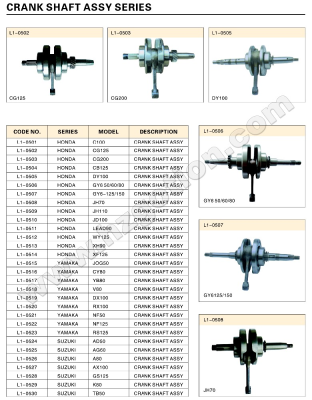
Automobile Parts Engine Spare Parts Car Accessories Motorcycle Crankshaft
$80.00 - $150.00
MOQ: 10 Pieces


Forged Steel Automobile Auto Engine Spare Parts Diesel Engine Crankshaft
$80.00 - $150.00
MOQ: 10 Pieces


$15.00 - $20.00
MOQ: 100 Pieces




Spare Parts High Efficiency Smooth Auto Crankshaft for Engine Replacement
$6.60 - $98.50
MOQ: 1 Pieces


Comprehensive Sourcing Guide
Strategic Sourcing Guide for Gasoline Automobile Crankshafts
Procuring a Gasoline Automobile Crankshaft requires a disciplined approach that balances technical precision with supply chain reliability. As a critical component of the internal combustion engine, the crankshaft converts the linear motion of pistons into rotational motion, making its integrity non-negotiable for vehicle performance and safety. Buyers navigating the global market must rely on verified data rather than marketing assertions. This guide synthesizes available market observations to provide a framework for evaluating suppliers, understanding technical requirements, and managing procurement risks for gasoline engine crankshafts.
Technical Specifications and Material Integrity
The foundation of a reliable crankshaft lies in its material composition and manufacturing standards. Based on observed product attributes in the current market, crankshafts are predominantly manufactured from cast iron or iron alloys. These materials are selected for their high tensile strength, wear resistance, and ability to withstand the immense cyclic stresses generated during engine operation. When sourcing, buyers must verify the specific grade of iron used, as variations in alloy composition directly impact durability and fatigue life.
The manufacturing process often adheres to OEM (Original Equipment Manufacturer) standards, ensuring that the replacement part fits and functions identically to the original component. The market data indicates that "OEM Standard" is a common requirement, with many suppliers offering products that meet specific model numbers such as Bedford J6330, NT855, or various motorcycle and small engine models like 188F and 192F. However, it is crucial to distinguish between generic standard parts and those engineered for specific applications.
| Feature | Observation from Market Data | Verification Requirement for Buyer |
|---|---|---|
| Primary Material | Cast Iron, Iron | Confirm specific alloy grade and heat treatment process. |
| Engine Type | Diesel, Gasoline, CNG | Ensure the part is explicitly rated for gasoline engines, not just generic use. |
| Condition | New | Verify manufacturing date and storage conditions to prevent corrosion. |
| Model Compatibility | Optional, Specific (e.g., 188F) | Cross-reference part numbers with the vehicle or engine serial number. |
| Surface Finish | Standard, Silver | Inspect for uniformity and absence of casting defects or machining marks. |
Buyers should note that while some listings mention "Silver" as a color, this is often a visual observation of the raw or coated material rather than a functional specification. The critical technical verification involves checking the dimensional tolerances against the engine block specifications. The "Model No" is often listed as optional or specific, meaning the buyer must provide exact engine details to ensure the crankshaft's journal diameters, rod bearing sizes, and main bearing clearances match the target application.
Compliance and Certification Verification
In the B2B procurement of automotive components, certification serves as the primary indicator of a supplier's commitment to quality management systems. The observed market data highlights several recurring certifications, including CE, ISO, ISO9001, and CCC. These certifications suggest that the manufacturing facility has undergone audits to verify its processes, though the specific scope of these audits varies by supplier.
The presence of "ISO" and "ISO9001" certifications is particularly significant. These standards indicate that the supplier adheres to international quality management principles, which is essential for maintaining consistency in mass-produced components like crankshafts. Additionally, some listings reference "CCC" (China Compulsory Certification), which is a mandatory safety standard for products sold within the Chinese market. For international buyers, the CE mark indicates conformity with health, safety, and environmental protection standards for products sold within the European Economic Area.
However, buyers must exercise caution. While certifications are listed as facts for certain products, they are not universal guarantees for every item in a supplier's catalog. A supplier may hold an ISO9001 certificate for their general management system but not for a specific batch of crankshafts. Therefore, procurement teams should request copies of valid certificates and verify their expiration dates. Furthermore, the "Emission Standard: Euro 5" observation suggests that some crankshafts are designed to support engines meeting specific environmental regulations. Buyers targeting markets with strict emission laws must confirm that the crankshaft design supports the required engine efficiency and emissions control systems.
Cost Drivers and Pricing Dynamics
Understanding the cost structure of gasoline automobile crankshafts is vital for budgeting and negotiation. The observed price range in the market spans from 1 to 1000 USD, reflecting a wide disparity in product quality, material grade, and order volume. This broad range indicates that "Attractive Price" is a common selling point, but it does not necessarily correlate with value. Low-cost options may utilize inferior iron grades or lack rigorous quality control, potentially leading to premature failure.
Several factors drive the final cost of a crankshaft. First, the material cost of cast iron fluctuates with global commodity markets. Second, the complexity of the machining process influences labor costs; crankshafts for high-performance engines or specific models like the NT855 may require more precise CNC machining than generic parts. Third, packaging and logistics play a role. The market data shows various packaging methods, including "Wooden & Pallet," "Carton Packaging," and "Plywood Case." Heavy-duty packaging like plywood cases is necessary for protecting the crankshaft during long-distance shipping but adds to the unit cost.
Buyers should also consider the Minimum Order Quantity (MOQ) and its impact on unit pricing. The observed MOQ range is 1 to 1000 units. Suppliers offering an MOQ of 1 are likely targeting the aftermarket repair market, where unit prices are higher due to the lack of economies of scale. Conversely, suppliers requiring an MOQ of 1000 may offer significantly lower per-unit costs, making them suitable for fleet maintenance or large-scale assembly projects. The "Selling Units: Single item" observation confirms that single-unit purchases are possible, but buyers should anticipate a premium for small quantities.
Typical Applications and Compatibility
The versatility of crankshafts is evident in the diverse applications listed in the market data. While the core keyword focuses on "gasoline automobile crankshafts," the observed data reveals that these components are also used in trucks, tractors, excavators, motorbikes, boats, and lawn mowers. This cross-application capability suggests that many crankshafts are designed with modular specifications that can be adapted to different engine types.
However, compatibility is not guaranteed across all categories. A crankshaft listed for a "Lawnmower" application may have different load-bearing requirements than one for a "Car" or "Truck." The "Application" field in product listings often includes multiple categories, such as "Car, Truck, Tractor, Excavator," indicating a broad compatibility range. Buyers must verify that the specific crankshaft is engineered for the intended load and RPM range of their target vehicle. For instance, a crankshaft designed for a diesel engine (as noted in some listings) may not be suitable for a gasoline engine without significant modification, despite similar physical dimensions.
The "Purpose: for Replace/Repair" attribute clarifies that many of these parts are intended for the aftermarket service sector. This distinction is important for buyers sourcing for original equipment manufacturing (OEM) versus those sourcing for repair shops. Repair parts often need to be "Standard" or "STD/OEM/ODM" compatible, allowing them to fit a wide range of older or generic engines. Buyers should prioritize parts with clear model number specifications, such as "CG/YBR/V./BAJAJ/GY/TITIAN/WAVE/WY," to ensure precise fitment for motorcycle and small engine applications.
Supplier Evaluation and Origin Analysis
Evaluating suppliers requires a focus on their location, delivery capabilities, and service offerings. The market data indicates that the majority of these products originate from China, with specific mentions of "Zhejiang China" and "Sinotruk." Zhejiang is a known hub for automotive manufacturing, suggesting a mature supply chain ecosystem. However, the "Sinotruk" origin note implies that some suppliers may be directly affiliated with or supply to major truck manufacturers, which could be a positive indicator of quality.
Lead time is a critical factor in supplier evaluation. The observed delivery times range from 7 to 60 days, with specific mentions of "7-15 Days" and "20-30 Days After Payment." This variance suggests that lead times are highly dependent on order volume, stock availability, and the specific shipping method chosen. Buyers should clarify the "Delivery Time" terms before placing an order, as "7-60 days" is a broad window that could impact production schedules. The "Port of dispatch: ningbo" observation provides a specific logistical anchor, indicating that most shipments likely originate from the Ningbo port, a major shipping hub in China.
Service quality is another key evaluation metric. The "One-Stop Service" attribute suggests that some suppliers offer comprehensive support, including sourcing, quality inspection, and logistics coordination. This can be particularly valuable for buyers who lack local expertise in Chinese manufacturing. Additionally, the "Customization: Available" and "OEM: Yes" attributes indicate that suppliers are willing to produce parts to specific buyer requirements, which is essential for niche applications or private labeling.
Quality Control and Long-Term Procurement
Ensuring long-term reliability requires a robust quality control (QC) strategy. The "Quality: Standard" attribute is a baseline, but buyers should demand more detailed QC reports, including material test certificates and dimensional inspection records. The "Warranty: 12 Months" observation provides a safety net, but the terms of this warranty must be clearly defined. Does it cover manufacturing defects only, or does it include shipping damage? Buyers should verify the warranty process and the supplier's track record for honoring claims.
For long-term procurement, establishing a consistent supply chain is paramount. The "Standard Package" and "Standard product carton" observations suggest that packaging is generally consistent, but buyers should specify packaging requirements to prevent damage during transit. The "prod_packing: Wooden & Pallet" option is recommended for heavy or high-value shipments to ensure stability.
Buyers should also consider the "prod_standard: STD/OEM/ODM" flexibility. This allows for a transition from standard off-the-shelf parts to custom-engineered solutions as the business scales. Maintaining a relationship with a supplier who offers "OEM Standard" compliance ensures that future replacements will remain compatible with existing fleets. Finally, buyers must remain vigilant about the "Condition: New" status. While most parts are listed as new, verifying that they are not refurbished or reconditioned without disclosure is essential for maintaining vehicle safety standards.
In conclusion, sourcing gasoline automobile crankshafts involves a careful balance of technical verification, certification checks, and supplier evaluation. By focusing on material integrity, adhering to specific model requirements, and leveraging the observed market data for logistics and pricing, buyers can mitigate risks and secure high-quality components. The diverse applications and flexible customization options available in the market provide ample opportunities for strategic procurement, provided that buyers maintain a disciplined approach to quality assurance and compliance.
FAQs
What certifications do Gasoline Automobile Crankshaft suppliers typically hold?
Suppliers typically hold ISO, CE, and ISO9001 certifications. Some listings also mention CCC certification. Buyers should verify specific certificate validity for their target market before purchasing.
How long does delivery take for these crankshaft orders?
Delivery times range from 7 to 60 days depending on order specifics. Some suppliers offer 7-15 day delivery, while others require 20-30 days after payment. Stock availability impacts the exact timeline.
Which materials are used to manufacture these crankshafts?
Crankshafts are primarily manufactured from cast iron or iron alloys. These materials provide the necessary strength for engine operation. Buyers must confirm the specific alloy grade for durability requirements.
Can I order a single unit of a Gasoline Automobile Crankshaft?
Yes, single item purchasing is available with an MOQ of 1. However, bulk orders starting at 1000 units may offer better pricing. Check specific supplier terms for minimum order quantities.
What warranty is provided for these replacement crankshaft parts?
A standard 12-month warranty is commonly provided for these parts. This covers manufacturing defects but excludes shipping damage. Review the specific warranty terms for each supplier before finalizing the order.
Which packaging methods are used for shipping these crankshafts?
Packaging includes wooden pallets, carton packaging, and plywood cases. The method depends on the product weight and shipping distance. Standard packages are common for general orders.
Where are these Gasoline Automobile Crankshaft products manufactured?
Products originate from China, with specific mentions of Zhejiang and Sinotruk. Ningbo is the primary port of dispatch. Buyers should confirm the exact origin for logistics planning.